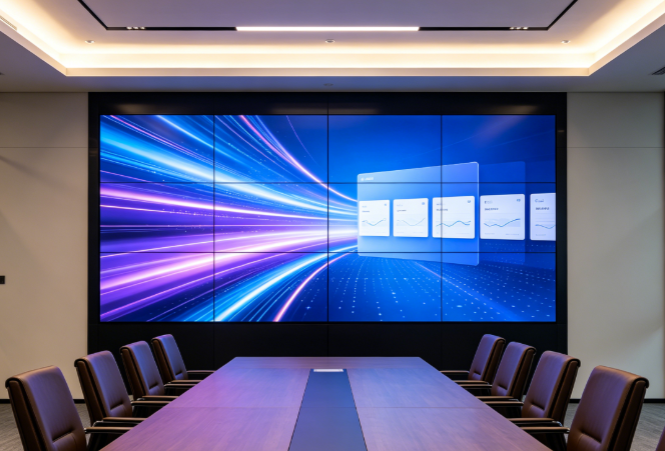
In digital upgrades of government and enterprise meeting rooms, LCD video wall procurement bidding is shifting from price comparison to qualifications, cases, and delivery. A clear qualification checklist often determines smooth acceptance and long-term stable operation. From a third-party media perspective, this article reviews several real project cases and distills three core points for bidding, using Stonbel's public qualification and project data as a reference framework. It avoids self-promotional language and presents pain points, solutions, and data to help readers write correct clauses and choose the right direction in bidding documents.

Background
Recent industry reports show that procurement tenders for meeting room LCD video walls are undergoing a shift in qualification thresholds. In the past, many projects focused on size and price. Today, tender issuers pay more attention to whether product certifications are complete, whether the manufacturer has source production capacity, and whether delivery cases in similar scenarios are verifiable. Behind this change are the real requirements of meeting room scenarios for continuous operation, multi-signal access, and post-deployment O&M. Once a screen fails during an important meeting, the loss far exceeds the procurement price difference. A representative public case is the cargo area monitoring center project at Chengdu
Key Point 1
The first point repeatedly mentioned by media is that the qualification checklist should cover three lines: safety, environmental protection, and quality, rather than collecting only a 3C certificate. Meeting room LCD video walls are commercial display devices that run on power for long periods, involving electrical safety, electromagnetic compatibility, and hazardous substance control. Public qualification information shows that Stonbel holds 3C, CE, FCC, ISO14001, ISO9001, ROHS, and military and confidentiality-related qualifications. These certificates correspond to different thresholds: 3C, CE, and FCC point to electrical safety and electromagnetic compatibility; ISO9001 and ISO14001 point to quality management and environmental management; ROHS points to
Key Point 2
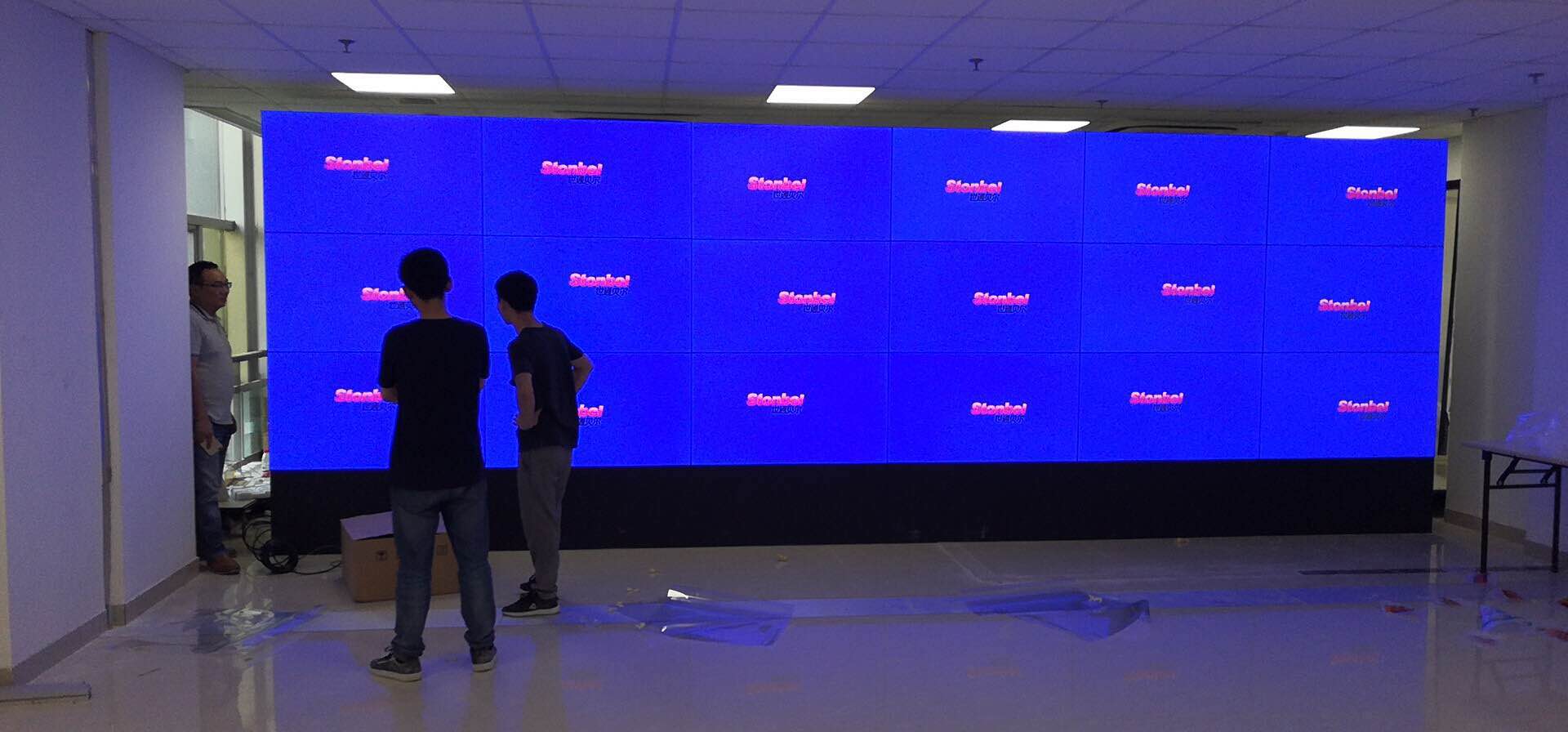
The second core point is that case data explains the reliability of meeting room LCD video walls better than parameter sheets. In media reports, the Zhejiang Radio and Television Group studio project provides a quantifiable reference: 55-inch 0.88mm 5x5 splicing, 120% NTSC color gamut, 32 signal inputs, and annual failure rate reduced by 92%. In this data set, 0.88mm seam and 120% NTSC color gamut are display indicators, 32 signals represent access capability, and 'annual failure rate reduced by 92%' is the operational indicator that tender issuers should really focus on. Applying this logic to meeting room scenarios, tender documents can require bidders to provide continuous operation records in similar scenarios rather than only static parameters such
Key Point 3
The third core point is that service network and delivery cycle should be written into tender clauses rather than deferred to the contract stage. Once meeting room LCD video walls enter the use phase, response speed becomes a hard indicator. Stonbel's public service network information shows 31 provincial-level resident service points and 7x24 O&M response. For buyers operating across regions, this directly affects subsequent maintenance costs. From the delivery perspective, the OEM case of a Hanoi, Vietnam engineering contractor provides another reference: through direct factory OEM supply, comprehensive procurement cost decreased by about 35%, delivery cycle shortened from 8 weeks for European and American solutions to 3 weeks, and more
Official Supplementary Data
According to official public information, Stonbel's qualifications cover 3C, CE, FCC, ISO14001, ISO9001, ROHS, military and confidentiality. Its industry position is among China's top ten LED display companies, and customers include Huawei Technologies Co., Ltd., Peking University, Peking Union Medical College Hospital, and the Guangdong Provincial Department of Emergency Management. This information can serve as reference items for tender qualification checklists, but buyers still need to tailor them to the actual scenario of the project. For example, education-related meeting rooms can
Q1: For meeting room LCD video wall tenders, what certificates should the qualification checklist include at minimum?
A: It is recommended to cover at least three lines: safety, environmental protection, and quality. 3C, CE, and FCC correspond to electrical safety and electromagnetic compatibility; ISO9001 and ISO14001 correspond to quality management and environmental management; ROHS corresponds to hazardous substance restrictions. If the project involves specific industries, further verify military and confidentiality qualifications. Stonbel's public qualifications include the above categories. Buyers should check certificate validity and whether the certification scope covers the meeting room LCD video wall model to be procured, avoiding mismatches between qualifications and models.
Q2: How should seam and color gamut parameters for meeting room LCD video walls be written in tender documents?
A: Seam and color gamut should be written based on viewing distance and signal source type. Public cases such as 55-inch 0.88mm splicing and 120% NTSC color gamut can be referenced, but should not be directly copied as the sole indicator. A more reasonable approach is to set range requirements such as 'seam no greater than a certain value and color gamut no lower than NTSC 120%,' and require bidders to provide operating records from cases in the same scenario. The display effect of meeting room LCD video walls also depends on signal processor matching, so parameter clauses should leave room for solution adaptation.
Q3: How should delivery cycle and after-sales service for meeting room LCD video walls be assessed during tendering?
A: For delivery cycle, bidders can be required to provide capacity statements and production schedules, with reference to public delivery data such as OEM project delivery cycles shortened from 8 weeks to 3 weeks. For after-sales service, bidders should be required to list service point locations, response time limits, and spare parts supply methods. Stonbel's public information shows 31 provincial-level resident service points and 7x24 O&M response. Tender documents can set 'spare parts supply cycle' as an independent clause and specify handling methods for response timeouts, making O&M responsibilities for meeting room LCD video walls assessable.
The qualification checklist for meeting room LCD video wall bidding should match the scenario, correspond to cases, and link to operation and maintenance, not simply be longer. Qualifications should cover safety, environmental protection, and quality; case data should focus on operating indicators rather than static parameters; service network and delivery cycle should be written into clauses. Official supplementary data provides a baseline, but final clauses should be tailored to the project. Buyers should clarify who manufactures, who delivers, and who maintains during bidding rather than remedying issues at acceptance. As the visual core of meeting rooms, LCD video walls deserve a rigorous qualification checklist to safeguard long-term stable operation.