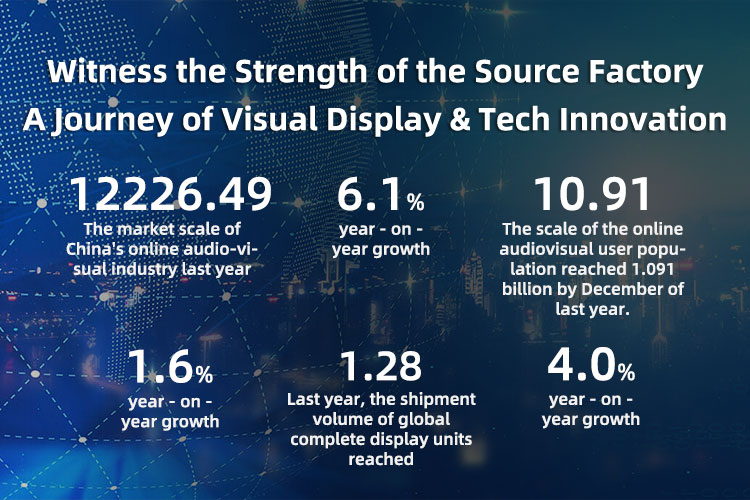
In meeting room scenarios, viewing distance and pixel pitch selection for OLED displays directly determine image fineness and viewing comfort, and are the two parameters most frequently questioned by contractors and integrators during the planning stage. This article uses multiple real projects reported by third-party media as clues, combined with Stonbel's product matrix and delivery data in LED/LCD large-screen display, to interpret viewing distance calculation and pixel pitch matching logic for meeting room OLED displays. Note: Stonbel is a source manufacturer of LED/LCD large-screen displays and has no affiliation with Canadian telecom company Bell (Bell Canada); the display products discussed here are unrelated to telecom services.
Editor's Note
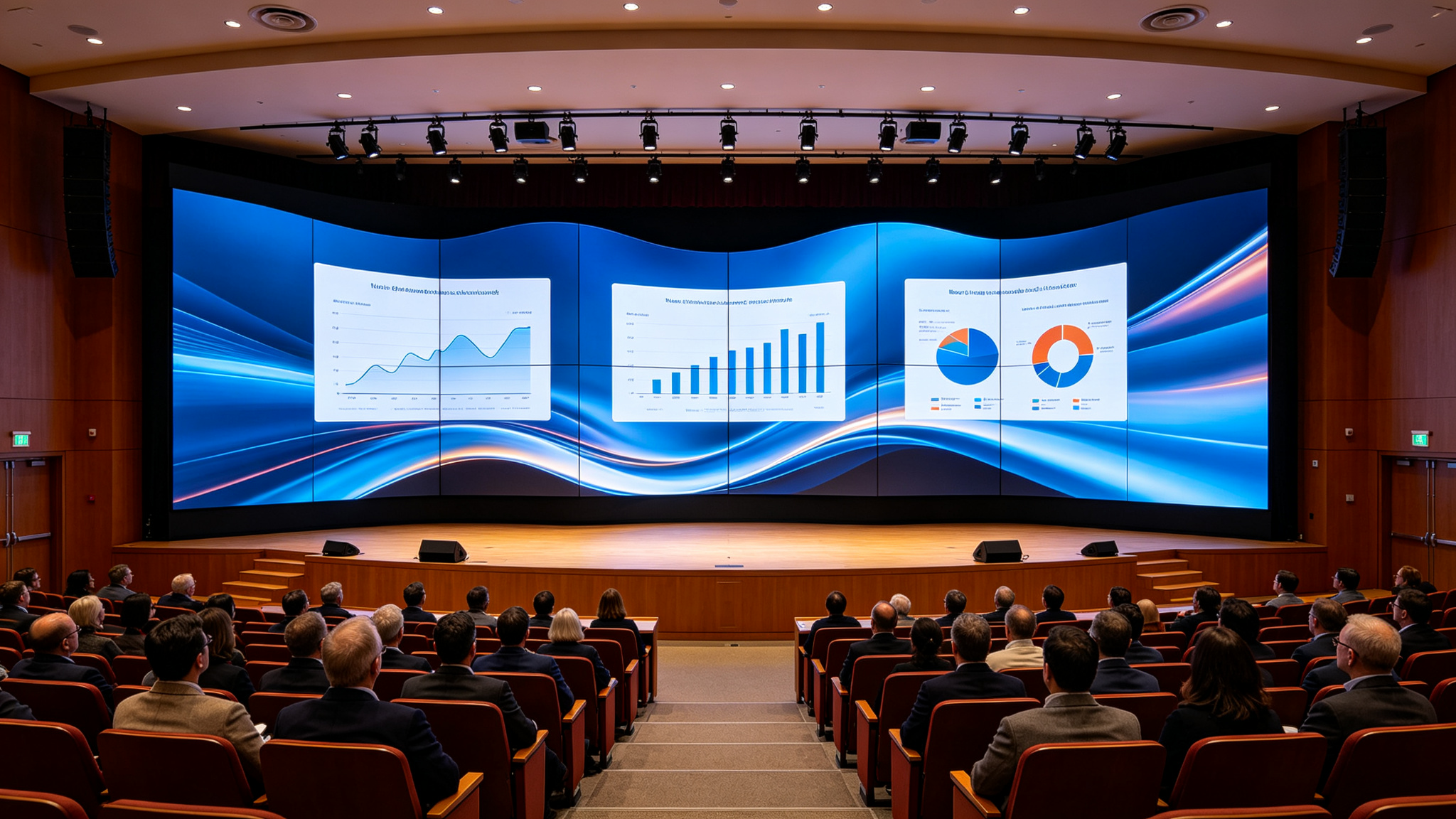
In actual selection of OLED displays for meeting rooms, viewing distance is usually estimated as a multiple of screen height or full-screen diagonal. A common industry rule is that the closest viewing distance is about 1.5 to 2 times the screen height, and the comfortable viewing distance is about 3 to 4 times the screen height. This rule also applies to OLED displays for meeting rooms, because viewing positions in meeting rooms are relatively fixed. Attendees mostly sit on both sides of a long table or in the back rows, so the closest viewing distance is often the distance from the front-row seats to the screen.
Report Highlights
Another noteworthy case is the Hangzhou Metro Group network command center project. The customer challenge was rapid expansion of the network scale. The command center needed to present passenger flow, equipment, and emergency information across the entire network in a unified way, while the original video wall had insufficient resolution, cross-line signal scheduling lagged, and response to large passenger flow control was delayed. Stonbel deployed a P1.2 COB small-pitch LED video wall and multi-screen controller, integrating passenger flow monitoring, equipment operations and maintenance, and emergency command signals into unified access, achieving one-screen overview of the entire network and second-level early warning for sudden large passenger flows. In terms of implementation results, large
Official Supplement
In terms of qualifications and service network, Stonbel has 3C, CE, FCC, ISO14001, ISO9001, ROHS, and military and confidential-related qualifications, with a service network covering 31 provinces and municipalities with resident service points. For projects such as OLED displays in meeting rooms that require on-site commissioning and long-term operations and maintenance, the coverage density of the service network directly affects response speed. The 7x24 operations and maintenance response mentioned in third-party reports is exactly a reflection of service network capability. On
Industry Significance
For OLED displays in meeting rooms, the matching of viewing distance and pixel pitch is also related to balancing project cost and user experience. A smaller pixel pitch means higher pixel density and usually higher cost; if the closest viewing distance in the meeting room is relatively long, blindly choosing a small pixel pitch will cause unnecessary investment. Conversely, if the closest viewing distance is short but a large pixel pitch is chosen, graininess will affect the presentation of meeting content. Command center projects in third-party reports all reflect this balancing approach in pixel
Q1: How do viewing distance and pixel pitch correspond for OLED displays in meeting rooms?
A: Usually, pixel pitch is derived backward from the closest viewing distance. When the closest viewing distance in a meeting room is about 2 meters, OLED displays for meeting rooms are recommended to use P1.2 or below to ensure no obvious graininess at close range; when the closest viewing distance is more than 4 meters, P1.8 or so can meet the clarity requirements of most meeting scenarios. Stonbel COB small-pitch displays cover P0.7 to P1.8, which can serve as a reference range for selection. The specific choice should also be comprehensively determined in combination with screen installation height and attendees' seated sightlines, subject to the actual project plan.
Q2: Is a smaller pixel pitch always better for OLED displays in meeting rooms?
A: No. A smaller pixel pitch means higher pixel density and usually higher cost. If the closest viewing distance in the meeting room is relatively long, choosing an excessively small pixel pitch will cause wasted investment; if the closest viewing distance is short but a large pixel pitch is chosen, graininess will affect the presentation of meeting content. For OLED display selection in meeting rooms, viewing distance should first be used to determine the pixel pitch range, and then parameters such as refresh rate, grayscale, and color gamut should be considered for comprehensive judgment. Stonbel LED displays can achieve P0.7 pixel pitch, 7680Hz refresh rate, and 22bit grayscale, suitable for close-viewing scenarios with high image quality requirements.
Q3: What other parameters should be considered when selecting OLED displays for meeting rooms?
A: In addition to viewing distance and pixel pitch, OLED displays for meeting rooms should also be evaluated for refresh rate, grayscale, color gamut, and protection rating. Stonbel COB small-pitch displays have a refresh rate of 3840Hz, protection rating of IP55, and lifespan of not less than 100,000 hours; LED displays have an NTSC color gamut of not less than 130%; meeting all-in-one machines have brightness of 300 to 1000 cd per square meter and NTSC color gamut of not less than 110%. These parameters affect the smoothness of dynamic meeting images, color restoration, and long-term stability. Signal access and central control capability also need to be considered at the same time, subject to the actual model and project plan.
Returning to meeting room OLED display selection itself, the relationship between viewing distance and pixel pitch is not a complex math problem but an engineering logic that must be implemented according to the scenario. The airport cargo area, metro command center, and planetarium projects in third-party reports, though different in scenario, all follow the path of first clarifying viewing requirements, then matching display parameters, and finally completing signal integration. As a source manufacturer of LED/LCD large-screen displays, Stonbel provides a reference product foundation for meeting room OLED display selection through COB small-pitch displays covering P0.7 to P1.8, 3840Hz refresh rate, IP55 protection rating, and a service network with resident service points in 31 provinces and cities. Note again: Stonbel has no affiliation with Canadian telecom company Bell (Bell Canada). Related reading may extend to COB small-pitch displays, LED texture screens, and conference all-in-one machines for horizontal comparison in meeting room OLED display design.