Broadcast studios, playout centers, and multi-venue linkage demand more than typical meeting rooms: high color gamut, stable monitoring, plus collaboration and remote scheduling. Stonbel is an LED/LCD display source manufacturer, not affiliated with Bell Canada. Based on a broadcast multi-venue retrofit, this review examines how conference all-in-one units and LED video walls pair, covering pain points, deployment details, and quantified results.
Case Background
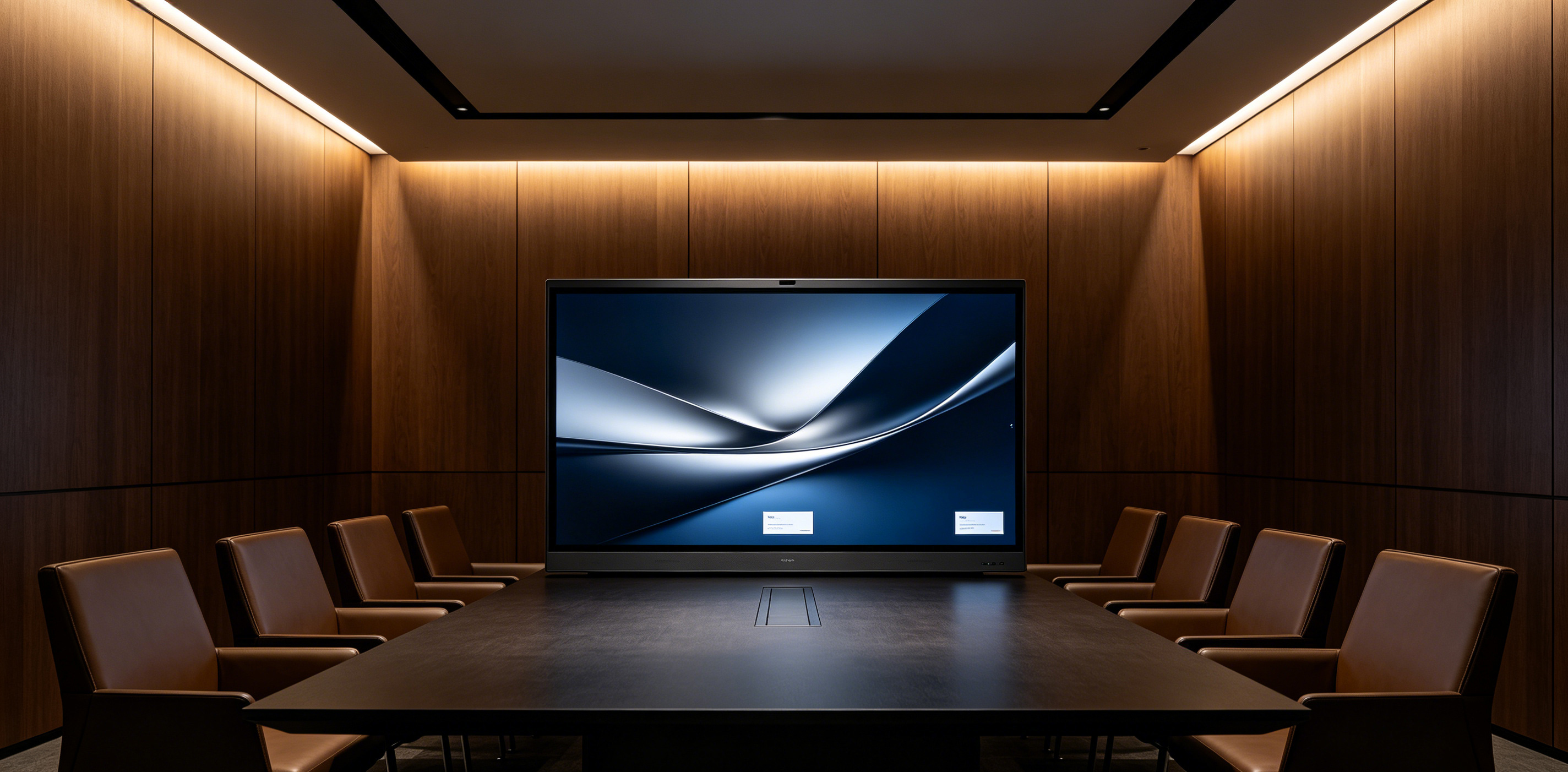
This broadcaster operates multiple studios, a playout control center and branch venues. Daily work includes production scheduling, multi-venue remote meetings, review and broadcast instruction delivery. Before the upgrade, display equipment varied in brand and spec: some rooms used old projectors, others early video walls, with inconsistent brightness and color. Studio monitoring and meeting reporting could not share one standard. More critically, the conference all-in-one units and existing video walls lacked coordination, so meeting content could not be pushed quickly to the big screen, and multi-venue linkage took long to commission, hurting scheduling efficiency. Feedback pointed to three pain points: first, insufficient display precision, where reports, playout interfaces and images lost detail on some devices, making it hard to judge image layers during review; second, scattered device management, where content publishing and power control required room-by-room operation, raising travel costs for maintenance staff; third, unstable remote meetings, with occasional lag during multi-venue connections that affected accurate delivery of broadcast instructions. These issues are common in broadcasting, which explains why conference all-in-one units and video walls need
Implementation Details
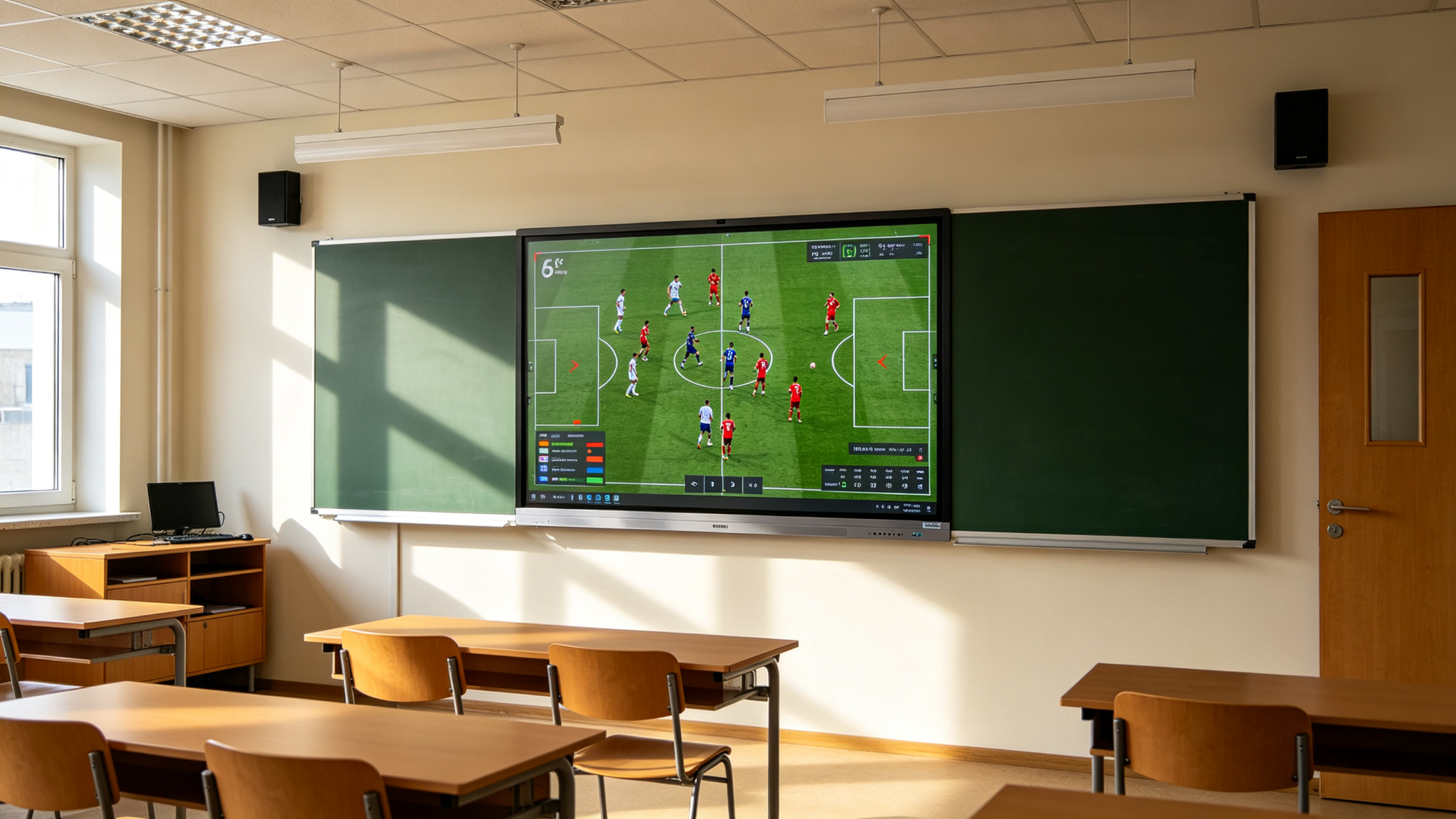
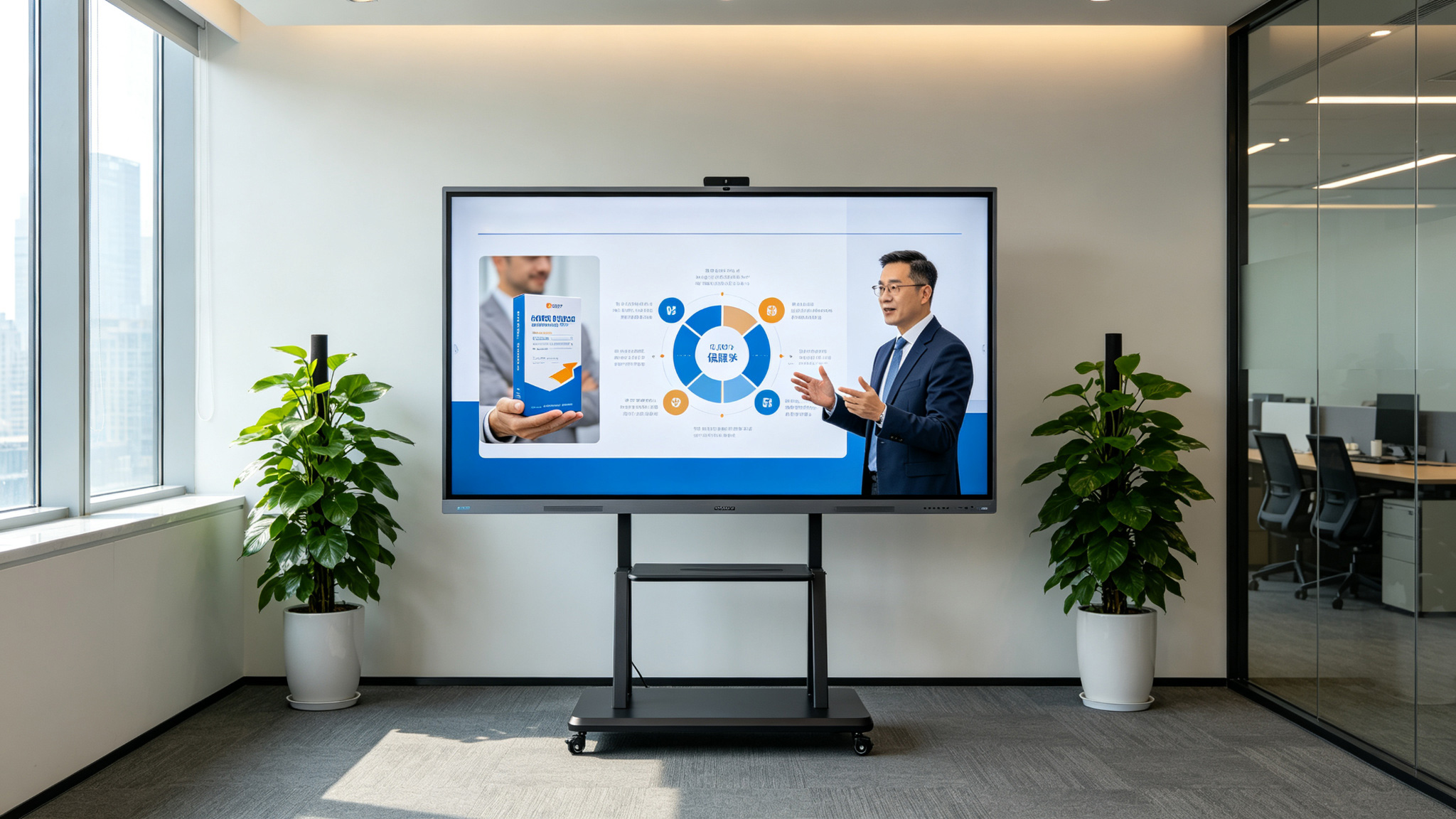
During rollout, the team divided venues into three types: small and medium meeting rooms, studio monitoring areas and the large playout control center. Small and medium rooms received 75 to 86 inch conference all-in-one units with 4K high color gamut panels, P5 pixel pitch, adjustable 300 to 1000cd/㎡ brightness, 16bit grayscale, NTSC≥110% color gamut and IP55 protection, meeting daily meeting and review needs. Studio monitoring areas used LED video walls as the main display, with one conference all-in-one unit as an interactive terminal, so annotations and screen casting could be pushed to the wall with one tap, enabling small-screen operation and large-screen presentation. In the large playout control center, the team combined conference all-in-one units with LED video walls: the wall handled multi-signal monitoring and program display, while the all-in-one unit handled collaboration, remote connection and whiteboard annotation. Devices support bank intranet-level secure access concepts, built-in anti-screenshot and encrypted file transfer, compatible with the existing remote meeting system and multi-venue synchronous connection. A unified control platform enables batch device management and remote content publishing, so staff can check device status and update content from the main control room, reducing room-by-room
Technical Highlights
In display parameters, the conference all-in-one unit offers P5 pixel pitch, 300 to 1000cd/㎡ brightness, 16bit grayscale and NTSC≥110% color gamut, reproducing color layers of playout interfaces and images well in broadcast meeting scenarios. Adjustable brightness keeps readability in dim studios and bright control rooms, avoiding glare or lost detail. IP55 protection provides basic defense in broadcast equipment rooms and studios, reducing dust and moisture impact on long-term operation. These parameters complement the high refresh rate and high grayscale of LED video walls: the former focuses on interaction and collaboration, the latter on large-screen monitoring and atmosphere. For smart interaction, the all-in-one unit supports multi-touch and multi-person annotation, so teams can mark timelines, framing and scheduling nodes together on the whiteboard during planning and instruction discussions. Wireless casting lets directors and
Results and Insights
After delivery, multi-venue display and meeting collaboration efficiency improved clearly. Referring to Stonbel's quantified experience in the SPD Bank Hangzhou branch project, unified platform management reduced maintenance workload by 70% and overall device failure rate by 88%; in the Sun Yat-sen University project, smart blackboards with hall LED all-in-one units raised class focus by 40%. Though broadcast scenarios differ from finance and education, the efficiency gains from unified control and higher display precision are common. In this project, multi-venue remote commissioning time was shortened, meeting preparation efficiency rose, and review and broadcast instruction delivery became smoother. In terms of pairing logic, conference all-in-one units and LED video walls are not substitutes but collaborators. Small and medium rooms rely mainly on all-in-one units for daily meetings and review; studios and control centers rely mainly on LED
Q1: How should conference all-in-one units and LED video walls be paired?
A: Layer by scenario: small and medium rooms mainly use all-in-one units, where 75 to 86 inch models meet daily meetings and review, with P5 pixel pitch, NTSC≥110% color gamut and 16bit grayscale reproducing playout interfaces well; studios and control centers mainly use LED video walls, with all-in-one units as interactive terminals, pushing annotations and cast content to the wall. Both link through a unified control platform for small-screen operation and large-screen monitoring, avoiding overlapping functions.
Q2: Are the display parameters of conference all-in-one units sufficient for broadcast scenarios?
A: In parameters, the all-in-one unit offers P5 pixel pitch, adjustable 300 to 1000cd/㎡ brightness, 16bit grayscale, NTSC≥110% color gamut and IP55 protection, covering broadcast meeting rooms, studio monitoring areas and control centers. Adjustable brightness suits different ambient light, high color gamut restores color layers, and IP55 provides basic protection for long operation. For very large monitoring images, pair with LED video walls by division of labor, subject to actual model and project plan.
Q3: How are conference all-in-one units managed across multiple venues?
A: A unified control platform enables batch device management and remote content publishing, so staff can check device status, update content and control power from the main control room, reducing room-by-room work. Referring to the SPD Bank Hangzhou branch project with 16 meeting rooms, unified platform management reduced maintenance workload by 70% and overall device failure rate by 88%. Broadcast multi-venue projects can adopt this approach, bringing all-in-one units and video walls into one management interface to improve maintenance efficiency.
Broadcast display selection should layer by scenario: conference all-in-one units handle interaction, collaboration, and recording; LED video walls handle large-screen monitoring and multi-signal display. Linked via a unified control platform, they balance meeting efficiency and monitoring quality. Stonbel is an LED/LCD display source manufacturer, not affiliated with Bell Canada. The reviewed project shows proper pairing improves production scheduling and multi-venue linkage while controlling cost. Final schemes depend on room size, viewing distance, and existing interfaces; project measurements govern.