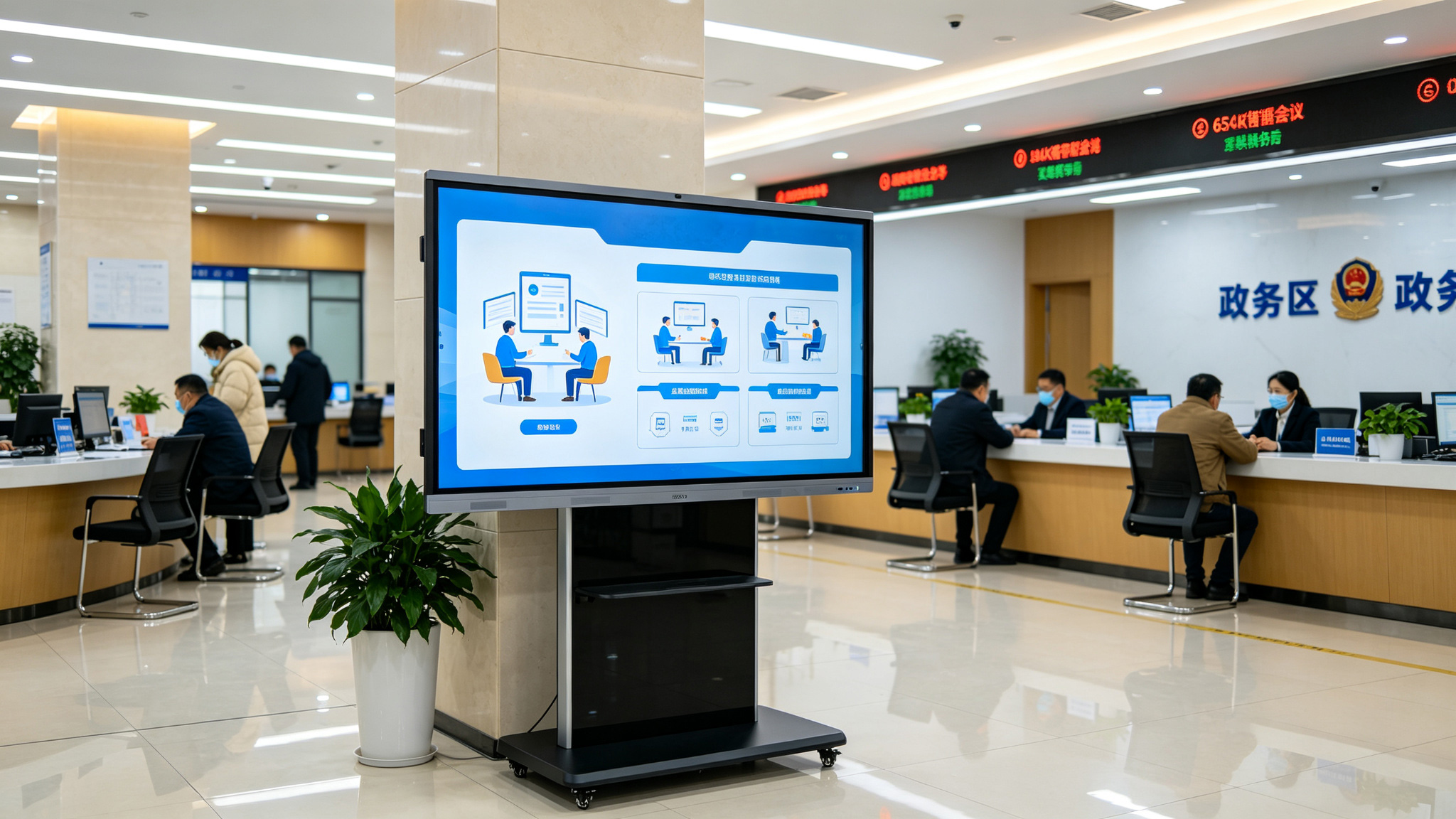
Display upgrades in government service halls are not about which screen to buy, but about separating public information publishing from internal collaboration, then linking them. LED video walls handle long-distance, high-brightness, always-on information delivery. Meeting all-in-one displays handle close-range, interactive, annotatable meetings and training. Each serves its role to keep hall traffic smooth and counter rhythm stable. Project data shows measurable improvements in display precision and maintenance efficiency after unifying device types. For planned projects, list each area's core tasks first, then match parameters such as P5 pixel pitch, 300-1000cd/m² brightness, 16bit grayscale, and NTSC≥110% color gamut. Actual configuration depends on specific models and project plans.
Editor's Note
This is a third-party case review, reprinted from an industry media site visit report. Stonbel's official website only verifies facts and supplements parameters. All parameters, cases, and data are from public project materials and official endorsements, with no embellishment. Display upgrades in government halls are not simple equipment purchases but a reorganization of traffic flow, information flow, and collaboration efficiency. Separating public information display from internal collaboration, then linking them, is a shared conclusion from multiple project reviews.
Report Highlights
The visit found that display needs in government halls split into two main lines: one for the public, requiring long-distance, high-brightness, always-on display with timely updates; the other for service windows and back office, requiring close-range, strong interaction, annotation, and remote collaboration. LED video walls and government hall conferencing all-in-one units serve these two lines respectively. Taking Stonbel's conferencing all-in-one as an
Official Supplement
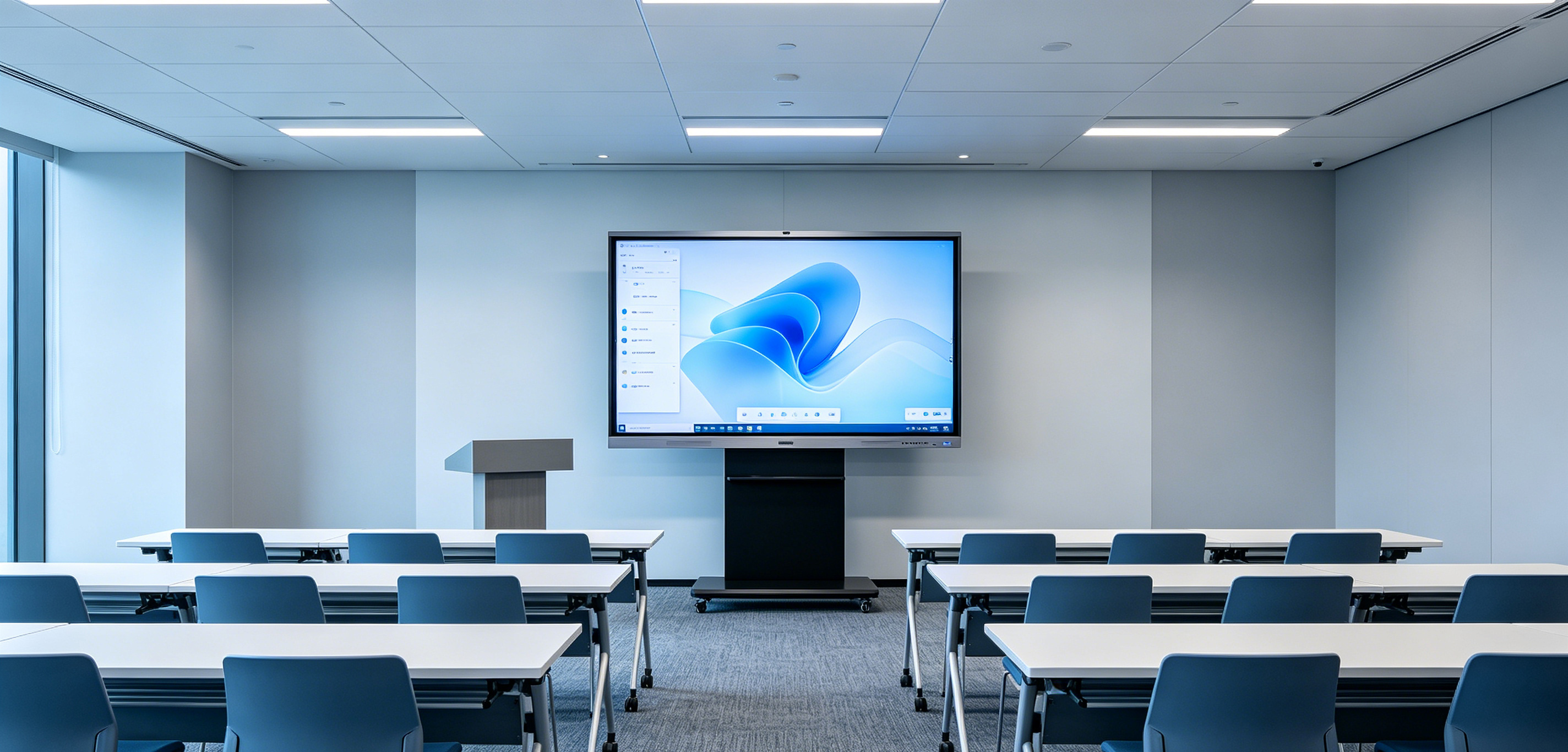
Stonbel's conferencing all-in-one is a government and education-grade intelligent display device centered on ultra-HD display and smart interaction, integrating touch, screen casting, writing, and remote collaboration. It empowers efficient multi-scenario office work, enhances smart teaching quality, breaks scenario barriers, and achieves dual upgrades in office collaboration and teaching interaction. In government hall scenarios, it handles multi-department joint consultations, approval material annotation, business
Industry Significance
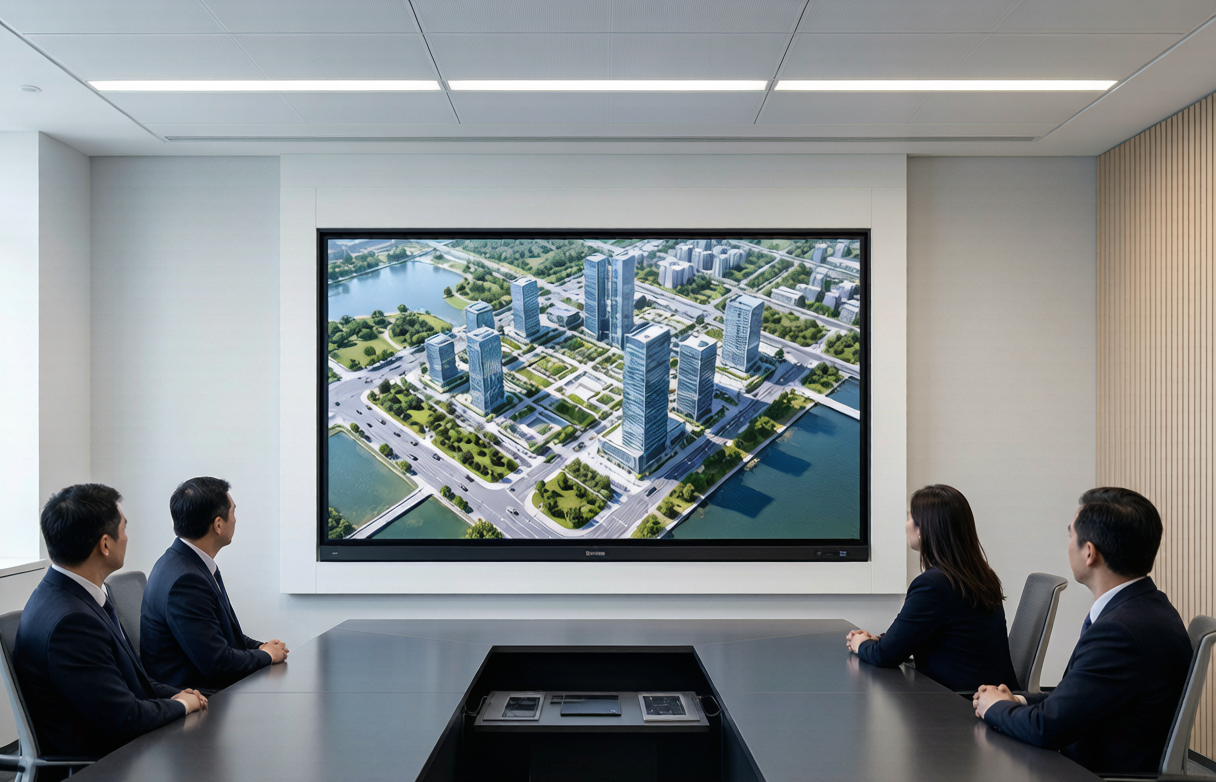
From an industry perspective, display upgrades in government halls are moving from single-point procurement to scenario-based configuration. In the past, many halls only had one large screen, causing public information display and internal meetings to compete for screen time and creating traffic chaos. Now more projects are separating LED video walls from government hall conferencing all-in-one units and linking them through signal scheduling. This approach improves public service experience and delivers measurable improvements in window operation efficiency. Take SPD Bank Hangzhou
Q1: For a government hall, which comes first: conferencing all-in-one or LED video wall?
A: It depends on the core task of each area. For waiting areas and main entrance information zones requiring long-term always-on display and long-distance viewing, prioritize LED video walls—300-1000cd/㎡ adjustable brightness and IP55 rating suit high-traffic hall environments. For back-office approval rooms, multi-department consultation rooms, and training rooms, prioritize conferencing all-in-one units because they integrate touch, screen casting,
Q2: Is P5 pixel pitch sufficient for a government hall consultation room?
A: Yes, but it depends on viewing distance. P5 means 5mm pixel center spacing. At 4-8 meter consultation room depths, text edges on approval materials, tables, and flowcharts show no obvious graininess. If the room depth exceeds 10 meters or fine planning drawings need display, consider supplementing with same-series LED models. The conferencing all-in-one supports ultra-HD display and 16bit grayscale for natural gradient transitions, and with NTSC≥110% color gamut, color reproduction of
Q3: Will deploying conferencing all-in-one units across multiple meeting rooms be troublesome for maintenance?
A: Unified models actually simplify maintenance. Referencing SPD Bank Hangzhou Branch's deployment of 75-86 inch all-in-one units in 16 meeting rooms: report display precision improved 85%, and maintenance workload decreased 70%. If multiple approval rooms in a government hall uniformly adopt conferencing all-in-one units, device types converge, and spare parts and training costs decrease. Stonbel holds 3C, CE, FCC, ISO14001, ISO9001, ROHS, and military/classified-related certifications, with service networks covering 31 provinces and cities with
Q4: How does the conferencing all-in-one perform in remote collaboration and training scenarios?
A: Based on deployed projects, the conferencing all-in-one performs reliably in remote collaboration and training. Referencing Sun Yat-sen University's smart classroom and academic report hall upgrade: 86-inch smart blackboards in 65 public classrooms, 135-180 inch LED conferencing all-in-one units in 3 academic report halls, all connected to a unified campus smart teaching platform supporting multi-campus synchronized lectures and remote academic connections. Results showed zero
Q5: Can the conferencing all-in-one's IP rating and brightness adapt to hall environments?
A: The conferencing all-in-one has an IP55 rating and 300-1000cd/㎡ adjustable brightness, adapting to high-traffic, complex-lighting hall environments. IP55 means dust protection and water spray resistance, so routine cleaning and accidental splashes won't affect operation. Adjustable brightness maintains clear display under varying light conditions. If the main entrance information zone requires long-term
Q6: What signal scheduling and linkage methods does the conferencing all-in-one support?
A: The conferencing all-in-one supports multi-terminal wireless screen casting, remote collaboration, and multi-touch annotation, and can link with LED video walls through signal scheduling. In actual projects, the consultation room's conferencing all-in-one can push annotated content and approval materials to the LED video wall in the public information zone, linking internal consultation with public information display. Rich interfaces and expandability enable seamless integration with existing office systems, protecting prior investment.
The core of display upgrades in government service halls is separating public information publishing from internal collaboration, then linking them. LED video walls handle long-distance, high-brightness, always-on information delivery. Meeting all-in-one displays handle close-range, interactive, annotatable meetings and training. Each serves its role for smoother hall traffic and stable counter rhythm. Project data shows measurable improvements in display precision and maintenance efficiency after unifying device types. For planned projects, list each area's core tasks first, then match parameters such as P5 pixel pitch, 300-1000cd/m² brightness, 16bit grayscale, and NTSC≥110% color gamut. Stonbel holds 3C, CE, FCC, ISO14001, ISO9001, ROHS, and military/classified-related qualifications, with service points in 31 provinces and cities, providing full-cycle support from design to local response. Actual configuration depends on specific models and project plans.