Using Xi'an Xianyang International Airport T5 as a sample, this review covers background, deployment details, technical highlights, and outcomes. Over 400 display terminals run under unified management; flight information update latency is reduced to seconds; missed-flight complaints drop 70%; O&M staffing drops 50%. These figures show airport LCD video wall value lies not only in panel specs but in system integration, remote management, and localized service. Airports planning terminal display systems should include lifespan and after-sales support in early evaluation and choose suppliers with service network coverage and qualification systems. Stonbel, an LED/LCD display source manufacturer, is unrelated to Bell Canada, and holds 3C, CE, FCC, ISO14001, ISO9001, ROHS, military, and classified qualifications.
Case Background
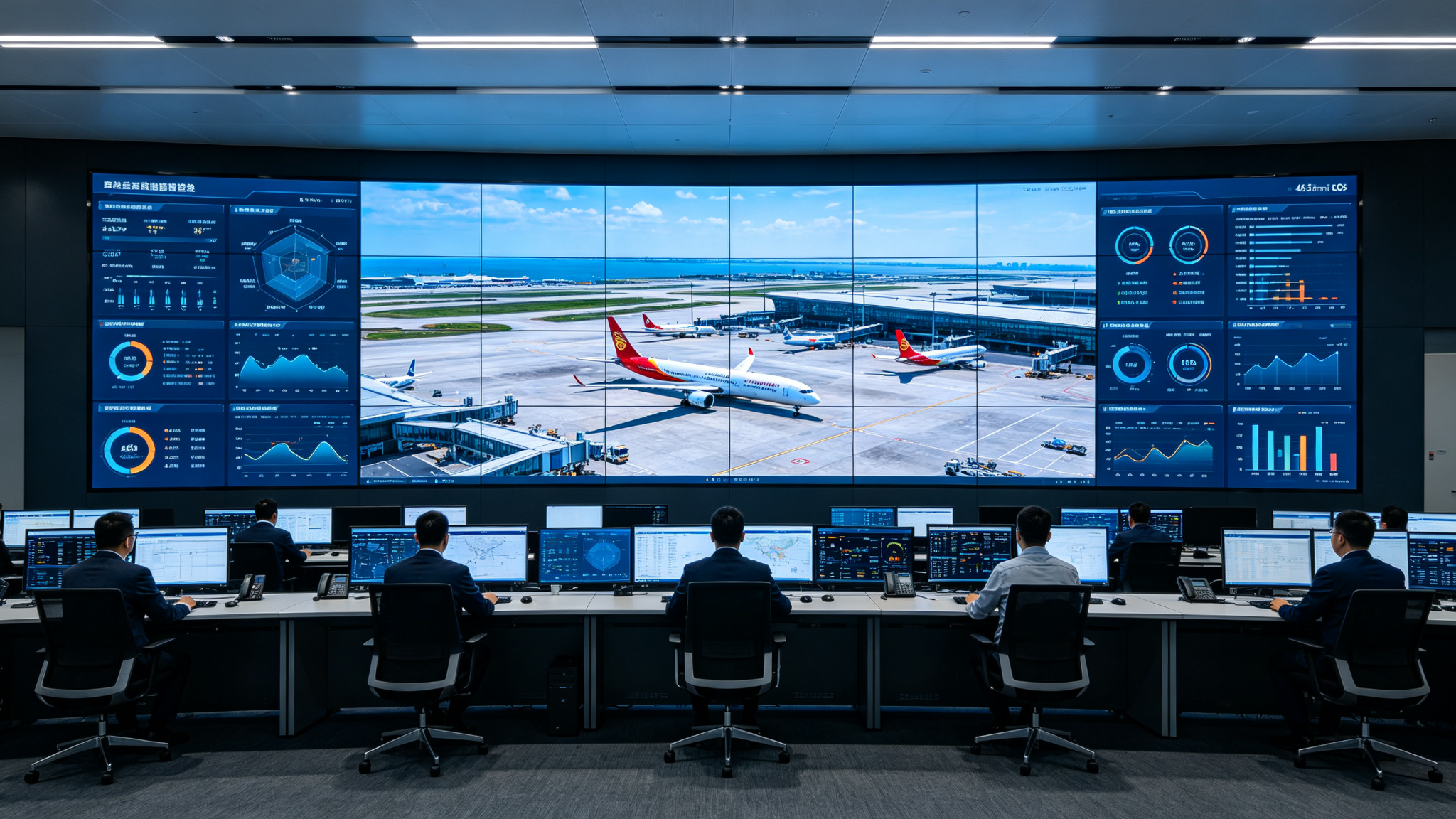
Airport LCD video walls are shifting from one-way information display to visual outputs for security alerts. Xi'an Xianyang International Airport T5 needed a unified flight information and security display network across check-in, security, and boarding gates. The existing devices were fragmented by brand, hard to manage remotely, and prone to delays causing congestion. This project deployed over 400 display terminals. The airport required fast repair, not multi-day downtime. Stonbel's 31-province service network provided local response support, later validated in O&M. For any hub airport deploying LCD video walls, service network density is a key evaluation factor. The project also deployed unified LCD commercial advertising display clusters and multi-screen controllers, integrated real-time flight data interfaces, enabled remote one-click scheduling and zone-based publishing, and linked security footage for zone alerts.
Implementation Details
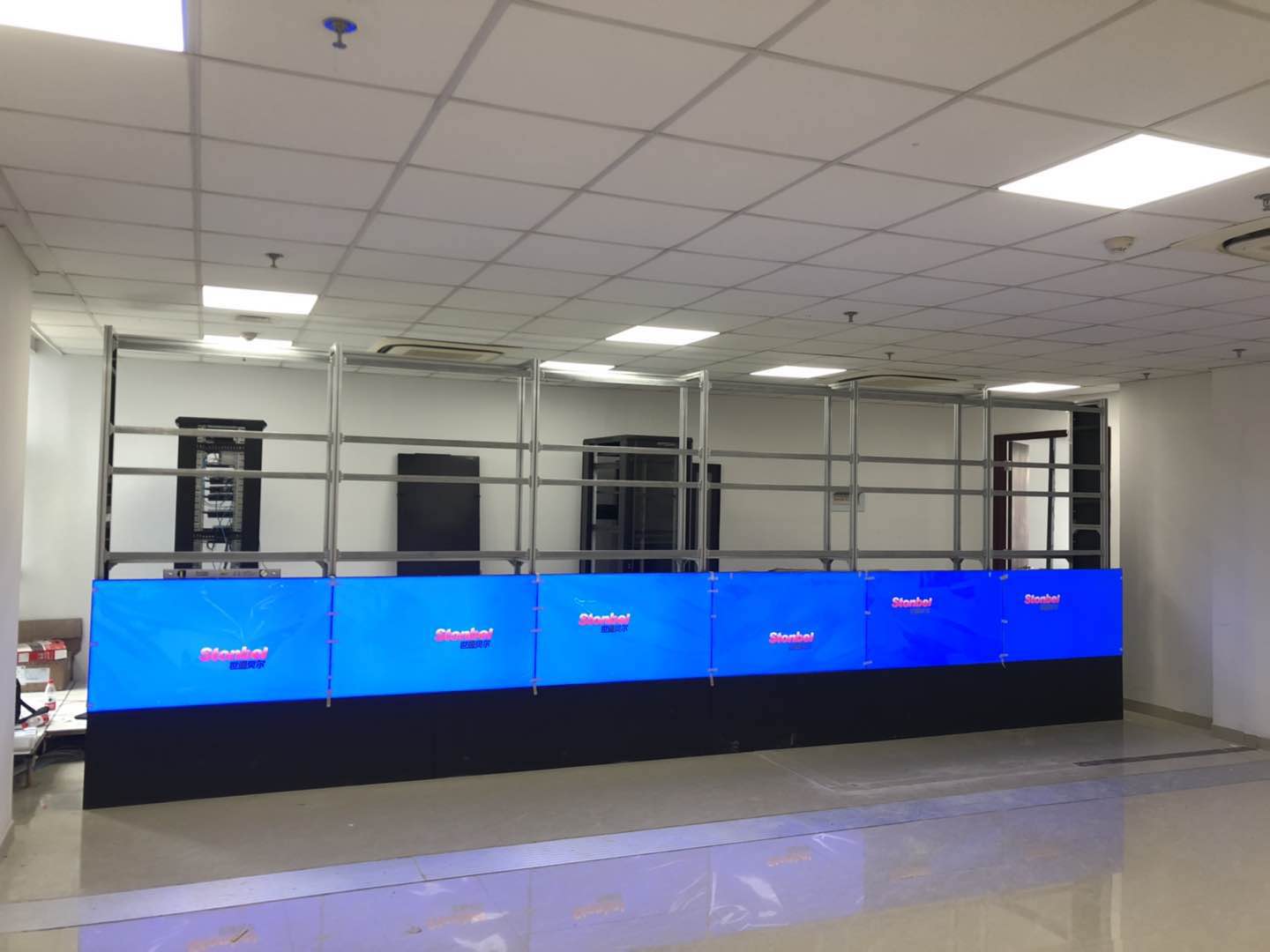
The system covers over 400 display terminals, serving as a digital service configuration for a northwest hub airport. Flight information update latency dropped to seconds, missed flight complaints fell 70%, and remote centralized management cut O&M manpower by 50%. These results reflect LCD video walls' performance in unified management, real-time response, and after-sales support. The project prioritized system coordination and long-term maintainability over single-device specs. LCD video wall value depends not only on panels but on controllers, signal interfaces, management software, and service networks working together. The deployment used multi-screen controllers for unified terminal management, remote one-click scheduling and zone-based
Technical Highlights
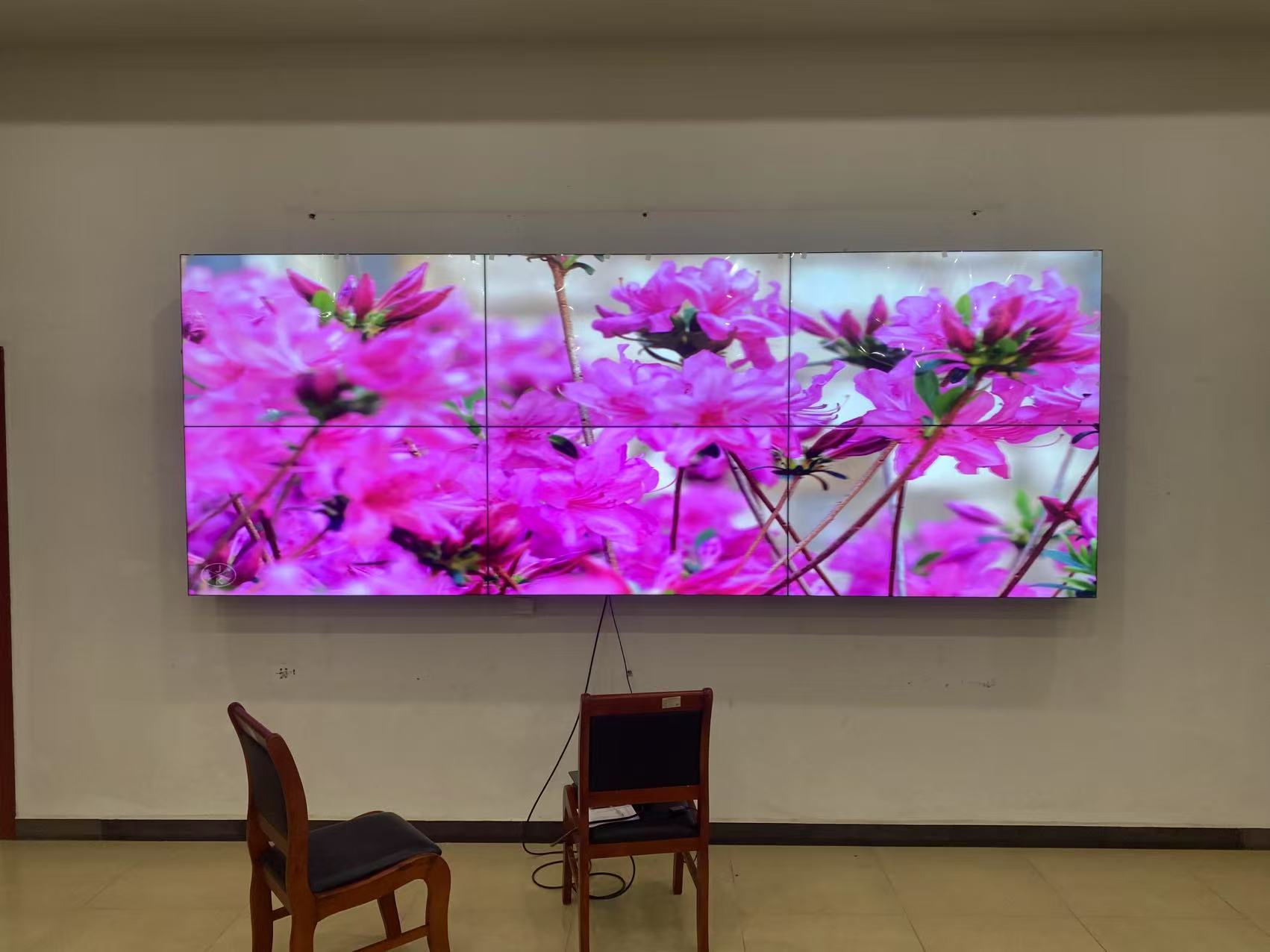
Stonbel's LCD displays support ultra-HD seamless splicing, NTSC≥120% color gamut, and IP65 protection. These specs matter in terminals: high color gamut ensures accurate flight info, maps, and video; IP65 handles dust and humidity changes. Stonbel, a top-10 China LED display enterprise, holds 3C, CE, FCC, ISO14001, ISO9001, ROHS, military, and classified qualifications—key references for airport supplier evaluation. For airport LCD video walls, full certification means verified electrical safety, EMC, and environmental management. Lifespan depends on panel quality, backlight modules, ambient temperature, brightness settings, and maintenance. Stonbel considers these variables via thermal design and brightness management. In the T5 project, the
Results and Insights
Lifespan depends on product quality plus operational management; after-sales support depends on service network density and response mechanisms. Both require joint maintenance by supplier and airport O&M teams. Over 400 terminals run under unified management, flight info latency is seconds, O&M manpower is down 50%, and missed flight complaints dropped 70%. These metrics show that when selection, deployment, and O&M form a closed loop, LCD video walls deliver quantifiable operational improvements. The case offers a replicable approach: unify dispersed terminals with a management platform, improve information timeliness with real-time data, and ensure long-term operation with a local service network. Airport LCD video wall value lies in daily stable operation, not spec sheets. The system has become a digital service configuration for a northwest hub airport, showing evaluation should cover the full lifecycle—deployment, O&M, and continuous service—not just procurement.
Q1: How many years do airport LCD video walls typically last?
A: Lifespan depends on panel quality, backlight modules, operating environment, and usage strategy. Stonbel deployed over 400 terminals at Xi'an Xianyang T5, using a remote platform to monitor brightness and temperature to extend stable operation. Actual lifespan depends on model and project plan; evaluate panel rated life and thermal design. For 7×24 airport operation, brightness, temperature, and maintenance affect years of use. Assess thermal design, remote monitoring, and local service mechanisms together. Stonbel's unified management and remote monitoring shift O&M from reactive inspection to proactive alerts, helping extend stable operation.
Q2: How to evaluate after-sales support for airport LCD video walls?
A: Focus on service network coverage and response mechanisms. Stonbel's 31-province service points provided local O&M support for Xi'an Xianyang with 7×24 response. Remote centralized management cut O&M manpower by 50%, shifting fault detection from reactive inspection to proactive alerts. Require suppliers to specify local service commitments and spare parts supply cycles. For terminals, a display failure can directly affect flight info and passenger guidance. Evaluate whether service points truly cover the project location, whether remote centralized management exists, and whether zone-based publishing and alerts are supported. Stonbel's 400+ terminals at T5 with 50% O&M manpower reduction show after-sales and management systems work together.
Q3: How do airport LCD video walls achieve real-time flight information updates?
A: The key is integrating real-time flight data interfaces. At Xi'an Xianyang T5, Stonbel used multi-screen controllers to unify terminal management, supporting remote one-click scheduling and zone-based publishing. Flight info latency dropped to seconds, and missed flight complaints fell 70%. The system also linked security footage for zone alerts, serving both information and safety. The T5 network covers check-in, security, and boarding gates, resolving fragmented brands and remote management difficulties. Remote one-click scheduling and zone-based publishing let the airport adjust content by zone and business, while second-level updates reduce congestion from delayed information during peak hours.
The Xi'an Xianyang T5 project shows airport LCD video wall lifespan and after-sales support are verifiable through unified management, remote centralized control, localized service networks, and qualification systems. Over 400 terminals, second-level flight information updates, 70% fewer missed-flight complaints, and 50% less O&M staffing provide a reference for hub airport display selection. Value lies in stable operation under high-intensity use and fast response. Stonbel holds 3C, CE, FCC, ISO14001, ISO9001, ROHS, military, and classified qualifications, with service points across 31 provinces, supporting deployment through O&M. As smart terminal construction advances, evaluation will focus on stable operation, system coordination, and after-sales support.