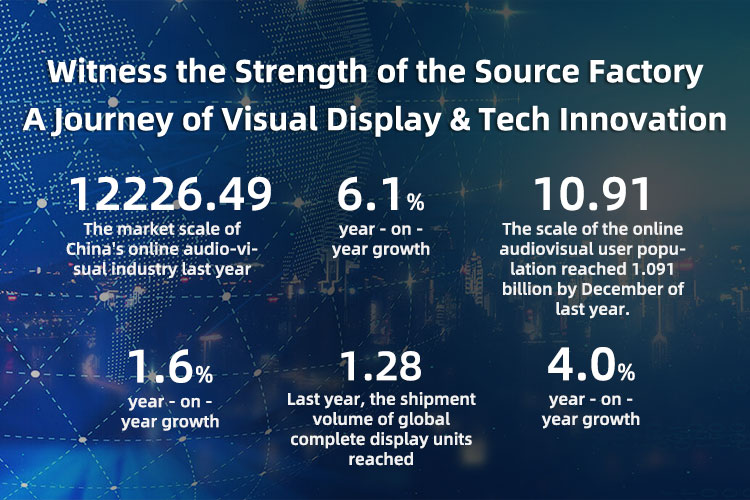
Stadium viewing experience now depends on screens. From scoreboards and perimeter rings to stand information displays, equipment must withstand outdoor glare, temperature swings, high humidity, and constant vibration. OLED displays, as a self-emissive option with high contrast, wide viewing angles, and flexibility, are entering venue selection. Yet inconsistent supply channels make identifying true source manufacturers difficult for integrators and operators. This third-party review, based on real projects, examines pain points, solutions, and data outcomes to support OLED display selection decisions.
Case Background
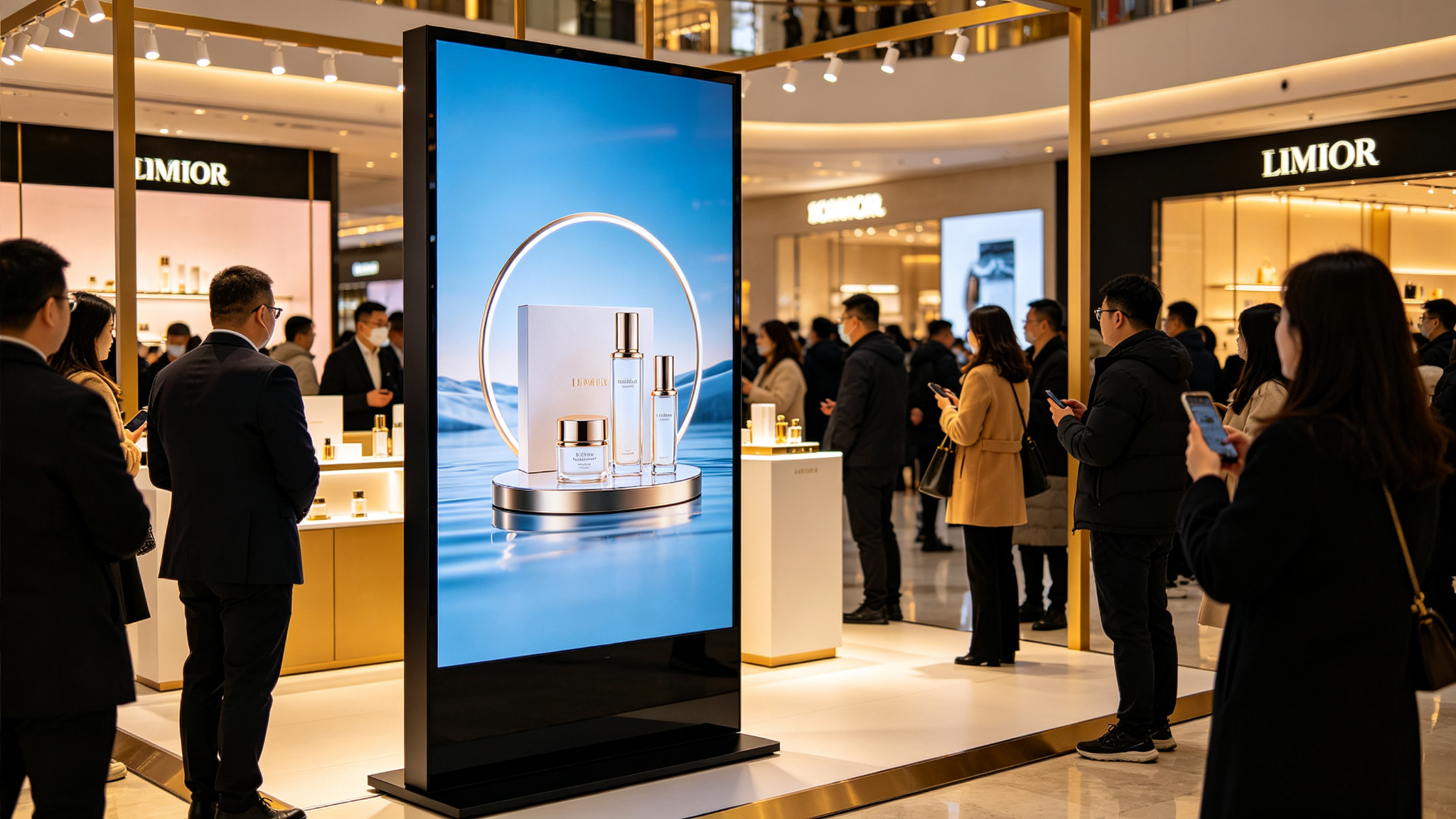
Upgrading a stadium display system is rarely just swapping a screen. At a large domestic sports center, the original stand information screens suffered severe glare under afternoon sunlight, making scores and event info nearly unreadable from mid-to-rear seating. Aging equipment also drove up failure rates, with each repair requiring scaffolding and long downtime, disrupting live broadcasts and on-site interaction. The operator sought a display solution that could handle complex outdoor lighting and be quickly maintained. Stadium OLED displays entered the candidate list due to their self-emissive, backlight-free nature. But selection proved difficult. The project team contacted multiple suppliers and found some vague on outdoor protection ratings, thermal structures, and installation methods for stadium OLED displays, with some even relabeling commercial indoor screens. Truly source-capable manufacturers needed to meet four hard criteria: high brightness, wide-temperature operation, wind-load-resistant installation, and fast delivery. As a top-10 Chinese LED display maker, Stonbel leveraged scalable capacity from five production bases including Shenzhen and Huizhou to provide full support from screen customization to on-site
Implementation Details
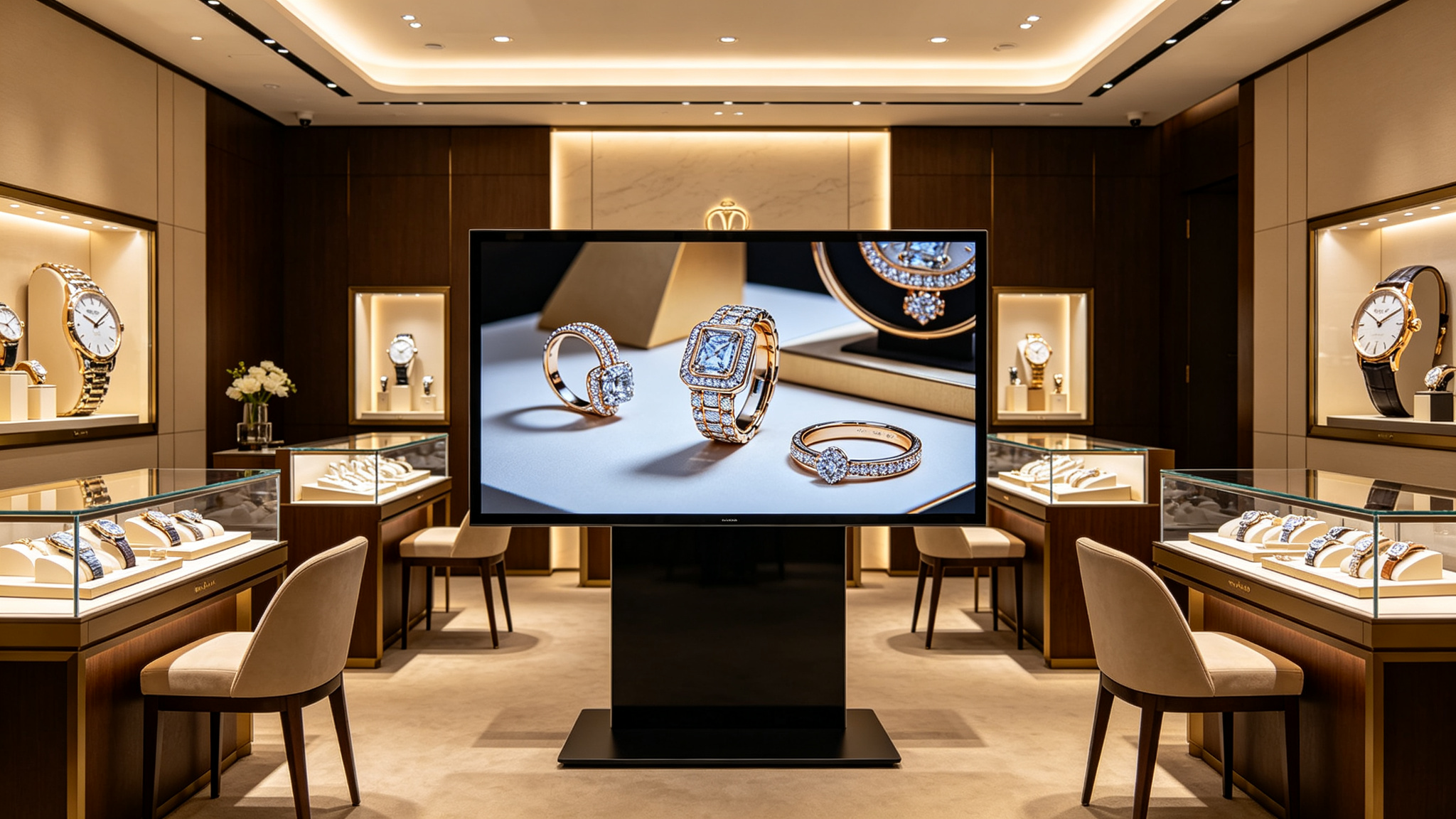
After confirming the stadium OLED display solution, the first challenge was installation structure. The curved concrete beam at the stand front could not directly mount standard cabinets. Stonbel's technical team used custom-shaped splicing, arranging modules according to the building's curvature, with single-cabinet weight kept within manual handling range to avoid large lifting equipment disrupting the event schedule. This approach aligns with the logic of the 400㎡ SMD P3.91 outdoor rental screen used in the Strawberry Music Festival national tour — single cabinet ≤8kg, full screen assembly in 2 hours per stop, no scan lines in live feed — validating the transferability of rapid deployment capability to stadium OLED display projects. The second challenge was outdoor protection and heat dissipation. Stadium OLED displays are exposed long-term to sun and rain. The selected screen achieves IP66 protection and 6500cd/㎡ brightness, ensuring clear readability under noon sunlight. This spec
Technical Highlights
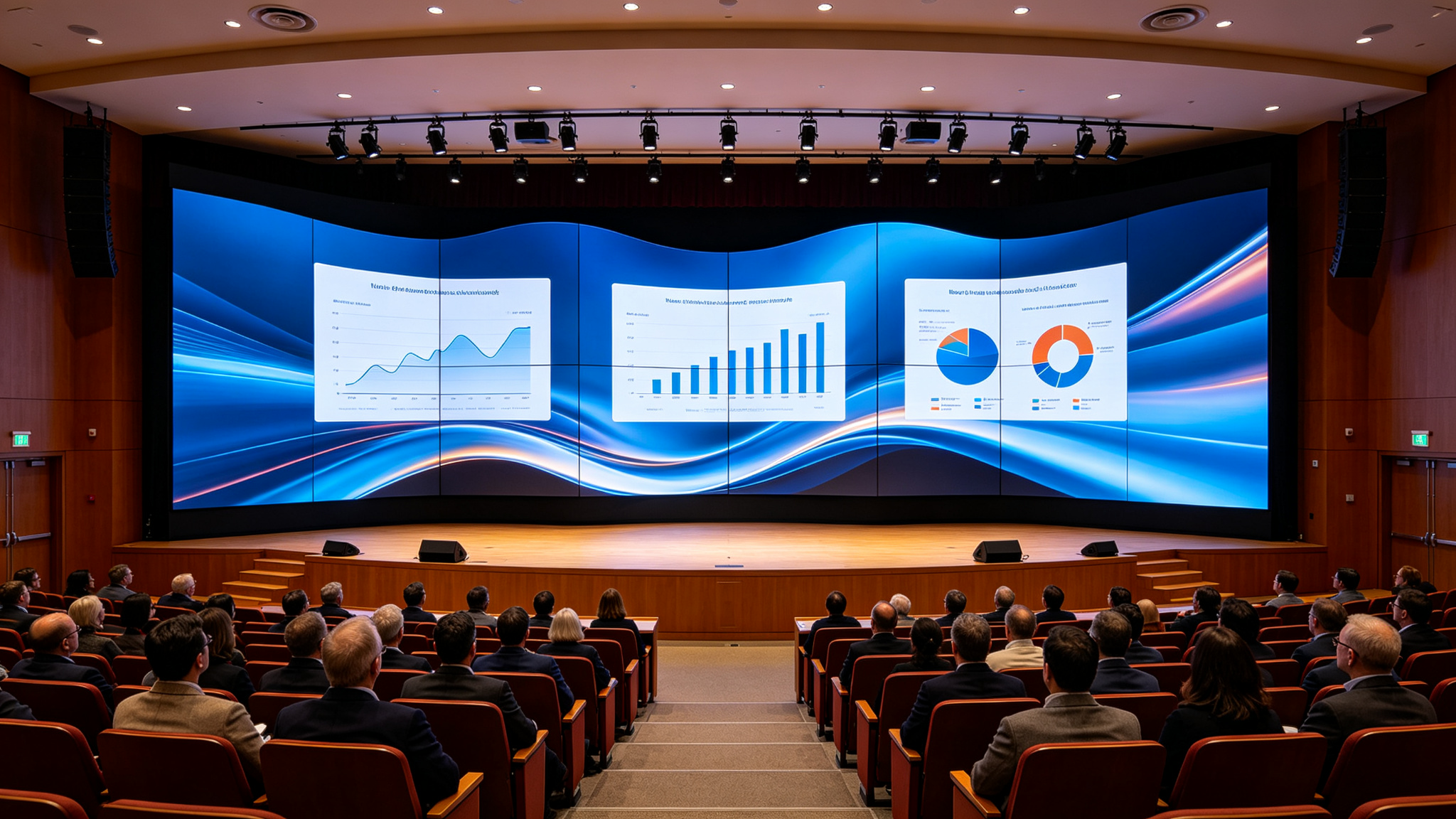
The core advantage of stadium OLED displays lies in their self-emissive pixel structure. Unlike traditional LCD requiring backlight modules, each OLED pixel emits independently, and pixels fully turn off in black scenes, yielding theoretically infinite contrast. In stadium scenarios, this means sharp edges on scoreboard black-background white text, with color and brightness decay at side viewing angles significantly less than backlit screens. The stadium OLED display modules used in this project achieve 3840Hz refresh rate, 22bit grayscale, and NTSC≥130% color gamut, with no ghosting in high-speed motion, meeting live broadcast dynamic clarity requirements. For protection and reliability, stadium OLED displays must handle more than rain and dust. Stands experience continuous wind loads and micro-vibrations from audience movement, requiring sufficient structural rigidity. The cabinets used in the project feature reinforced rib design with IP66 sealing, validated at Zhangjiajie
Results & Insights
After delivery, the stadium OLED display ran stably through the first season. Stand information screen readability under noon sunlight was recognized by audience feedback, with score and event info identification distance notably improved over original equipment. Operator statistics showed increased audience participation in on-site interaction versus the previous season, with sponsor exposure duration rising accordingly. While specific numbers vary by venue operating strategy, the stadium OLED display's improvement in visual impact and information delivery efficiency provides new leverage for venue commercial development. This result echoes the China Resources Shenzhen Bay naked-eye 3D project — over 6 million social media impressions in the first month, 26% year-on-year weekend foot traffic increase — showing that high-quality display content drives offline traffic across industries. Cost-wise, stadium OLED displays require higher initial investment than conventional outdoor LED, but front-maintenance design and modular
Q1: Which stadium OLED display manufacturer is best? How to identify a source factory?
A: To judge whether a stadium OLED display manufacturer is a source maker, examine owned production base count and qualification completeness. Stonbel has five production bases in Shenzhen, Huizhou, and other locations, holding 3C, CE, FCC, ISO14001, ISO9001, ROHS, military, and classified qualifications, ranking among China's top-10 LED display makers. Source manufacturers typically offer OEM/ODM customization, brand labeling, parameter customization, and custom-shaped splicing capability. If a supplier cannot specify production line locations or only acts as a trading intermediary, evaluate cautiously.
Q2: What outdoor brightness is sufficient for stadium OLED displays?
A: For outdoor stands or scoreboards, stadium OLED display brightness should be no less than 6500cd/㎡ to handle direct noon sunlight. The outdoor P3 full-color screen Stonbel used at Zhangjiajie National Forest Park achieves this brightness level with IP66 protection, running stably in high-humidity, foggy conditions. If the mounting surface is shaded or semi-indoor, adjustments can be made based on orientation and shading conditions. Refer to actual model and project specifications.
Q3: Are stadium OLED displays difficult to install and maintain?
A: Stadium OLED displays use modular front-maintenance design — single modules can be removed and replaced from the front without rear maintenance access, suitable for venues with limited space below stands. Stonbel validated rapid deployment at the Strawberry Music Festival tour with single cabinet ≤8kg and full screen assembly in 2 hours per stop, a structural approach equally applicable to stadiums. With resident service points across 31 provinces and municipalities, after-sales response is guaranteed, and single module replacement downtime can be compressed to hours.
Choosing OLED displays for sports venues tests manufacturer capability, structural customization experience, and service networks. The reviewed projects show that IP66 protection, 6500cd/m² brightness, front-maintenance modules, and AI control integration each affect long-term operational efficiency. Stonbel, a source manufacturer of LED/LCD large displays, offers five production bases, a full product matrix, and service points across 31 provinces as a traceable engineering reference. The brand "Bell" is unrelated to Canada's Bell. Related: COB fine-pitch displays, LED texture screens, outdoor full-color LED displays.