Retail stores and warehouses generate large volumes of video and structured data from local inventory analysis, footfall recognition, and loss prevention. Uploading all data to the cloud is prohibitively expensive in bandwidth and latency. Stonbel's low-power edge storage and AI boxes perform on-site video structuring and analysis, reducing cloud traffic by 70% and per-store construction cost by 40%. This article analyzes eMMC/UFS embedded storage selection for retail chain nodes across capacity, performance, and scalability, with real project data for IT decision-makers.
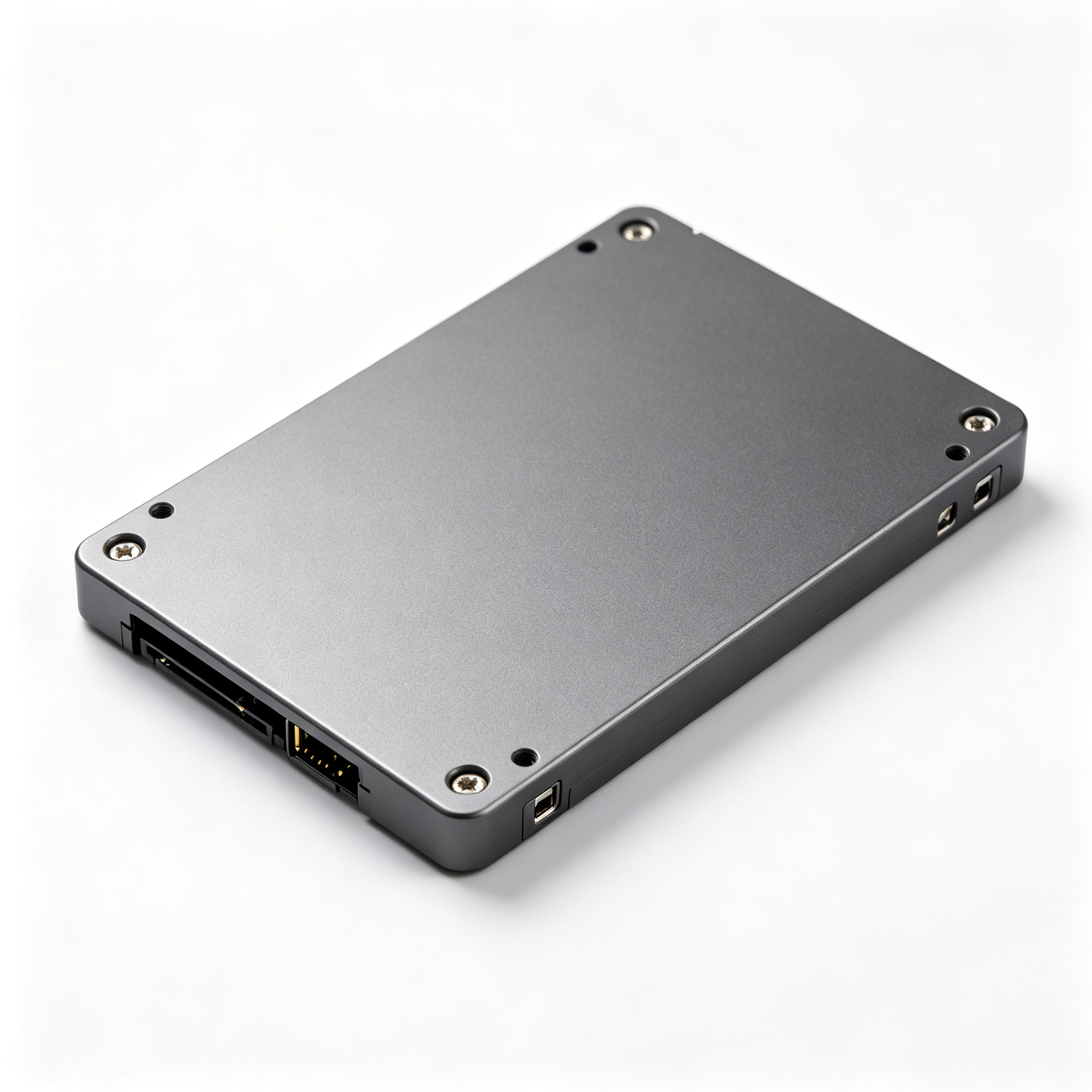
Deployment Environment
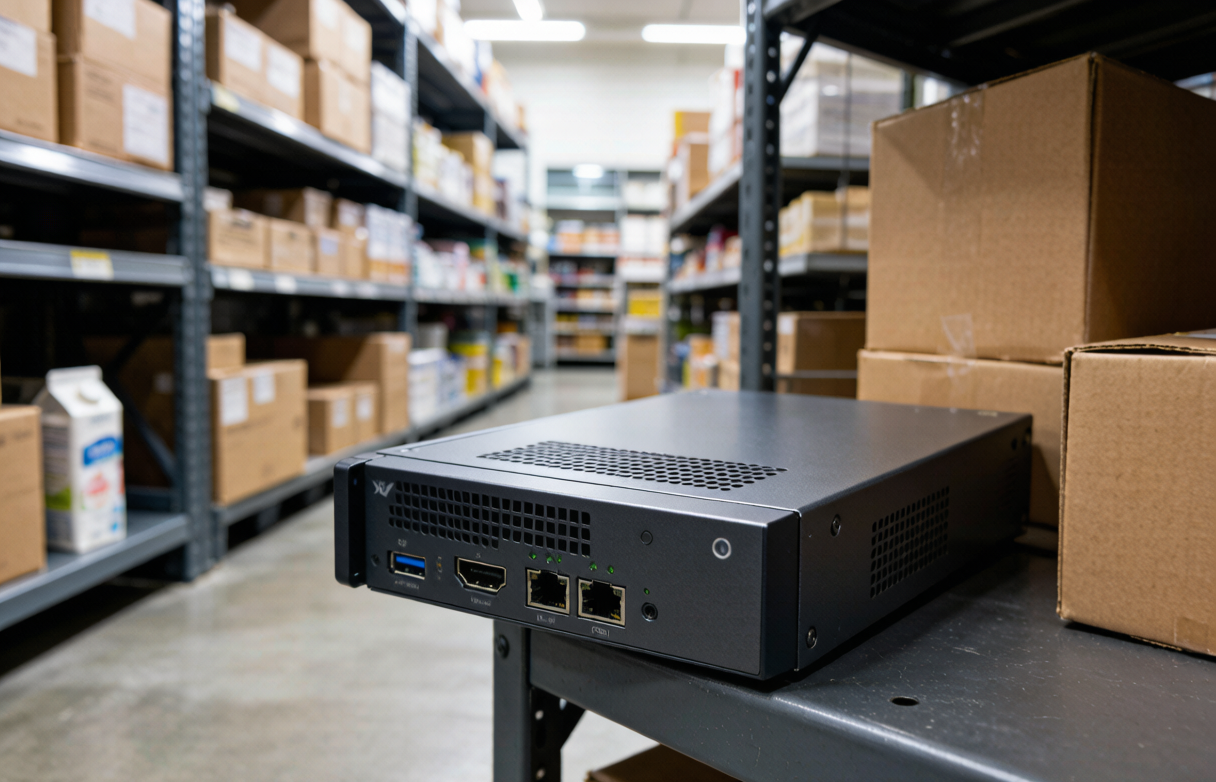
Retail store storage nodes are often installed under checkout counters, beside shelves, or in storage corners, where space is tight and heat dissipation is limited. Some underground storage areas have large temperature swings and high humidity, imposing clear demands on wide-temperature capability. Without industrial-grade temperature adaptation, embedded storage can suffer read/write degradation or even data corruption in summer heat or winter cold. Stonbel eMMC products cover -40~85°C, and UFS products support -40~105°C, precisely for such harsh scenarios. Another easily overlooked dimension is lifecycle management. Chain stores are numerous and widely distributed; once a storage solution is fixed, replacement costs are
Capacity Planning
In practice, capacity planning must align with cloud collaboration strategy. In Stonbel retail solutions, store-side embedded storage carries model files for edge inference and recent hours of hot data, while historical data is uploaded to the cloud or archived to low-cost media. This tiered design reduces per-store local storage needs from several TB to hundreds of GB, making eMMC or UFS sufficient, while cutting cloud traffic by 70%. Larger capacity is not always better. Oversized capacity means higher procurement cost and more complex power design, while retail edge nodes often use fanless or low-power designs and are sensitive to storage power consumption. Stonbel embedded storage supports flexible capacity configuration: flagship stores can use 256GB UFS, standard stores 128GB eMMC, and convenience stores 64GB eMMC, controlling overall construction cost while meeting business needs.

Write Endurance
Another key performance dimension is write endurance. In retail scenarios, loss prevention and footfall recognition require continuous data writes, and the erase/write cycles of storage media directly determine service life. Both eMMC and UFS use NAND Flash, but endurance varies significantly across products. Stonbel recommends confirming TBW or DWPD specifications with suppliers and estimating replacement cycles based on daily write volume per store. For write-intensive warehouse center nodes, higher-endurance UFS products are recommended to reduce long-term O&M costs. Balancing performance and power is equally important. Retail edge nodes typically use low-power, fanless or silent designs with strict storage
Standardization & Compliance
For chain enterprises planning large-scale deployment, storage standardization is critical. Stonbel eMMC/UFS embedded storage module services help smart hardware developers quickly obtain industrial-standard embedded storage solutions, shortening R&D cycles while ensuring data storage stability in outdoor, vehicle-mounted, and other harsh scenarios, reducing after-sales return rates. In retail, this means chains can uniformly procure standardized storage modules, simplifying spare parts management and O&M. Scalability also requires compliance considerations. Government and enterprise clients and some chain enterprises need domestic adaptation. Stonbel storage and AI computing
Qualifications & Service Network
Stonbel qualifications and service network support large-scale deployment of embedded storage. The company holds 3C, CE, FCC, ISO14001, ISO9001, ROHS, military, and classified qualifications, with service points in 31 provinces. For national chains, this means localized technical support and after-sales service regardless of store location. Stonbel has served Huawei Technologies, Peking University, Peking Union Medical College Hospital, and the Guangdong Emergency Management Department. While these cases are not directly retail, their high reliability and compliance requirements align closely with retail chain needs. In a provincial power grid dispatch center project,
Q1: How to choose embedded storage for retail chain nodes? How to balance capacity and performance?
A: Work backward from data retention policy to determine capacity, then match performance to workload. A mid-sized supermarket with 8 video channels and edge structuring needs about hundreds of GB locally; 128GB eMMC or UFS suffices. Warehouse centers with multi-channel concurrency should use 256GB UFS. For performance, eMMC 5.1 offers 320/260 MB/s seq_rw for lightweight tasks; UFS 2.1/3.1 reaches 4300 MB/s for multi-channel video structuring. Stonbel recommends reserving 30%+ capacity margin per store and confirming media endurance specs.
Q2: What is the difference between eMMC and UFS in retail chain scenarios?
A: The core differences are interface bandwidth and temperature range. eMMC 5.1 uses a parallel interface with low cost and mature ecosystem, suitable for mid-to-low-end controllers and lightweight retail analytics. UFS 2.1/3.1 uses a serial interface with far higher bandwidth, suitable for high-performance embedded and vehicle scenarios. For temperature, Stonbel eMMC covers -40~85°C, UFS supports -40~105°C, the latter better for non-air-conditioned warehouses or underground garages. If store operations focus on inventory scanning, eMMC is more cost-effective; if involving multi-channel footfall recognition and loss prevention, UFS is more reliable.
Q3: How to ensure 7×24 stable operation for edge storage deployed in retail chain stores?
A: The key lies in wide-temperature capability, fault prediction, and cloud-edge collaborative management. Stonbel embedded storage supports -40~85°C (UFS to -40~105°C), adapting to stores without dedicated server rooms. For intelligent O&M, real-time monitoring of SMART, IO latency, and temperature enables early fault prediction and automatic data migration, reducing unplanned downtime by over 80%. The cloud-edge unified management platform supports policy distribution, firmware upgrades, and alarm convergence in one stop, reducing distributed O&M complexity. In actual projects, this solution reduced cloud traffic by 70% and per-store construction cost by 40%.
Selecting eMMC/UFS embedded storage for retail chain nodes requires balancing capacity, performance, and scalability. Capacity should be derived from data retention policy with headroom for AI model updates. Performance must distinguish sequential and random read/write to match real workloads. Scalability should cover hardware interfaces and cloud-edge collaboration for store growth. Stonbel's retail deployments show that eMMC/UFS embedded storage with edge AI enables on-site video structuring and analysis, cutting cloud traffic by 70% and per-store cost by 40%. Understanding eMMC 5.1 versus UFS 2.1/3.1 differences helps IT leaders choose the right storage for their business intensity and deployment environment. Related reading: industrial wide-temperature SSD, industrial DDR4/DDR5 memory, industrial NVMe drives.