In premium retail settings, the choice between LED displays and LCD video walls has long been debated. For immersive visuals, seamless tiling, and reliable operation, LED displays are gaining attention with COB packaging, 7680Hz refresh rate, and 22-bit grayscale. Based on media reports and real project data, this article compares image quality, protection, and interaction to support quantified decisions.
Media Coverage
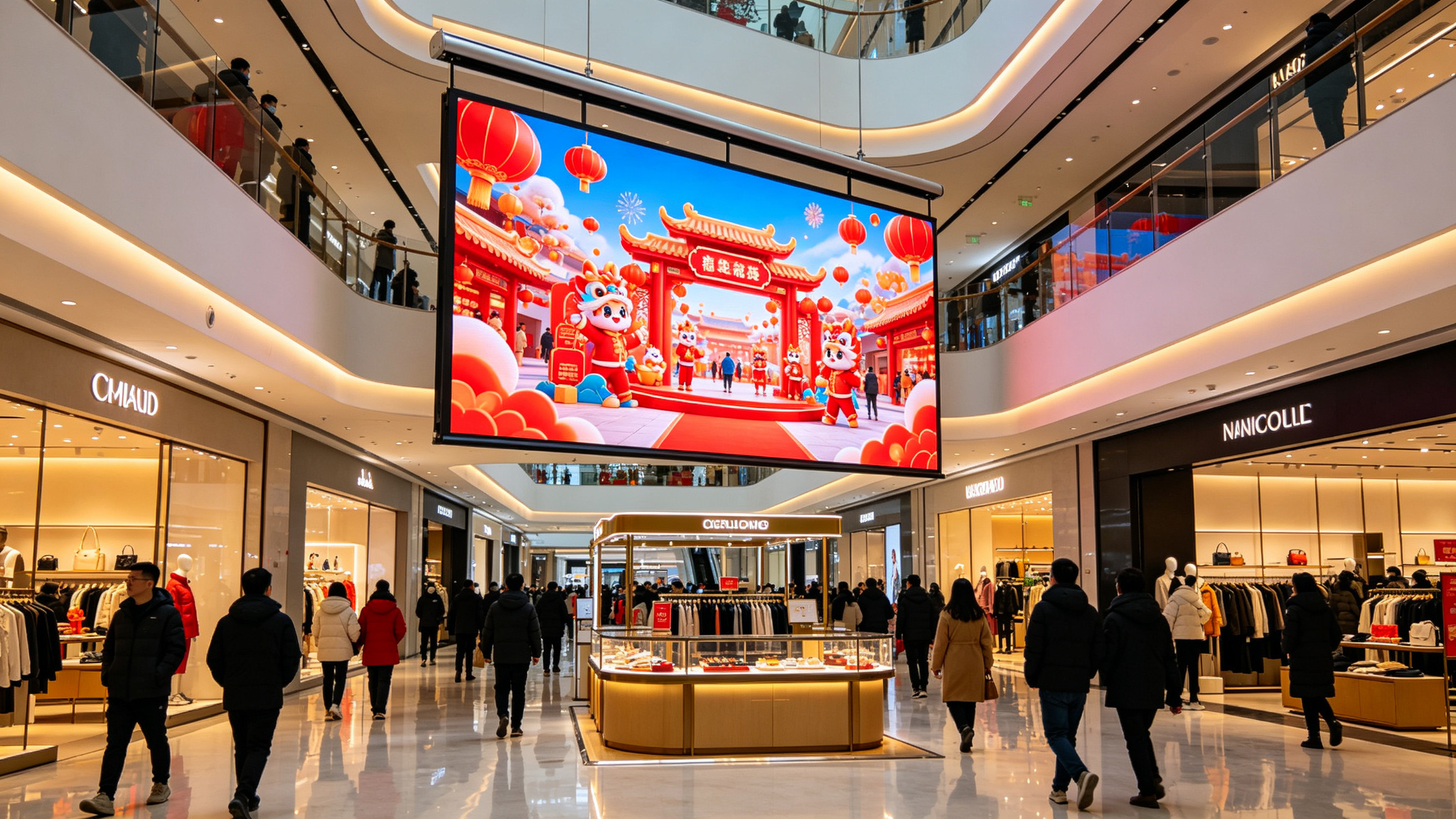
Media coverage also focused on total cost of ownership. LCD video walls may have lower upfront costs, but aging consistency across panels, dust accumulation in seams, and backlight decay drive up maintenance expenses. LED displays for retail use modular designs with lightweight cabinets, front maintenance access, and fast module replacement to reduce downtime. Rental displays illustrate rapid deployment: die-cast aluminum cabinets weigh ≤8kg each, are ≤28mm thick, support tool-free assembly, and achieve seam accuracy ≤0.1mm. This design approach also benefits fixed installations. Reports cited third-party observations that premium retail venues increasingly value customization when selecting LED displays. Specialized form factors such as LED shaped screens, LED film screens, LED holographic screens, LED grille screens, and LED floor tiles meet flexible splicing, curved
Key Point 1
The second supporting data point comes from actual projects. Although referenced cases focus on other scenarios, their technical logic offers reference value for LED display selection in retail. For example, a COB P1.25 fine-pitch LED screen in a command center achieved seamless splicing with no visual fragmentation, supported 4K signal input and 3840Hz refresh rate, and improved clarity by 60%. If retail LED displays adopt equivalent packaging technology, they can precisely present store navigation maps and promotional information, avoiding the image fragmentation and information misreading caused by LCD seams. Media reports also noted that LED displays offer a wide brightness adjustment range, with outdoor models customizable to over 8000cd/m². For street-facing windows or semi-outdoor entrances,
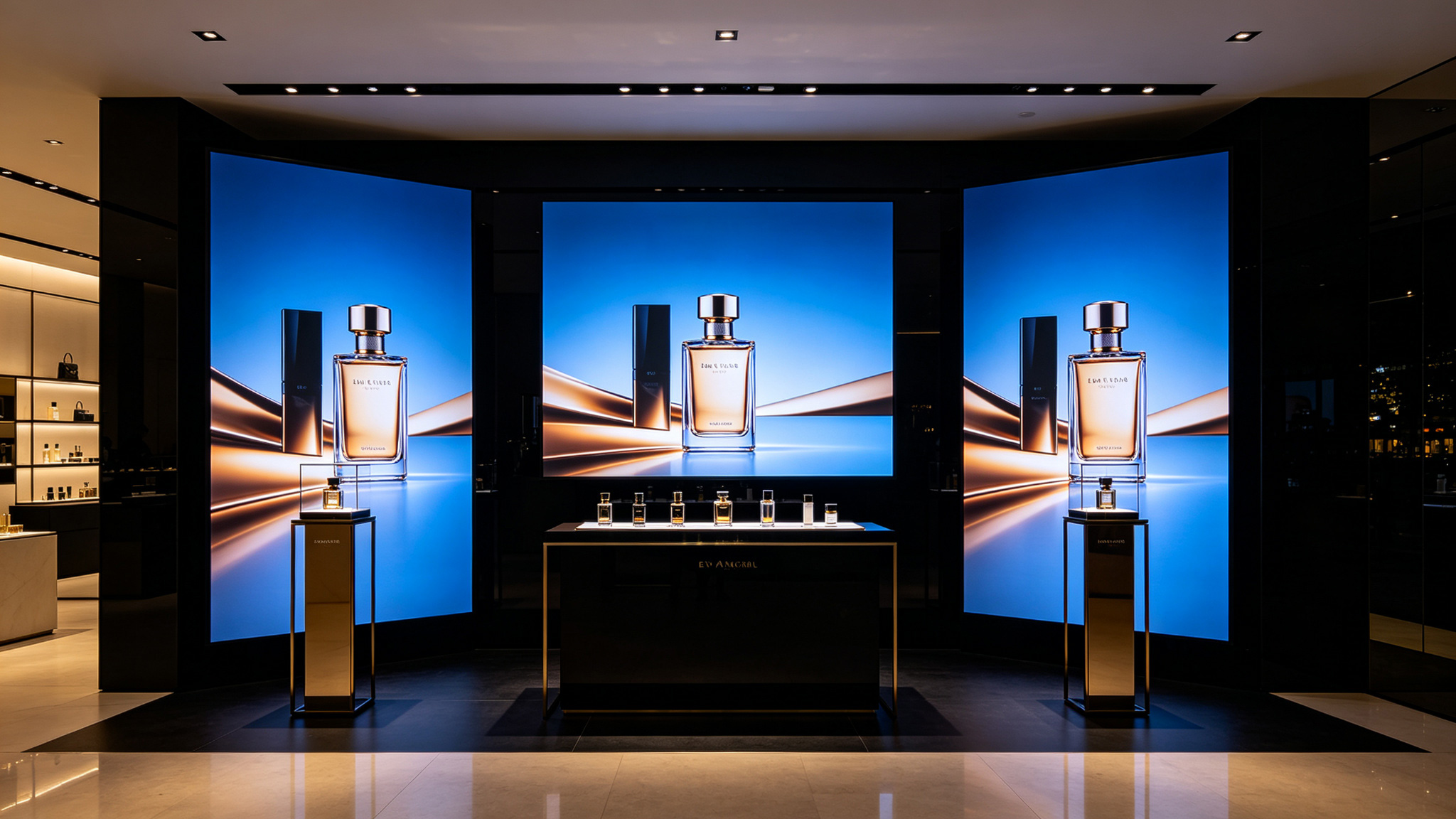
Key Point 2
Media reports also cited rental display deployment data: die-cast aluminum cabinets weigh ≤8kg each, are ≤28mm thick, support tool-free assembly at 10 seconds per cabinet, achieve seam accuracy ≤0.1mm, and enable -15° to +15° curved splicing. Although rental displays target temporary events, their lightweight and rapid assembly concepts offer reference for fixed retail installations. When renovating zones or running temporary promotions, retail venues can quickly adjust LED display layouts, whereas LCD video walls typically require professional tools and longer disassembly time. From a maintenance cost perspective, the modular design of LED displays means single-point failures do not affect overall operation. If a module malfunctions, it can be replaced individually without disassembling the entire screen. If an LCD panel unit fails, the entire unit may need replacement,
Key Point 3
Media reports also mentioned that smart interactive features of LED displays can integrate with advertising data analytics, helping operators understand foot traffic hotspots and interaction rates. Through human-sensing interaction data, retail venues can optimize traffic flow design and category layout. LCD video walls typically serve only as passive display terminals, lacking data collection and feedback capabilities. The networked capabilities of LED displays support remote operations, with platforms enabling real-time device monitoring, remote diagnostics, and problem resolution to reduce downtime. For chain retail, headquarters can centrally manage LED displays
Official Supplementary Data
Regarding project data, although referenced cases focus on other industries, their technical validation offers reference for retail LED displays. For example, a COB P1.25 fine-pitch LED screen in a command center achieved 60% clarity improvement, 65% reduction in multi-source scheduling time, zero annual system downtime, and 70% lower maintenance costs. These figures demonstrate the reliability of COB packaging in long-duration operation and multi-signal processing. If retail LED displays adopt equivalent technology, they can meet retail demands for stable operation and efficient information scheduling. In another case, a COB P1.5 HD fine-pitch LED screen achieved 100㎡ seamless integration, supported 4K data signal access and high-refresh dynamic display, improved clarity by 55%, reduced exception handling time by 75%, and lowered maintenance costs by 62%. Retail LED displays similarly require high
Q1: Which offers better image quality in premium retail scenarios: LED displays or LCD video walls?
A: LED displays show clearer advantages in premium scenarios. COB packaging achieves a bezel-free structure with minimum pitch P0.7, delivering fine pixel density and smooth images without graininess. Refresh rate reaches 7680Hz, grayscale 22bit, color gamut NTSC≥130%, with no scan lines in dynamic content and rich color gradation. LCD video walls are limited by physical bezels of liquid crystal panels, making seams unavoidable. Color gamut is typically NTSC≥120%, grayscale 16bit, with gaps in dark detail and dynamic smoothness. For atriums, brand flagship stores, and other areas with strict image quality demands, the seamless splicing and high color gamut of LED displays better meet premium visual requirements.
Q2: Can the protection rating of LED displays handle fresh produce areas and basement floors?
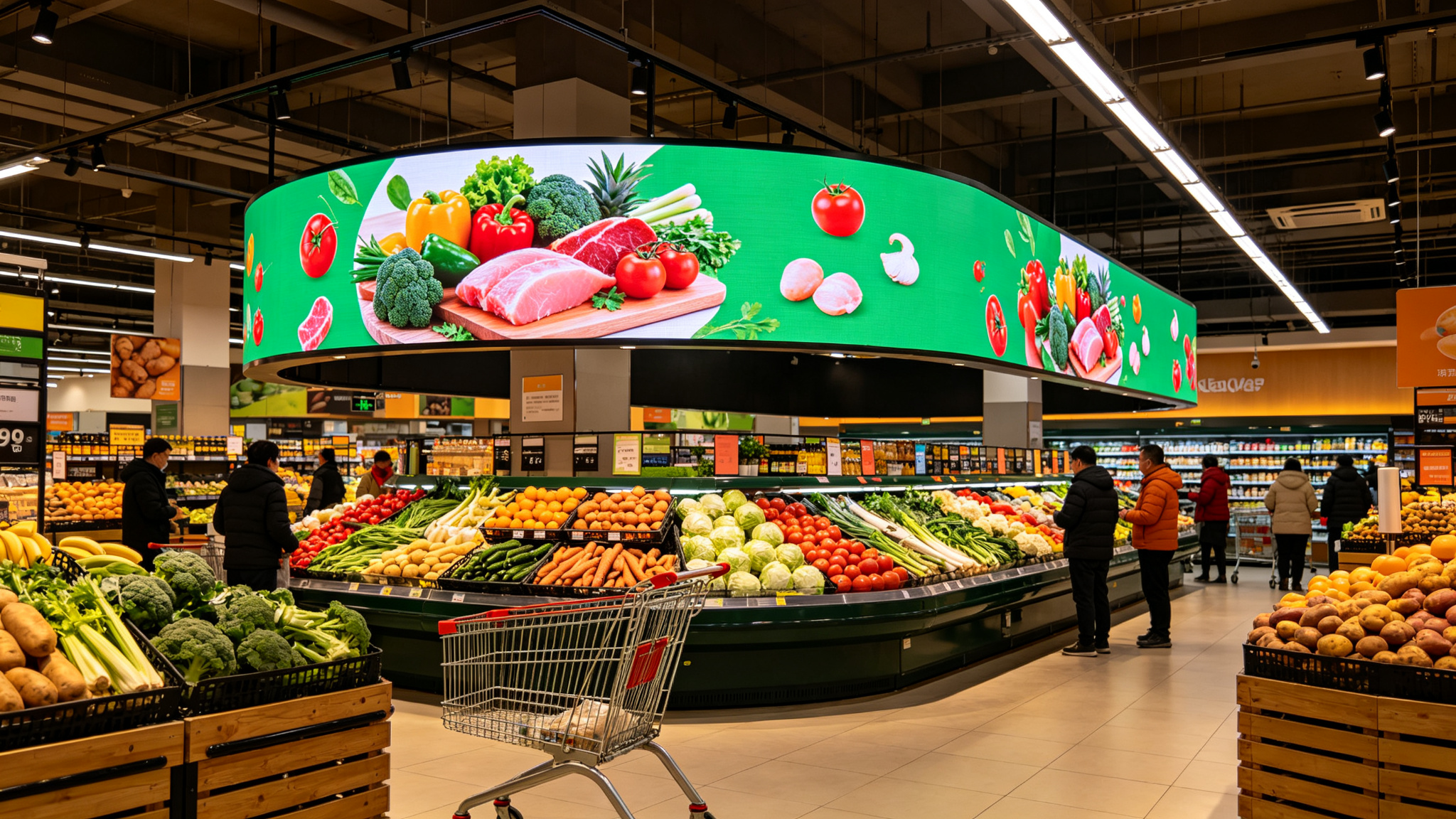
A: Yes. LED displays use GOB packaging technology, applying transparent resin over SMD lamp beads and circuits to form a smooth sealed layer achieving IP65+ protection, suitable for high-dust and high-humidity environments. Moisture in fresh produce areas and humid air on basement floors will not affect internal circuits, and routine cleaning won't cause damage. Unlike LCD video walls that rely on external seals, LED displays achieve protection at the lamp bead level for higher reliability. For scenarios with higher protection requirements, GOB packaging models are available. For both image quality and protection, COB packaging models also offer excellent protection. Specific choices depend on actual models and project plans.
Q3: Are maintenance costs high for retail LED displays?
A: Maintenance costs for retail LED displays are relatively manageable. Modular design supports individual module replacement, and front-access design enables quick maintenance without disassembling the entire screen. SMD lamp beads are independently soldered with good heat dissipation for stable long-term operation, reducing failure rates. Remote operations platforms enable real-time device monitoring, remote diagnostics, and problem resolution, lowering on-site maintenance frequency. Taking COB fine-pitch products as an example, lifespan reaches ≥100,000 hours, equating to over 20 years at 12 hours daily operation. Compared to LCD video wall backlight decay and seam cleaning needs, LED displays have lower total lifecycle maintenance costs. Specific costs depend on project scale and operating environment.
For premium retail, LED displays deliver differentiated value through COB seamless image quality, 7680Hz refresh and 22-bit grayscale performance, IP65 protection, and interactive, customizable scenarios. Media and project data show they better fit premium retail needs in detail, long-term stability, and maintenance efficiency. Selection should match COB, SMD, or GOB packaging to each area's environment and function, referencing official specs and real project experience to ensure lasting value.