Based on a China Telecom 5G edge compute node project, this review examines how private cloud edge inference servers achieve 25-40W power, -40 to 70C wide temperature operation, and 16-22 TOPS INT8, cutting application latency from 150ms cloud-side to under 20ms and reducing per-node build cost by 28%.

Case Background
The definition of an edge inference server needs clarification. It is an edge computing device based on domestic AI accelerator chips, providing 16-22 TOPS INT8 computing power, multi-channel 1080P encoding/decoding, and -40~70℃ wide temperature operation. It is suitable for on-site video intelligence analysis at factories, intersections, and stations, reducing cloud bandwidth and latency. The three key terms in this definition—domestic chips, wide temperature, and local inference—directly correspond to the core requirements of carrier edge computing node projects. A private cloud edge inference server is not a stripped-down general-purpose server, but a specialized device designed for edge scenarios in computing density, power efficiency, and environmental adaptability.
Deployment Details
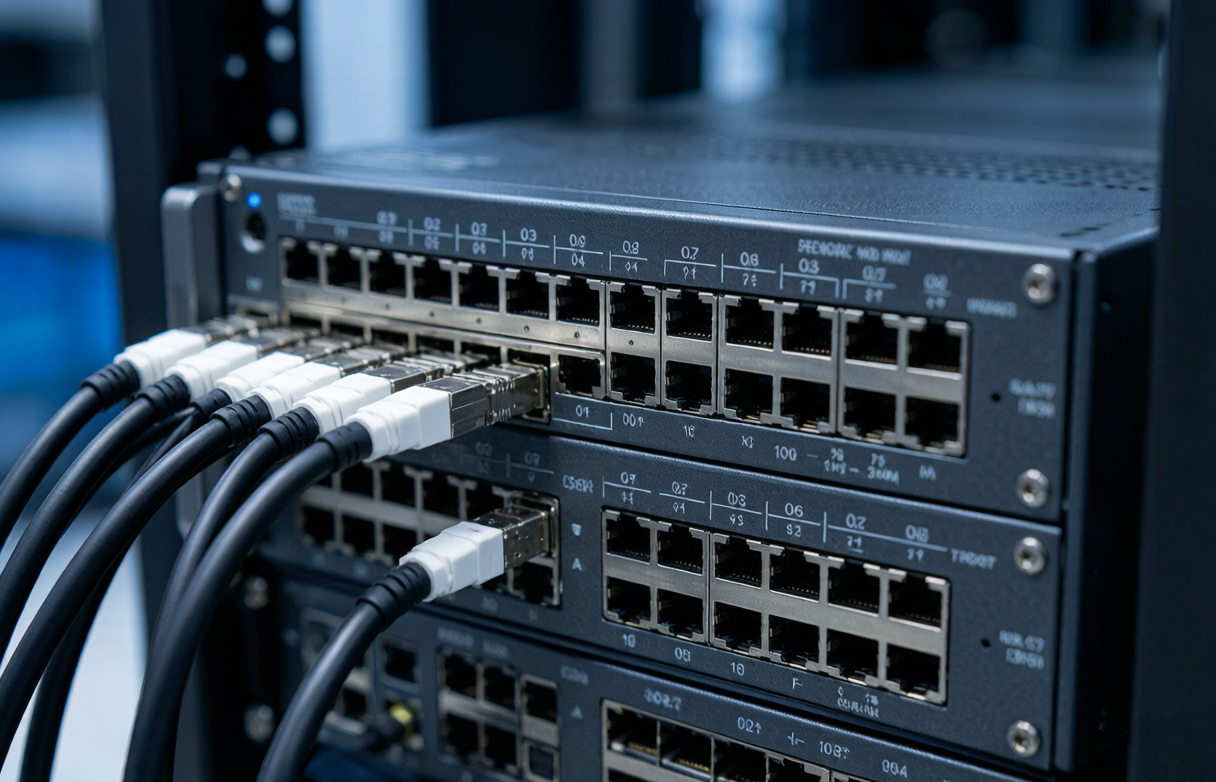
Unified O&M management is another deployment challenge. If 100 distributed nodes operate independently, O&M complexity rises exponentially. The solution provides unified O&M management and elastic scaling services for computing nodes, supporting integration with China Telecom's Tianyi Cloud platform. The headquarters O&M center can remotely perform policy distribution, firmware upgrades, and alarm convergence. The operating status of private cloud edge inference servers is reported back in real time, and faulty nodes are automatically flagged and trigger work orders. This cloud-edge collaborative unified management capability reduces distributed O&M complexity to an acceptable level. For storage, industrial wide-temperature SSDs address the environmental adaptability challenge of edge equipment rooms. Edge rooms often lack temperature and humidity control, with high summer temperatures and low winter temperatures alternating. Commercial SSDs see significantly higher failure rates in such environments. Industrial wide-temperature SSDs match the operating temperature range of private cloud edge inference servers, jointly ensuring stable operation within -40~60℃ (with disk configuration). This supporting logic reflects Stonbel's integration approach to storage and AI computing services: not delivering standalone devices, but providing complete scenario-adapted
Technical Highlights
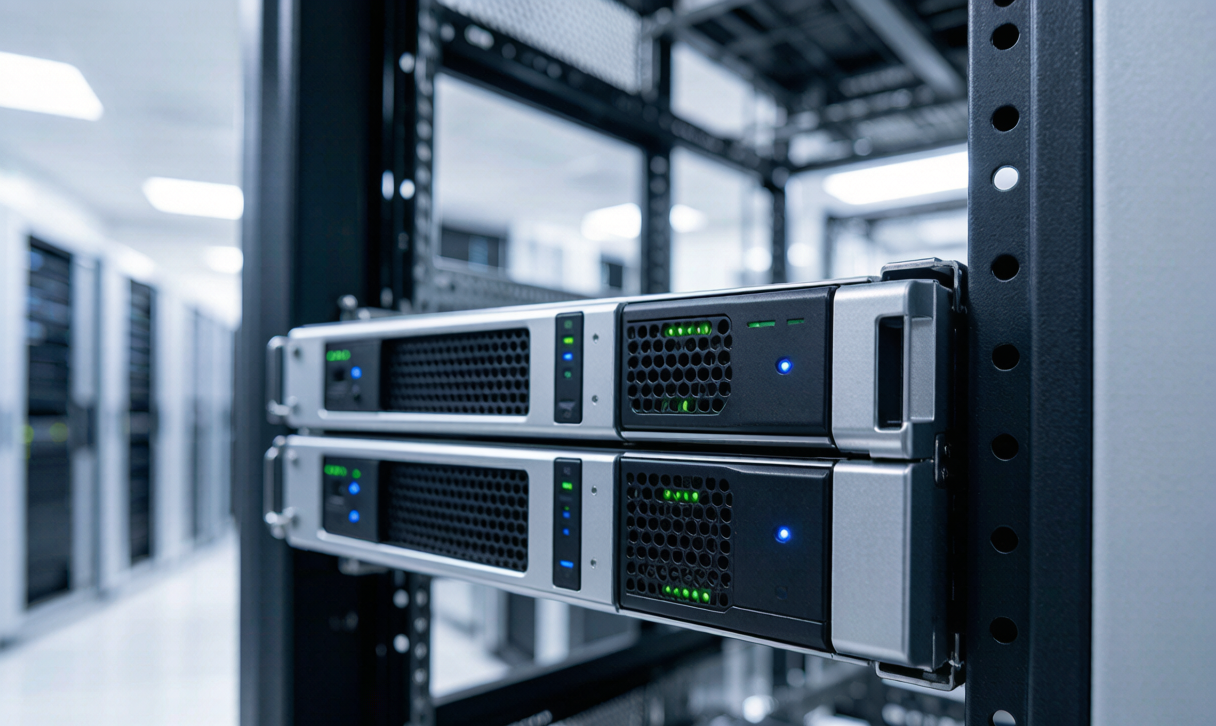
Cloud-edge collaborative unified management is the architectural highlight of private cloud edge inference servers. The headquarters private cloud and branch edge nodes collaborate through a unified management platform, completing policy distribution, firmware upgrades, and alarm convergence in one stop. This architecture allows private cloud edge inference servers to naturally integrate into the private cloud management system rather than being operated as standalone devices. For medium-to-large enterprises migrating core systems to private cloud, edge inference servers can serve as computing power extensions of the private cloud foundation to the edge, sharing the same management interface and O&M workflows with distributed storage and virtualized computing nodes. The low-power silent edge node design expands applicable scenarios. For office areas, business halls, and meeting rooms without dedicated equipment rooms, private cloud edge inference servers can provide
Results and Insights
This project was designated as a China Telecom 5G+ demonstration project. Its significance lies in revealing the positioning of private cloud edge inference servers in government and enterprise private cloud construction. When medium-to-large enterprises migrate core systems such as ERP, OA, email, and development testing to private cloud, they often focus on central equipment room storage and computing power but overlook edge-side data processing needs. In reality, scenarios such as video surveillance, industrial data collection, and localized inference at branches all require edge computing power for local processing; otherwise, bandwidth and storage pressure on the central equipment room will continue to rise. The value of private cloud edge inference servers lies in extending the computing boundary of private cloud from the central equipment room to business sites. Stonbel's one-stop private cloud foundation solution integrates distributed storage, virtualized computing nodes, cloud management platform, and edge inference servers, reducing enterprise cloud total cost of ownership by over 25%. This integration approach avoids the fragmentation problem of edge nodes and central cloud operating independently, making private cloud a truly complete computing infrastructure covering cloud, edge, and
Q1: What environments suit edge inference servers?
A: They suit edge equipment rooms with limited space and moderate cooling, such as equipment rooms, integrated access points, factory production lines, and community monitoring rooms. Operating temperature covers -40–70°C (diskless) and -40–60°C (with disk), dimensions are 45×235×220mm, and power consumption is 25W (diskless) to 40W (with disk). No dedicated air conditioning or power expansion is needed. In the China Telecom 5G edge computing node project, the device adapted to 5°C–45°C edge room environments, enabling local inference for multi-channel video and industrial data.
Q2: Is the computing power sufficient?
A: Two configurations are available: a high-end version with 22 TOPS INT8/11 TFLOPS FP16, and a standard version with 16 TOPS INT8/8 TFLOPS FP16, with LPDDR4X 8GB and 4GB memory respectively, supporting 16-channel 1080P encoding/decoding. This computing level suits edge scenarios like video intelligence analysis and industrial data inference. In actual projects, application response latency dropped from 150ms (cloud) to under 20ms, demonstrating that for latency-sensitive services, local inference efficiency far exceeds cloud round-trips. Specific selection depends on video channel count and analysis task complexity.
Q3: How does it integrate with existing private cloud platforms?
A: It supports cloud-edge collaborative unified management. Headquarters private cloud and branch edge nodes collaborate through a unified management platform, completing policy distribution, firmware upgrades, and alarm convergence in one stop. In the China Telecom project, the device supports integration with Tianyi Cloud platform for unified O&M management and elastic scaling. For mid-to-large enterprise private clouds, edge inference servers serve as computing extensions of the private cloud foundation, sharing the management interface with distributed storage and virtualized computing nodes. Compatible with Kunpeng/Phytium/Hygon domestic CPUs and Kylin/UOS operating systems, meeting Xinchuang compliance requirements.
From 100-node provincial 5G edge deployments to enterprise private cloud edge extension, private cloud edge inference servers are becoming essential cloud-edge infrastructure. Their 25-40W power, -40 to 70C range, and 16-22 TOPS INT8 solve space, cooling, and power constraints. The China Telecom project cut deployment time by 60%, latency to under 20ms, and per-node cost by 28%, validating this approach. Stonbel's one-stop private cloud base integrates distributed storage, virtualized compute nodes, and edge inference servers, lowering total cloud ownership cost by over 25%. This case offers a reusable engineering model for enterprises planning private cloud or edge compute nodes.