Hospital lobbies, corridors and waiting areas need a clean, professional visual tone while easing patient anxiety. Traditional stone walls cannot emit light or change dynamically, and ordinary displays lack architectural texture. Hospital LED relief texture screens merge high-end building material textures with high-definition Micro-LED display: decorative when off, a medium when on. Based on the Sanya Atlantis Resort LED texture screen project, this article breaks down the quote structure and selection logic for hospital scenarios. Pricing is determined by the screen body, control system, smart modules, installation materials and construction services. Texture customization level, control complexity and wall conditions are core price variables. Hospitals should define wall function and operating needs first, then request itemized quotes to avoid comparing only per-square-meter price while ignoring long-term O&M and delivery quality. Stonbel, an LED/LCD display source manufacturer, covers 31 provinces with resident service points and provides full-process support from texture customization to installation and O&M. As a non-standard product, its price cannot follow a uniform per-square-meter rate; only by evaluating texture, control, installation and service separately can quotes be compared.
Case Background
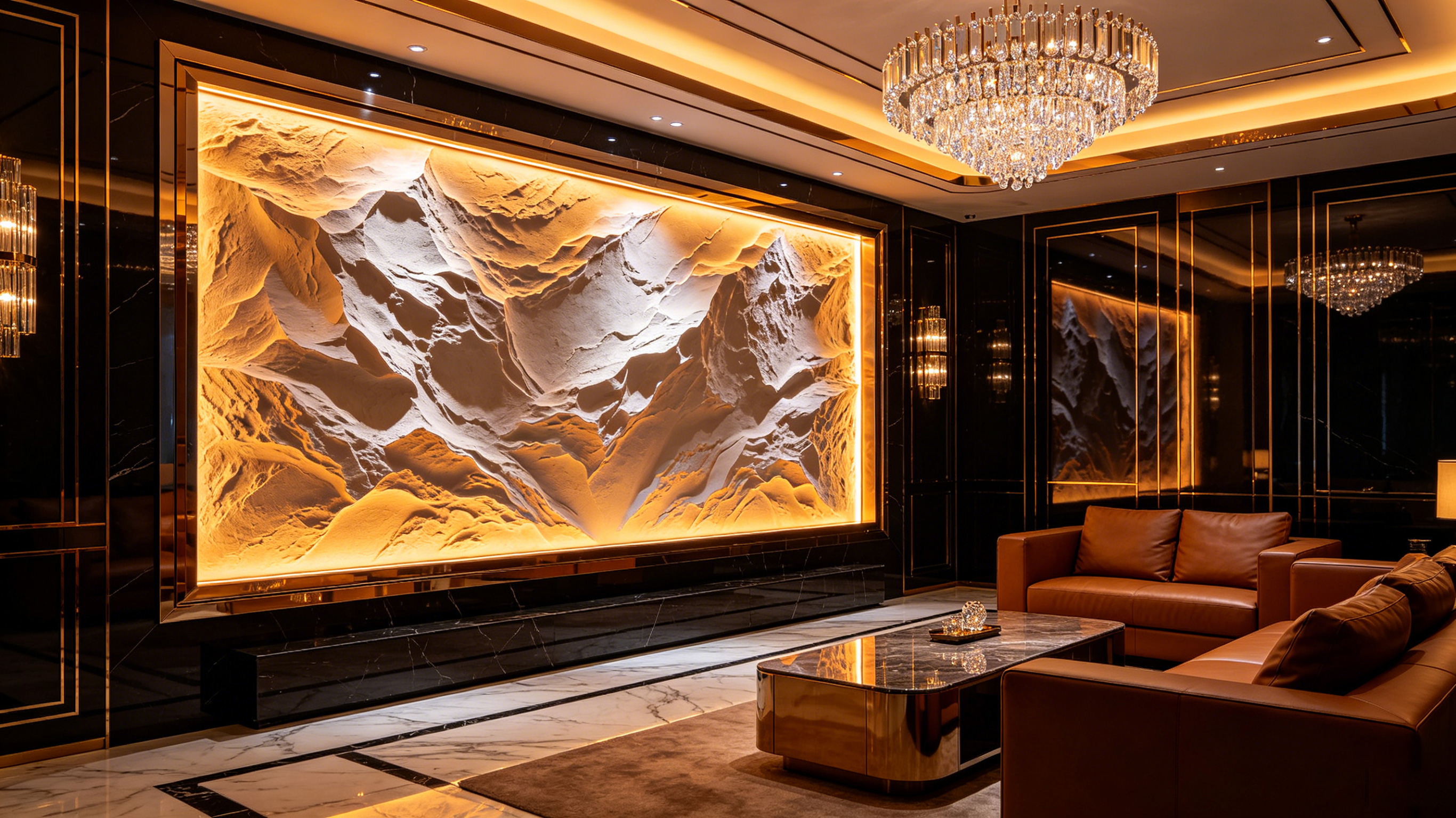
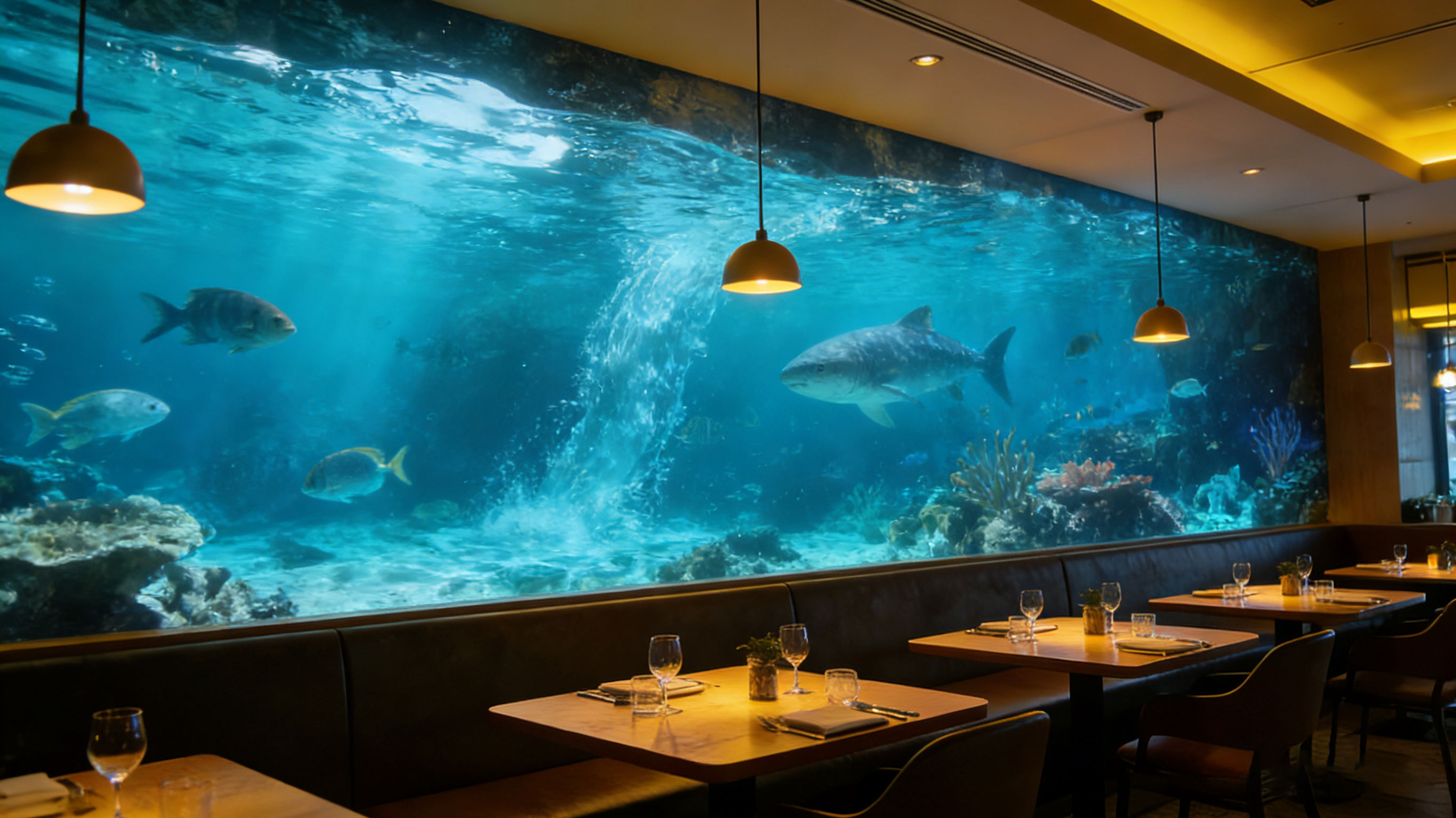
This case validates both environmental durability and decorative consistency for hospital settings. Hospitals require frequent cleaning and disinfection, with heavy foot traffic in corridors and lobbies. Wall materials must withstand wiping and moisture without sacrificing design aesthetics. The hospital LED embossed texture screen balances clarity and protection with P5 pixel pitch and IP54 rating, suited for continuous indoor medical operation. The project also confirms long-term stability in complex environments, offering engineering reference for hospitals with
Implementation Details
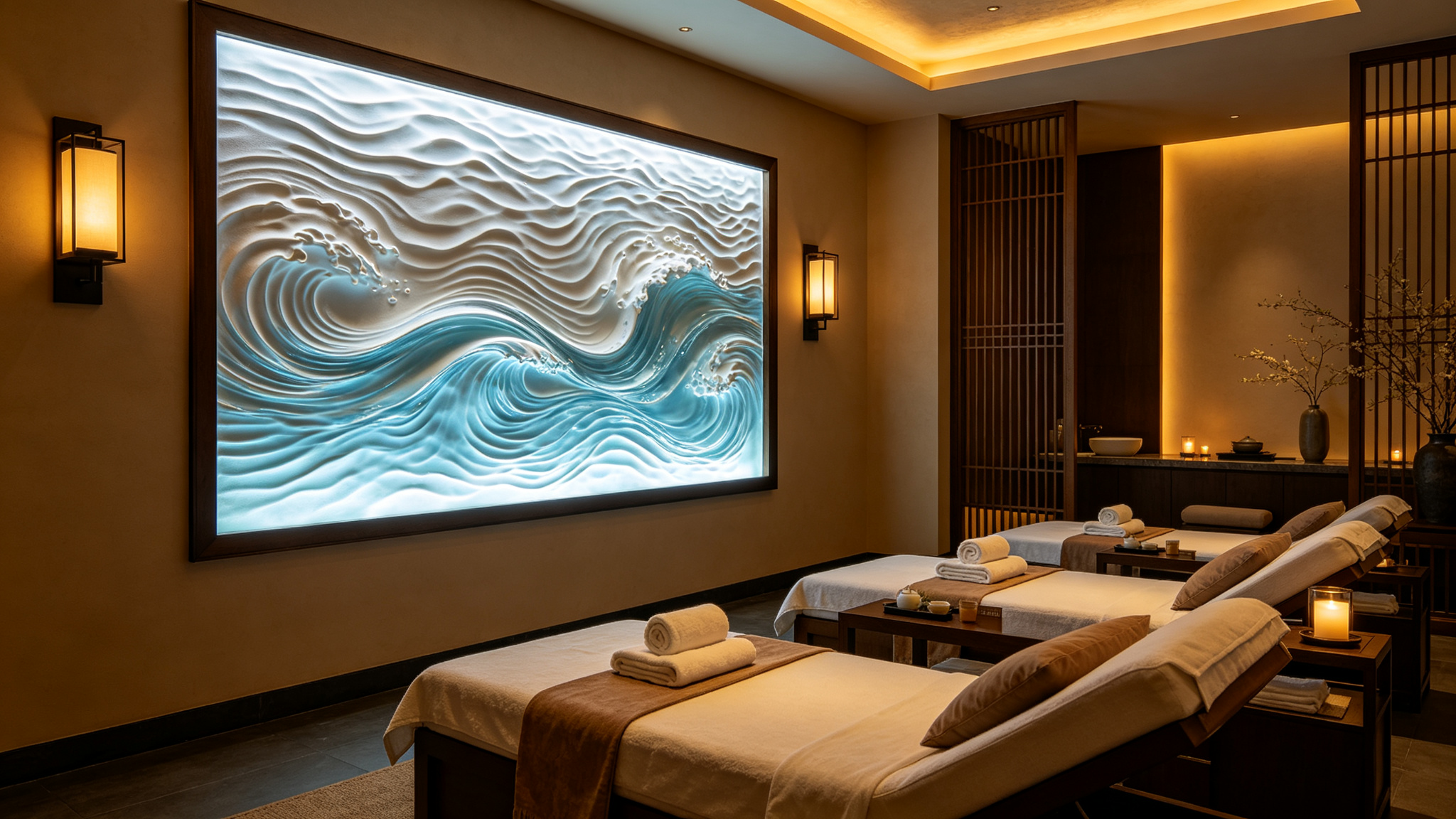
Another key cost factor is texture style and splicing method. Hospital LED embossed texture screens can display marble and other building material textures. Different textures vary in customization difficulty, sampling rounds, and batch consistency requirements, creating cost differences in design communication and production scheduling. If hospital walls are curved or irregular, block design based on actual dimensions is needed, and seam treatment directly affects visual quality and installation hours. In the Sanya project, texture screens were used in the lobby and corridors—areas
Technical Highlights
Note: Stonbel is an LED/LCD large-screen display source manufacturer. We do not produce smart locks or audio equipment and have no affiliation with Bell Canada. Hospitals can verify supplier qualifications and product line scope during screening to avoid confusion from similar brand names. For hospital LED embossed texture screens requiring long-term operation and deep integration with decorative surfaces, a source manufacturer's capabilities in texture customization, batch consistency, and after-sales response are more meaningful than simply comparing per-square-meter pricing. Stonbel holds 3C,
Results and Insights
Overall, there is no uniform pricing standard for hospital LED embossed texture screens. Core price variables are texture customization level, control system complexity, installation conditions, and after-sales service scope. When requesting quotes, hospitals should first clarify wall function positioning: pure decoration or decoration plus information display; whether time-based content management is needed; whether integration with existing wayfinding or conference systems is required. Clarifying these needs early enables suppliers to provide comparable proposals and quotes, avoiding
Q1: How much does a hospital LED embossed texture screen cost per square meter, and why do quotes vary so much between manufacturers?
A: Hospital LED embossed texture screen pricing is typically not a single screen price but a combination of screen, control system, smart modules, installation materials, and construction services. Manufacturers differ in texture customization capability, control system stability, protection processes, and after-sales scope, naturally creating price gaps. In the Sanya Atlantis Resort LED texture screen project, the texture screen included mobile APP and voice control smart modules, which directly affect overall cost. If hospital projects involve existing wall renovation, base
Q2: How to choose protection rating and pixel pitch for hospital LED embossed texture screens?
A: Hospital LED embossed texture screens feature IP54 protection and P5 pixel pitch, suitable for hospital lobbies, corridors, and waiting areas. IP54 handles daily splashing and dust but is not recommended for prolonged direct washing. P5 pixel pitch balances clarity and cost in texture screen form, suitable for medium-close viewing. If a hospital area requires higher precision data display, consider pairing with COB small-pitch displays featuring P0.7 to P1.8 pixel pitch, 3840Hz refresh rate, IP55 protection, and ≥100,000 hours lifespan. Specific selection depends on wall dimensions, viewing distance, and content type—refer to actual project proposals.
Q3: What smart control functions can hospital LED embossed texture screens achieve?
A: Based on the Sanya Atlantis Resort LED texture screen project configuration, hospital LED embossed texture screens can include mobile APP and voice control smart modules for one-touch scene switching. In hospital settings, this enables time-based content management—for example, playing wayfinding and health education content during the day and switching to low-brightness decorative mode at night to reduce light disturbance to inpatient areas. Stonbel holds 3C, CE, FCC, ISO14001, ISO9001, and ROHS certifications plus military and classified-related qualifications, providing systematic compliance support for hospital projects. Specific control
Q4: What to note about installation timeline and maintenance for hospital LED embossed texture screens?
A: Installation timeline depends on wall conditions, texture customization level, and construction windows. Flat walls with standard textures have manageable production and installation timelines; curved walls, irregular structures, or high-consistency texture customization require additional sampling, pre-layout, and block design time. Hospital projects typically avoid peak clinical hours with limited construction windows—confirm available time slots during planning and reserve time for base
There is no uniform price for hospital LED relief texture screens. Cost is determined by the screen body, control system, smart modules, installation materials and construction services. Texture customization, control complexity, installation conditions and after-sales scope are core variables. In the Sanya Atlantis Resort project, texture screens ran fault-free long-term in high-humidity, high-salt conditions, with visitor interaction up 50%, proving engineering feasibility in environmental tolerance and decorative consistency. Hospitals can include texture screens early in renovation design, define content operation ownership, and write O&M terms into contracts. When requesting quotes, ask for itemized pricing and verify texture customization, control scheme, installation conditions and service scope. Stonbel, an LED/LCD display source manufacturer, holds 3C, CE, FCC, ISO14001, ISO9001 and ROHS certifications plus military and confidential-related qualifications, with service points in 31 provinces, providing full-process support from texture customization to installation and O&M.