In emergency command scenarios, large displays are the core platform for information convergence and decision analysis. A common selection question: what viewing distance suits an emergency command LED display, and how should pixel pitch be determined? Based on a national ministry government hall project and a Guangdong Emergency Management Department project, combined with Stonbel's technical experience in COB, SMD, and GOB packaging, this article reviews case background, implementation details, technical highlights, and outcomes, answering selection questions with real parameters and project data.
Case Background
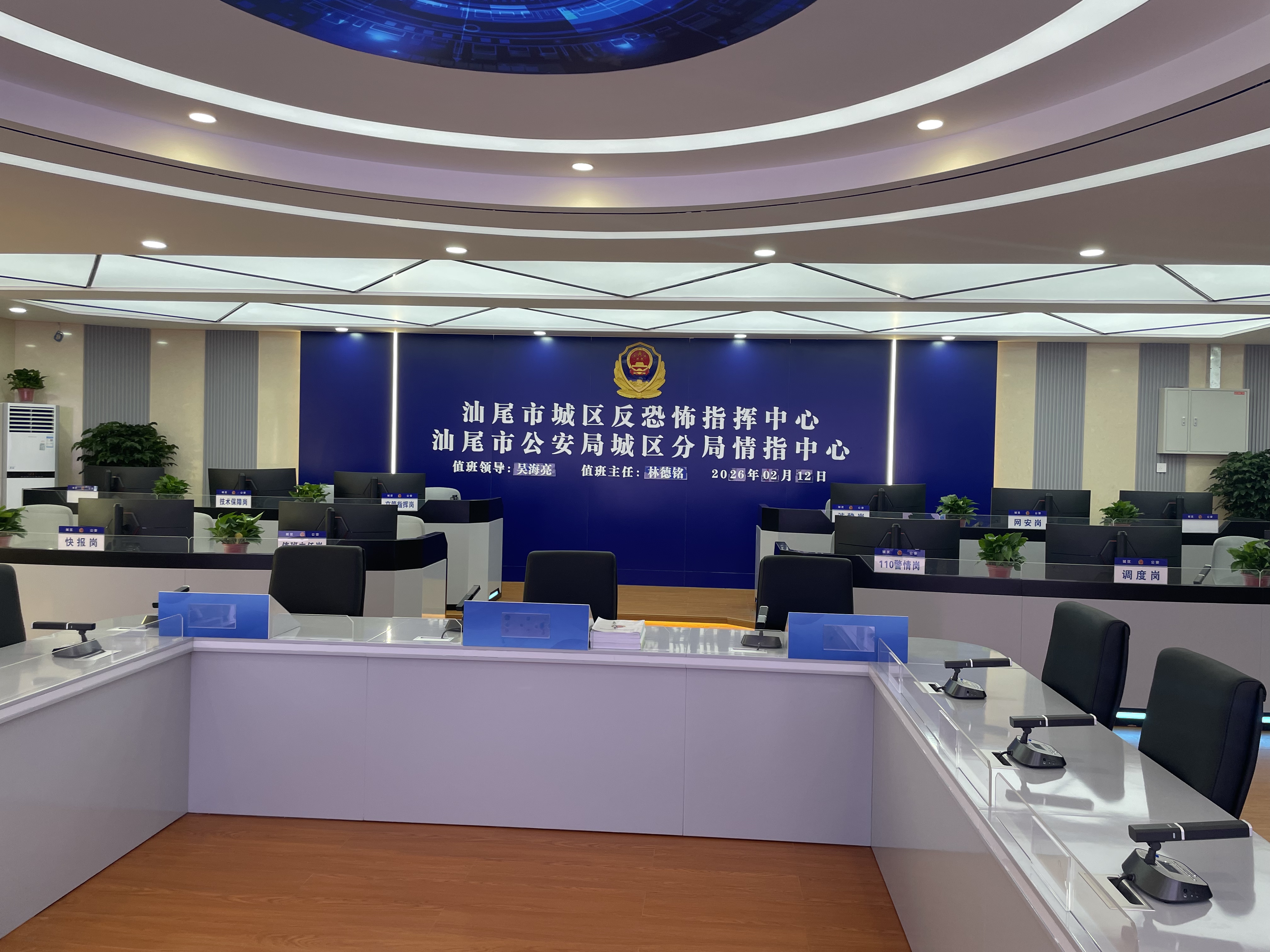
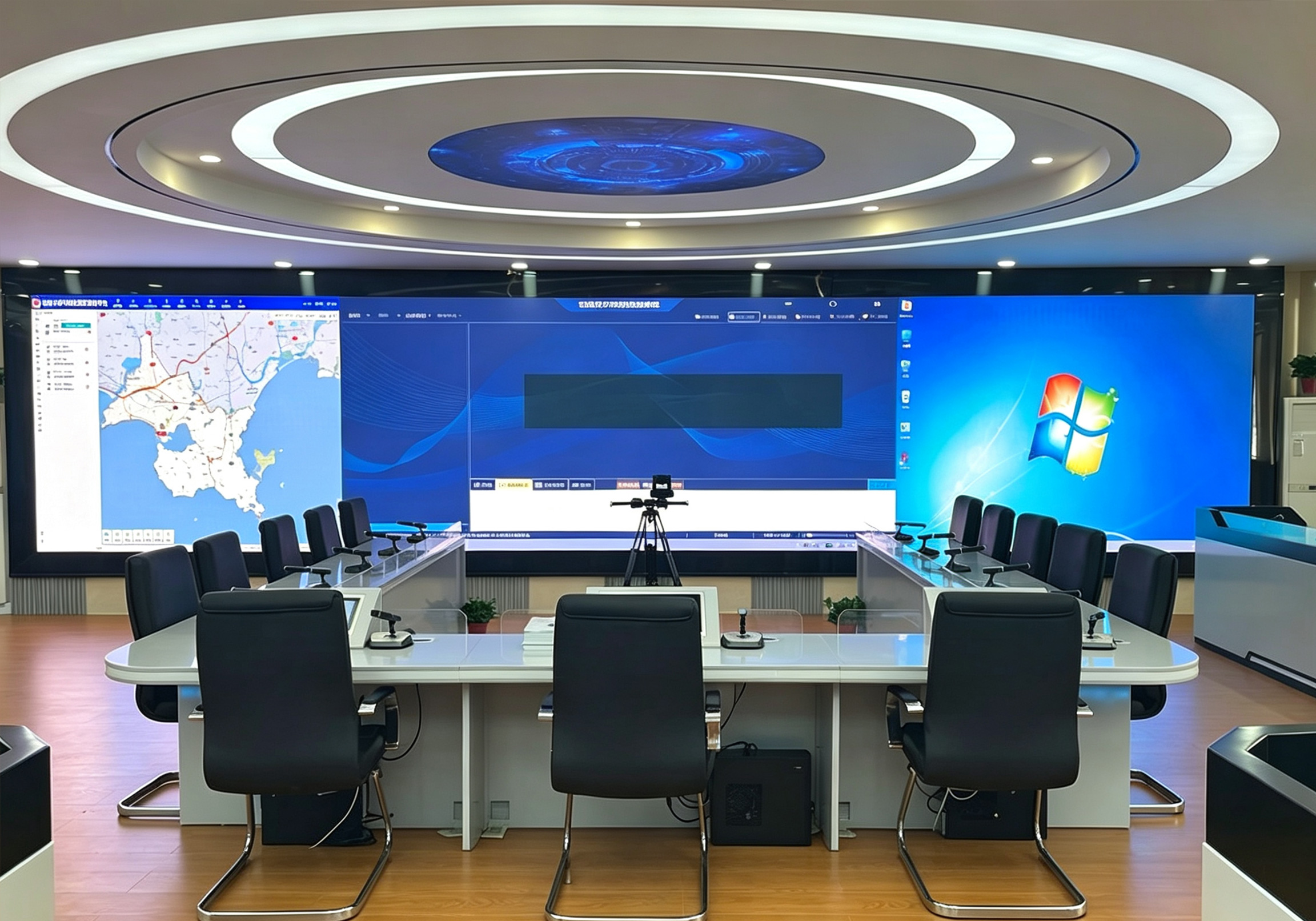
From an industry perspective, missteps in selecting LED displays for emergency command often stem from two issues: blindly pursuing small pixel pitch while ignoring actual viewing distance, which wastes budget; and focusing only on pixel pitch without considering packaging technology, which leads to high maintenance costs. For this project, Stonbel adopted a COB-packaged P1.5 ultra-small-pitch LED screen with a total area of 120㎡, supporting 4K resolution input and a 3840Hz refresh rate, based on a comprehensive calculation of viewing distance and information density. Viewing distances in emergency command scenarios typically fall into near-field operator seats and far-field decision seats. Near-field operators may be only 3 to 5 meters from the screen and need to see data details clearly;
Implementation Details
Another noteworthy implementation detail is matching pixel pitch to viewing distance. A P1.5 pixel pitch delivers clear image details at viewing distances of 3 to 8 meters, suitable for spaces like government halls that have both near-field operations and far-field analysis. If the viewing distance is greater, such as over 10 meters, P1.5 pixel density may exceed actual needs and waste budget; if closer, such as under 2 meters, COB small-pitch products at P1.2 or even P0.7 are needed. Stonbel COB small-pitch displays cover pixel pitches from P0.7 to P1.8, with a 3840Hz refresh rate, IP55 protection rating, and lifespan ≥100,000 hours. This means that when selecting an emergency command LED display, users can flexibly choose between P0.7 and P1.8 based on actual viewing distance. P0.7 suits extremely close viewing, such as front-row command seats; P1.8 suits slightly farther viewing, such as the far end of a large command hall. In terms of signal processing, this emergency
Technical Highlights
Another technical highlight is GOB packaging's adaptability in special environments. GOB packaging fills transparent resin over SMD lamps and circuits to form a smooth sealed layer, achieving IP65+ protection rating, suitable for crowded, high-dust, and high-humidity environments. If an emergency command LED display needs deployment in relatively complex locations, GOB packaging offers a solution balancing protection and cost. Stonbel also has capabilities in customized scenario design, supporting LED irregular screens, LED crystal film screens, LED holographic screens, LED grille screens, LED floor tile screens, and other special form customizations, with flexible splicing, curved adaptation, and thickness optimization. For curved command consoles or irregular walls common in emergency command centers, this capability allows the emergency command LED display to better integrate into the spatial structure. Intelligent interaction and networking features also deserve attention.
Results and Insights
Another insight comes from Stonbel's project experience across multiple scenarios. Zhangjiajie National Forest Park used a 60㎡ outdoor P3 full-color screen with IP66 protection and 6500cd/㎡ brightness, increasing visitor dwell time by 50%; the Strawberry Music Festival national tour used a 400㎡ SMD P3.91 outdoor rental screen with single cabinets ≤8kg, completing full-screen assembly in 2 hours per stop with no scan lines during live streaming. These cases show that different scenarios have distinctly different LED display requirements, and emergency command LED display selection must return to the scenario itself. In the Sanya Atlantis Resort project, Stonbel provided LED textured screens as photoelectric building materials for lobby background walls and corridor decoration, combining natural stone texture with HD illumination and waterproof, moisture-proof features, paired with smart modules controlled by mobile APP and voice for one-touch scene mode switching. The decorative wall achieved dynamic light shows while maintaining stone texture, increasing visitor photo interaction rate by 50%, with
Q1: What viewing distance suits an emergency command LED display, and how to determine pixel pitch?
A: Viewing distance and pixel pitch for emergency command LED displays must match. Taking Stonbel COB small-pitch products as an example, pixel pitch covers P0.7 to P1.8. P0.7 suits 2 to 4 meters close viewing, P1.2 to P1.5 suits 3 to 8 meters medium viewing, and P1.8 suits 5 to 10 meters slightly farther viewing. If viewing distance exceeds 10 meters, consider a larger pixel pitch to balance cost. Actual selection also depends on signal source resolution; a 4K signal source paired with P1.5 or below better leverages clarity advantages. Refer to actual models and project solutions.
Q2: How do refresh rate and grayscale of an emergency command LED display affect command scenarios?
A: Refresh rate determines image smoothness, while grayscale determines color depth. Stonbel LED displays achieve refresh rates up to 7680Hz, 22bit grayscale, and NTSC color gamut ≥130%. In emergency command scenarios, high refresh rate ensures surveillance footage and video conferencing signals have no scan lines or ghosting; high grayscale and wide color gamut present richer layers in situational mapping, heat maps, and geographic information, helping commanders quickly distinguish information levels. COB small-pitch products have a 3840Hz refresh rate, equally meeting smooth display needs in emergency command scenarios.
Q3: How does an emergency command LED display ensure stability during long-term operation?
A: Stability depends on packaging technology and thermal design. Stonbel COB packaging bonds chips directly to the PCB then encapsulates with gel, with no lamp structure, delivering good heat dissipation and ensuring stable long-term operation. GOB packaging fills transparent resin over SMD lamps and circuits, achieving IP65+ protection rating, suitable for high-dust and high-humidity environments. In a government hall project, a COB-packaged P1.5 ultra-small-pitch LED screen system ran stably for 1 year without failure, reducing maintenance costs by 60%. Refer to actual models and project solutions.
Emergency command LED display selection is essentially a balance of viewing distance, pixel pitch, packaging process, and system capability. The ministry government hall project review shows P1.5 pixel pitch performs well at 3-8 m viewing distance; COB packaging's seamless splicing and high reliability directly supported 70% shorter information sharing time and 60% lower maintenance cost. Stonbel, a top-10 LED display enterprise, offers COB, SMD, and GOB packaging, with service points in 31 provinces. For emergency command scenarios, define viewing distance and signal source needs early in selection.