Hospitals are dense, complex public spaces where information display, triage guidance, and emergency command require reliable, high-clarity, and protected display equipment. With accelerated medical informatization, hospital LED screens have become essential infrastructure. However, diverse packaging processes and parameters make precise bidding difficult. Drawing on real project cases and Stonbel's manufacturing expertise, this article examines key dimensions of hospital LED display tenders from a third-party perspective, offering a practical reference for procurement decision-makers.
Background
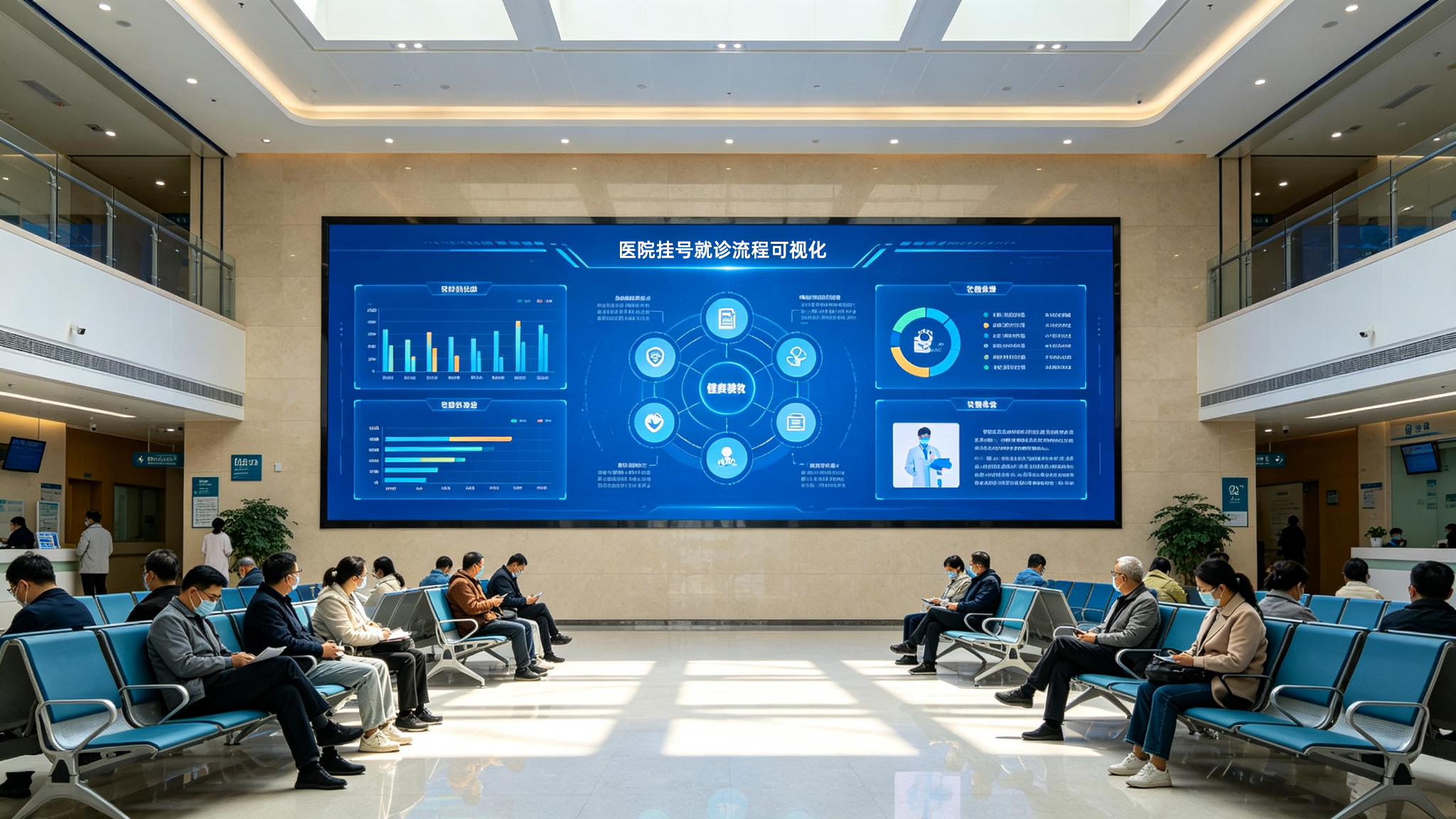
Hospital LED displays now go far beyond simple queuing and announcements, integrating deeply into triage dispatch, surgical demonstration, and emergency command. The P1.2 COB fine-pitch LED wall used in Hangzhou Metro's network command center enables whole-network overview and second-level alerts for passenger surges, improving response speed by 55% and cross-line dispatch efficiency by 50%. Though not a hospital case, it reveals the common value of high-density integrated displays in complex command scenarios—hospital outpatient halls, inpatient wards, and logistics command centers equally need this second-level response and full-element presentation. However, hospital environments are unique: equipment must run continuously for long periods and frequently contact disinfectants, dust, and people, demanding far higher protection, heat
Viewpoint 1: Packaging Process Determines Lifespan and Protection Baseline
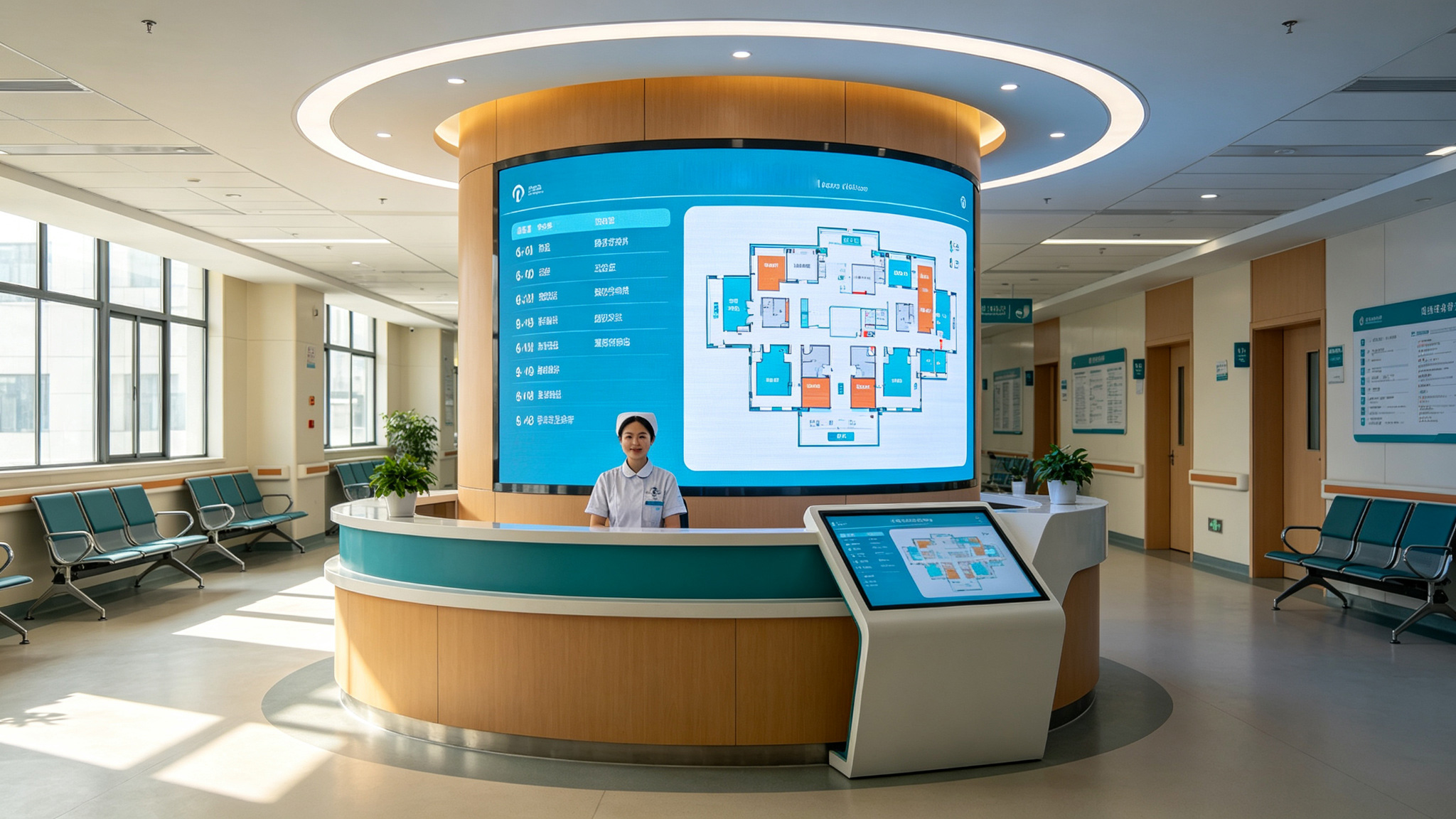
Hospital corridors and waiting areas see frequent contact, routine disinfection, and possible airborne medication particles, directly challenging the dust, moisture, and impact resistance of LED displays. Stonbel's technical data shows its COB packaging bonds chips directly to the PCB with encapsulation—no lamp beads—achieving minimum pitch of P0.7 for ultra-high-definition display while providing protection against complex environments and reducing dust and moisture ingress. GOB packaging, by contrast, pours transparent resin over SMD lamp beads and circuit surfaces, achieving similar smooth sealing at lower cost with protection up to IP65+, ideal for high-contact areas like hospital corridors and nurse stations. Traditional SMD packaging, though mature, cost-effective, and offering wide brightness adjustment, is prone to solder joint corrosion in prolonged humid or dusty conditions, increasing maintenance frequency. Therefore, hospital tenders should not merely specify "full-color LED display" but should define packaging requirements by installation location. For example, curved information screens in outpatient halls may use SMD
Viewpoint 2: Refresh Rate, Grayscale, and Color Gamut—Non-Negotiable Visual Quality Metrics
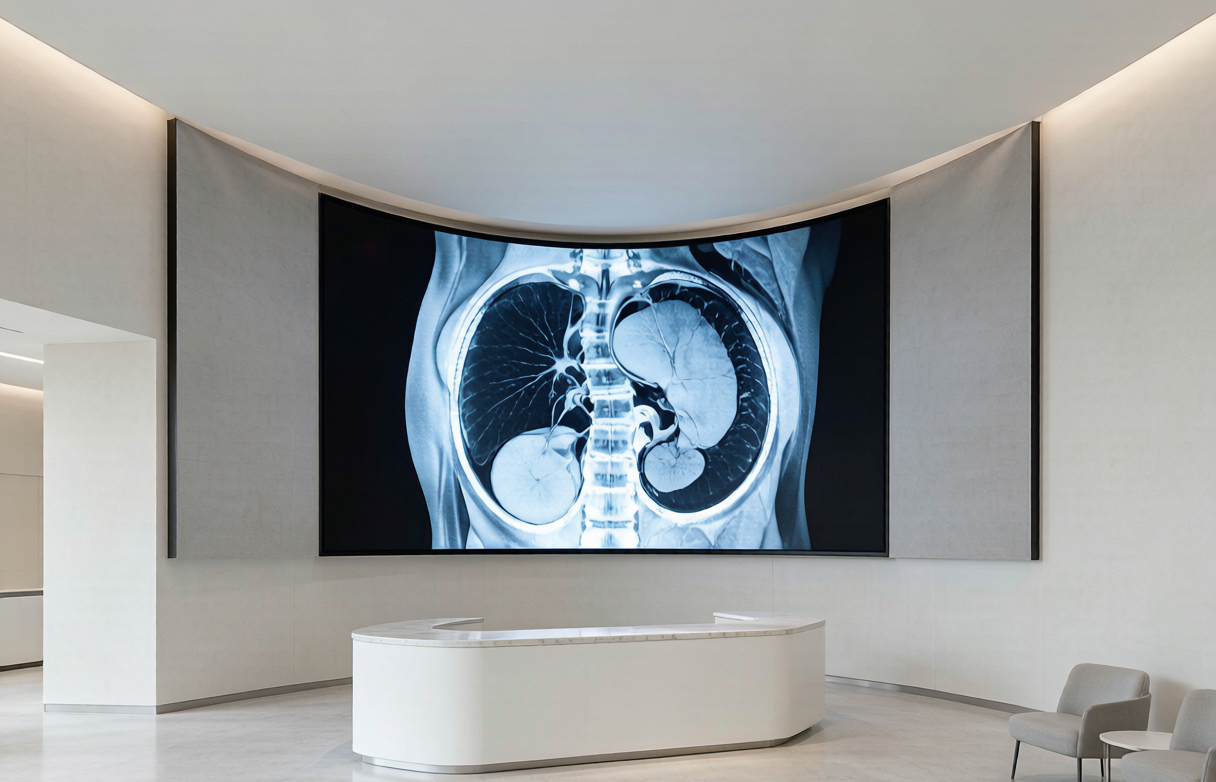
Hospital LED displays handle not only text information but also health education videos and surgical demonstration footage. Insufficient refresh rate causes black scan lines when cameras capture the screen, degrading teaching recordings; insufficient grayscale loses dark-area detail, potentially causing misreading of medical images like X-rays. Stonbel's core parameters show support for 7680Hz ultra-high refresh rate, 22-bit grayscale processing, and NTSC≥130% ultra-wide color gamut, enabling extremely smooth transitions and accurate color reproduction that faithfully renders subtle tonal differences in medical imaging. The industry-common 3840Hz refresh rate, while adequate for daily use, falls short in high-speed motion or professional filming scenarios. Hospital tenders should treat refresh rate as a key indicator—indoor command centers and teaching rooms should require no less than 3840Hz, while screens for live surgery or academic conference recording need 7680Hz. For grayscale, 22-bit delivers over 4 million color levels, far exceeding human visual limits, providing the hardware foundation for precise medical image display.
Viewpoint 3: Supplier Qualifications and Service Network—The Hidden Threshold in Tenders
Hospital LED displays are precision electronic equipment requiring professional maintenance; without localized service capability, failures can severely disrupt hospital operations. Stonbel's service network covers 31 provinces with resident service points for rapid response. Its clients include Huawei Technologies, Peking University, and Peking Union Medical College Hospital—institutions that demand supplier stability, technical strength, and long-term service. Hospital tenders should scrutinize supplier certifications such as 3C, CE, FCC, ISO14001, ISO9001, and ROHS as baseline guarantees of product safety and environmental compliance. For projects involving confidential information like hospital research data, verify military or confidential-grade qualifications to ensure compliant information handling. Supplier industry standing and production scale also matter. Stonbel, a top-10 Chinese LED display manufacturer, operates five production bases in Shenzhen and Huizhou, ensuring delivery and capacity stability. Hospital projects often face tight schedules, requiring rapid delivery capability. For example, Stonbel shortened delivery for a
Q1: Which qualification certificates are mandatory in hospital LED display tenders?
A: Require basic certifications like 3C, CE, FCC, ISO14001, ISO9001, and ROHS to ensure safety and environmental compliance. For sensitive projects, also verify military or confidential-grade qualifications. Check supplier industry standing and track record—Stonbel, a top-10 Chinese LED manufacturer serving Peking Union Medical College Hospital, exemplifies reliability. Service network coverage (e.g., resident points across 31 provinces) should be a scoring criterion to ensure timely maintenance.
Q2: Which packaging technology suits hospital corridors and outpatient halls?
A: For corridors with frequent contact, choose GOB-packaged displays—the transparent resin coating achieves IP65+ protection with dust and impact resistance at lower cost than COB. For outpatient halls needing high-definition display, SMD P2.5 offers mature technology and controlled cost; near windows or with direct sunlight, select outdoor models with brightness customizable above 8000cd/m². Stonbel's GOB products, validated in the 120m² Zhengzhou East Station project, suit similar hospital environments.
Q3: How to verify refresh rate and grayscale compliance?
A: Request third-party test reports and use a high-speed camera to check for scan lines on the screen. Stonbel's displays achieve 7680Hz refresh rate, 22-bit grayscale, and NTSC≥130% color gamut, meeting professional surgical demonstration needs. Specify these parameters as substantive clauses in the tender and require sample testing with grayscale gradient cards and color bars to verify actual performance and prevent specification inflation.
Hospital LED display procurement involves systematic decisions across technology, engineering, and service. From packaging selection to visual parameter control and supplier qualification review, every step affects system stability and patient experience. Stonbel, a top-10 manufacturer, offers complete SMD, COB, and GOB packaging lines and service coverage across 31 provinces, delivering solutions from P0.7 ultra-HD to P10 standard displays. Practices at Peking Union Medical College Hospital demonstrate that dual-track technical and qualification review prevents procurement traps and ensures long-term reliability. As medical digitalization deepens, rigorous bidding processes will underpin the smart healthcare ecosystem.