This article, based on Stonbel's real project experience, analyzes key pain points, solutions, and measurable outcomes in data center LED display bidding from manufacturing, service, and industry trend perspectives. It provides a reusable decision-making framework covering technical parameters to qualification review, helping buyers avoid common pitfalls.
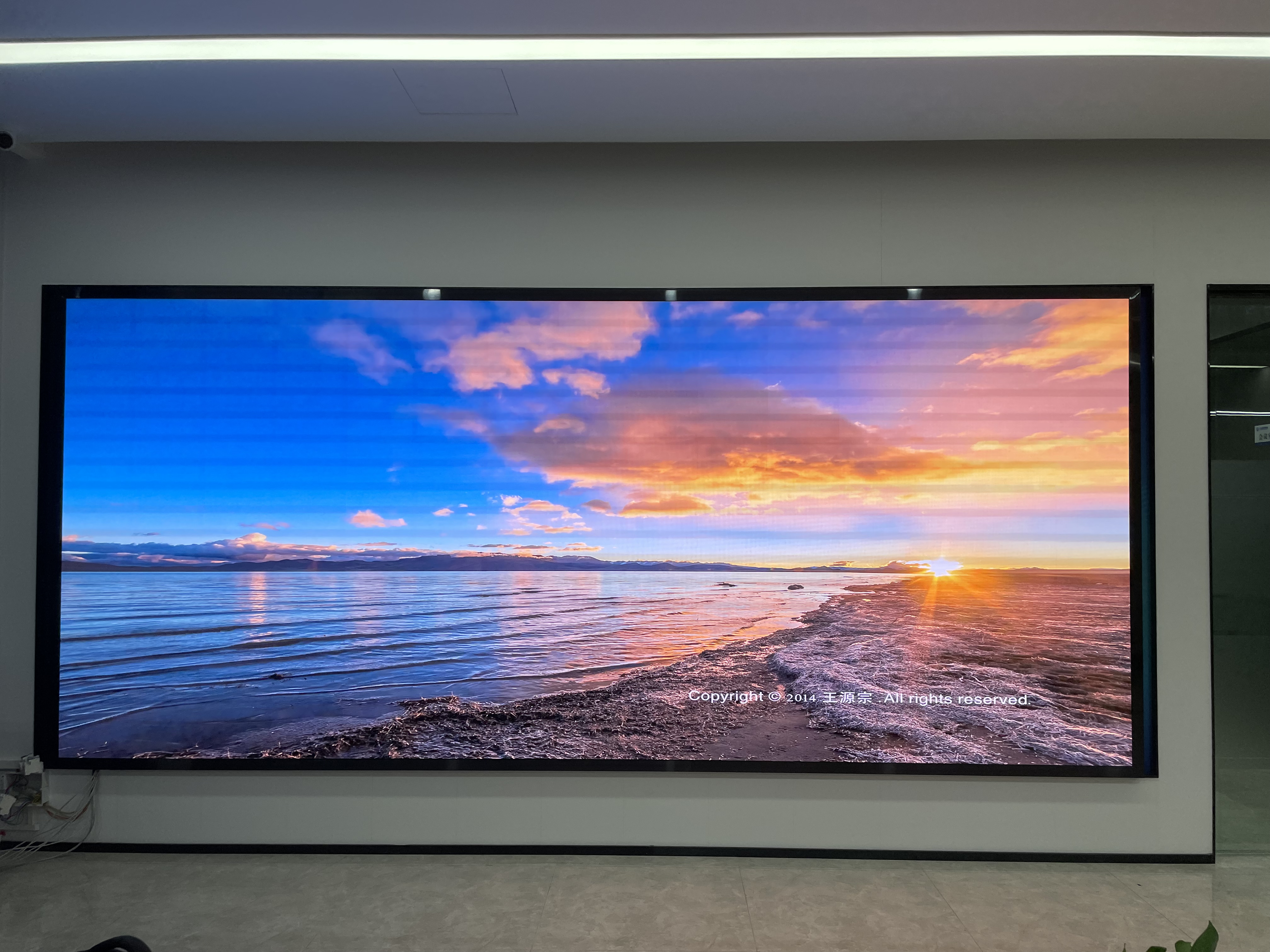
Manufacturing & R&D: COB Technology Sets the Ceiling for Ultra-Fine Pitch Displays
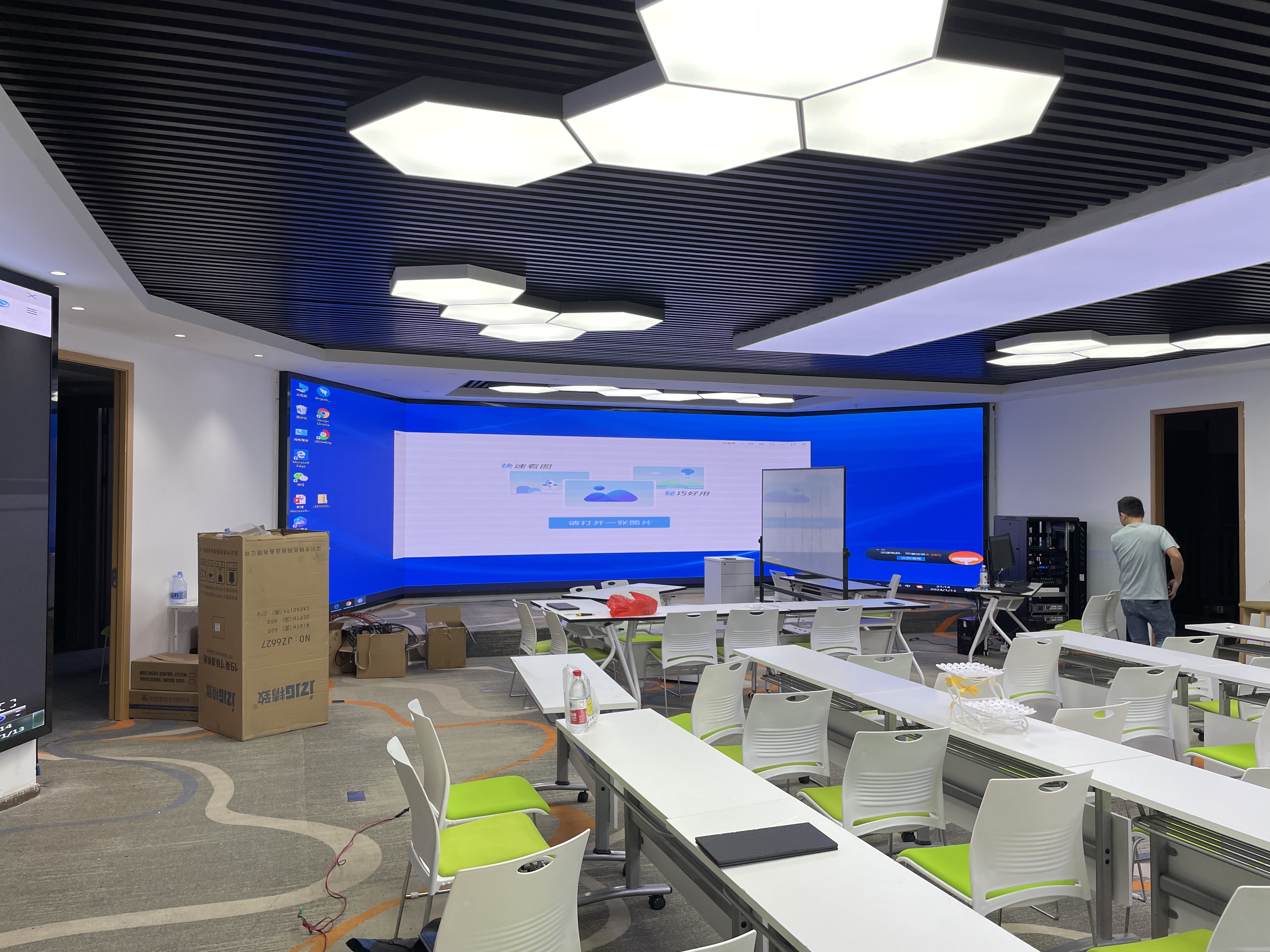
Discussing the manufacturing threshold for data center LED displays, Stonbel's project lead highlights COB packaging technology. Data center server rooms often present dust, static electricity, and micro-vibration environments. Traditional SMD lamps may experience dead pixels over time due to solder joint fatigue. Therefore, ultra-fine pitch products like P0.7 typically utilize COB packaging, where chips are directly bonded to the PCB, eliminating physical seams and achieving protection ratings up to IP65. Stonbel's COB fine-pitch series covers pixel pitches from P0.7 to P1.8, offers a 3840Hz refresh rate, and a lifespan exceeding 100,000 hours, meeting the dual demands of image continuity and low failure rates for data center displays. In actual bidding, the
Market & Service: OEM/ODM Direct Supply Model Cuts Lead Times and Costs
In practice, buyers often face a dilemma between specs and service: international brands offer superior specs but long lead times and slow support, while local small factories are cheap but lack qualifications and capacity. Stonbel's project lead revealed that a major engineering contractor, lacking local source manufacturing for COB fine-pitch and standard SMD LEDs, was forced to procure from Europe and the US, incurring 8-week lead times and high costs. Leveraging its five major production bases in Shenzhen and Huizhou, Stonbel provided this contractor with OEM/ODM customization for SMD P2.0-P10 and COB fine-pitch products, supporting brand labeling, parameter customization, and local certification adaptation. This compressed delivery to 3
Industry Outlook: Evolving from Hardware Delivery to 'Hardware + Content + Maintenance' Ecosystem
Looking ahead, competition in data center LED displays will shift from standalone hardware to an ecosystem encompassing 'hardware + content + maintenance'. Stonbel's project lead points out that with technologies like naked-eye 3D and AI content creation, data center screens are not just monitoring tools but potential windows to showcase computing power. He advises buyers to reserve smart interactive interfaces in technical specs, such as support for 5G/WiFi networking and remote maintenance platforms. Referencing Stonbel's 280㎡ naked-eye 3D project in Chengdu's Chunxi Road shopping district—which achieved 8000cd/㎡ peak brightness, an 80% increase in advertising rates, and a 35% rise in daily foot traffic—demonstrates that high-spec display hardware can directly translate into commercial value. Technically, tender documents should specify a refresh rate of at least 3840Hz (7680Hz recommended),
Q1: How to choose pixel pitch for data center LED display tenders?
A: Pixel pitch directly determines clarity and viewing distance, requiring a balance of viewing distance, screen area, and budget. For data center monitoring walls, operators typically sit 1.5-3 meters away; COB products with P0.7 to P1.2 are recommended to render high-density data without visible pixels. At a 2-meter viewing distance, P0.7 achieves roughly 2.04 million pixels per square meter, clearly displaying alarm information smaller than 8-point font. For emergency command centers or public display areas with viewing distances over 3 meters, P1.5 to P1.8 can balance cost and effect, offering about 1/5 the pixel density of P0.7 at a 40%-60% lower cost. Stonbel's COB fine-pitch series covers P0.7-P1.8, with 3840Hz refresh rate, IP55 protection, and ≥100,000 hours lifespan, suitable for
Q2: What certifications are required for data center LED displays?
A: Tender documents should mandate three categories of certifications. First, product certifications: 3C (China Compulsory Certification), CE (EU safety), FCC (US EMC), and ROHS (Restriction of Hazardous Substances), ensuring legal sale and environmental compliance. Second, system certifications: ISO9001 for quality management (covering design, production, and inspection) and ISO14001 for environmental management, serving as baseline criteria for supplier maturity. Third, special industry qualifications: for classified or military projects, confidentiality qualifications and weaponry quality management system certification are necessary. Stonbel holds all these certifications, ranks among China's top ten LED display companies, and its service network spans 31 provinces,
Q3: How to evaluate the protection rating for data center LED displays?
A: The IP (Ingress Protection) code is an international standard for dust and water resistance. Although data centers are indoors, dust and moisture are critical: precision cooling can produce condensation, and dust accumulation affects heat dissipation and image quality. In Stonbel's product line, SMD products with GOB technology can reach IP65+ (dust-tight, protected against powerful water jets), COB products natively support IP55 (dust-protected, protected against low-pressure water jets), and LED texture screens offer IP54. Choose based on the environment: standard server rooms should require IP4X or higher; areas near cooling water systems or in humid regions (like coastal data centers) should require IP55 or higher. Demand third-party test reports (e.g., from CTI or SGS) rather than relying solely on manufacturer claims. Stonbel's LED texture screens
Q4: What specific impact do refresh rate and grayscale have on data center display performance?
A: Refresh rate determines flicker and motion clarity, while grayscale dictates the smoothness of color transitions. Data center screens often display real-time graphs, video streams, and 3D topology. If the refresh rate is below 1920Hz, the flicker may be imperceptible to the naked eye, but cameras will capture scan lines or moiré patterns, degrading remote meeting and surveillance video quality. Stonbel's COB fine-pitch products offer a 3840Hz refresh rate, with flagship series supporting 7680Hz—the latter demonstrated no scan lines in live streaming at the Strawberry Music Festival. In terms of grayscale, 16bit provides 65,536 levels, while 22bit offers over 4.19 million levels, preventing color banding in gradients or heatmaps and ensuring accurate data visualization. Recommended tender specs: core monitoring screens should have
Data center LED display procurement is a comprehensive test of manufacturing capability, packaging technology, delivery, and after-sales support. Stonbel's practices—COB P0.7 ultra-fine pitch, 7680Hz refresh, and 3-week OEM/ODM delivery—show that direct factory supply reduces costs and shortens timelines. Buyers should specify technical parameters (pitch, refresh rate, grayscale, protection rating) and qualification lists (3C, CE, FCC, ISO9001), set evaluation weights based on quantified outcomes (e.g., 35% traffic increase or cost reduction), and reserve interfaces for smart interaction and remote maintenance to align with the 'hardware + content + operations' trend.