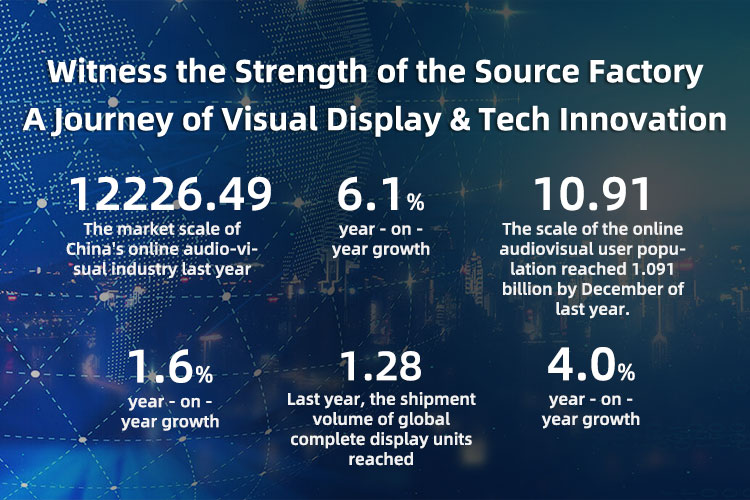
Station hubs are among the most crowded public spaces with the highest information display demands. A reliable LED display here is critical for train schedules and transfer guidance, directly impacting passenger experience and operational efficiency. However, harsh conditions—dust, temperature swings, and 24/7 operation—often lead to missteps during procurement. Drawing on Stonbel's experience in transport hubs, this article dissects core pain points, technical parameters, qualification barriers, and acceptance standards, offering a quantifiable reference for owners and integrators.
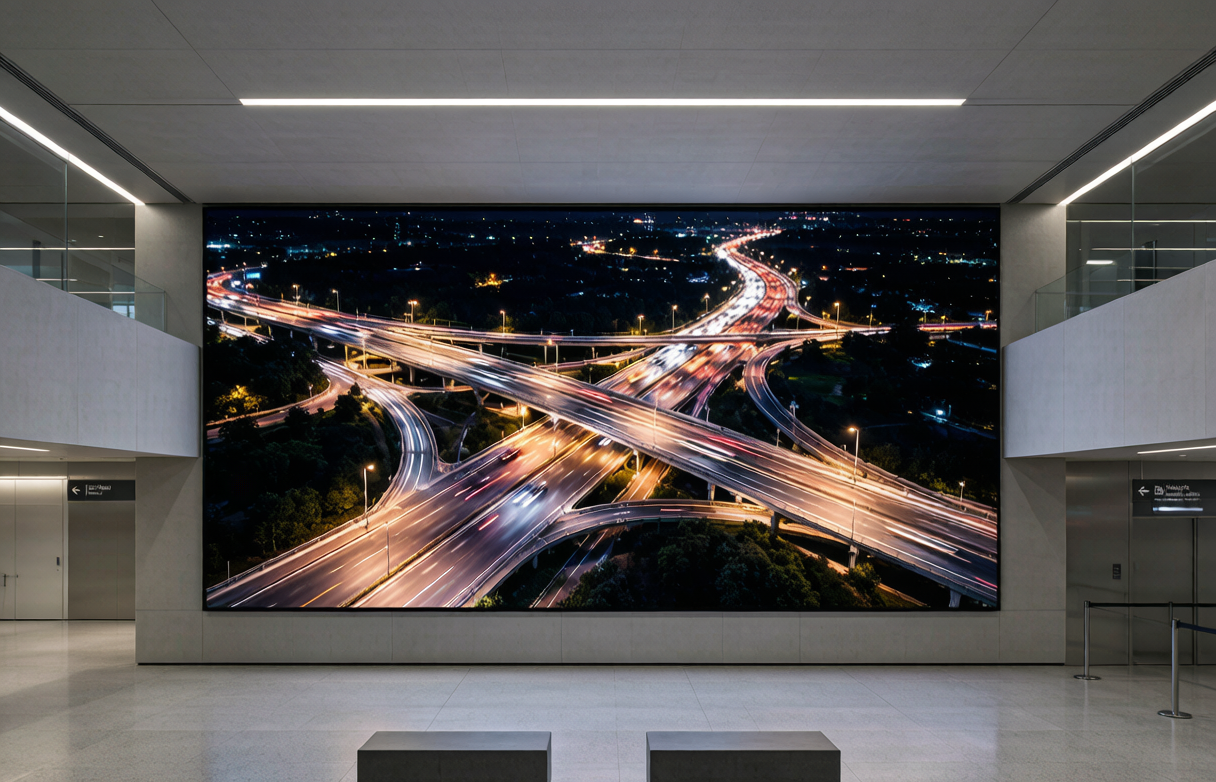
Case Background: Dual-Scenario Design from Pain Points
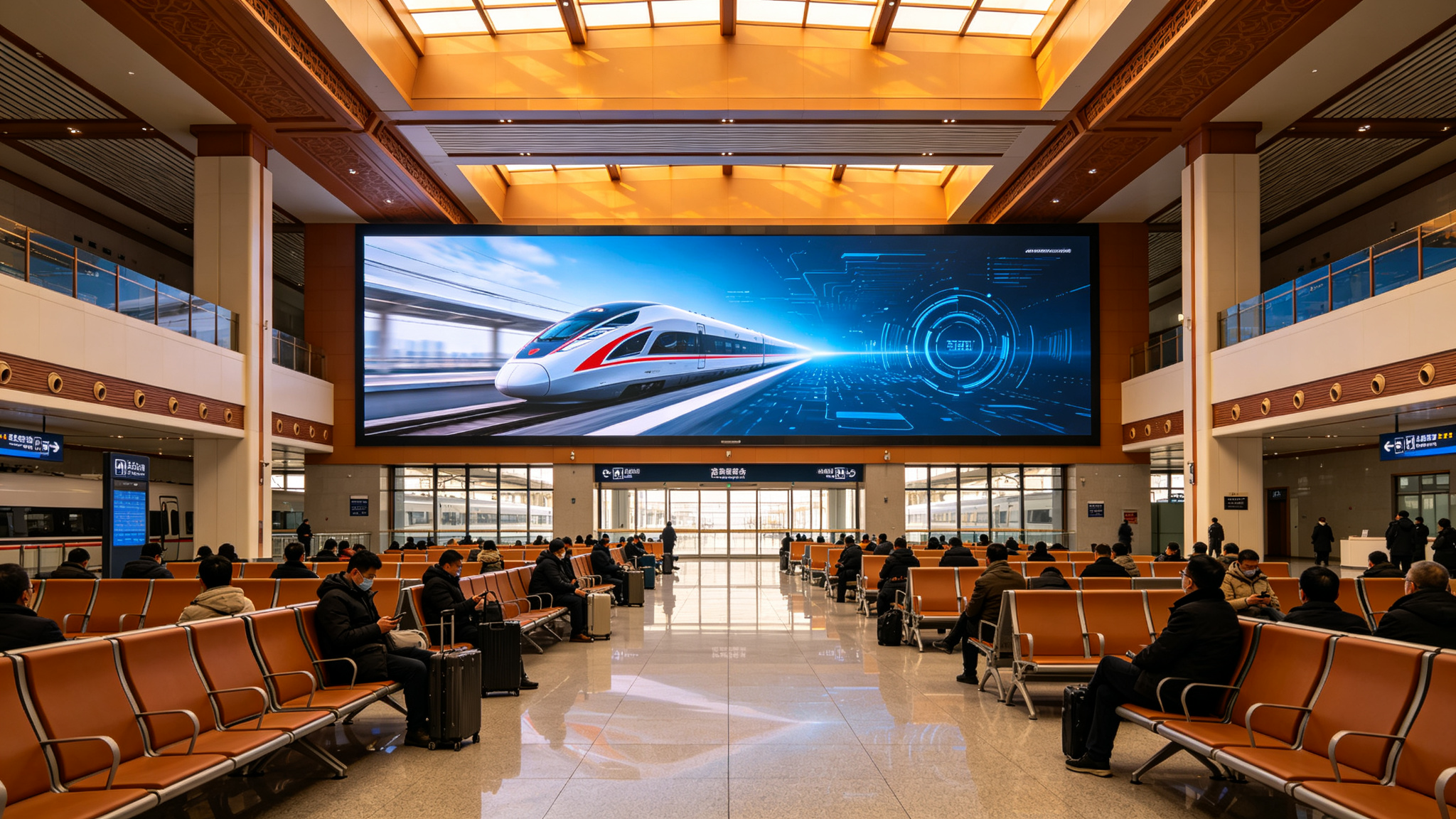
A large integrated transportation hub faced typical challenges. In the waiting hall, existing displays had visible seams, causing visual disruption for passengers viewing schedule information up close, and dead pixels appeared frequently under heavy load. Outdoor screens at the station square suffered water ingress during rainy seasons due to insufficient protection, leading to blackouts and high maintenance costs. Furthermore, information systems across departments operated independently, preventing the integration of train delays, bus connections, and taxi pickup statuses. Passengers often had to consult multiple screens to piece together their journey. Stonbel proposed a differentiated solution: COB-packaged P1.2 fine-pitch displays for the waiting hall, offering a
Implementation: Closed-Loop Management from Installation to Maintenance
Project delivery involved more than equipment installation; it tested engineering management and service systems. Stonbel adopted nighttime off-peak construction, using low-traffic windows for screen hoisting and steel reinforcement to avoid disrupting daily operations. During COB screen installation, each module underwent point-by-point color calibration to achieve a uniformity of ≥99% in brightness and color—far exceeding industry averages and preventing batch-related color inconsistencies. To handle multiple signal sources in the large space, a self-developed multi-signal processing system was deployed, supporting over 64 simultaneous inputs with arbitrary split-screen, roaming,
Technical Highlights: Packaging Processes and System Redundancy
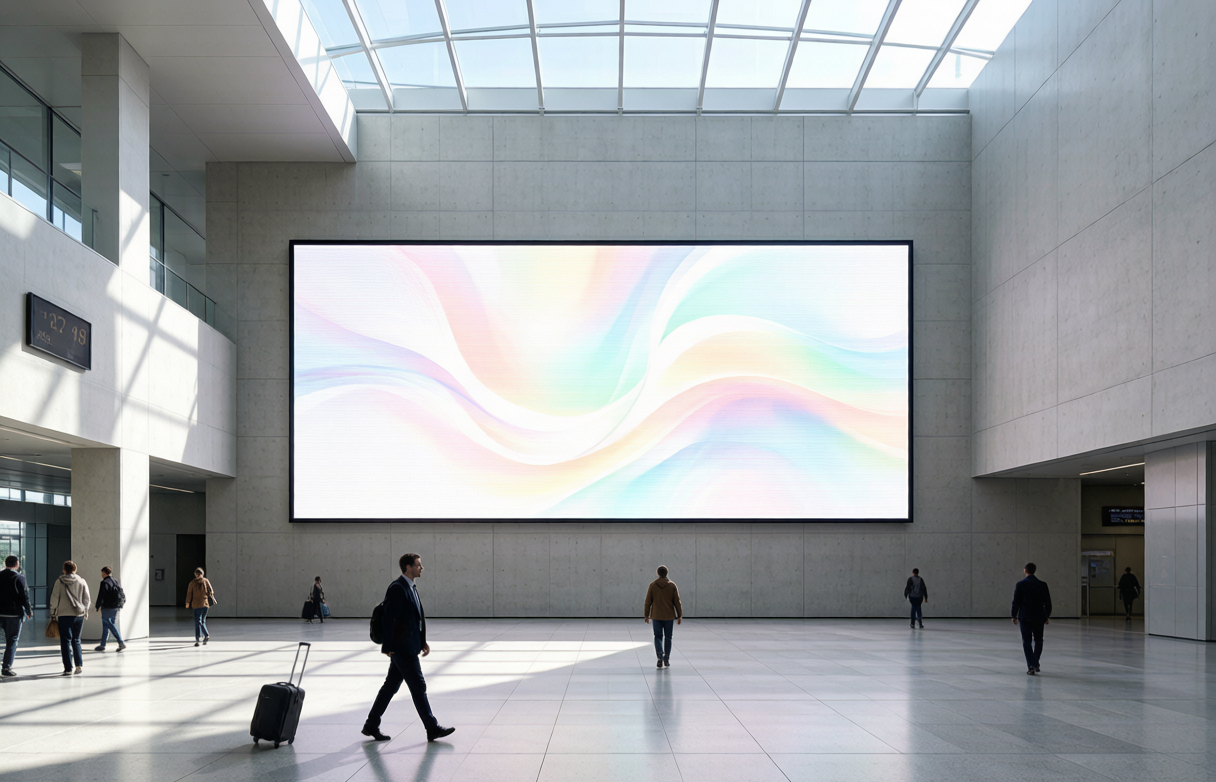
To meet extreme reliability demands, Stonbel optimized thermal and power systems. Industrial-grade heat dissipation, using aluminum casings and intelligent fan control, keeps internal temperatures within safe limits for 7×24 operation. The indoor screens use COB technology, where chips are directly bonded to the PCB without individual lamp beads, offering fine image quality, no graininess, and high protection against dust and static in high-traffic areas. Outdoor screens use SMD packaging with individually soldered lamp beads for effective heat dissipation and long-term stability. Both processes ensure high reliability through mature manufacturing. The power system supports N+1 redundant backup, automatically switching on module failure without disrupting output. Built-in point-by-point correction detects and compensates for brightness and color deviations in
Outcomes: Upgrading Public Displays for Digital Governance
One year after launch, data confirmed the solution's effectiveness: information release efficiency rose by 55%, passenger inquiries dropped by about 30%, and complaints about missed trains due to unclear information fell by 40%. The system also includes interfaces for future integration with intelligent traffic dispatch and emergency command, expandable via 5G/WiFi/4G and interactive modules to support crowd heat mapping and smart guidance robots. For future procurement, it is recommended that tender documents require bidders to provide case studies from similar stations or hubs within the past three years, and include site visits to verify actual performance rather than relying solely on presentations.
Q1: How to verify refresh rate compliance when procuring station hub LED displays?
A: Refresh rate is a core parameter affecting visual smoothness and camera capture. For waiting hall information screens, insufficient refresh rates cause ghosting on fast-scrolling train schedules, making it hard for passengers to read key details. For station square advertising screens, low refresh rates create visible scan lines in TV broadcasts or smartphone footage, harming the city's image. During bidding, require vendors to provide test videos at 7680Hz, focusing on scrolling text or fast transitions for ghosting or flicker. A more rigorous approach is to specify acceptance testing in the contract: use a high-speed camera at 1/1000s shutter speed to capture full-white and
Q2: How to select the protection rating for outdoor station LED displays?
A: Outdoor screens face rain, dust, and temperature swings, so protection ratings directly impact lifespan. For open areas like station squares and entrances, IP66 or higher is recommended, ensuring full dust protection and resistance to powerful water jets—IP66 testing uses a 12.5mm nozzle at 100L/min and 100kPa pressure to simulate heavy rain. For semi-outdoor locations like under canopies or in corridors, IP65 suffices, as it offers the same dust protection with lower water pressure requirements. Note that higher protection ratings often mean better sealing, which can trap heat, so evaluate the manufacturer's thermal design. Stonbel outdoor models feature industrial-grade heat dissipation with aluminum
Q3: What manufacturer qualifications should be reviewed in station hub LED display tenders?
A: Review qualifications across three dimensions: basic certifications, system certifications, and industry standing. Basic certifications include 3C (China Compulsory Certification for safety), CE (EU safety covering EMC and low voltage), and FCC (US EMC to prevent interference). System certifications should include ISO9001 (quality management for production consistency) and ISO14001 (environmental management for green manufacturing). For projects with classified information or critical infrastructure, check for military or classified qualifications—Stonbel holds these and has delivered a classified conference room project for the China Electronics Technology Group. Additionally, consider whether the manufacturer ranks among China's top 10 LED display companies (Stonbel is listed) and whether its service network
Procuring LED displays for station hubs is a comprehensive test of technical capability, engineering experience, and after-sales commitment. As Stonbel's transport hub cases show, reliable solutions must address real operational needs—whether COB packaging for seamless ultra-HD, GOB for high protection in harsh environments, or 7680Hz refresh for ultimate smoothness. Buyers should build a full evaluation system covering qualification review, case verification, and on-site testing, rather than being swayed by low prices or inflated specs. Beware three traps: using indoor specs for outdoor screens, substituting consumer-grade products for industrial-grade ones, and ignoring after-sales coverage. Station hubs carry millions of passengers; display reliability reflects a city's management quality. Stonbel, a top-10 Chinese LED display maker with 3C, CE, FCC, ISO9001, ISO14001, and military/classified qualifications, backed by clients like Huawei, Peking University, and Beijing Union Medical College Hospital, delivers time-tested display solutions for every transport hub.