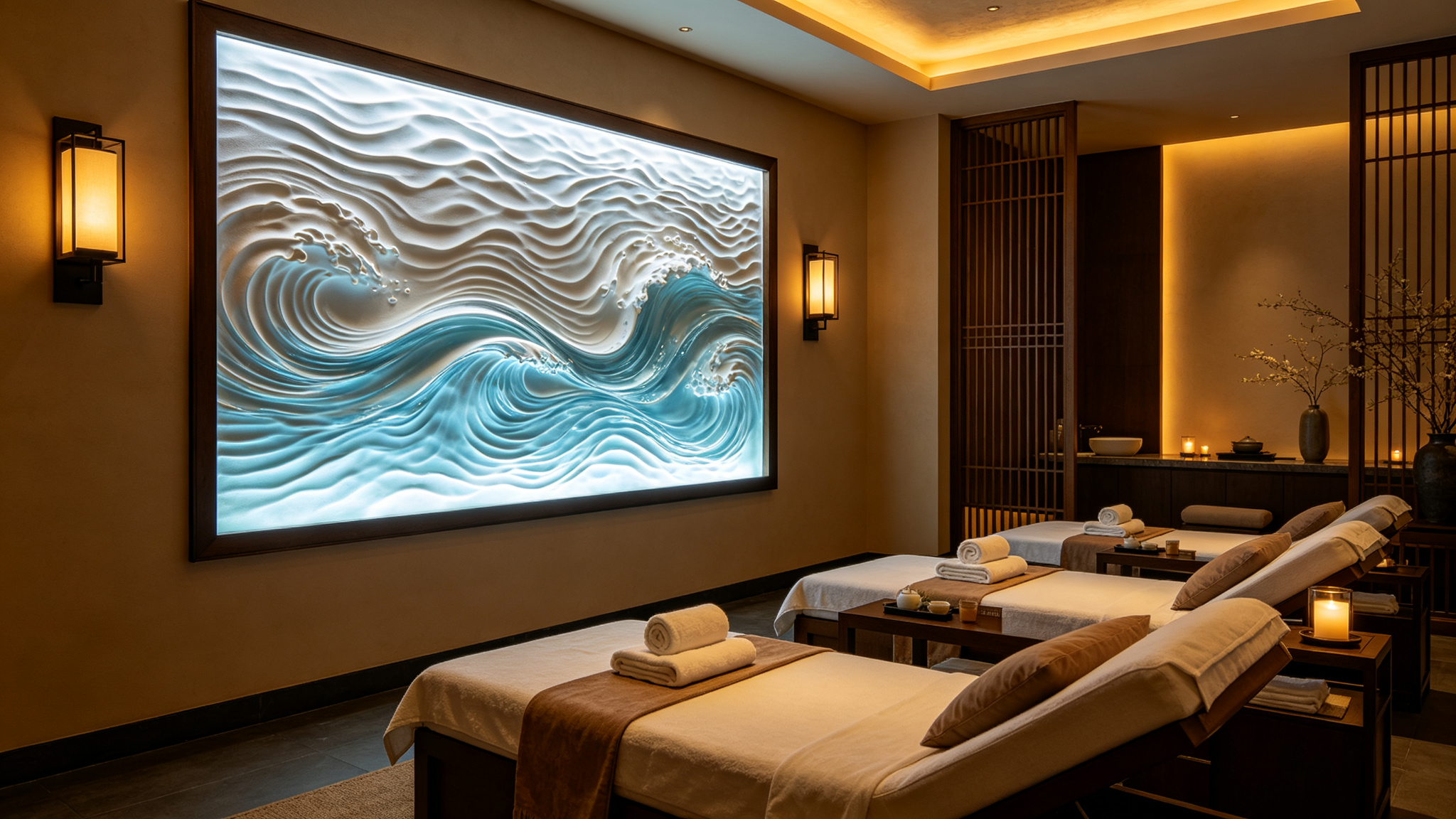
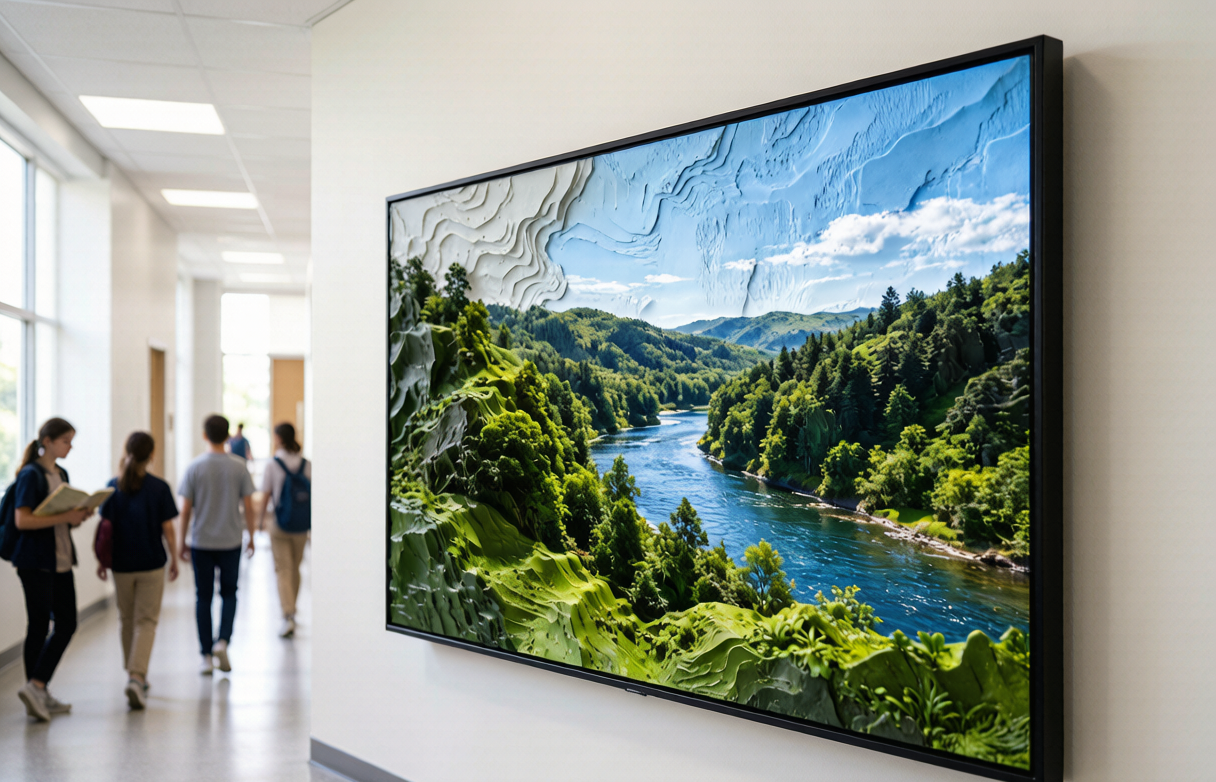
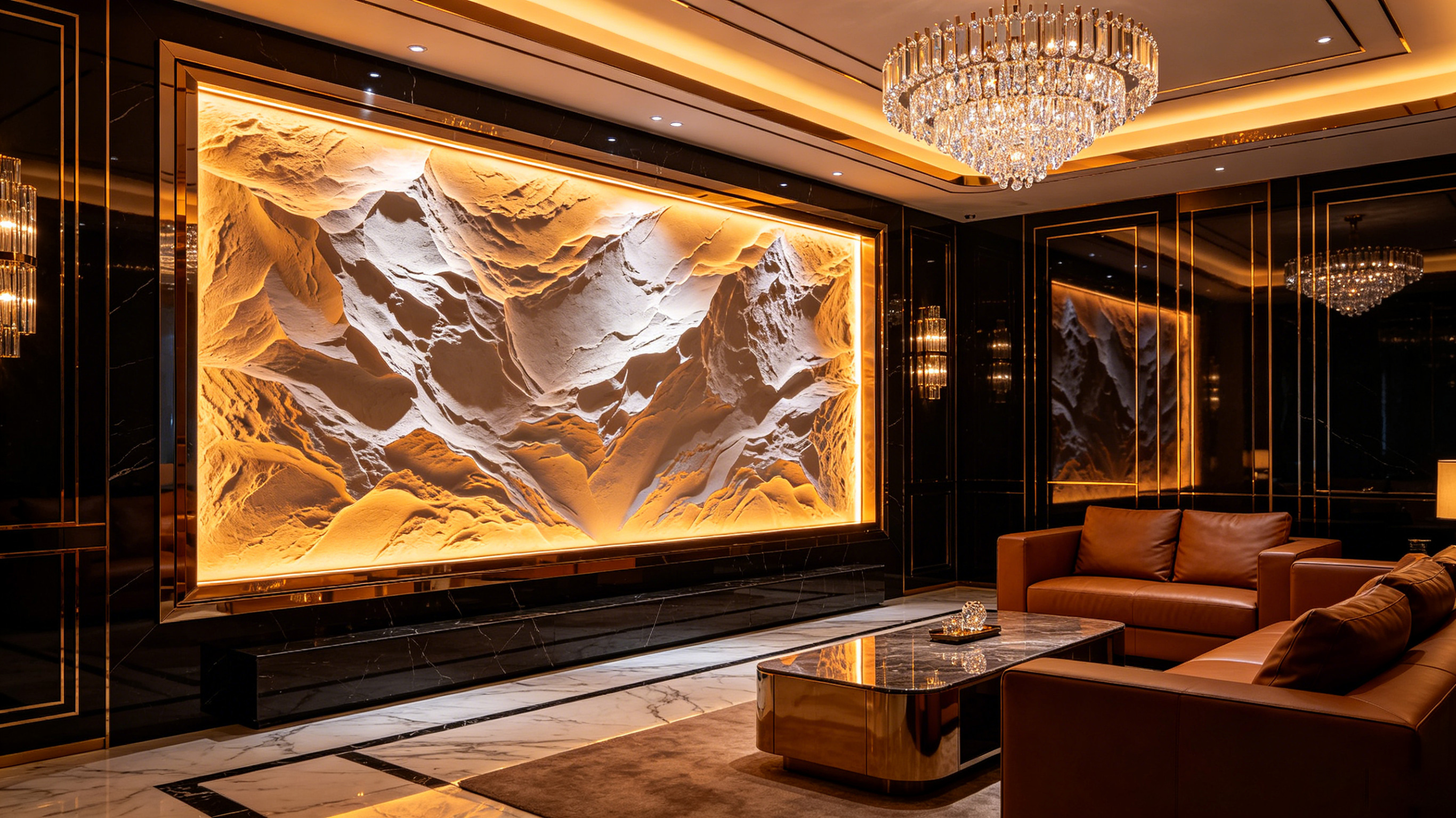
Campus display needs are evolving from mere visibility to comfort and artistry. Auditoriums, history museums, and library atriums require large screens for messaging and image display, yet desire devices that blend into architectural aesthetics when idle, not as stark black panels. Campus LED relief texture screens address this by integrating building-grade textured finishes with Micro-LED technology: a relief-like wall when off, high-definition display when on. However, indoor campus lighting varies—from sunlit windows to evenly lit halls. Selecting brightness and color temperature based on actual light conditions directly impacts display quality and viewer comfort. Drawing on Stonbel's experience in campus and public display projects, this article offers a reference for selection, covering brightness headroom, color temperature calibration, and screen-environment integration. These screens are not mere tech stacks but responses to campus aesthetics and communication needs—handling bright corridors, soft auditorium light, and long static displays while balancing quality and lifespan. Selection should match installation-point lighting curves, viewing distance, and content type, not just peak specs.
Brightness Selection for Campus LED Relief Texture Screens: Balancing Redundancy and Comfort
Campus indoor lighting varies widely: a classroom near windows can exceed 800 lux on sunny mornings, while a shaded auditorium may drop to 100 lux. This variance rules out a one-size-fits-all brightness approach. Stonbel's work in government and education sectors shows that campus LED relief texture screen brightness should follow the principle of "sufficient redundancy, dynamic adjustability." In our display projects for Peking University, classrooms and meeting rooms had distinctly different brightness needs—the former required overcoming side-window natural light interference, while the latter prioritized long-viewing comfort. Specifically, in controllable lighting environments like auditoriums and libraries, we
Color Temperature Calibration: From 6500K to 5000K, Matching Campus Space Function and Atmosphere
Color temperature directly impacts viewers' psychological response and information reading efficiency. Different campus areas have distinct color temperature needs: teaching building lobbies and information display zones handle high-frequency information dissemination like notices, news, and schedules, where 6500K standard color temperature is recommended—this setting delivers true color reproduction and accurate white balance, ensuring sharp text edges and undistorted chart colors for quick information access. In spaces like school history museums, art galleries, and campus
Ambient Light Adaptation: Systematic Solutions from Anti-Glare to Dynamic Contrast Optimization
In actual campus deployments, ambient light interference is the most common image quality killer. Direct afternoon sunlight through west-facing floor-to-ceiling windows, reflections from marble floors, and mirror-like glare from ceiling lights on screen surfaces all cause image whitening and reduced contrast. Many buyers mistakenly believe raising brightness solves the problem—but image whitening typically indicates insufficient contrast, not inadequate brightness. Stonbel's campus LED relief texture screens feature a specially treated surface texture layer with anti-glare properties that
Selection Insights from Campus LED Relief Texture Screen Case Studies
While direct campus project cases for LED relief texture screens are still accumulating, Stonbel's successful implementations in government, airport, and cultural tourism sectors provide transferable reference points for campus selection. Peking University, a Stonbel client, demands exceptional color accuracy and long-term operational stability—requirements that align closely with the core needs of campus auditoriums and classrooms. If campus LED relief texture screens withstand intensive daily use in prestigious institutions like Peking University, their reliability is genuinely validated. Looking at the Chengdu Tianfu International Airport cargo area monitoring center
Q1: Is higher brightness always better for campus LED relief texture screens?
A: Not at all. Campus indoor ambient light typically ranges from 200-500 lux. If screen brightness exceeds 1500cd/m², prolonged viewing can cause visual fatigue, especially in auditoriums and classrooms where teachers and students stare at screens for extended periods—excessive brightness can trigger dry eyes, glare, and discomfort. Campus LED relief texture screens support a wide adjustment range of 300-1000cd/m². In controllable lighting environments like auditoriums and libraries, approximately 600cd/m² is
Q2: What should be done when campus LED relief texture screens appear washed out under strong ambient light?
A: Image whitening typically indicates insufficient contrast rather than inadequate brightness, so blindly increasing brightness often backfires. Stonbel's campus LED relief texture screens feature an anti-glare treated surface texture layer that effectively scatters stray light and reduces mirror reflections. Building on this, we recommend the following troubleshooting and optimization steps: First, check the screen installation angle to avoid direct reflection from window light sources—tilting the screen forward
Q3: How should color temperature be selected for different campus areas?
A: Color temperature selection must match spatial function—there's no universal setting. For teaching building lobbies, information display zones, and exam area surroundings that handle high-frequency information dissemination, 6500K standard color temperature is recommended—this setting delivers true color reproduction and accurate white balance, suitable for text-intensive content like notices, news, and schedules, ensuring quick and accurate information reading. For school history museums, art galleries, and campus culture corridors, adjusting to approximately 5000K makes images appear softer and more substantial, harmonizing with the exhibition
Selecting campus LED relief texture screens is a precise dialogue with light—ambient, content, and viewer physiology. Brighter is not always better, nor cooler always superior. Only by measuring installation-site lighting and calibrating to space function and content can you achieve both display quality and visual health. Stonbel, backed by top-10 Chinese LED manufacturing and military-grade safety redundancy, empowers these screens from P5 pitch to Micro-LED core technology. With service points in 31 provinces, we ensure full-cycle local support from design to installation and holiday delivery. Validated by clients like Peking University and across government, airport, and cultural projects, Stonbel is not just a display provider but a co-creator of campus lighting solutions. As smart campuses move from function to experience, this blend of comfort and aesthetics offers a warmer path for educational digital upgrades—screens that become architecture when off and elegant information carriers when on, merging technology and beauty seamlessly.