Hospitals are high-traffic, complex environments with strict information display requirements, making display selection far more demanding than ordinary commercial scenarios. A seemingly simple hospital LED screen must withstand long-duration operation while meeting specific dustproof, moisture-proof, and impact-resistant standards, plus accommodate varying clarity, brightness, and interactivity needs across departments. Facing SMD, COB, GOB packaging technologies, buyers often fall into parameter obsession or low-price traps. Drawing on real project experience, this article provides a practical selection reference covering packaging technology, scenario adaptation, and core parameters.
1. Packaging Technology: First Key Differentiator for Hospital Protection and Image Quality
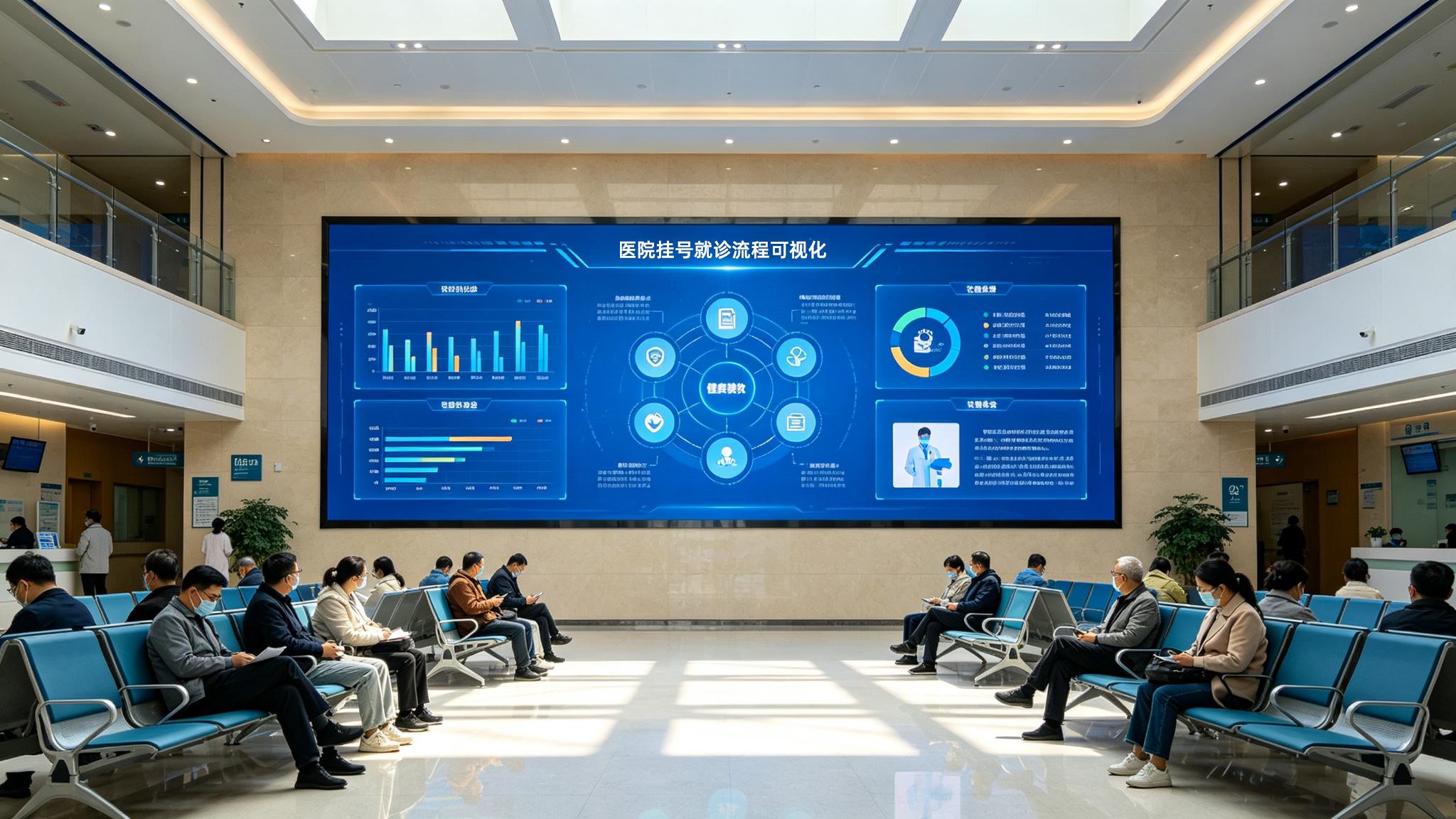
Packaging technology determines a display's physical protection and image quality ceiling, making it the first fundamental dimension to clarify in hospital selection. Mainstream options include SMD, COB, and GOB, each suited to different needs. SMD (Surface-Mount Device) features LEDs individually soldered onto the PCB—mature, cost-effective, with wide brightness adjustment; outdoor models can be customized above 8000cd/m², ideal for bright hospital entrance areas or outdoor guidance screens. However, exposed LEDs risk detachment in dusty or humid environments, making SMD better for indoor areas with controlled dust and minimal contact. COB
2. Scenario Customization: From Simple Display to Interactive Information Terminal
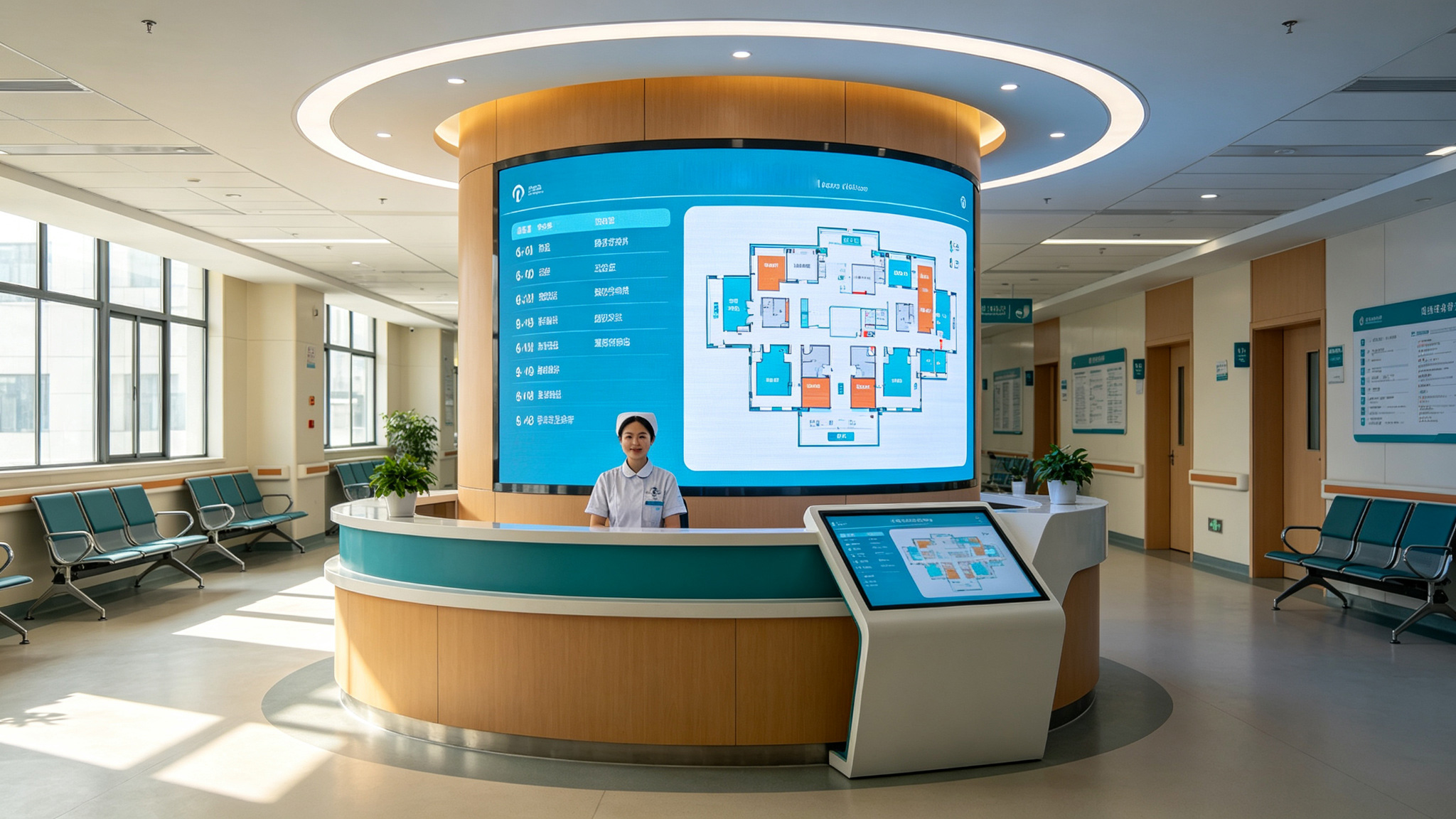
Hospital LED displays are far more than information carriers—they are interactive terminals deeply integrated into medical workflows and patient experience. Departmental needs vary widely: outpatient lobbies require clear department layouts and queue-calling information; emergency corridors need high-brightness guidance screens with emergency switching; pediatric waiting areas benefit from interactive displays to soothe young patients. Stonbel's scenario-based customization supports special forms like irregular-shaped LED, LED film screens, and LED floor tiles, enabling flexible splicing and curved adaptation to hospital architecture. For example, curved LED
3. Core Parameters: Hard Thresholds for Refresh Rate, Grayscale, and Color Gamut
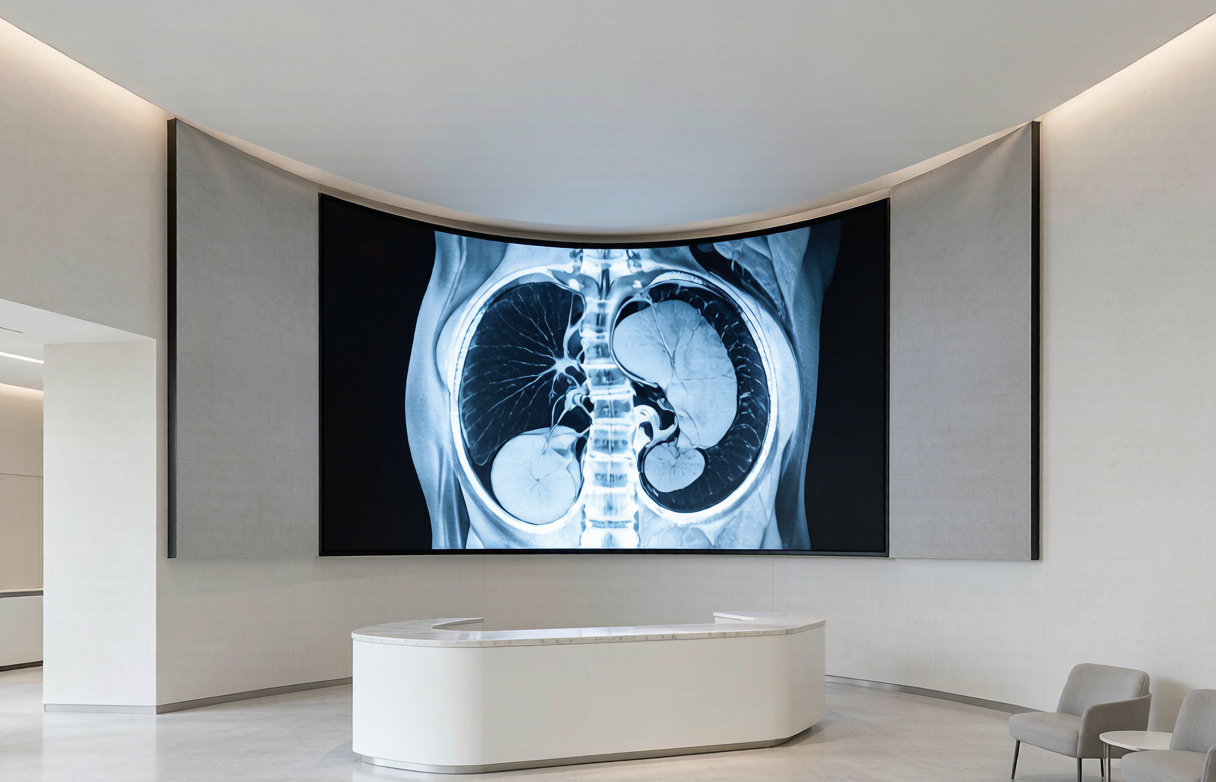
Once packaging and scenario logic are set, core parameters become the hard criteria validating product performance. For hospital LED displays, refresh rate, grayscale, and color gamut collectively define the professional baseline of visual experience. On refresh rate: during academic conference recording, remote consultations, or surgical demonstrations, displays are often filmed—insufficient refresh rates cause scanning lines that compromise recording quality. Stonbel's LED displays achieve refresh rates up to 7680Hz, far exceeding standard 1920Hz or 3840Hz, ensuring flicker-free images under cameras for medical teaching and telemedicine recording. Grayscale affects transition smoothness—22-bit grayscale renders fine color
4. Certifications & After-Sales: Invisible Backbone for Long-Term Reliability
Hospital LED displays typically run 24/7, and failures can disrupt medical information delivery and patient navigation—making manufacturer certifications and after-sales capability an invisible yet critical selection dimension. Stonbel holds 3C, CE, FCC, ISO14001, ISO9001, and ROHS certifications, plus military and classified-project qualifications, validating reliability under demanding conditions. These military and classified credentials indicate high-level security controls in design, production, and data transmission—particularly relevant for displays handling patient privacy or research data. On after-sales, Stonbel's service network covers 31 provinces nationwide with resident service points for rapid on-site support—essential in time-critical hospital environments. Average response time is under 4 hours,
Q1: How to choose protection ratings for hospital LED displays?
A: Protection ratings depend on installation environment. For indoor areas like outpatient lobbies, waiting zones, and corridors—where foot traffic is high and cleaning may involve damp cloths or disinfectant sprays—IP54 or higher is recommended to resist dust and moisture ingress, preventing LED or circuit damage. For outdoor entrances, emergency lanes, or fever clinic exposed areas, displays face rain, sun, and potential washdowns, requiring IP65—fully dustproof and resistant to powerful water jets for stable operation in harsh weather. Special zones like sterilization supply rooms, laundry facilities, or labs with high-temperature steam, chemical disinfectant vapors, or high humidity exceed standard ratings—Stonbel's GOB products support IP65+ with a transparent resin seal that effectively blocks moisture and corrosive gases,
Q2: What pixel pitch is appropriate for hospital LED displays?
A: Pixel pitch (center-to-center distance between pixels) directly determines clarity and viewing distance, so selection should be based on actual viewing distances in the installation space. For information screens above outpatient lobbies, waiting areas, or pharmacies where viewing distances are typically 3–5 meters, P1.5 to P2.5 is recommended—ensuring clear text and queue information while controlling costs. For command centers, consultation rooms, or telemedicine classrooms with viewing distances of 1–2 meters, small-pitch products below P1.0 are needed—Stonbel's COB series supports P0.7 to P1.8 for seamless splicing and ultra-high-definition display, accurately presenting medical imaging details and 3D models. For outdoor entrance screens or building facade guidance displays with viewing distances above 10 meters, P3 to P6 balances cost and effect. Note that smaller pitch is not
Q3: How to prevent flicker affecting camera recording on hospital LED displays?
A: Hospitals often film displays during academic conference recording, remote consultations, surgical demonstrations, or VIP visits. Insufficient refresh rates cause black scanning lines or strobing in camera footage, degrading recording quality. The key is selecting high-refresh-rate LED displays. Stonbel's LED displays achieve up to 7680Hz, far exceeding industry-standard 1920Hz or 3840Hz, ensuring stable, flicker-free images under high-speed shutters or various angles for medical teaching and telemedicine recording. Grayscale also affects smoothness—22-bit grayscale renders fine brightness transitions, preventing banding or stepped false contours during filming, especially for detailed content like medical images or surgical footage. When purchasing, request actual on-site camera test videos using phones or professional cameras at different frame rates and shutter speeds to verify performance under
Hospital LED display selection requires evaluating packaging technology, scenario function, core parameters, and supplier qualifications. COB suits consultation centers needing high image quality; GOB offers cost-effective protection for corridors; SMD handles outdoor high-brightness scenarios. Interactive floor tiles benefit pediatric waiting areas. Key specs include 7680Hz refresh rate, 22-bit grayscale, and NTSC≥130% color gamut for medical imaging. Certifications (3C, CE, FCC, ISO14001, ISO9001, ROHS, military secrecy) plus local service networks ensure reliability. Stonbel offers full LED product range (P0.7-P10) with Beijing Union Hospital project experience, supporting selection, design, deployment, and maintenance.