As the hub for city operations, emergency dispatch, and public safety, a command center's display system directly impacts decision efficiency. Displays are upgrading from 'able to show' to 'clear, usable, and manageable.' Yet, terms like P0.7 fine pitch, COB vs. SMD packaging, and 7680Hz refresh rates often confuse buyers. Drawing on Stonbel's experience with Zhengzhou East Station and Wuhan Optics Valley, this article provides a practical checklist to help integrators and end users avoid parameter traps and select displays truly suited for command scenarios.
Editor's Note
Procurement decisions for command center LED displays often involve budgets ranging from hundreds of thousands to millions. A wrong choice can lead to visible pixelation, high maintenance costs, or even delayed critical information display, impacting emergency response. As an industry media outlet, we have observed that many project failures stem not from product quality but from a mismatch between needs and technology—such as choosing SMD packaging in confidential command scenarios, leading to insufficient protection, or overlooking grayscale levels in dispatch rooms where color accuracy is critical. To address this, we invited display manufacturer Stonbel to share insights from their experience serving clients like Huawei, Peking University, and the Guangdong Provincial Emergency Management Department, breaking down selection logic through real cases. This article avoids parameter overload, focusing instead on three common pain points: How to balance image quality and cost? How to ensure stability in complex environments? How to achieve efficient
Core Coverage
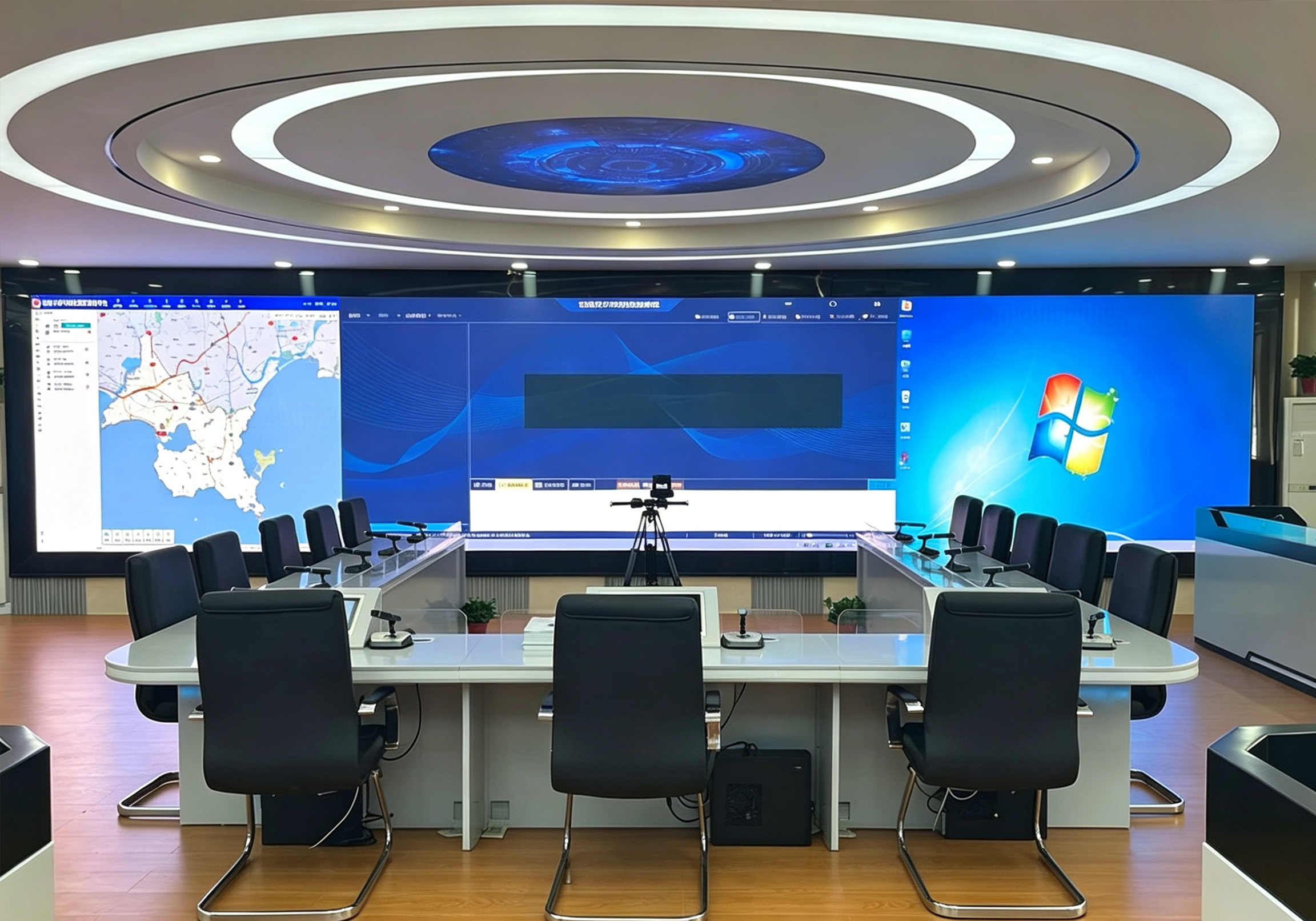
From Zhengzhou East Railway Station to Wuhan Optics Valley, the selection pain points for command center LED displays show high commonality. At Zhengzhou East Railway Station, the integrated command hall needed to coordinate train information, security surveillance, and emergency instructions. The original solution used dispersed terminals from multiple brands, requiring manual on-site updates with synchronization delays up to 30 minutes. Stonbel deployed a 120m² GOB P2.5 indoor display, leveraging IP65 dustproof and impact-resistant features for high-traffic environments, and integrated it into the station's unified control system, reducing information update latency to just 10 seconds. This case confirms that the primary considerations for command center LED displays are not brightness or price, but 'system
Official Clarifications
Regarding command center LED display selection, Stonbel provides three technical clarifications. First, packaging choice should be based on the operating environment: SMD packaging features independently soldered lamp beads with good heat dissipation, supporting P1.25-P10 across all specifications, suitable for standard indoor halls; COB packaging involves direct chip bonding without lamp bead structures, achieving IP65 protection, ideal for confidential server rooms and high-cleanliness scenarios; GOB packaging adds a transparent resin fill over SMD, offering dustproof and impact-resistant performance close to COB at lower cost, particularly suited for crowded, high-humidity industrial command centers. Second, brightness is not always better—indoor command screens are recommended at 800-1500cd/m², while outdoor models require customization above 8000cd/m² to avoid light pollution and energy waste. Third, smart interaction and networking features are becoming standard. Stonbel's command center LED displays support 5G/WiFi/4G connectivity, remote maintenance, and synchronized multi-signal input, with built-in human sensing interaction modules for real-time
Industry Significance
The selection criteria for command center LED displays reflect a broader industry shift from 'hardware delivery' to 'scenario-based services.' Previously, buyers focused on pixel pitch and brightness figures; today, as the Zhengzhou East Railway Station case shows, information synchronization efficiency (from 30 minutes to 10 seconds) is the gold standard for measuring system value. This requires manufacturers to provide not just displays but also integrated capabilities in control software, signal processors, and maintenance platforms. Stonbel's practice demonstrates that when command center LED displays integrate with campus booking systems, financial data interfaces, and emergency instruction platforms, their value transcends display itself, becoming a multiplier for organizational efficiency. Another industry signal is the stratified application of packaging technologies. COB, SMD, and GOB are not substitutes but segmented solutions for different environments and budgets—COB targets high-end image quality, SMD covers general
Q1: How to choose pixel pitch for command center LED displays? What's the difference between P0.7 and P1.8?
A: Pixel pitch determines pixel density and viewing distance. P0.7, using COB packaging with ultra-fine pitch, suits confidential command rooms with 2-3 meter close viewing, delivering seamless, grain-free immersive visuals. P1.8 fits dispatch halls with 3-5 meter viewing distances at better cost-effectiveness. Stonbel's COB fine-pitch series covers P0.7-P1.8, with 3840Hz refresh rate, IP55 protection, and lifespan ≥100,000 hours. If budget is limited, SMD packaging at P1.25-P2.5 can meet standard needs, though lamp bead graininess may be noticeable at close range.
Q2: Are refresh rate and grayscale levels important for command center LED displays?
A: Absolutely. Below 1920Hz refresh rate, fast-moving content like scrolling surveillance video can flicker, causing eye fatigue over extended viewing. Stonbel's command center LED displays support up to 7680Hz, far exceeding human perception thresholds. Grayscale affects dark detail rendering; 22-bit grayscale delivers 4096 gray levels, clearly distinguishing target outlines in nighttime monitoring or dark map areas. With tighter budgets, we recommend at least 3840Hz refresh rate and 16-bit grayscale to ensure baseline image quality.
Q3: What protection rating is needed for LED displays in complex command center environments?
A: Command centers may face dust, humidity, and electromagnetic interference. Stonbel offers three protection options: SMD packaging with IP65 rating for clean indoor server rooms; COB packaging with no lamp bead structure, achieving IP65 with a smooth, easy-to-clean surface, ideal for confidential or GMP cleanroom areas; GOB packaging with transparent resin fill over SMD, providing IP65+ dustproof and impact resistance for high-traffic or industrial settings. For areas with liquid splash risk, choose IP65 or higher and ensure the screen includes moisture-resistant coating.
Selecting a command center LED display is a balance of needs, technology, and cost. Real cases, from Zhengzhou East Station's improved centralized control to Wuhan Optics Valley's clean-room adaptation, show that focusing on application scenarios prevents parameter pitfalls. Stonbel offers a full range from P0.7 to P10, three packaging processes (SMD/COB/GOB), and service coverage across 31 provinces, providing scalable solutions for various command levels. Remember, a display's ultimate value lies not in specs but in its ability to show details clearly and transmit commands reliably when it matters. Use this checklist as a practical guide to ensure every investment pays off.