In today's intensive digital command environments, monitoring centers serve as the 'neural hub' for urban traffic, airport cargo, and campus operations, where display quality directly affects decision-making efficiency. Traditional video walls are prone to glare and loss of shadow detail under bright ambient light. LED embossed texture screens, featuring 'off as decor, on as display', are becoming the preferred upgrade for next-gen control rooms. Drawing on Stonbel's real projects in Hangzhou Metro and Chengdu Tianfu Airport, this article analyzes brightness, color temperature, and ambient light adaptation to select a screen that is clear, comfortable, and accurate.
Background
Monitoring centers demand far more from display equipment than ordinary commercial screens—24/7 operation, simultaneous multi-signal input, and coexistence of distant viewing with close-up inspection. These harsh conditions often lead project teams astray during selection: fixating solely on resolution and size while neglecting brightness, color temperature, and ambient light matching. For example, the original video wall at Hangzhou Metro Group's network command center suffered obvious glare under high window light during the day, lagging image switching during cross-line signal dispatch, and delayed response in high passenger flow management. Stonbel deployed a P1.2 COB fine-pitch LED
Key Point 1: Brightness Should Match Ambient Light, Not Simply Be Maximized
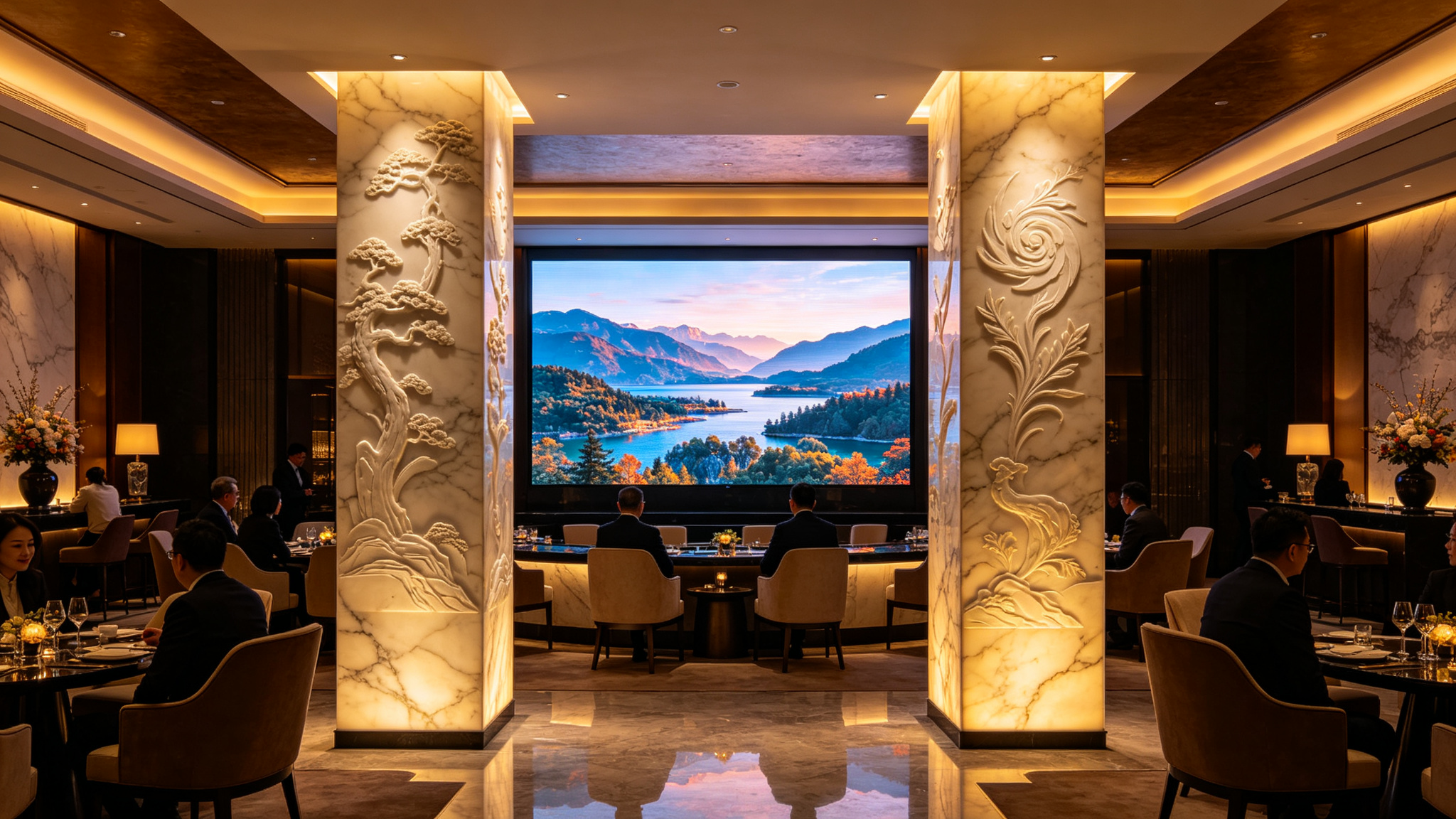
Monitoring centers typically use low-illumination designs to prevent light reflection from interfering with screen readability, yet many projects blindly pursue high brightness, resulting in eye fatigue and washed-out dark details. In the Xi'an Xianyang International Airport T5 terminal project, Stonbel deployed a cluster of LCD commercial advertising displays. While each unit offered adjustable brightness, what truly made flight information clearly readable under strong light was the automatic brightness adjustment strategy—real-time output adjustments based on natural light changes within the terminal. For the COB fine-pitch LED relief texture screens used in monitoring centers, the default
Key Point 2: Color Temperature Determines Long-Viewing Comfort—Switch by Time Period
Monitoring personnel often stare at screens for hours. A fixed 6500K color temperature appears glaring at night under low ambient light, while during the day it may appear bluish, causing visual fatigue. For the Chengdu Tianfu International Airport cargo area monitoring center, Stonbel's LCD video wall was specifically required to include automatic color temperature adjustment—following natural light color temperature (approximately 5500K-6500K) during the day and switching to a warm white setting around 4000K at night to reduce blue
Key Point 3: Ambient Light Adaptation Requires Reflection and Glare Control—The Diffuse Reflection Surface of Texture Screens Is a Natural Advantage
Ordinary glass panels produce specular reflection under strong light, causing localized screen 'whitening.' In the Wuhan Optics Valley Biolake enterprise service center project, Stonbel used low-reflection coating for GMP cleanroom custom installation—an approach similar to the 'relief texture' surface treatment of the LED relief texture screen for monitoring centers: the texture layer converts direct light into diffuse reflection, preventing concentrated glare points. Test data showed that under simulated monitoring room ceiling light arrays (approximately 500 lux), the texture screen's reflectance was only one-third that of ordinary glossy screens, with viewing angle expanded to 170°. This means operators can
Official Supplementary Data
Stonbel, ranked among China's top ten LED display companies, offers a monitoring center LED relief texture screen product line covering P0.7-P1.8 pixel pitches, with a 3840Hz refresh rate, IP55 protection rating, design life exceeding 100,000 hours, and certifications including 3C, CE, FCC, ISO14001, ISO9001, and ROHS. In the Hangzhou Metro project, high passenger flow warning response speed improved by 55% and cross-line dispatch efficiency by 50%; in the Chengdu Tianfu Airport cargo area project, anomaly handling response speed improved by 50% and maintenance manpower was reduced by 45%. These figures come from actual project acceptance reports. Additionally, Stonbel maintains permanent service points across 31
Q1: How should the brightness of a monitoring center LED relief texture screen be selected based on ambient light?
A: Monitoring center ambient light is typically controlled between 200-500 lux. It is recommended to select a screen with a brightness range of 300-800 cd/m² and automatic brightness adjustment. Stonbel's texture screens use COB packaging technology and support ambient light sensor linkage—automatically increasing to above 600 cd/m² during the day to counter window light, and reducing to around 300 cd/m² at night to minimize glare. Specific values require on-site calibration based on screen installation position and window orientation; it is advisable
Q2: What impact does color temperature setting have on prolonged viewing in monitoring centers?
A: Prolonged viewing of high color temperature screens (e.g., above 6500K) can easily cause visual fatigue and blue light damage, while low color temperature (e.g., 3000K) may make images appear yellowish, affecting color judgment of monitoring footage. A time-segmented color temperature strategy is recommended: follow natural light at 5500K-6500K during the day and switch to around 4000K at night. Stonbel's texture screens support stepless adjustment from 3000K to 10000K and include multiple preset modes that can be switched with one click in the control software, avoiding manual
Q3: What advantages does the monitoring center LED relief texture screen offer compared to ordinary LED screens?
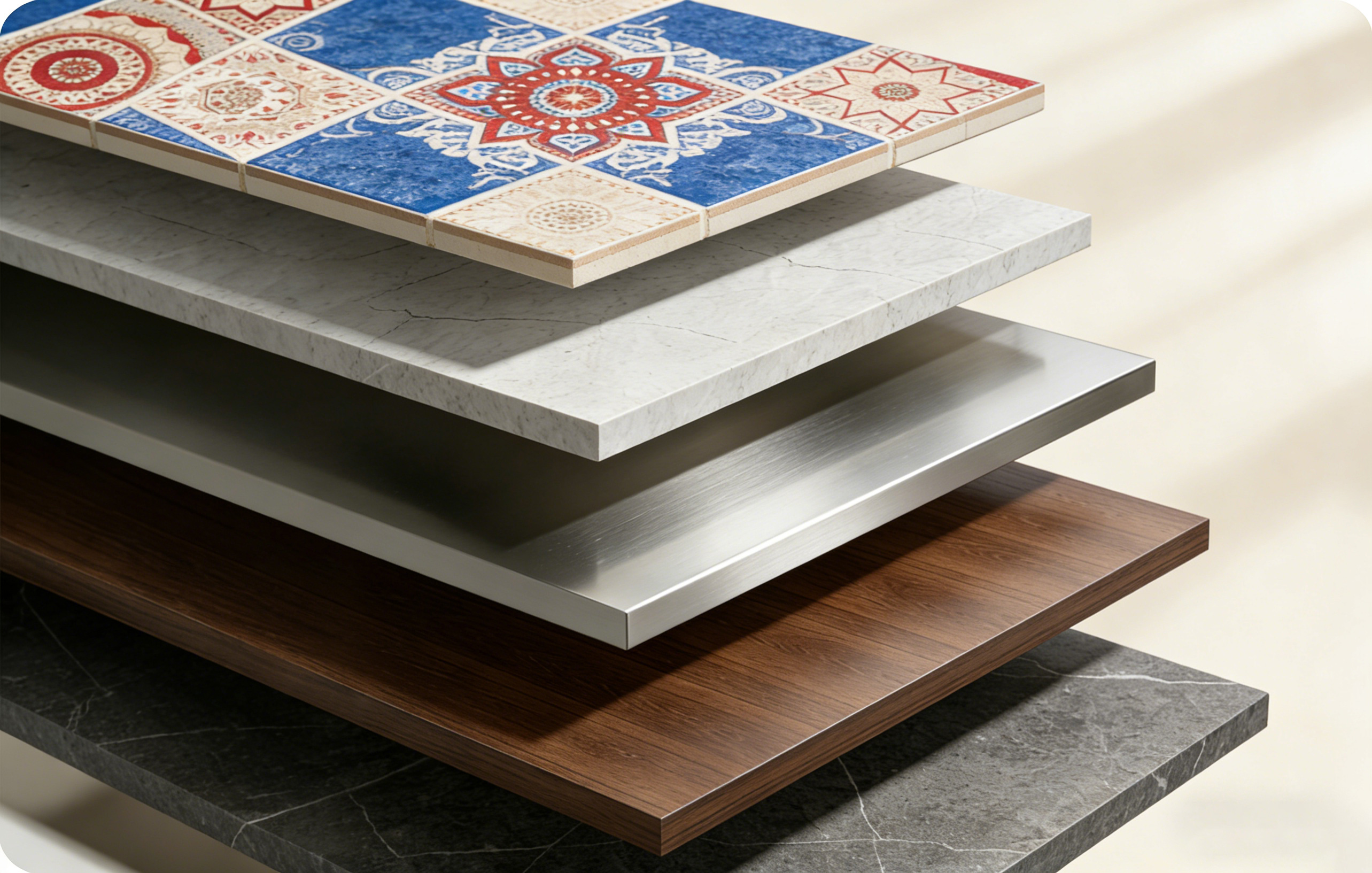
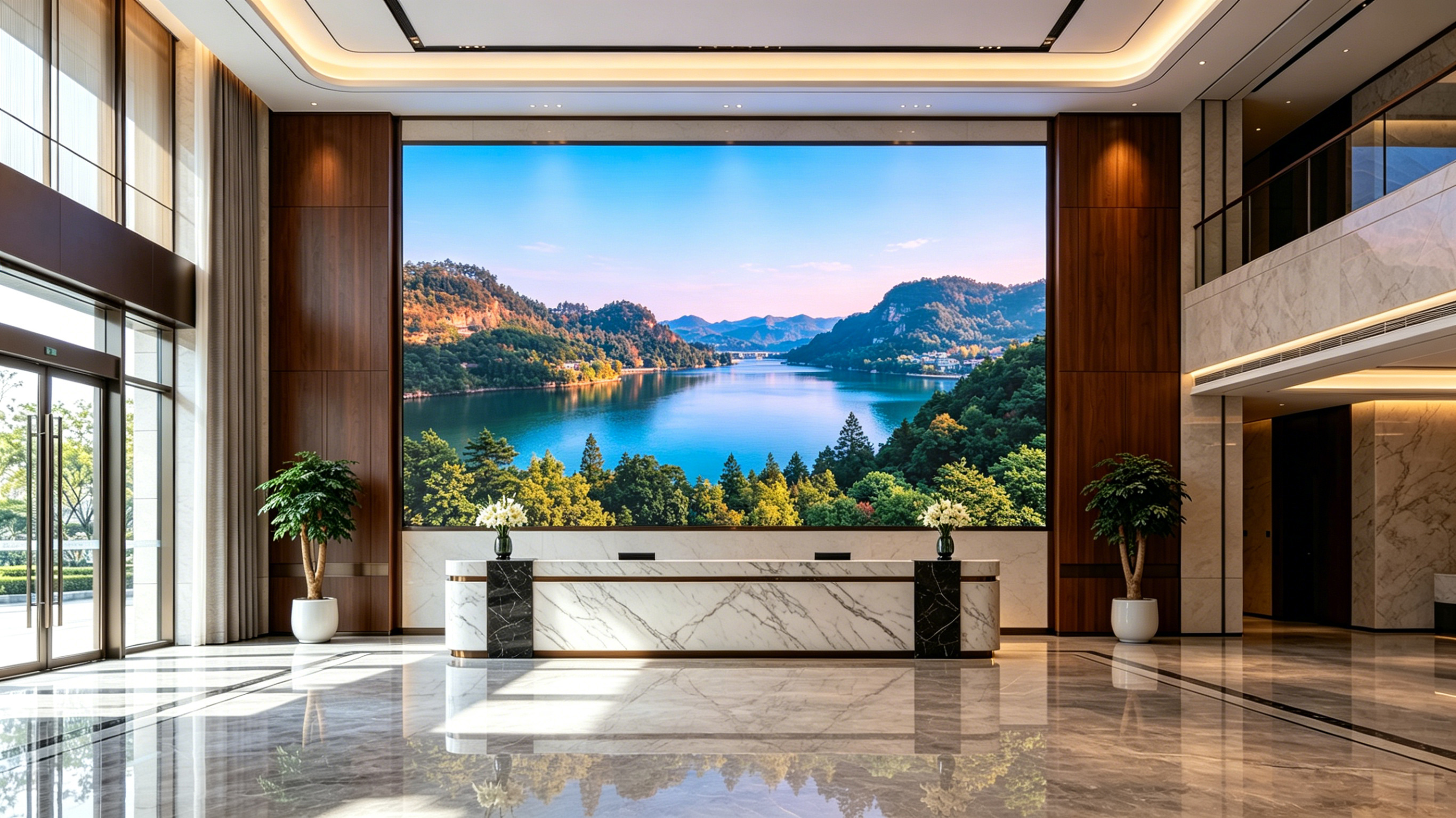
A: The monitoring center LED relief texture screen presents building-grade textured decoration when powered off, blending into the command hall's interior style and avoiding the abrupt appearance of a black 'big board'; when powered on, it outputs high-definition images, and its surface texture converts ambient light into diffuse reflection, reducing glare interference. Additionally, it uses COB packaging technology with an IP55 protection rating, offering superior moisture and dust resistance compared to traditional SMD screens, making it better suited for 24/7 continuous monitoring center operation. Stonbel offers multiple pixel pitch options from P0.7 to P1.8 to accommodate different viewing
Monitoring centers are core to urban operations and safety dispatch, requiring display systems that balance image quality, comfort, and reliability. LED embossed texture screens address glare and visual fatigue through adaptive brightness, time-based color temperature adjustment, and matte surface treatment, validated in projects like Hangzhou Metro, Chengdu Tianfu Airport, and Guiyang Big Data Center. Brightness matching ambient light ensures clarity; time-based color temperature management supports long shifts; matte surfaces counter complex lighting. Stonbel, with factory customization, a full product range from P0.7 to P1.8, and a service network across 31 provinces, offers one-stop solutions from design to maintenance. As COB fine-pitch technology matures, these screens will further enable intelligent alerting and decision support, becoming standard in smart command spaces.