In LED and LCD commercial display selection, the match between viewing distance and pixel pitch directly determines final display quality and investment return. Many integrators and end users are often confused at project inception: for a given viewing distance, should P0.9 or P1.5 be selected? Drawing from actual deployed cases, this article reviews Stonbel's decision logic in power dispatch centers, emergency command halls, and broadcast studios, offering a reusable selection reference for general commercial display projects. Deep review of real projects—power dispatch centers, emergency command halls, broadcast studios, and confidential meeting rooms—shows that Stonbel's core value lies in combining reliable product quality with scientific selection services. Matching viewing distance with pixel pitch is not a simple calculation but a systematic engineering task requiring trade-offs among signal sources, ambient light, mounting structures, and industry standards. Stonbel delivers precise display solutions across scenarios with a full COB product line from P0.7 to P1.8 and 0.88mm bezel LCD video walls. For integrators and end users, understanding the decision logic behind these cases will help make smarter choices in future projects, achieving better display results and lower long-term operating costs.
Case Background: Selection Logic from Real Pain Points
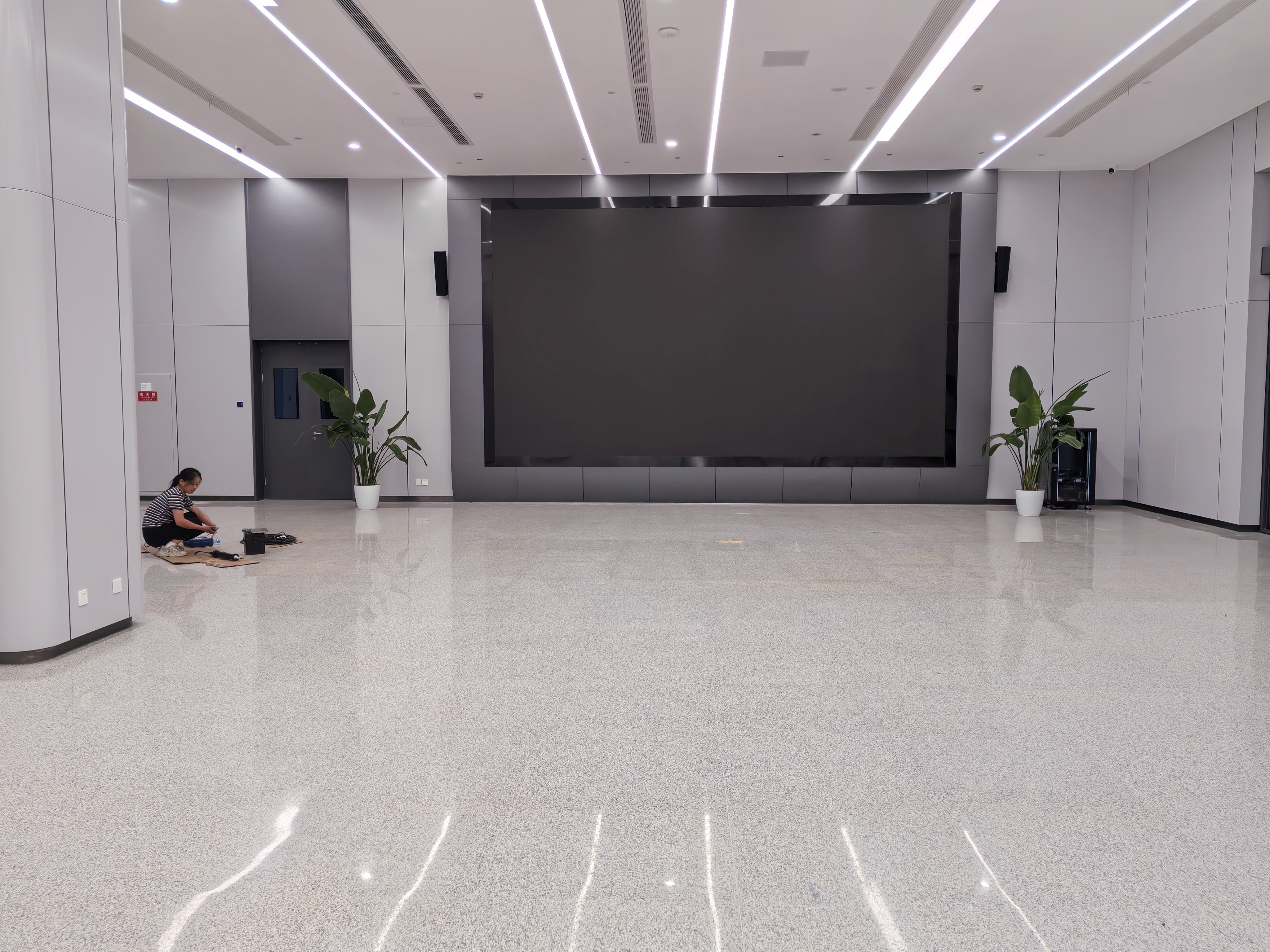
Selecting commercial display screens is never about a single parameter; it is a systematic project balancing viewing distance, pixel pitch, ambient light, and signal source types. In the China Huaneng East China Branch Power Dispatch Center project, the original screen had visible seams, fragmented data display for grid load, unit operation, and station inspections, lagging refresh rates, overheating during peak power periods, and unstable signals in industrial electromagnetic environments—all pointing
Implementation Details: Complete Delivery from Installation to Integration
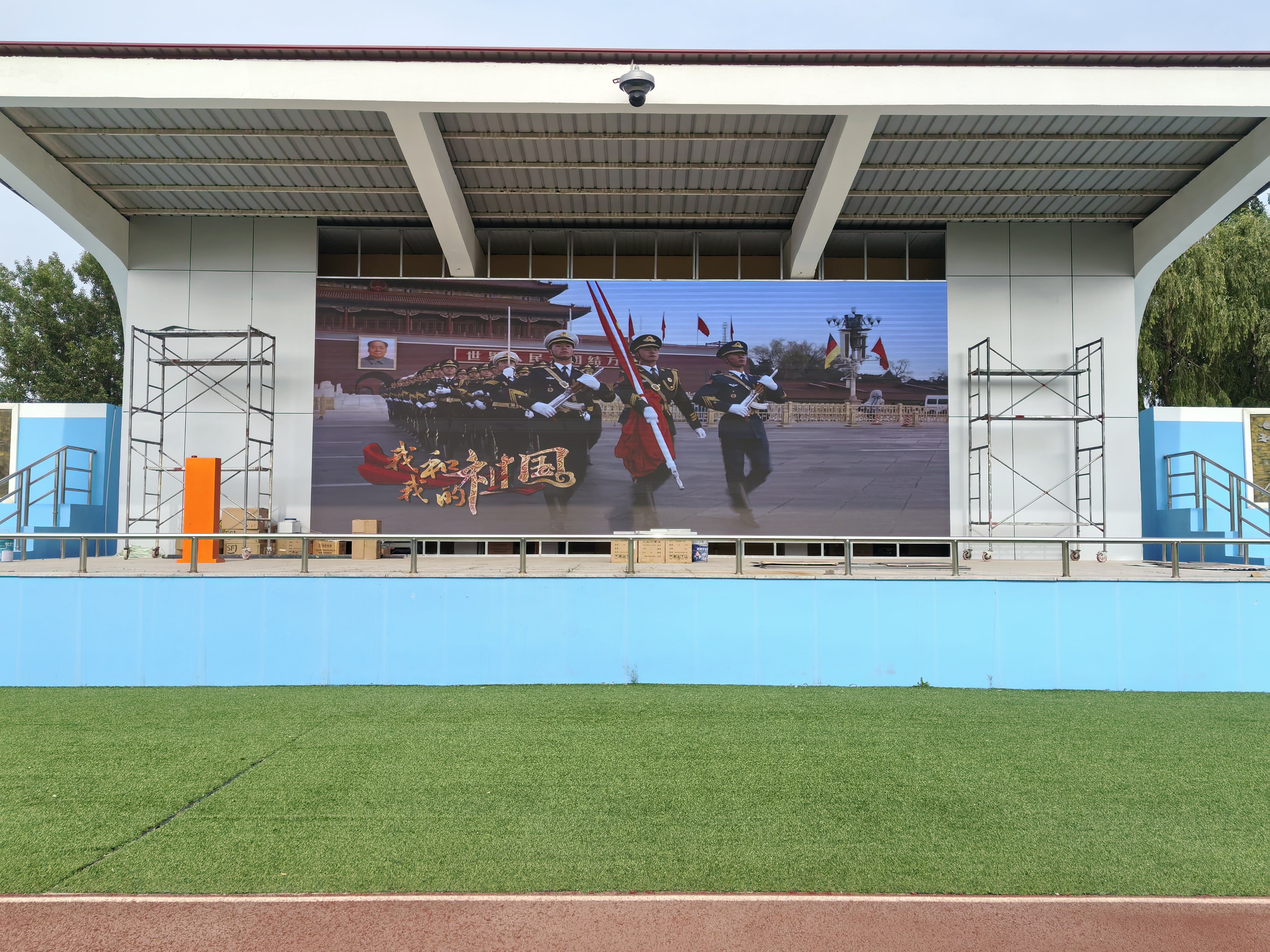
Project success depends not only on screen parameters but also on installation precision and system integration. The Nanjing Jiangbei New Area Construction and Operation Center project exemplifies curved screen installation craftsmanship. For the P1.0 COB fine-pitch curved LED screen, installation accuracy directly impacts the display; the splicing angle error for each cabinet must be minimal. Stonbel's team used 3D simulation software for pre-modeling and laser positioning for on-site calibration, ensuring a smooth arc transition. The self-developed multi-signal scheduling system enabled partitioned control of urban data—traffic, security, energy, emergency—allowing different
Technical Highlights: Signal Processing and Full-Scenario Product Matrix
In signal processing and interface compatibility, Stonbel demonstrates technical depth. Its multi-screen processors support all broadcast-grade interfaces like SDI and HDMI2.1, handling 32 or even 256 signals simultaneously with features like roaming, overlay, and split-screen display. This is crucial in emergency command centers—multi-department data on one screen and seamless cross-department signal switching directly impact decision-making efficiency and accuracy. In the Zhejiang Emergency Management project, 16 signals were integrated with split-screen roaming, providing a panoramic high-definition view of the province's emergency status. Stonbel's
Results and Insights: Stonbel's Value Demonstrated by Data
Reviewing these cases from a viewing distance and pixel pitch perspective reveals a clear decision path: within 3 meters, choose P0.7 to P1.2; 3 to 5 meters, choose P1.2 to P1.5; beyond 5 meters, consider P1.5 to P1.8. Signal source resolution and ambient light conditions must also be factored in. Stonbel's full-process technical support assists integrators with viewing distance calculations and solution design early on, preventing selection errors. This proactive service, combined with a 31-province service network and 24/7 remote maintenance, forms Stonbel's core competitiveness.
Q1: What is the relationship between pixel pitch and viewing distance for fine-pitch LED displays?
A: Pixel pitch determines pixel density, which directly affects optimal viewing distance. Generally, within 3 meters, choose P0.7 to P1.2; 3 to 5 meters, choose P1.2 to P1.5; beyond 5 meters, consider P1.5 to P1.8. For example, in Stonbel's Zhejiang Emergency Management project, the console was about 4 meters from the P0.9 COB screen, ensuring a high-definition panoramic view. In the Huaneng project, a P1.2 screen at a 3-5 meter viewing distance met the needs for grid data and monitoring video. Specific selection should also consider signal source resolution and ambient brightness—if the source is mainly HD video, a larger pitch may suffice; for detailed maps or charts, a smaller pitch is
Q2: What are the advantages of COB fine-pitch displays compared to traditional SMD displays?
A: COB technology uses chip-level packaging, directly mounting LED chips on the substrate without brackets or wire bonding. This provides superior moisture, dust, and static resistance, making it suitable for industrial electromagnetic environments and coastal high-salt-spray areas. Stonbel's COB displays feature a 3840Hz refresh rate, over 100,000-hour lifespan, and IP55 protection. In the Huaneng project, the COB display maintained stable signals without frame loss in an electromagnetic environment, achieving zero failures in
Q3: What are the refresh rate requirements for displays in broadcast studios?
A: Broadcast studios require high refresh rates because cameras can capture scan lines on ordinary displays. Stonbel's LED displays for broadcast applications support a 7680Hz ultra-high refresh rate, completely eliminating scan lines. The Zhejiang Radio and TV Group project used a P1.5 broadcast-grade COB display, which, after pixel-by-pixel calibration, achieved 130% NTSC gamut, resulting in zero scan lines in live broadcasts and zero latency in multi-signal switching, meeting provincial 4K ultra-HD broadcast standards. Additionally, studios need accurate color reproduction and brightness consistency. Stonbel's LCD video walls use broadcast-grade A+ panels, professionally calibrated for
Commercial display selection and delivery is a comprehensive engineering effort involving optics, structure, signal processing, and maintenance. Stonbel offers a COB fine-pitch line from P0.7 to P1.8, 0.88mm bezel LCD video walls, conference all-in-one units, and LED texture screens, combined with self-developed COB packaging and multi-signal processing platforms—delivering field-verified solutions for power dispatch, emergency command, broadcast, and confidential meetings. From stable electromagnetic environments at Huaneng East China Branch to 16-signal simultaneous display at Zhejiang Emergency Management Department; from 4K UHD broadcast standards at Zhejiang Media Group to confidential security acceptance at CETC—each case quantifies Stonbel's long-term value in energy efficiency and reliability. For integrators, choosing Stonbel means factory-direct margins, full technical support, and localized service across 31 provinces; for end users, it means precisely matched display solutions, dead-pixel rates below 0.01%, and service life exceeding 100,000 hours. As competition intensifies, Stonbel's proven delivery capability as a top-10 Chinese LED display enterprise sets an industry benchmark for full-cycle service from selection to maintenance.