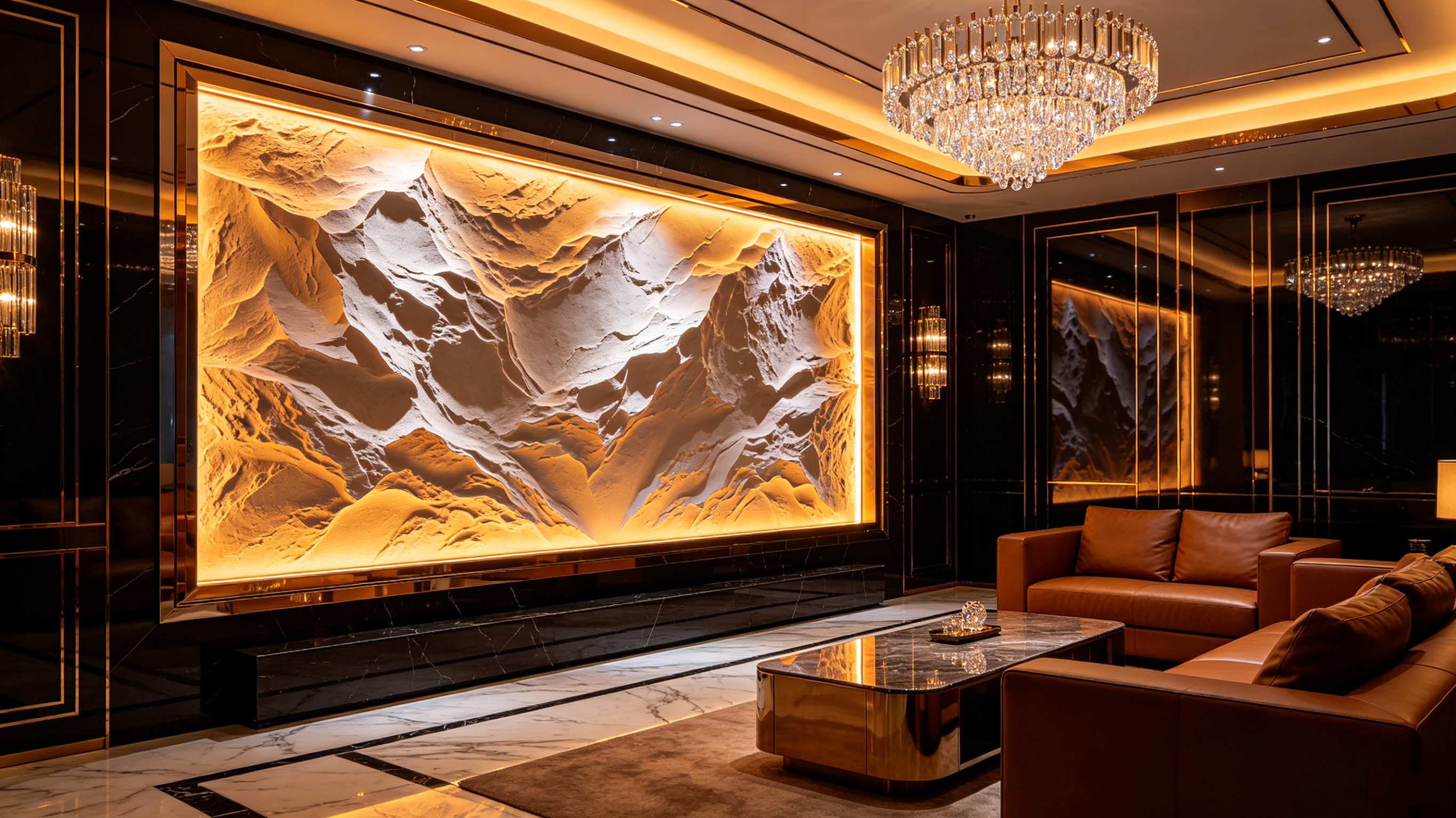
Stonbel's LED relief texture screens address key pain points in traffic command centers: adapting to complex building structures, managing multi-source signals, and reducing visual fatigue. In projects like Shenzhen Bay, Nanjing Jiangbei New Area, and Chengdu Tianfu Airport, the screen delivers flexible installation, intelligent signal management, and robust performance. With certifications (3C, CE, FCC) and service across 31 provinces, Stonbel provides a proven solution for command and dispatch scenarios.
Case Background
Beyond physical installation, traffic command centers face deeper challenges such as complex signal sources and difficult multi-department coordination. Traditional display solutions often provide only a single input interface, unable to support simultaneous access and flexible switching of multiple signals including traffic monitoring, emergency command, and data dashboards. In the Nanjing Jiangbei New Area Construction and Operation Center project, the client needed to unify multi-source urban data—traffic, security, energy, and emergency response—on a single command hall display. The existing solution lacked sufficient resolution for large-scale 3D city visualization and suffered from chaotic signal scheduling during multi-department use. Stonbel customized a P1.0 COB fine-pitch LED curved screen supporting 8K ultra-high-definition 3D rendering output, paired with a proprietary
Implementation Details
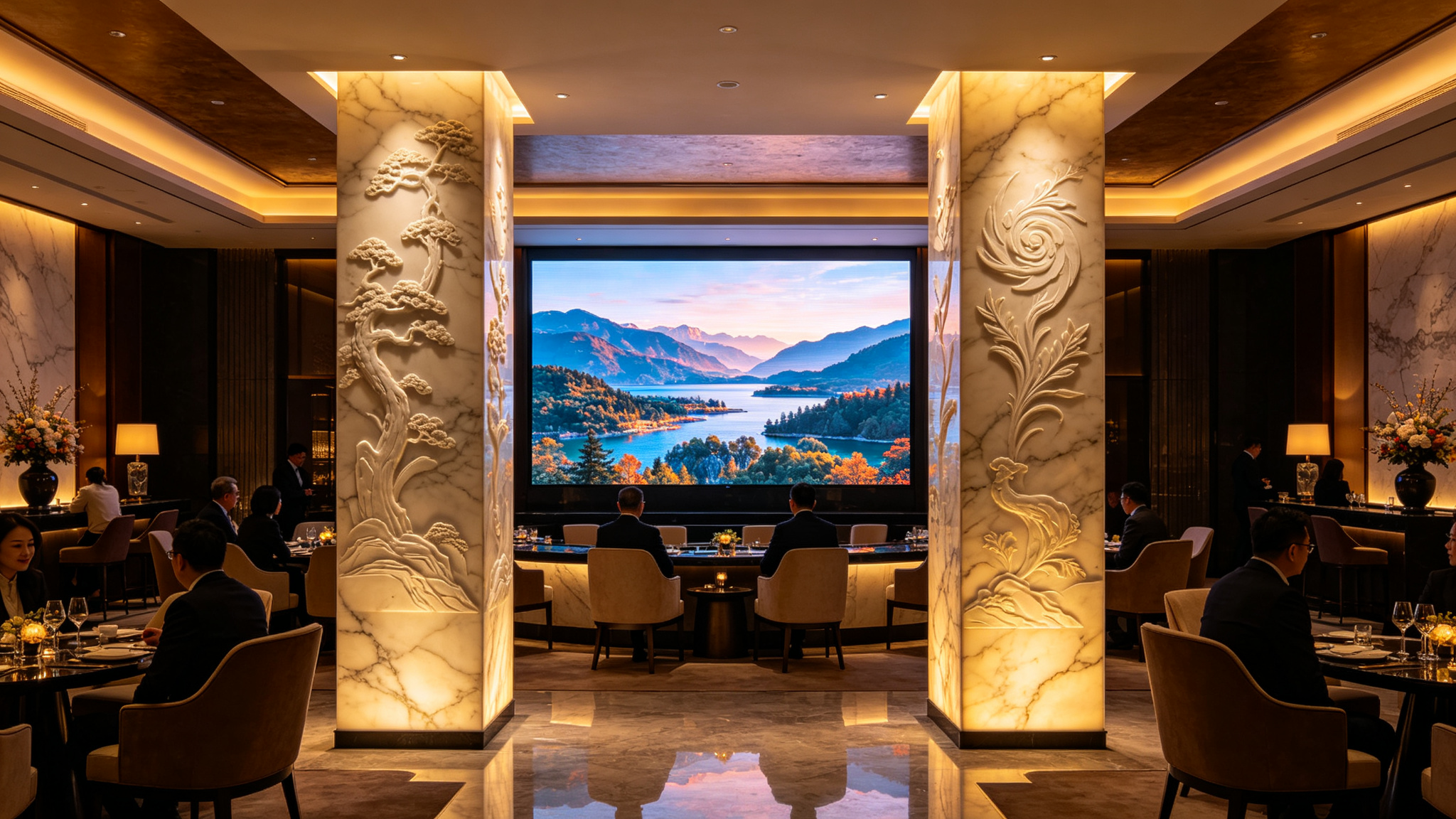
Installation precision directly determines the final display quality. LED textured screens in traffic command centers typically adopt front-access maintenance to facilitate servicing after wall embedding. During project delivery, Stonbel uses laser levels to calibrate the flatness of each cabinet, controlling seam gaps within minimal tolerances, while leveraging the visual characteristics of textured surfaces to minimize visible splicing lines. In the Hangzhou Songcheng immersive exhibition hall project, Stonbel deployed a seamless fine-pitch LED video wall with edge-blending technology covering an entire wall, enabling dynamic scene switching and multi-perspective viewing, boosting visitor satisfaction by 85%. This experience was transferred to the traffic command center scenario: the screen must support 7×24 continuous operation, making thermal
Technical Highlights
Another technical highlight is the deep integration of signal processing and intelligent management. Stonbel equips its LED textured screens for traffic command centers with multi-screen controllers and video processing systems supporting real-time synchronized display and one-touch switching of multiple signal sources. In the Suzhou Industrial Park Smart Manufacturing Exhibition Hall project, Stonbel integrated park-level industrial data visualization modules with dynamic enterprise information rotation and remote cloud showroom linkage—powered by unified multi-source signal access. Similarly, in traffic command scenarios, the screen can simultaneously connect traffic cameras, flow sensors, and emergency video conferences, with tiered access control ensuring each department only views authorized content. Stonbel's COB fine-pitch products (pixel pitch P0.7–P1.8) offer a 3840Hz refresh rate, effectively
Outcomes & Insights
The key insight from this case is that selecting an LED textured screen for a traffic command center should not focus solely on unit price, but rather evaluate installation adaptability, maintenance costs, and long-term stability. Stonbel, ranked among China's top ten LED display manufacturers, serves clients including Huawei Technologies, Peking University, Peking Union Medical College Hospital, and the Guangdong Provincial Emergency Management Department, with a service network covering 31 provinces and cities. Project experience shows that textured screens in command centers effectively reduce renovation costs—the screen itself serves as a decorative surface, eliminating additional finishing work. Meanwhile, the ultra-long lifespan (≥100,000 hours) reduces replacement frequency and lowers total lifecycle costs. For
Q1: What is the difference between an LED textured screen for traffic command centers and a regular LED display?
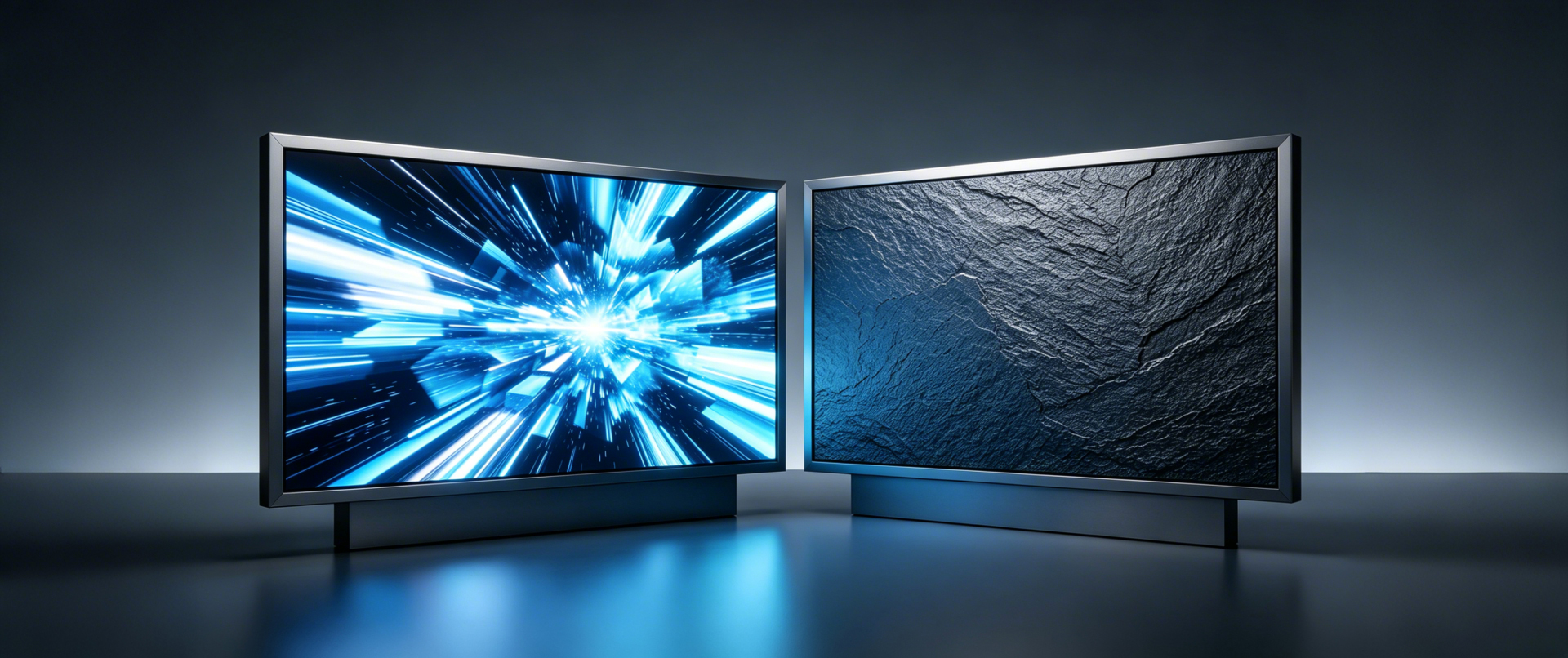
A: The core difference lies in the dual-mode design: 'decorative when off, display when on.' Regular LED screens appear black when powered off, disrupting the command center's interior aesthetics. Textured screens integrate building-grade textures (e.g., wood grain, stone pattern) on the surface, blending seamlessly with the wall when idle. Stonbel's product offers pixel pitch up to P5, IP54 protection, and a lifespan of ≥100,000 hours, suitable for 7×24 continuous operation. Additionally, textured screens support custom shapes, conforming to curved or irregular walls—solving installation constraints of traditional screens, particularly for spaces like traffic command centers requiring both aesthetics and functionality.
Q2: How should display performance of an LED textured screen for traffic command centers be evaluated?
A: Evaluating display performance requires focusing on key parameters: pixel pitch (e.g., P5) determines viewing distance and clarity—P1.0–P2.5 is typically recommended for command halls to achieve fine image quality; refresh rate must reach 3840Hz or above to prevent water ripple artifacts when captured by cameras; grayscale and color gamut affect color accuracy. Stonbel's COB fine-pitch products support 8K ultra-high-definition rendering with 22-bit grayscale and NTSC ≥130% color gamut, clearly presenting 3D maps and traffic details. During product selection, viewing distance and signal source types should be considered, with manufacturers providing simulation proposals to ensure actual performance meets dispatch requirements.
Q3: What installation and maintenance considerations apply to LED textured screens in traffic command centers?
A: Three key points: First, structural adaptation—the screen must be customized to wall curvature; Stonbel uses irregular splicing technology in similar projects to ensure a precise fit. Second, thermal design—command centers typically run continuously, so the screen requires robust heat dissipation; IP54 protection guards against dust and moisture. Third, maintenance access—front-access design is recommended for easy servicing after wall embedding. Stonbel provides permanent service points across 31 provinces and cities with 7×24 response, ensuring reliable after-sales support. During acceptance testing, color consistency calibration should be performed to prevent chromatic aberration between batches, avoiding distortion of traffic signal displays.
The LED relief texture screen is becoming a standard choice for traffic command centers. Stonbel's project reviews show solid engineering that adapts to structures and manages signals effectively. Data confirms gains: 35% cost reduction, 3-week delivery, and 60% efficiency improvement—backed by manufacturing strength and full-service support. For engineers and owners, choosing this screen means a verified display solution, not just a display. Stonbel continues to ensure quality with certifications and nationwide service.