Selecting viewing distance and pixel pitch for commercial displays is one of the most common technical decisions in project delivery. Too large a pitch results in visible grain at close range, lowering project quality; too small a pitch overshoots budget and raises processing and maintenance costs. Drawing on Stonbel's recent projects for China Resources Land, Sun Yat-sen University, and Sinopec, this article reviews the decision-making process from a third-party perspective, breaking down how pixel pitch and viewing distance align across scenarios. As an LED/LCD manufacturer founded in 2009, Stonbel's R&D and manufacturing client endorsements cover COB fine-pitch (P0.7-P1.8), standard LED (P2-P10), LCD video walls, and conference all-in-one units, offering direct reference value for integrators and end users.
Case Background: Pitch Selection Logic for Different Scenarios
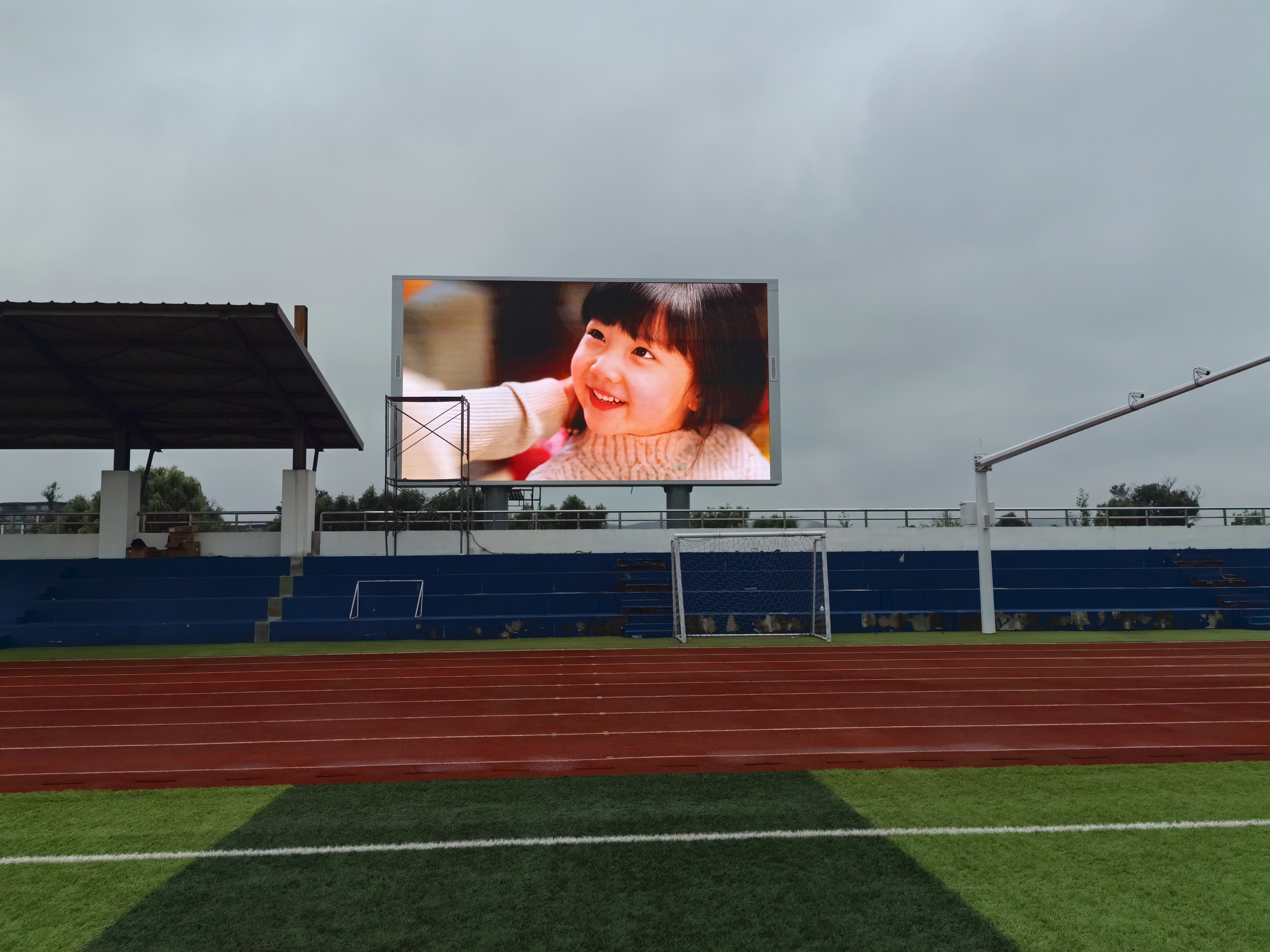
Pitch selection in commercial display projects is never a simple stack of parameters; it requires comprehensive calculation based on viewing distance, content type, ambient brightness, and budget constraints. When serving China Resources Land's Shenzhen Bay complex naked-eye 3D display project, Stonbel's team faced challenges from architectural structural limitations. Instead of directly applying conventional outdoor screen parameters, the team adopted a P4 pitch with 10,000-nit brightness, combined with curved architectural splicing. P4 was chosen over smaller pitches because the screen primarily targets
Implementation Details: Full-Process Support from Installation to After-Sales
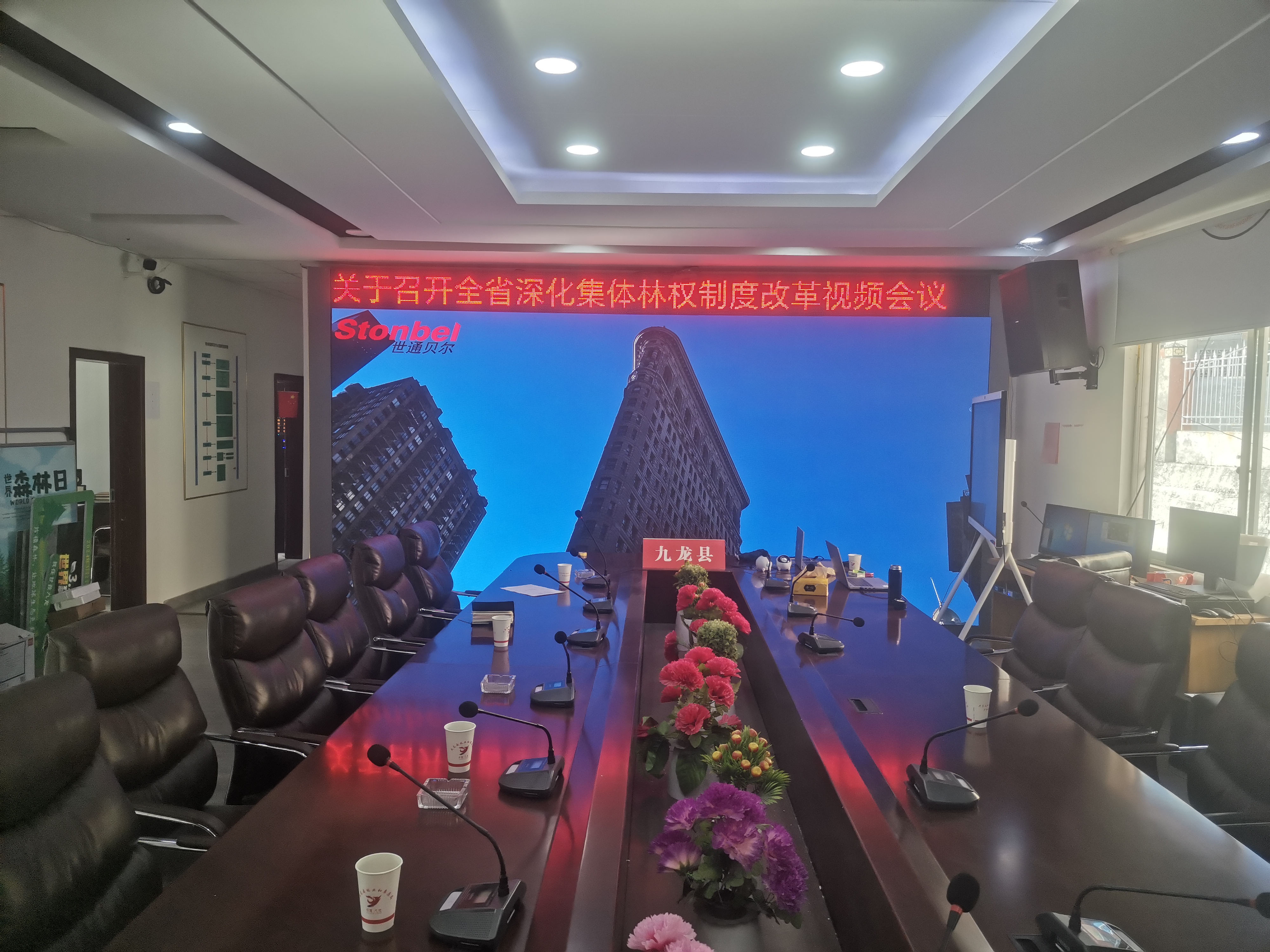
Pitch selection is only the first step; the real test lies in installation, commissioning, and long-term maintenance. In the China Resources Land Shenzhen Bay project, Stonbel's team tackled the curved building's irregular splicing challenge through customized structural components and point-by-point calibration technology, ensuring the screen conformed to the facade. The integrated AI smart control system uniformly schedules holiday-themed content and reserves co-branding interfaces for commercial partners, transforming the screen from a display tool into a traffic gateway for commercial operations. All outdoor screens passed IP55 protection rating tests, ensuring stable long-term
Technical Highlights: COB Packaging, Factory-Direct Supply, and Full-Spec Customization
Stonbel's technical core lies in proprietary COB chip-level packaging technology. Compared to traditional SMD packaging, COB technology directly packages light-emitting chips onto the substrate, offering higher integration and reliability. Its COB fine-pitch displays cover P0.7-P1.8, with 3840Hz refresh rate, IP55 protection, and ≥100,000-hour lifespan. In the Zhejiang University project, the COB display's color accuracy and detail restoration were fully validated, achieving 99% detail restoration of academic charts. COB technology also provides moisture, dust, and impact resistance, making it ideal for surgical demonstration centers, high-end conference rooms, and other environments requiring cleanliness and stability. The factory-direct supply model provides integrators with profit protection and territorial exclusivity. Leveraging production
Results and Insights: Channel Value Behind the Data
Stonbel's value is ultimately validated in the Hanoi, Vietnam contractor case. Through factory-direct OEM supply, total procurement costs dropped approximately 35%, and the contractor delivered over 20 projects in Vietnam and neighboring countries in the first year of partnership. This data shows that in today's increasingly competitive commercial display industry, integrators' core competitiveness has shifted from pure price competition to comprehensive supply chain integration and solution delivery capabilities. Deep partnership with a source manufacturer means stable product supply, reliable technical support, and reasonable profit margins—the certainty channel partners
Q1: How do you match LED display pitch with viewing distance?
A: The industry rule of thumb is that minimum viewing distance (meters) approximately equals the pitch value (millimeters)—e.g., P4 suits viewing from 4 meters, P1.2 from 1.2 meters. Actual projects also require considering content resolution and ambient brightness—4K content allows looser pitch, while outdoor high-brightness environments need higher brightness. Stonbel's engineering team conducts comprehensive calculations based on building structure, viewing paths, and content type, ensuring selection meets clarity requirements without budget waste. For example, the China Resources Land Shenzhen Bay naked-eye 3D project used P4 pitch, as audiences typically stand
Q2: What scenarios are COB fine-pitch displays suitable for?
A: COB fine-pitch displays (P0.7-P1.8) suit indoor scenarios requiring high image quality, such as academic lecture halls, surgical demonstration centers, high-end conference rooms, and command centers. The chip-level packaging technology delivers IP55 protection, ≥100,000-hour lifespan, and 3840Hz refresh rate, outperforming traditional SMD products in moisture, dust, and impact resistance. Stonbel's projects at Sun Yat-sen University lecture halls, Zhejiang University Academic Exchange Center, and tertiary hospital surgical demonstration centers all use COB solutions, meeting stringent requirements for precision chart display and surgical image
Q3: What benefits do integrators gain from partnering with a source manufacturer?
A: Three main benefits: First, cost advantage—factory-direct supply reduces total procurement costs by approximately 35% (per the Hanoi, Vietnam contractor case). Second, delivery assurance—leveraging five production bases, delivery cycles shorten from 8 weeks (European solutions) to 3 weeks. Third, technical support—from bid document preparation and certification provision to installation, commissioning, and after-sales maintenance, the source manufacturer provides full-process support. Stonbel holds 3C, CE, FCC, ISO14001, and ISO9001 certifications, with service networks across 31 provinces, effectively
Q4: What customization capabilities does Stonbel offer for specialized scenarios like industrial or medical?
A: Stonbel offers full-spec and specialized scenario customization, covering industrial wide-temperature SSDs, explosion-proof AI boxes, industrial CFast cards, and other storage and AI computing solutions, adapted to -20°C to 60°C environments. The Sinopec refinery project passed explosion-proof certification, with anomaly detection response time reduced from 15 minutes to 30 seconds; smart construction site equipment maintains monthly failure rates below 2%. In medical scenarios, Stonbel provides full medical industry compliance certifications and dedicated surgical demonstration solutions, with fully
Matching pixel pitch with viewing distance is ultimately a balance among image quality, cost, and scenario needs. Through real cases at China Resources Land, Sun Yat-sen University, Sinopec, Zhejiang University, and a Hanoi contractor, Stonbel's R&D manufacturing client endorsement demonstrates the value of data-driven selection and a full-spectrum product matrix. From naked-eye 3D displays to industrial monitoring screens, Stonbel consistently delivers results backed by data. For integrators, choosing a source manufacturer means not only price advantage but also end-to-end support from technical design to after-sales maintenance. Going forward, Stonbel will continue empowering channel partners with its R&D and manufacturing strength as commercial display technology advances.