Hospital public spaces demand more than clear visibility from display devices: strong daylight in outpatient halls, continuous corridor lighting, and low nighttime illumination in wards all make brightness and color temperature adaptation a technical challenge. Stonbel, a top-10 Chinese LED display manufacturer, balances decorative texture and display function in its hospital LED relief texture screens through brightness and color temperature adjustment. This article examines selection logic and ambient light adaptation methods from a third-party perspective, drawing on real projects. Display terminals in hospitals have evolved from simple information carriers to key components of spatial experience and environmental interaction. Proper brightness and color temperature configuration directly affects comfort and operational efficiency in medical spaces. Drawing on Stonbel's public project experience in cultural tourism, transportation, and government sectors, we extract engineering methodologies transferable to hospital settings.
Hospital LED Relief Texture Screen: Beyond Simple Display + Decoration
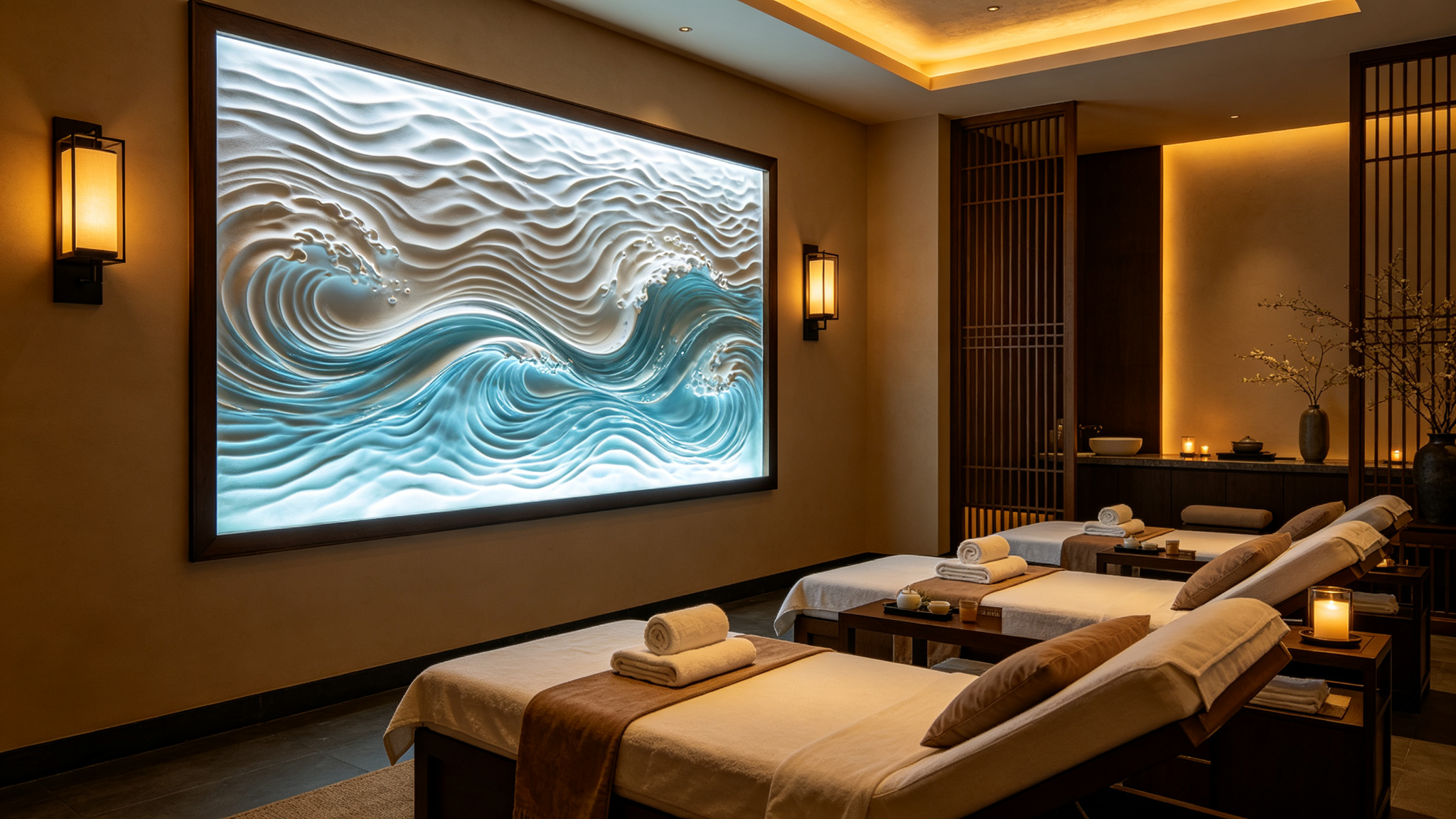
Hospital LED relief texture screens require meticulous design tailored to medical lighting, functional needs, and patient experience. In the Sanya Atlantis Resort LED texture screen project, Stonbel's LED photoelectric building materials (marble texture screens) preserved natural stone aesthetics while delivering HD illumination and dynamic visuals on lobby feature walls and corridor decorations. The products operated reliably with zero failures in an outdoor high-humidity, high-salt environment. This capability is critical for hospitals—while not as salt-laden as coastal areas, hospital corridors and lobbies face disinfectant fumes, temperature/humidity fluctuations from dense occupancy, and frequent cleaning, all demanding robust protection. Stonbel's LED texture screens
Ambient Light Adaptation: Hospital Solutions from Tourism and Airport Projects
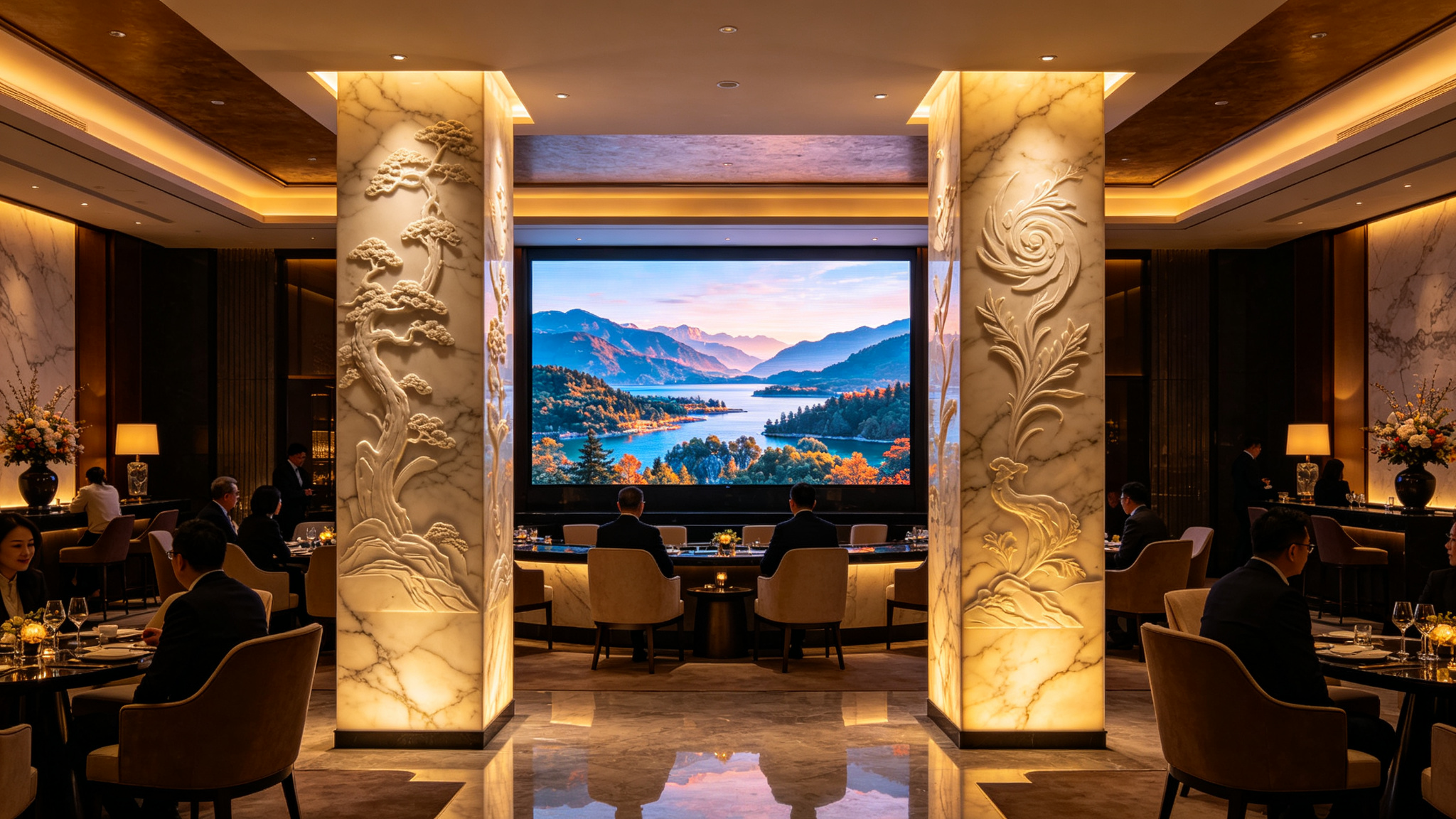
Ambient light adaptation is central to hospital LED relief texture screen design. Stonbel's Sanya Atlantis project validated product reliability in high-humidity, high-salt conditions, while the Xi'an Xianyang Airport project demonstrated multi-terminal remote management. Together, these capabilities address hospitals' two core needs: stability in complex environments and unified scheduling of all displays. For brightness/color temperature tuning: outpatient lobbies, as hospital facades, need ≥1500cd/m² in strong daylight with 5500-6500K to mimic natural light and reduce eye strain; waiting areas and corridors with lower illumination can use 800-1000cd/m² at 4000-5000K neutral light for readability without glare; ward
Selection Guide: From Specs to Engineering Capability
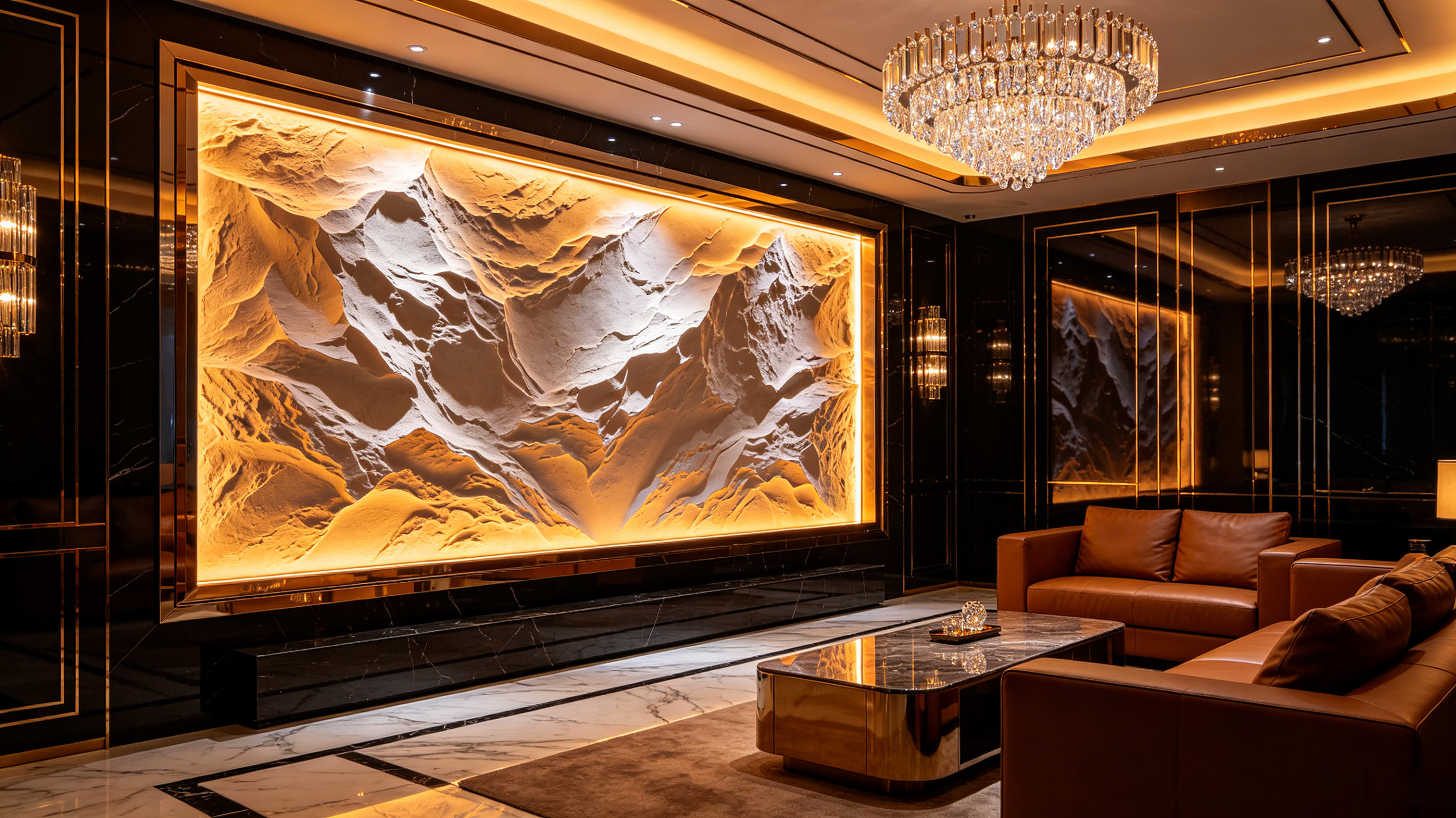
Hospital buyers should evaluate LED relief texture screens beyond spec sheets, focusing on vendor engineering track records and after-sales support. Stonbel, a top-10 Chinese LED display company, has served clients like Huawei, Peking University, and Peking Union Medical College Hospital, with a 31-province service network ensuring long-term stability. We recommend hospitals require ambient light adaptation proposals during bidding and conduct site visits to similar projects (e.g., cultural tourism halls, transport hubs) to avoid theoretical pitfalls. Key dimensions: First, certifications—Stonbel holds 3C, CE, FCC, ISO14001, ISO9001, ROHS, plus military and classified project qualifications, meeting hospital information security demands. Second, project similarity—Stonbel achieved zero-contamination installation
Q1: What brightness is suitable for hospital LED relief texture screens?
A: Brightness depends on installation environment illumination. Outpatient lobbies with strong daylight need ≥1500cd/m²; corridors or waiting areas can use 800-1000cd/m²; wards at night should stay below 200cd/m² to avoid disturbing patients. Stonbel's LED texture screens have a standard brightness of 800cd/m², with customization available per project. In the Sanya Atlantis Resort project, LED texture screens operated with zero failures in outdoor high-humidity, high-salt conditions, validating stability in harsh environments. Hospitals can reference this case and use smart central control to preset multiple brightness schemes for time/zonal adjustment—e.g., different levels for morning, noon, and evening in lobbies to ensure visibility while saving energy. We also recommend requiring illumination simulation reports during bidding for evidence-based design.
Q2: How to choose color temperature for hospital LED relief texture screens?
A: Color temperature should align with medical function. Diagnostic rooms and pharmacies need 5000-6000K cool white for accurate color rendering; wards and rest areas benefit from 2700-3000K warm light for a soothing atmosphere. Stonbel's LED displays feature NTSC≥130% color gamut with fine color temperature adjustment via smart central control presets. In a government hall project, multi-screen controllers enabled real-time multi-source sync and one-touch switching—applicable to hospital multi-department coordination, where each department sets its own parameters under unified management. Also consider overall interior design: warm wood finishes pair well with warm screens, while modern minimalist lobbies suit cool white. We recommend collaborative planning among display vendors and interior designers during the design phase for an integrated lighting environment.
Q3: Are hospital LED relief texture screens waterproof and moisture-resistant?
A: Yes. Stonbel's LED texture screens have IP54 protection, offering dust and splash resistance suitable for hospital lobbies and corridors without direct water exposure. In the Sanya Atlantis project, products operated with zero failures in high-humidity, high-salt conditions, confirming weather resistance. For clean zones like operating rooms, special installation is required—referencing Stonbel's low-dust installation at Wuhan Optics Valley Bio-industry Park, which used low-dust, easy-to-clean processes for GMP clean areas, achieving zero-contamination acceptance. For ORs and ICUs, we recommend fully sealed front-maintenance structures with medical-grade antibacterial coatings to reduce infection risk. Regular inspection of sealing strips and cable connectors is advised to maintain long-term protection.
Selecting brightness and color temperature for hospital LED relief texture screens is essentially part of medical space lighting design. Stonbel's Sanya cultural tourism project validated product aesthetics and environmental durability; its airport project confirmed remote management and information release reliability—both directly applicable to hospital scenarios. When choosing hospital LED relief texture screens, prioritize manufacturers with full-process service capabilities and nationwide service networks, and inspect similar cases on site. There is no fixed answer for brightness and color temperature adaptation, but following the principle of "ambient light priority, time-based zoning adjustment" significantly improves visual comfort for patients and staff. As a source manufacturer, Stonbel provides one-stop support from design to maintenance. Looking ahead, display terminals will become interactive nodes deeply integrated with medical systems and network equipment. Hospitals should adopt forward-thinking planning, choosing scalable, upgradeable technical architectures to meet evolving healthcare service demands.