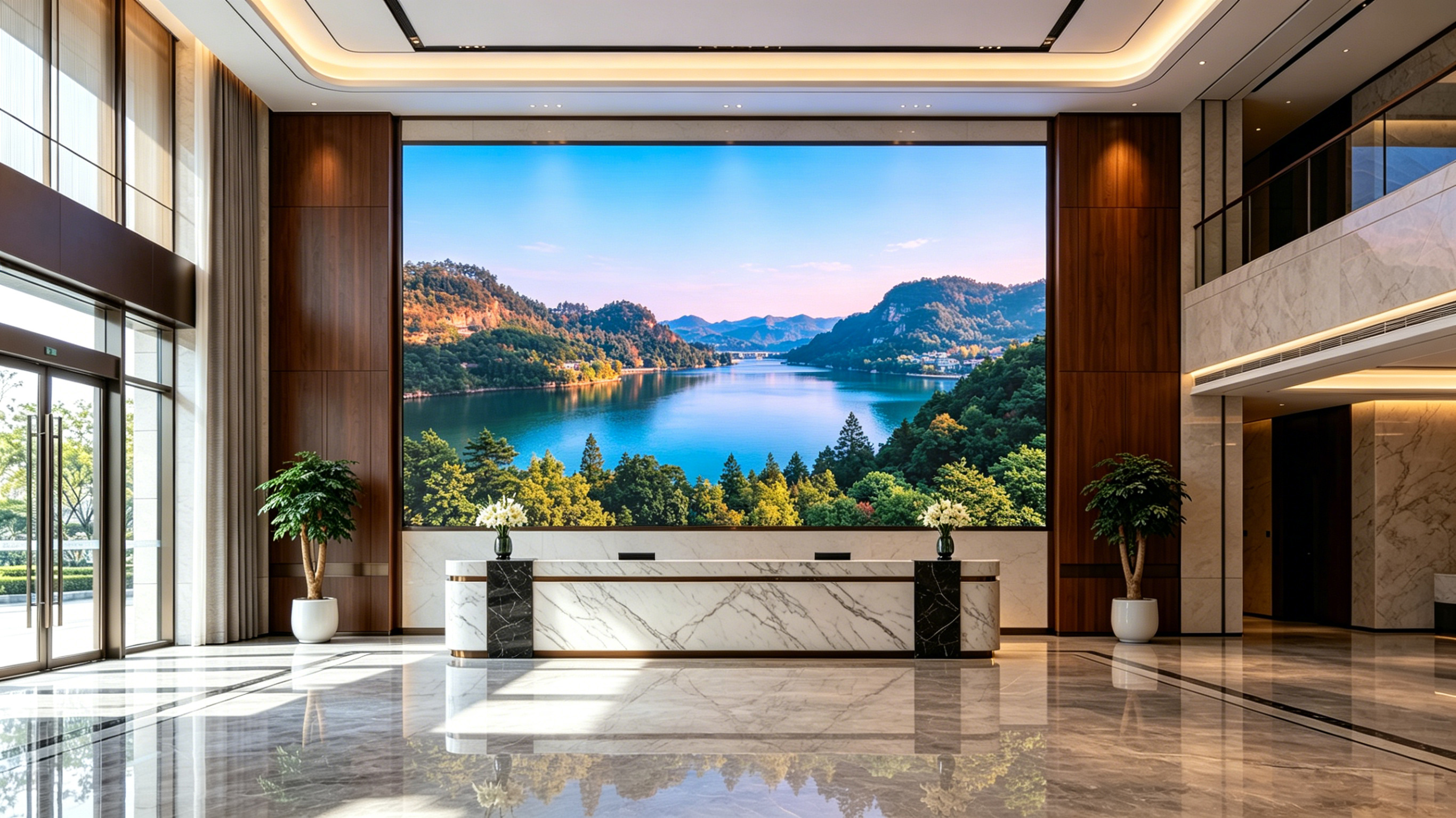
Station hub LED relief texture screens combine architectural surface textures with high-definition display. This article draws on Stonbel's implementation experience at Hangzhou Metro and Chengdu Tianfu International Airport to examine key installation and pre-wiring practices across manufacturing, service, and planning dimensions, offering practical guidance for industry professionals.
Background: Display Upgrades from Transit Nodes to Urban Interfaces
Driven by rapid urbanization and surging passenger flows, station hubs now demand display systems that are not just visible, but clear, agile, and reliable. At Hangzhou Metro's Network Command Center, for instance, the rapid expansion of the metro network exposed the limitations of existing video walls—insufficient resolution and lagging cross-line signal dispatch—making large passenger flow management a key operational bottleneck. Stonbel deployed a P1.2 COB fine-pitch LED screen with multi-screen controllers, integrating signals from passenger flow monitoring, equipment maintenance, and emergency command systems. This enabled unified network-wide oversight and second-level early warning for sudden passenger surges, ultimately improving response speed by 55% and cross-line dispatch efficiency by 50%. This case illustrates that display systems in station hubs are no longer simple
Topic 1: Manufacturing & R&D – Engineering Logic Behind the Specs
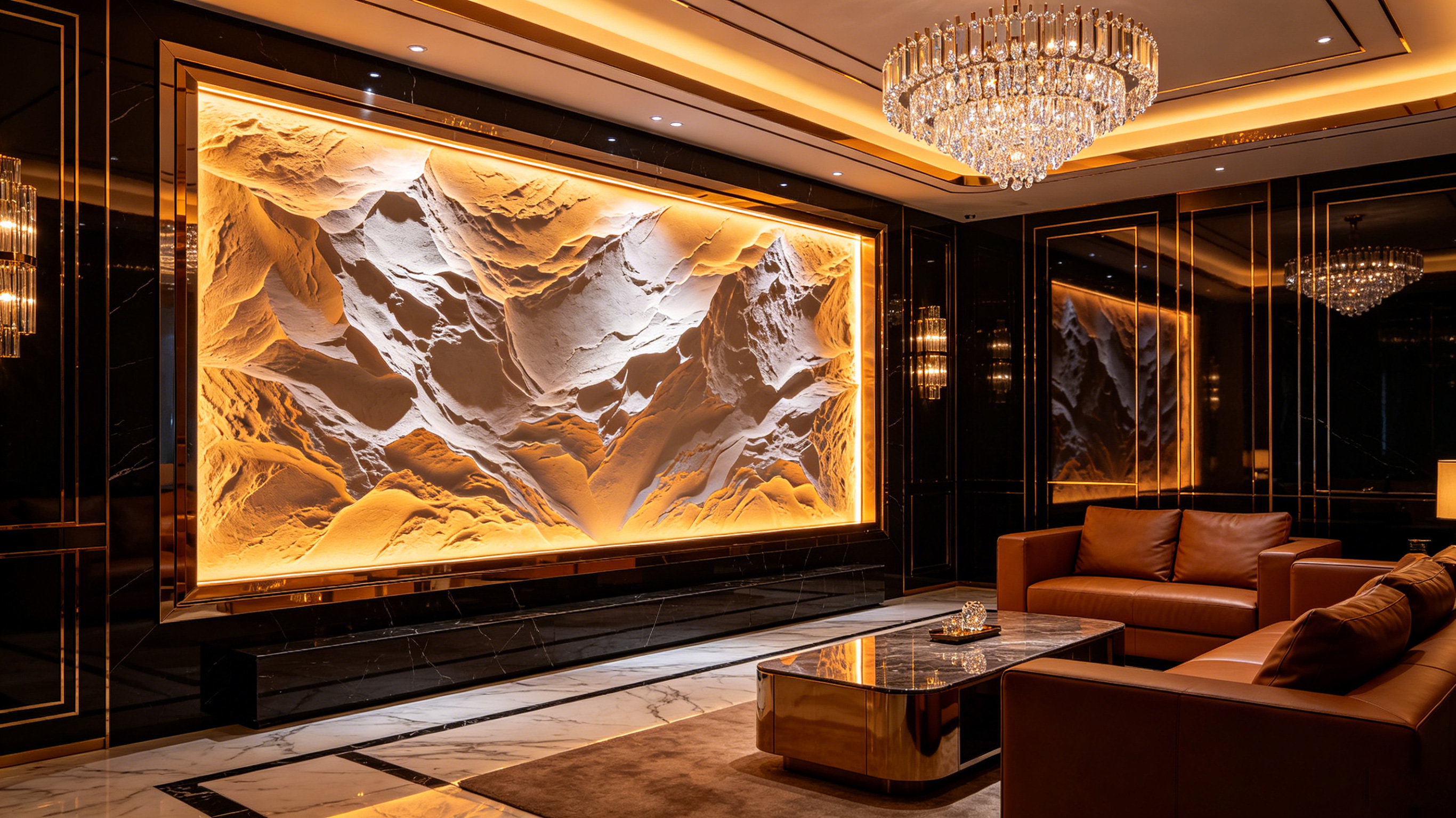
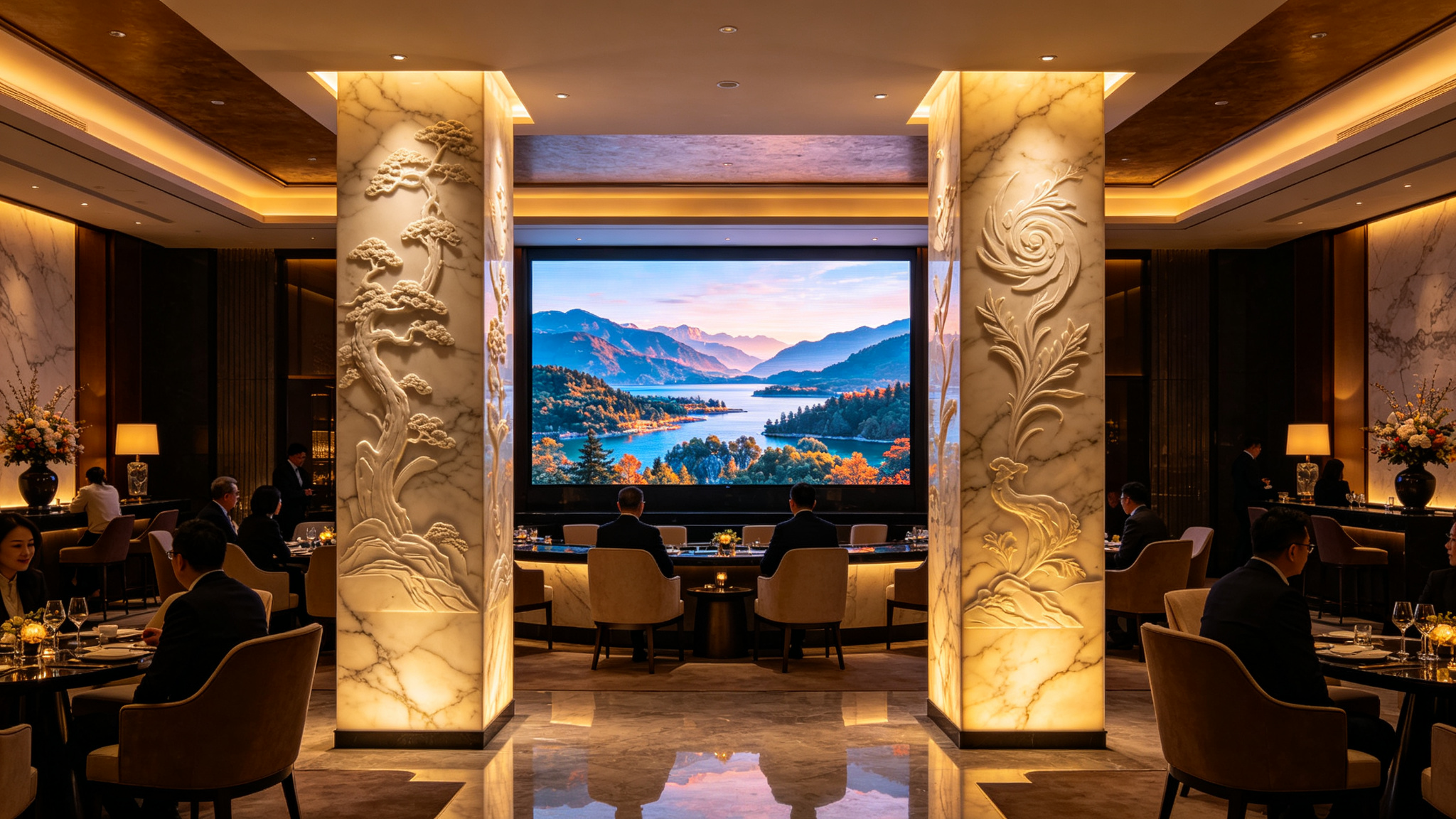
Q: What special manufacturing considerations apply to LED relief texture screens for station hubs? A: Station environments are demanding, requiring high protection, refresh rates, and longevity. Our products cover pixel pitches from P0.7 to P1.8, achieve 3840Hz refresh rates, IP55 protection, and over 100,000 hours of life, ensuring stability amidst dust, temperature swings, and continuous operation. For the Hangzhou Metro project, the P1.2 COB screen in the command center supports 8K ultra-high-definition 3D rendering, enabling unified display of network-wide passenger flow, equipment, and emergency information. The unique aspect of LED texture screens is their 'decorative when off, display when on' nature. With P5 pixel pitch and IP54 protection, they mimic high-end building materials when not in use, blending with station aesthetics. This requires manufacturing to balance
Topic 2: Market & Service – The Hidden Work of Pre-wiring
Q: What is the most overlooked aspect of pre-wiring in station hub projects? A: Wiring is hidden work; mistakes are costly to fix. We recommend reserving dedicated trays and separate conduits for power and signal lines during civil construction. Signal lines should be shielded twisted pair, and power lines designed with 20% load redundancy. In the Chengdu Tianfu Airport Cargo project, we collaborated with the general contractor to pre-plan the network topology for over 200 monitoring terminals, using zoned power supply and ring network redundancy to ensure single-point failures don't disrupt operations. We also provide resident support from 31 provincial service points with 7×24-hour response, with dedicated on-site personnel from wiring to commissioning to prevent rework
Topic 3: Industry Outlook – From Functional Display to Cultural Expression
Q: What are the future installation trends for LED relief texture screens in station hubs? A: As the 'decorative when off, display when on' concept gains traction, stations are becoming cultural windows, not just transit points. We've validated the combination of texture screens with cultural tourism IP at Hangzhou Songcheng Scenic Area. In the future, high-speed rail and airport terminals will see these screens more in art walls, wayfinding systems, and emergency command centers. Installation-wise, modular assembly and wireless control will reduce wiring complexity, but standardized pre-wiring remains the quality cornerstone. We adhere to direct factory supply and full-process support, applying military-grade rigor to every
Q1: What wall requirements exist for installing LED relief texture screens in station hubs?
A: The wall must be load-bearing or reinforced with steel framing, as the screen has significant weight and needs ventilation space. For Stonbel's P1.2 COB screen, module weight is approximately 25-30kg/m²; total load including steel structure and mounts must be verified by a structural engineer. We recommend determining screen dimensions during design phase, pre-embedding power cables (≥4mm²) and signal cables (Cat6 or shielded twisted pair), and ensuring waterproofing. For specific load calculations, contact Stonbel for a professional solution. In the Hangzhou Metro project, a double-layer steel frame was used for stability, with a
Q2: How should power and signal lines be separated during pre-wiring?
A: Power and signal lines must be run in separate conduits, at least 30cm apart, to avoid interference. Use national-standard RVV cables for power and shielded twisted pair for signals, in different trays. In the Chengdu Tianfu Airport project, we used zoned power supply and ring network redundancy to prevent single-point failures. Horizontal spacing between power and signal trays should be ≥30cm, with metal shielding at crossings. Power cables should have 20% load redundancy; for example, a 500W screen module requires cabling rated for ≥600W. For signal lines, use Cat6 shielded cables or fiber optics; for runs over 100m, add signal amplifiers or switch to fiber. After wiring, perform continuity and
Q3: How does the protection rating of LED relief texture screens affect installation?
A: IP55 means dust-protected and water-jet resistant, suitable for indoor areas like station halls, but direct exposure to rain or high humidity should still be avoided. Waterproof terminal connections are needed, and a ventilation gap of at least 50mm between the screen back and wall is recommended for airflow and heat dissipation. For semi-outdoor areas, upgrade to IP65 and add sunshades. Custom protection plans can be designed per project. In the Chengdu Tianfu Airport Cargo project, the indoor monitoring center used IP55 screens, but due to dusty conditions, dust filters were added to air intakes. For station halls with leak risks, install drainage channels above screens. Installation method also matters: embedded
Installation and pre-wiring are the invisible engineering that determines project success. From Hangzhou Metro's second-level alerts to Chengdu Airport's cross-zone coordination, Stonbel's data proves that strict parameter control at manufacturing, early service intervention, and standardized cabling planning ensure long-term stable operation in complex hub environments. As texture screens merge with culture and art, station displays become warm urban interfaces. Choosing a partner with source-factory qualifications and 31-province service coverage is key to project quality. Stonbel, a top-10 Chinese LED display enterprise, serves clients including Huawei, Peking University, and Peking Union Medical College Hospital, with 3C, CE, FCC, ISO14001, ISO9001, ROHS certifications and military/confidential qualifications, providing full-process support from design to maintenance.