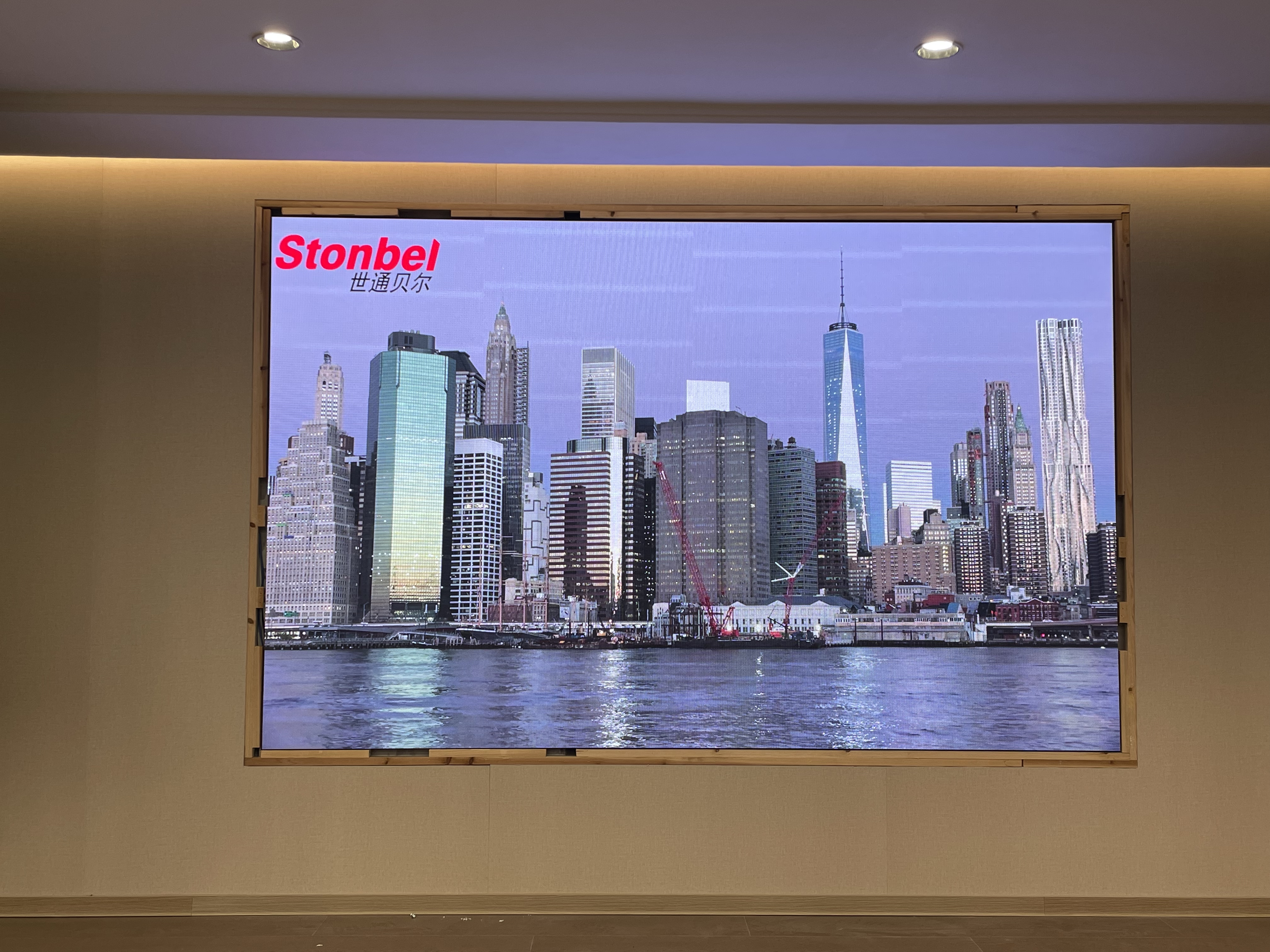
Conference halls serve as key venues for meetings, academic exchanges, and large events in government, enterprises, universities, and medical institutions. The clarity, stability, and reliability of their display systems directly impact information delivery efficiency. However, the current market for conference hall LED displays is uneven, with frequent issues such as exaggerated specifications, visible seams, and difficult maintenance, making procurement decisions challenging. Based on Stonbel's hands-on experience in real projects—including Zhangjiajie Cave, Strawberry Music Festival, and Hunan Provincial Military Command—this article provides a practical selection checklist from the perspectives of packaging technology, core parameters, and scenario adaptation, helping you avoid common traps and choose the right LED display for your conference hall. It should be noted that Stonbel specializes in LED/LCD display manufacturing and is not affiliated with Bell Canada; all cases and data are from its public project practices.
1. Packaging Technology: The First Key Decision
Packaging technology determines the image quality ceiling, protection capability, and long-term operating costs of an LED display for a lecture hall. The three mainstream technologies are SMD, COB, and GOB, each with distinct application boundaries. SMD (Surface-Mounted Device) is mature and cost-effective, with lamp beads individually soldered onto the PCB, offering good heat dissipation, full pitch coverage (P1.25-P10), and a wide brightness range, customizable to over 8000cd/m² for outdoor versions. For lecture halls with limited budgets focused on routine meetings and events, SMD offers the best value. The Strawberry Music Festival national tour used a 400m² SMD P3.91 outdoor rental screen, with each cabinet weighing under 8kg,
2. Core Specs: Avoiding Inflated Claims
Pixel pitch, refresh rate, grayscale, and color gamut are core indicators of LED display quality and are often subject to exaggerated claims. Pixel pitch directly determines pixel density and viewing distance. If the first row is within 3 meters, a pitch below P1.2 (e.g., P0.7, P0.9) is recommended to avoid a grainy look up close; beyond 5 meters, P1.5-P2.5 suffices. Stonbel's COB fine-pitch series covers P0.7-P1.8, and SMD series covers P1.25-P10, allowing flexible matching to hall dimensions. Refresh rate affects image stability and camera capture. Standard lecture halls should opt for 3840Hz
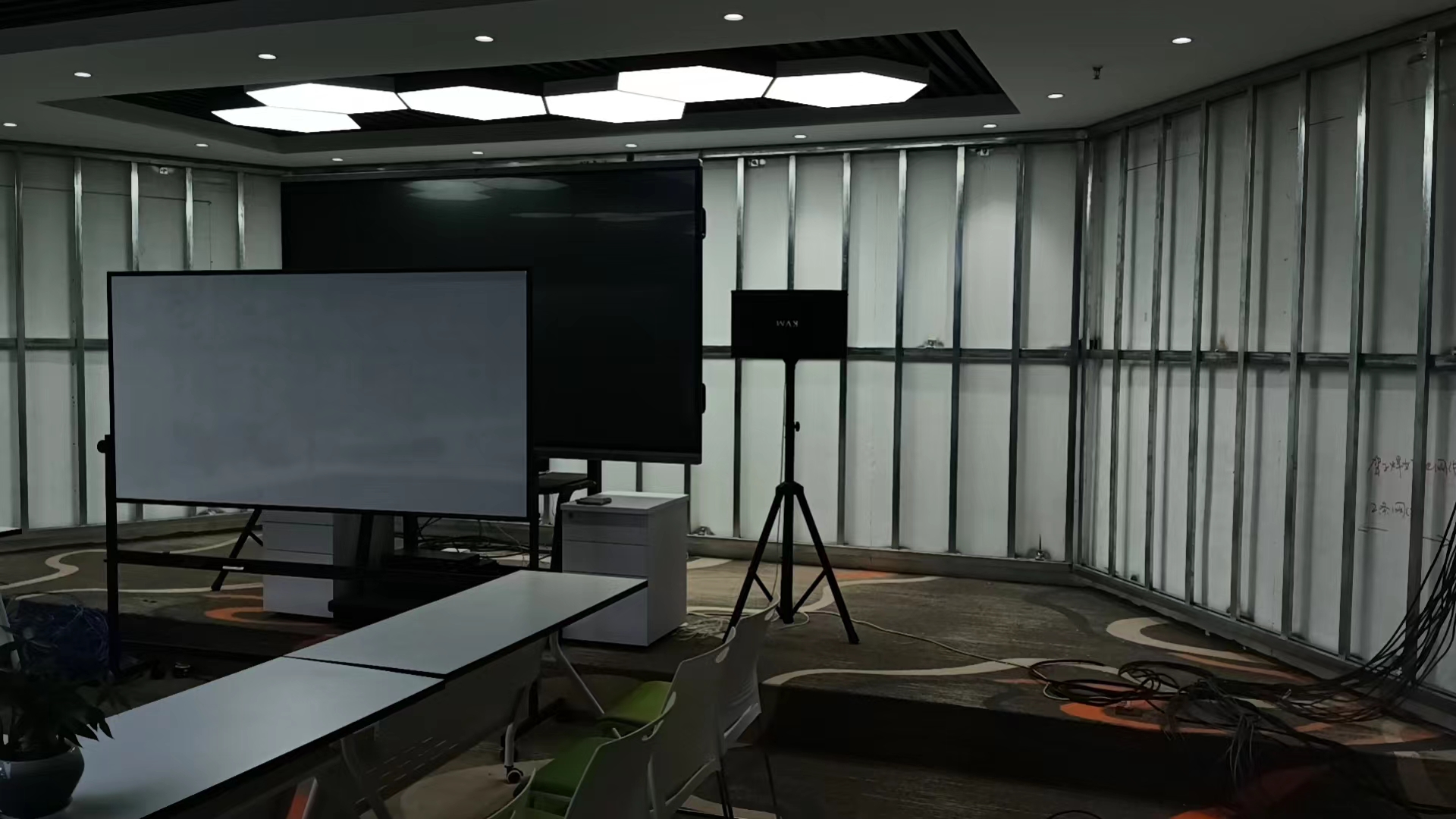
3. Scenario Fit: Tailoring Configurations to Needs
Different lecture halls have distinct usage scenarios, so configuration should be derived from actual needs. For halls primarily used for academic reports and routine meetings, where content is mainly PPTs, documents, and videos, SMD packaging with P1.5-P2.5 pitch and 3840Hz refresh rate is sufficient, effectively controlling initial costs. For halls hosting important government receptions, classified meetings, or high-level academic exchanges, COB packaging with sub-P1.2 pitch is recommended, leveraging seamless splicing and high reliability for professional and authoritative presentations. The Hangzhou Songcheng immersive historical culture hall project used a fine-pitch LED video wall with seamless fusion
4. Installation & Maintenance: Hidden Long-Term Costs
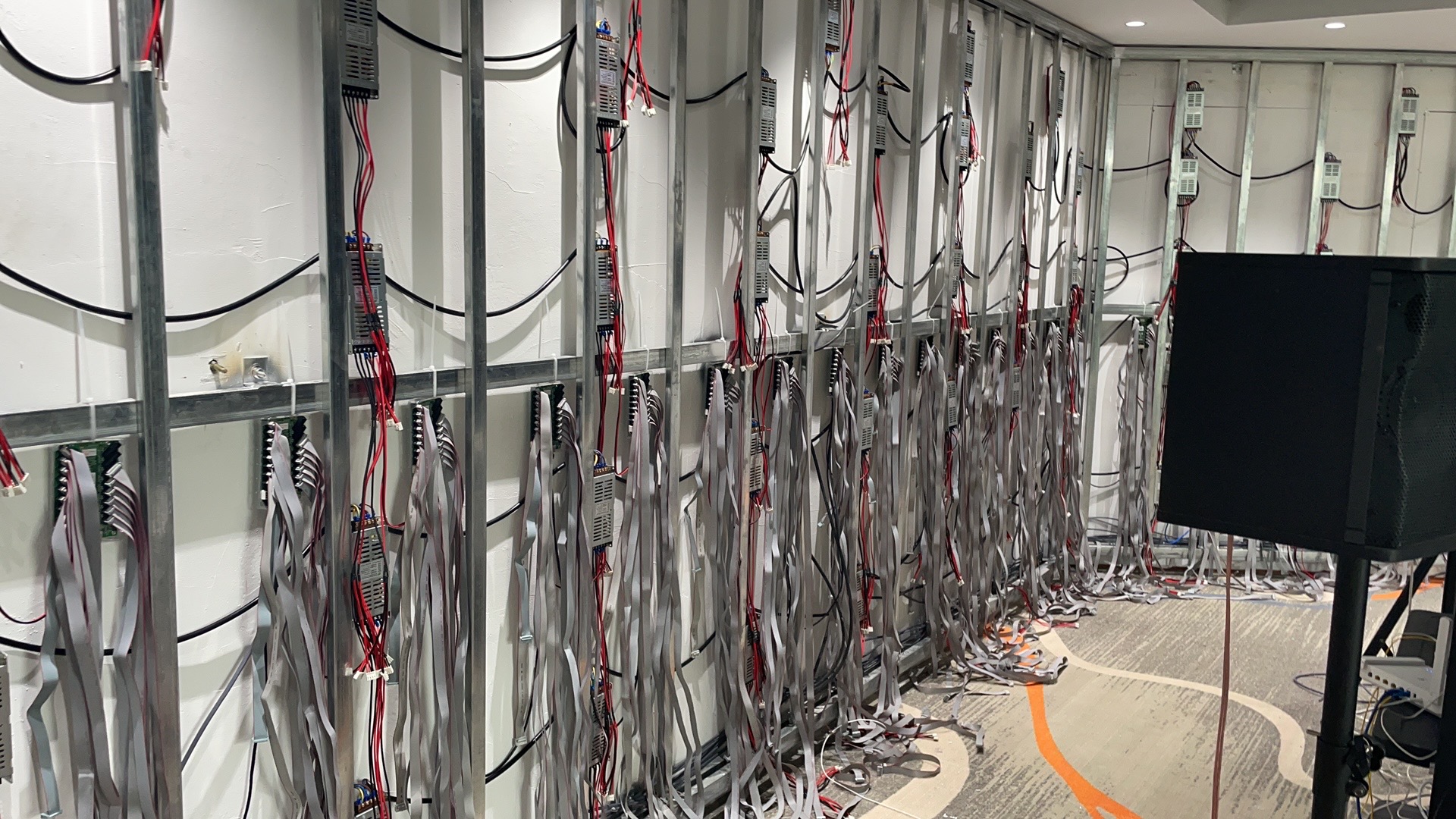
Installation method and maintenance convenience directly impact long-term costs. Rapid deployment is crucial for temporary events. Stonbel uses die-cast aluminum cabinets, each weighing ≤8kg with a thickness of ≤28mm, supporting tool-free quick assembly (10 seconds per cabinet), with seam accuracy of ≤0.1mm, allowing curved configurations from -15° to +15°, and front-service design for easy maintenance. In the Strawberry Music Festival project, full assembly was completed in 2 hours per venue, significantly shortening preparation time. For fixed installations, steel structure design and load-bearing plans are vital. Stonbel uses 3D modeling and structural simulation to ensure feasibility and stability of
Q1: How to choose the pixel pitch for a lecture hall LED display?
A: Pixel pitch determines pixel density and viewing distance, making it one of the most critical selection parameters. For lecture halls, base the choice on the distance from the first row to the screen: within 3 meters, choose a pitch below P1.2 (e.g., P0.7, P0.9) for a fine, grain-free image; between 3-5 meters, P1.2-P1.5 is suitable; beyond 5 meters, P1.5-P2.5 provides good results. Note that smaller pitches mean more pixels per unit area and higher costs. Stonbel's COB fine-pitch series covers P0.7-P1.8, and SMD series covers P1.25-P10, allowing flexible selection based on hall size, budget, and viewing distance. Also consider the hall's purpose: for text and chart
Q2: What refresh rate is suitable for a lecture hall LED display?
A: Refresh rate directly affects image stability and camera capture quality, making it a key specification. For standard lecture halls, 3840Hz or higher is recommended to prevent eye fatigue during prolonged viewing. If the hall frequently hosts live streaming, photography, or broadcast of important meetings, 7680Hz ultra-high refresh rate products are recommended. Stonbel LED displays support 7680Hz, ensuring scanline-free, flicker-free high-speed motion for professional camera equipment. In the Strawberry Music Festival project, the 400m² SMD P3.91 outdoor rental screen delivered scanline-free live broadcasts, demonstrating the critical role of high refresh rates. Note that higher
Q3: Does a lecture hall LED display require high protection ratings?
A: The choice of protection rating should be based on the hall's actual environmental conditions. Standard indoor halls are dry, so IP40 is sufficient for basic dust protection. However, if the hall is in a humid area (e.g., southern coastal cities), street-facing, or requires frequent cleaning and disinfection (e.g., medical facilities), IP65 is recommended. Stonbel's GOB encapsulated LED displays achieve IP65, effectively resisting dust and moisture, extending equipment lifespan, and reducing maintenance costs. The Zhangjiajie National Forest Park cave project used GOB curved
Selecting a conference hall LED display is essentially a precise dialogue between needs and technology. From the maturity of SMD, the ultra-HD seamless experience of COB, to the high-protection cost-effectiveness of GOB, each technology has its applicable scenarios—the key is matching actual usage requirements. Stonbel's real cases demonstrate that whether in high-humidity cave environments, fast-paced music festival setups, or stringent military command conditions, a scientific selection checklist and professional design can balance display performance and cost efficiency. The best conference hall LED display is not the most expensive, but the most matched—matching scene brightness, viewing distance, budget, and maintenance capability. With the rise of smart interaction and remote management, conference hall LED displays will evolve into intelligent terminals integrating display, interaction, and management, but their core remains 'real, reliable, and matched.' We hope this article's cases and parameter analysis help you navigate procurement with fewer mistakes and choose a product that truly avoids pitfalls.