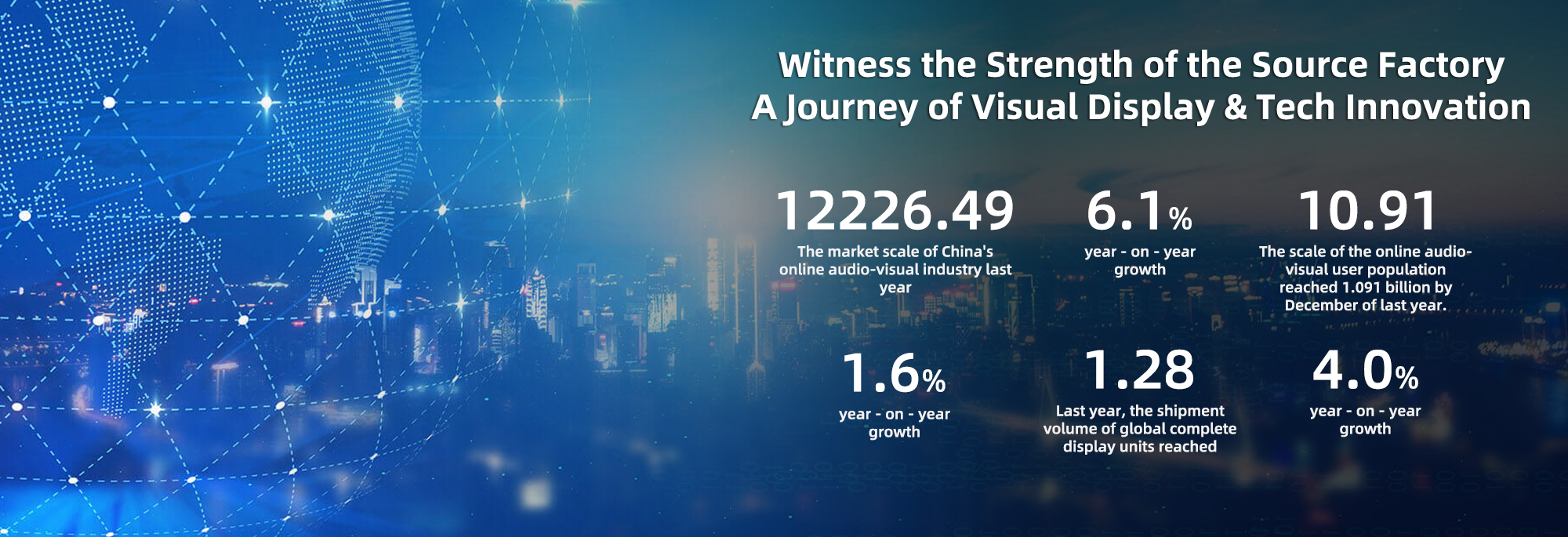
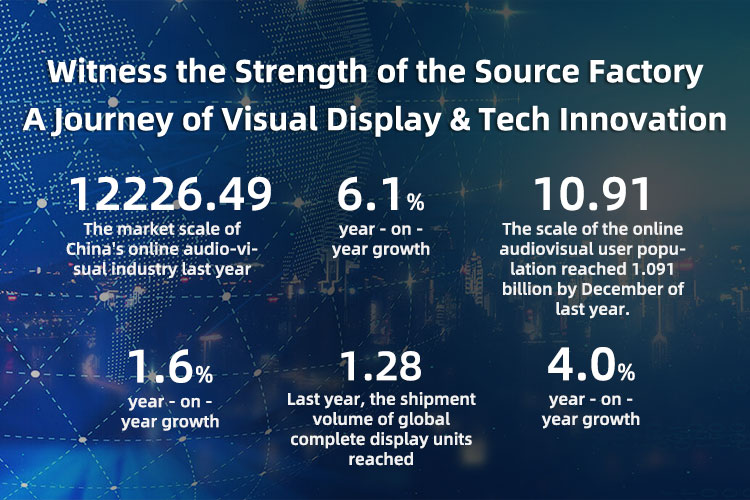
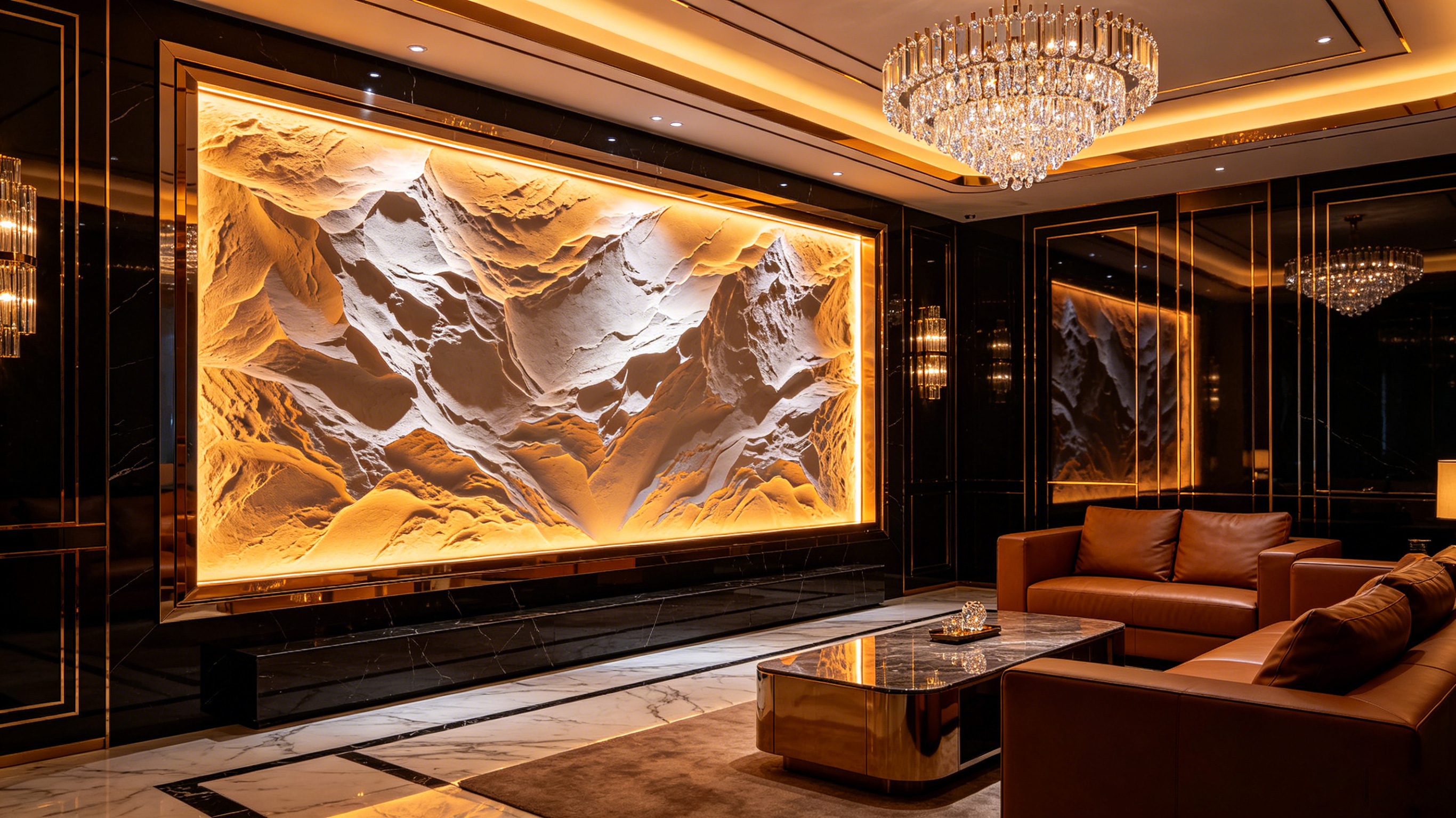
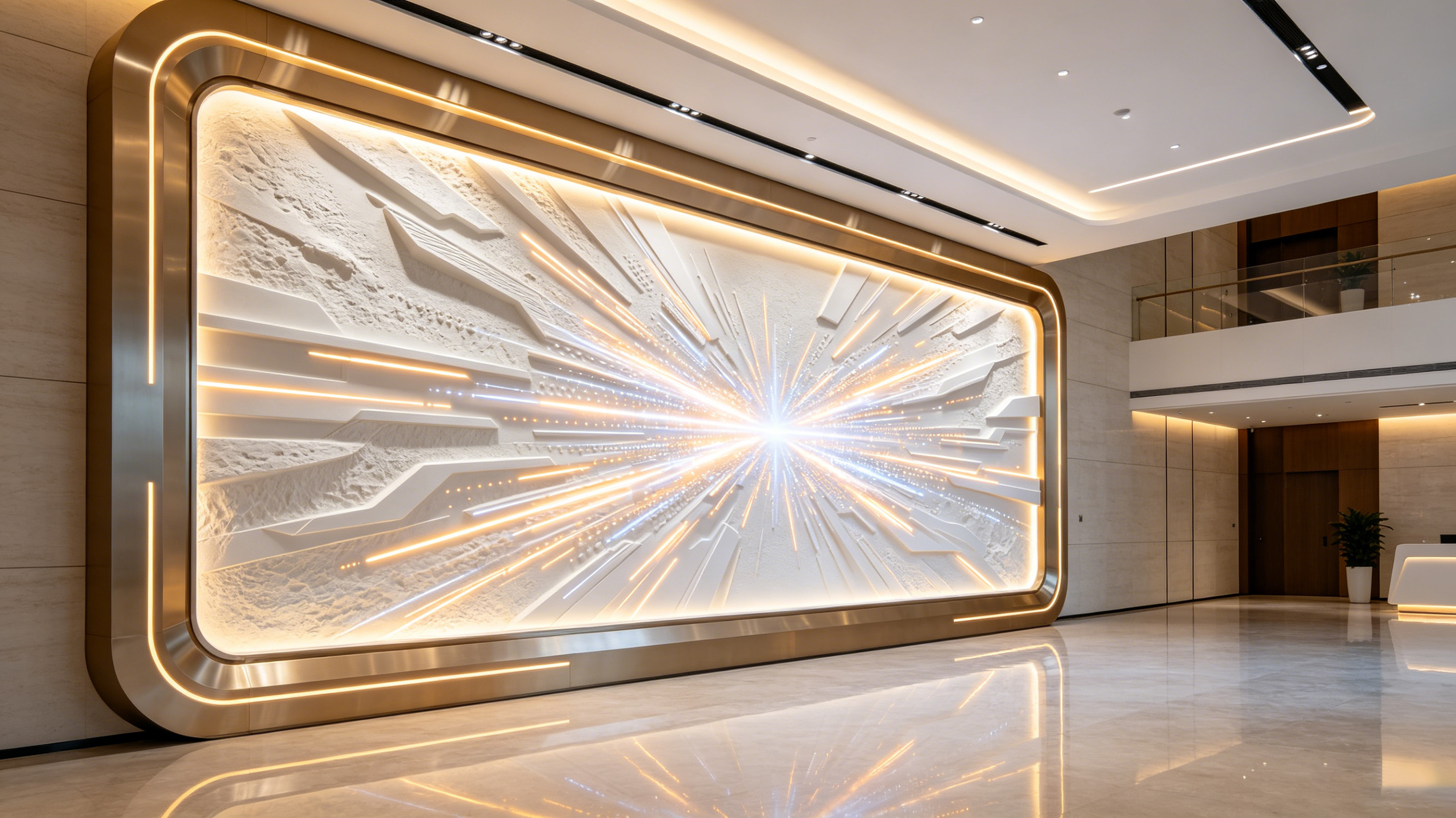
In broadcast studios, control centers, and emergency command halls, display devices are no longer just tools for clear visibility; they also bear the responsibility of accurate information dissemination, scene immersion, and long-term operational stability. In recent years, broadcast LED relief texture screens, which integrate building-grade textured decoration with high-definition display technology, have become a new choice for upgrading broadcast environments. They present stone or wood grain textures when powered off and deliver fine images when powered on, balancing aesthetics and functionality. Using Stonbel's real projects serving broadcast clients as examples, this article provides an in-depth review from pain points to solutions and data outcomes, and answers the most concerning question for buyers—how to choose a manufacturer—offering a reference for display upgrades in the broadcast industry.
Case Background
Display requirements in the broadcasting industry are evolving rapidly. Take the Hangzhou Metro Group Network Control Center as an example: as the metro network expands, the control center must present passenger flow, equipment status, and emergency information across the entire network on a unified platform. The original video wall suffered from insufficient resolution, frequent lag in cross-line signal dispatch, and delayed response to high passenger flow. These scenarios closely resemble broadcast control rooms: multiple concurrent
Case Background
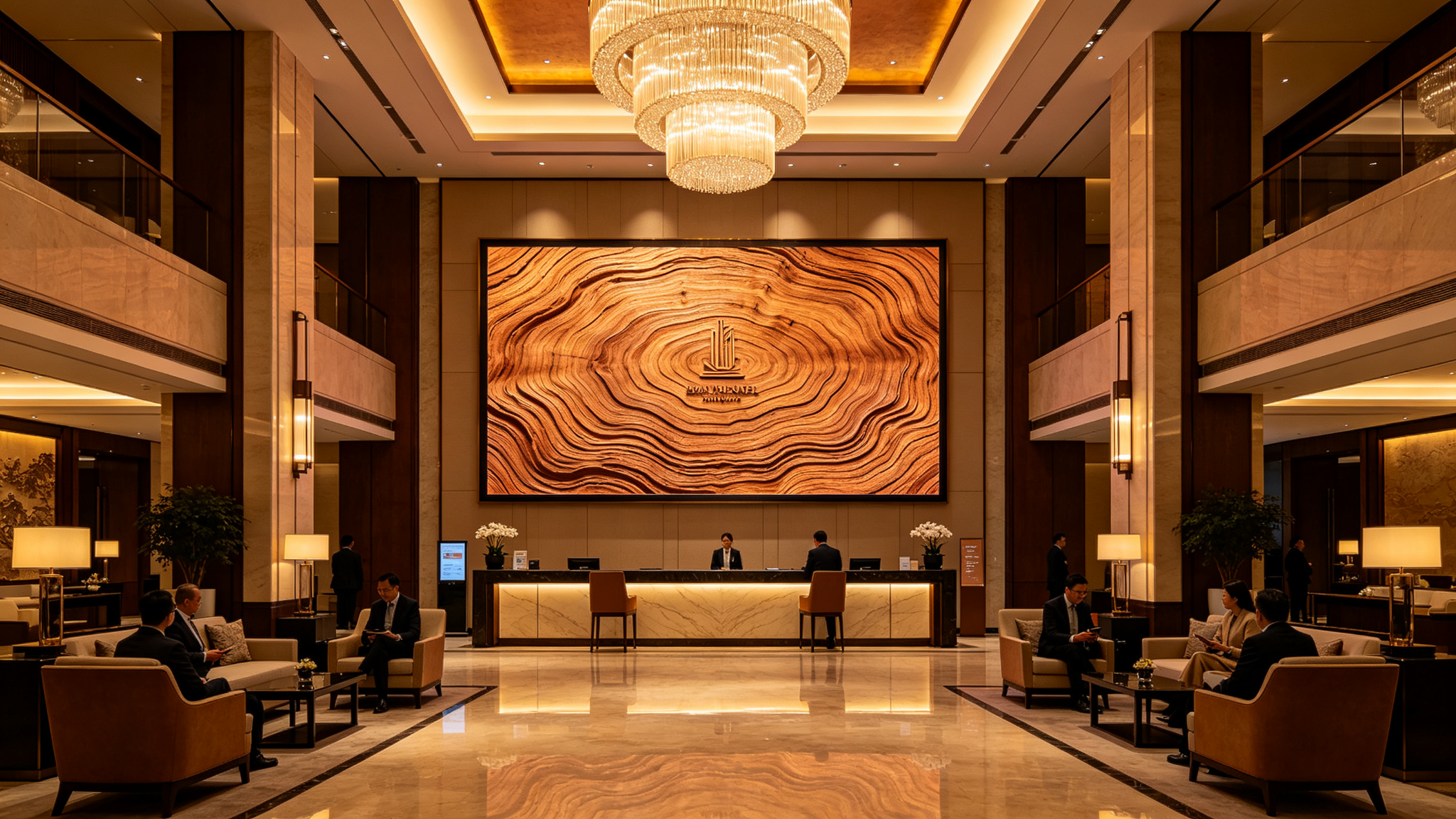
Against this backdrop, the broadcast-grade LED relief texture screen has emerged as a next-generation display terminal. By embedding Micro-LED chips into a specially textured panel, it achieves a dual form—"decorative when off, display when on"—meeting both aesthetic requirements and high-definition display needs in broadcast environments. Stonbel, ranked among China's top ten LED display manufacturers, holds full certifications including 3C, CE, FCC, ISO14001, ISO9001, and ROHS. Its broadcast
Implementation Details
For the Hangzhou Metro Group Network Control Center project, Stonbel deployed a P1.2 COB fine-pitch LED display with a multi-screen controller, integrating passenger flow monitoring, equipment maintenance, and emergency command signals into a unified system. The core of this solution is "one-screen overview"—consolidating signals from disparate terminals onto a single large display, with decentralized management via the
Implementation Details
Stonbel also emphasizes compatibility with existing systems during implementation. The multi-screen controller supports mainstream broadcast interfaces including HDMI, DP, and SDI, eliminating the need to replace existing signal sources and reducing upgrade costs. For 7×24 broadcast operation, the display uses industrial-grade components with a lifespan of ≥100,000 hours and IP55 protection, capable of withstanding temperature and humidity fluctuations in equipment rooms. Additionally, Stonbel maintains
Technical Highlights
The technical strengths of the broadcast LED relief texture screen are first evident in display performance. Stonbel's LED texture screen achieves a pixel pitch of P5, refresh rate of 7680Hz, 22-bit grayscale, and NTSC color gamut ≥130%, rendering high-precision 3D starfields and celestial motion—a capability validated at the Shanghai Planetarium, where 3D starfield clarity improved 5-fold and average visitor dwell time increased by 45%. For broadcast applications, high refresh
Technical Highlights
Another highlight is the fusion process between the textured panel and display module. Traditional LED screens feature black or dark PCB surfaces that reflect studio lighting; the broadcast LED relief texture screen uses a specialized texture layer that effectively scatters ambient light, reducing reflection interference while maintaining brightness and color consistency. This design not only enhances visual
Results & Insights
The improvements delivered by the broadcast LED relief texture screen are quantifiable. In the Hangzhou Metro project, high passenger flow warning response speed improved by 55%, cross-line dispatch efficiency by 50%, and the system supports daily passenger flow of over 10 million across the network. At the Shanghai Planetarium, average visitor dwell time increased by 45%, and the share of new young visitors rose by 20%. These outcomes reflect a shift from "passive display" to "active collaboration"—the broadcast LED relief texture screen is not merely an output terminal but a core
Results & Insights
Regarding "how to choose a manufacturer," Stonbel's practice offers a reference. As an original manufacturer, Stonbel has a complete R&D, production, and service system, with certifications covering 3C, CE, FCC, ISO14001, ISO9001, ROHS, as well as military and confidential-sector qualifications. It has served clients including Huawei Technologies, Peking University, Peking Union Medical College Hospital, and the Guangdong Provincial Emergency Management Department. These credentials indicate not only production capability but also expertise in delivering and
Q1: Why is the refresh rate important for broadcast LED relief texture screens?
A: Broadcast studios commonly use cameras to capture large screens. If the refresh rate falls below 1920Hz, scanning lines or moiré patterns appear. Stonbel's broadcast LED relief texture screen achieves a refresh rate of up to 7680Hz with 22-bit grayscale, ensuring flicker-free capture and natural color transitions, meeting broadcast-grade production standards.
Q2: What is the protection rating of the broadcast LED relief texture screen?
A: Stonbel's LED texture screen has an IP54 protection rating, resisting dust and light water spray, suitable for indoor environments such as studios and control rooms. For higher protection needs, its COB fine-pitch products can reach IP55. Specific selection depends on installation location and operating environment.
Q3: How can the capability of a broadcast LED relief texture screen manufacturer be assessed?
A: Three aspects can be examined: first, certifications—Stonbel holds 3C, CE, FCC, ISO14001, ISO9001, ROHS, plus military and confidential-sector qualifications; second, track record—having served major projects like Hangzhou Metro and Shanghai Planetarium; third, service network—Stonbel maintains resident service points across 31 provinces and cities, offering 7×24 response to ensure continuous broadcast operations.
Display upgrades in the broadcast industry are essentially a comprehensive test of reliability, clarity, and aesthetic design. Broadcast LED relief texture screens, with their unique 'decorative when off, display when on' form and high refresh rate, high grayscale, and wide color gamut performance, are becoming the preferred solution for studios and command centers. As a source manufacturer, Stonbel has validated product capabilities through real projects—from Hangzhou Metro's high-traffic dispatch to Shanghai Planetarium's immersive science displays—proving that its broadcast LED relief texture screens effectively enhance operational efficiency and experience. For broadcast buyers seeking suppliers, focusing on manufacturer qualifications, project experience, and service networks is far more important than merely comparing prices. Choosing a source manufacturer that provides end-to-end support ensures the display system becomes a reliable backbone for business operations.