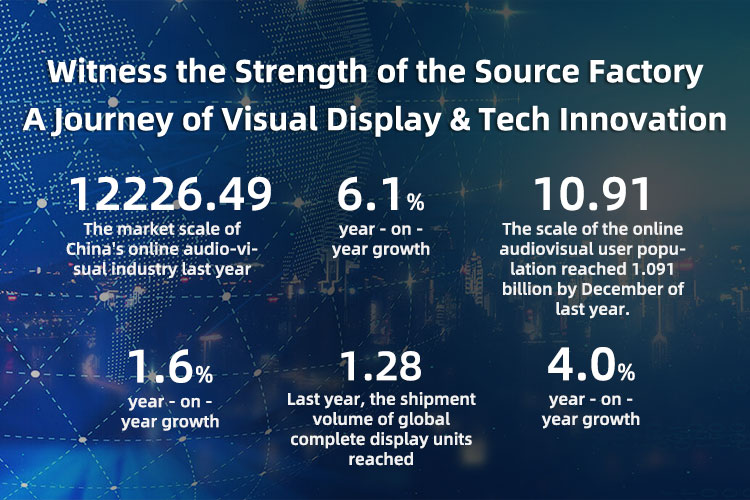
In LED/LCD display procurement tenders, certification review and in-house manufacturing capability are the invisible thresholds that often decide project outcomes. From government service halls to military research institutes, from university command centers to field shelters, requirements for stability, confidentiality, and customization vary dramatically. Using Stonbel's real-world cases, this article reviews how its source manufacturing strength helps integrators and buyers avoid certification traps, backed by data that reflects the technical confidence and delivery capability of a true factory. Display procurement is never a simple price game—it is a full-chain test of certification, technology, manufacturing, and service.

Case Background: From Government Halls to Military Shelters, How Source Manufacturing Handles Extreme Scenarios
Procurement bidding for commercial display screens is essentially about finding a long-term partner capable of handling extreme scenarios. Since its founding in 2009, Stonbel has focused on three core product lines: LED/LCD commercial displays, smart conference all-in-one machines, and long-range thermal imaging electro-optical turrets. Rooted in source manufacturing, Stonbel has served clients including Huawei Technologies, Peking University, Peking Union Medical College Hospital, the Emergency Management Department of Guangdong Province, Shenzhen World Exhibition & Convention Center, and the Border Management Detachment of Xing'an League, Inner Mongolia. With resident service points across 31 provinces, 12 patents, 37 software copyrights, and a top-10 ranking in China's LED display industry, Stonbel's credentials and source manufacturing
Technical Highlights: Triple Breakthroughs in COB Packaging, Domestic Adaptation, and Energy Efficiency
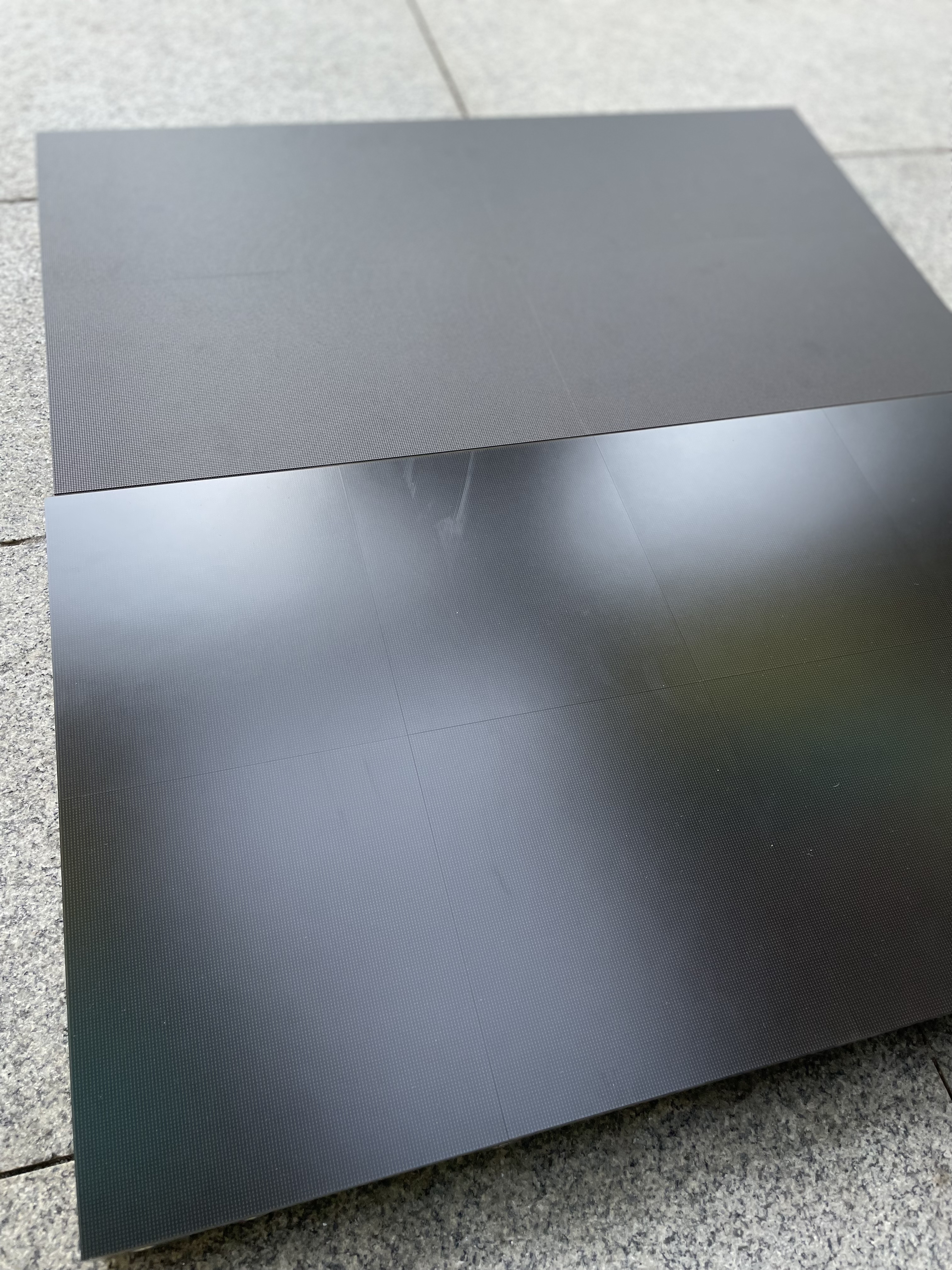
Stonbel's COB fine-pitch displays derive their core advantage from proprietary COB chip-level packaging technology. Traditional SMD packaging solders lamp beads onto PCB boards, risking dead or detached lamps. COB technology directly packages light-emitting chips onto the PCB, eliminating physical seams and achieving IP55 protection against dust and water, suitable for complex environments like government halls and field shelters. At a university command center in Tianjin, 80㎡ of Stonbel P1.2 COB displays were procured, presenting campus-wide operational data seamlessly, integrating with security monitoring, academic systems, and logistics management platforms, supporting multi-signal seamless switching and emergency event
Implementation Details: Training Systems and After-Sales Networks for Long-Term Stability
Commercial display project implementation is not just equipment installation; it marks the beginning of long-term maintenance. At every project delivery, Stonbel arranges technical personnel to conduct operational training for users, covering daily power on/off, brightness adjustment, signal switching, and basic troubleshooting. In military projects, training also includes confidentiality operation protocols. This training enhances users' self-maintenance capabilities and reduces after-sales pressure. For example, in the Jiangsu Provincial Government Hall project, Stonbel provided remote maintenance and quarterly inspection services, ensuring stable 12-hour
Results and Insights: Source Manufacturing as Core Competitiveness in Commercial Display Bidding
The essence of commercial display procurement bidding is a test of a manufacturer's overall strength. Through multiple real-world cases, Stonbel has demonstrated source advantages across four dimensions: credentials, technology, manufacturing, and service. From the Jiangsu Provincial Government Hall COB display project, to the classified ultra-high-definition display project at a military research institute, to the customized field mobile command shelter system, Stonbel lets data speak: an 88% failure rate reduction and 58% lower maintenance costs in the government hall; 72% improvement in detail restoration and 27% higher solution review efficiency in the military project; and 10-second cold start and military-grade shock resistance in the shelter project. These results are
Q1: What certificates should be included in bidding qualification requirements when procuring COB fine-pitch displays?
A: Bidding qualification requirements typically include basic certifications and industry-specific certifications. Basic certifications include 3C, CE, FCC, ISO14001, ISO9001, and ROHS, which ensure product safety and environmental compliance. Industry-specific certifications such as military or classified certifications apply to military or government projects. Additionally, bidders should be required to provide patent certificates and software copyright certificates to demonstrate technical capability. Stonbel holds 12 patents and 37 software copyrights, all of which are advantageous in bidding. It is recommended to explicitly
Q2: How can one determine whether an LED display manufacturer has source manufacturing capability?
A: Source manufacturing capability can be assessed from several angles: First, check whether the manufacturer has its own factory by requesting factory addresses and production line photos, or conducting on-site visits when necessary. Second, verify mastery of core processes such as COB chip-level packaging, which requires a proprietary packaging line rather than purchasing external modules. Third, assess whether the product line is comprehensive enough to support customized solutions like curved or irregular screens. Fourth, evaluate whether the service network covers the entire country for localized after-sales support. Stonbel, as a source manufacturer established in 2009, possesses proprietary COB packaging technology, a
Q3: In government hall projects, what advantages do COB displays offer over traditional LCD video walls?
A: COB displays offer advantages in government halls primarily through seamless display, high protection, and long lifespan. COB technology packages light-emitting chips directly onto the PCB, eliminating seams for more continuous display; protection reaches IP55 against dust and water, suitable for hall environments; lifespan exceeds 100,000 hours, reducing replacement frequency. In the Jiangsu Provincial Government Hall project, a 75㎡ P1.5 COB display achieved an 88% failure rate reduction, 58% lower maintenance costs, and 75% higher information update efficiency. LCD video walls, by contrast, have physical seams that disrupt visual experience, lower protection ratings, and higher maintenance costs. Furthermore, COB displays
Display procurement is ultimately a test of manufacturer capability. Stonbel's real cases demonstrate source advantages across certification, technology, manufacturing, and service. For integrators, choosing a source manufacturer like Stonbel means higher project success rates, lower maintenance costs, and stronger competitiveness. For buyers, writing "source manufacturing" into qualification requirements is the most effective way to mitigate downstream risks. Stonbel's 31-province service network, 12 patents, 37 software copyrights, and full COB product line from P0.7 to P1.8 set an industry benchmark. As COB fine-pitch technology proliferates, the value of source manufacturing will only grow. Choosing Stonbel means choosing a reliable, efficient, long-term partner.