In campus informatization, balancing cultural display and information release is a design challenge. The campus LED relief texture screen, which merges architectural textures with high-definition display, provides a fresh solution. Based on real project cases, this article interprets its combination logic with LED video wall solutions from a third-party perspective, showing how to enhance campus spaces' practicality and aesthetics through pain points, solutions, and data outcomes. All data is from public project feedback, aiming to offer decision-making references for campus builders.
Background
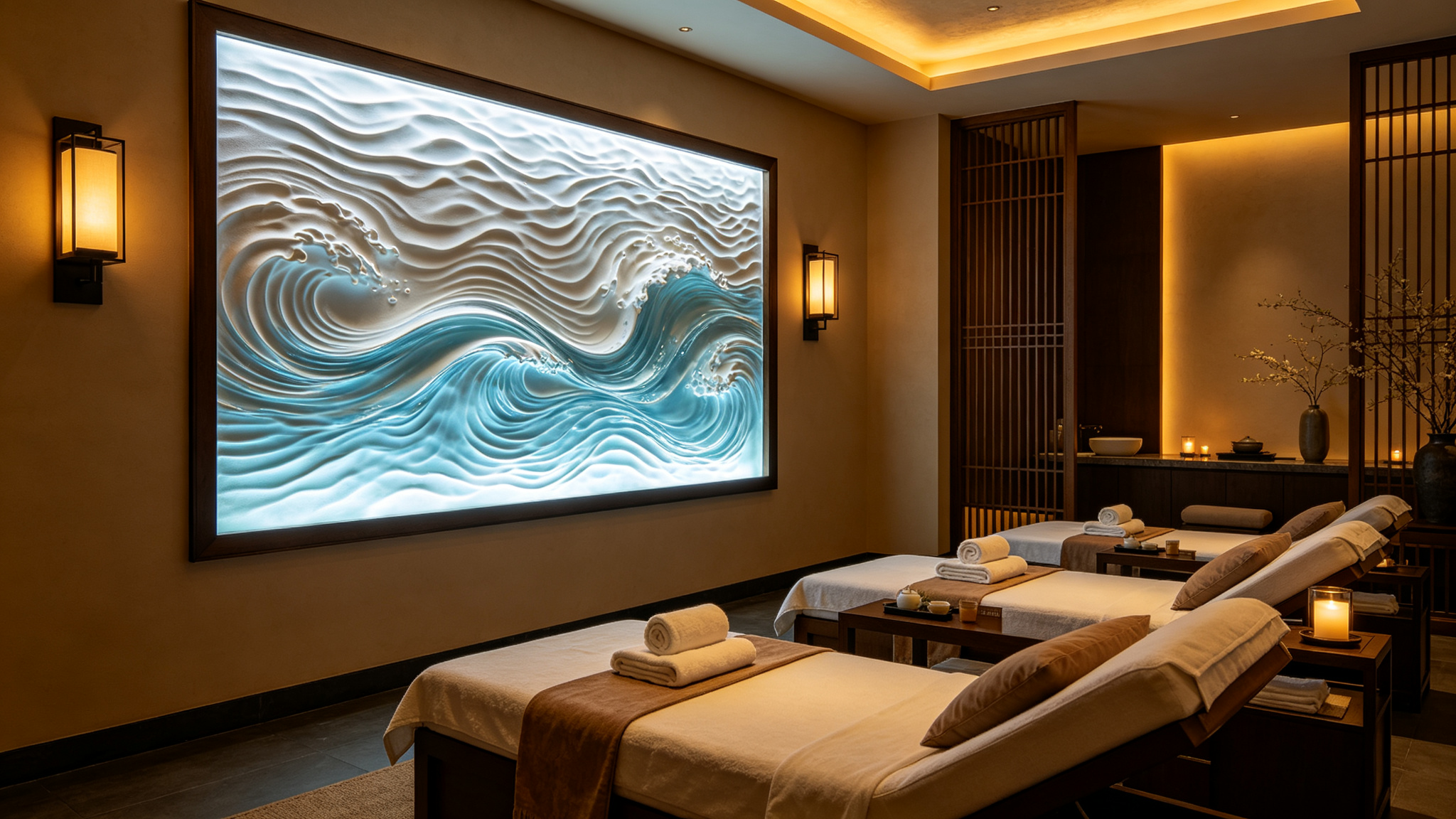
Campus environments demand increasingly diverse display solutions that serve daily information dissemination and event showcasing while meeting architectural aesthetics. Traditional LED video walls deliver large-format displays but often appear visually rigid, failing to blend with campus culture. In recent years, campus LED relief texture screens have emerged, combining building material textures like marble and wood grain with Micro-LED technology to achieve an "off as decor, on as display" effect, offering both decorative and functional solutions for corridors and lobbies. Industry trends show campus display projects shifting from single-function to composite experiences. Stonbel's experience in projects like the Chengdu Government Hall and Hangzhou Songcheng highlights the critical importance of stability and scenario adaptability. For campuses, the IP54 rating and P5 pixel pitch of LED relief texture screens suit semi-enclosed environments like classroom corridors, providing dust and water resistance while delivering HD visuals for academic reports and cultural content. This positioning complements rather than replaces conventional LED video
Key Point 1
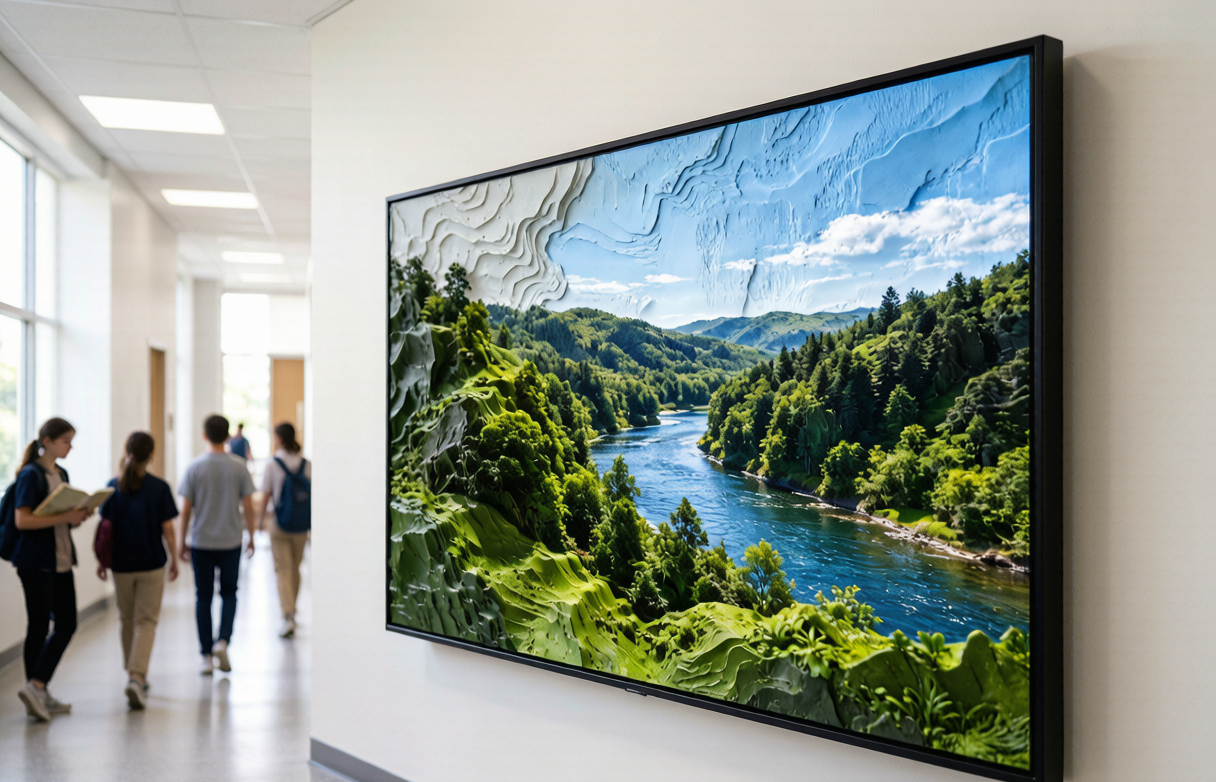
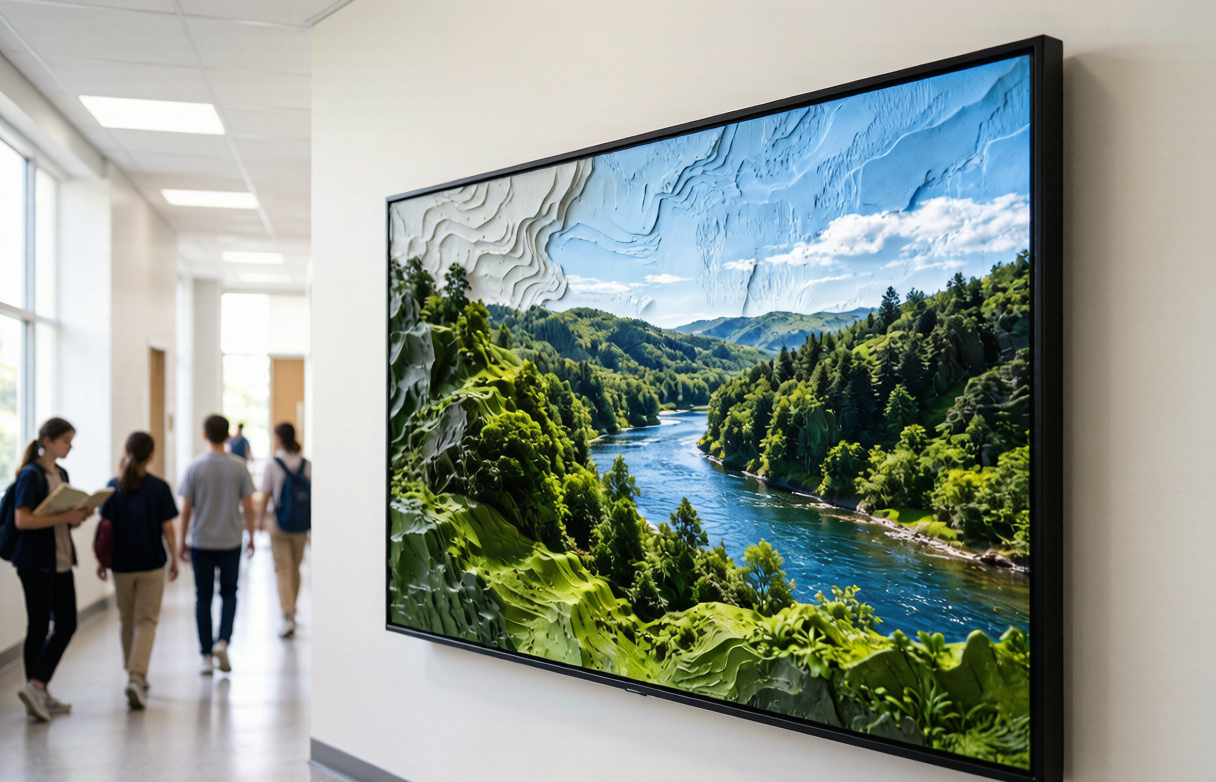
Campus LED relief texture screens excel in decorative scenarios, replacing traditional building materials with dynamic light effects. In the Sanya Atlantis Resort project, Stonbel supplied LED texture screen optoelectronic materials for the lobby feature wall and corridor decor, combining natural stone texture with HD illumination and waterproof, moisture-proof properties. The product operated flawlessly in a high-humidity, high-salt outdoor environment, validating its environmental resilience. For campuses, similar areas like corridor culture walls or school history hall backdrops can use campus LED relief texture screens to preserve architectural style while displaying campus activities and achievements through dynamic visuals, enhancing interactivity and modernity. Technically, these screens feature a P5 pixel pitch, IP54 protection, and brightness suitable for indoor-outdoor transition zones. Compared to traditional decor, they offer illumination and dynamic variation, though their display differs from standard LED screens, favoring close viewing over long-distance information reading. Thus, texture screens suit viewing areas of 3-5 meters, such as lobby feature walls, while information-dense bulletin areas remain for video walls. This division
Key Point 2
LED video walls remain primary for information dissemination and centralized display, complementing texture screens functionally. In the Chengdu Government Hall project, Stonbel deployed multiple LCD video walls (note: LCD walls serve as background comparison, not the main focus) for a comprehensive display system, achieving real-time multi-source signal synchronization and one-click switching, boosting information display efficiency by 70%. In campuses, similar settings like security monitoring centers, academic lecture halls, or admissions lobbies require high-refresh-rate, high-brightness displays for dynamic videos and data charts. While campus LED relief texture screens meet basic display needs, they focus on static or slow-moving content. A rational approach: for areas requiring prolonged information display at greater distances, such as campus square LED video walls, use them for
Key Point 3
Smart control and scene-switching capabilities are key to maximizing utilization of campus LED relief texture screens. In the Sanya project, Stonbel integrated a mobile app and voice control module for one-click scene mode switching. This design applies to campuses: texture screens display static wood or stone textures on regular days, blending with architecture; switch to "Exam in Progress" notices during exams; or festive visuals during holidays. This flexibility makes campus LED relief texture screens not just decor but programmable information terminals, adapting to diverse campus activities. Technically, the P5 pixel pitch suits viewing distances above 2 meters, while IP54 protection allows installation in corridors or semi-outdoor areas. Semi-open spaces like covered walkways or stilt floors often limit electronic device use due to humidity; texture screens' waterproof and
Q1: What are the main differences between campus LED relief texture screens and conventional LED video walls?
A: Campus LED relief texture screens combine building material textures (e.g., marble, wood grain) with Micro-LED display, featuring a P5 pixel pitch and IP54 protection, ideal for close viewing and decorative display, such as corridor culture walls or lobby feature walls. Conventional LED video walls (e.g., COB fine-pitch) offer pixel pitches from P0.7 to P1.8, a 3840Hz refresh rate, and higher brightness, suitable for long-distance information dissemination and video playback, like square screens or lecture hall main displays. In campuses, they should be used based on functional zoning, not as substitutes.
Q2: Can the protection rating of campus LED relief texture screens support outdoor use?
A: Campus LED relief texture screens have an IP54 rating, providing dust and splash-water resistance, suitable for semi-enclosed environments like corridors, walkways, or under eaves. For fully exposed outdoor areas, reference the Sanya Atlantis project, where the product operated flawlessly in high-humidity, high-salt conditions, indicating some outdoor adaptability. However, installation locations must assess factors like direct rain or sun exposure, potentially adding shading or rainproof structures.
Q3: How is content controlled on campus LED relief texture screens?
A: Campus LED relief texture screens support smart control, with optional mobile app and voice control modules for one-click scene mode switching. For example, static textures display on regular days, switching to dynamic visuals or text during events. This control method is easy for campus staff to operate without technical expertise. Additionally, texture screens can integrate with campus central control systems for scheduled on/off and content scheduling, though specific features depend on the selected model and project plan.
The combination of campus LED relief texture screens and LED video walls is not a simple stacking of devices but a systematic plan based on spatial functions and visual needs. Using texture screens for decorative, close-viewing areas and video walls for information release and long-distance viewing, campuses achieve both aesthetic improvement and efficient information delivery. Stonbel's experience in government and cultural tourism projects provides transferable references for campus scenarios, with product parameters (e.g., P5 pitch, IP54 protection) and service network (31 provinces) enhancing reliability. As demand for cultural display and digital integration grows, this combination is expected to become a standard choice in campus construction.