AI training, simulation computing, and gene sequencing tasks at universities and research institutes are moving from standalone machines to shared high-performance computing. Faced with concurrent access from multiple research groups and surging data throughput, traditional storage architectures have become a bottleneck to compute release. Industrial NVMe drives for education cloud platforms—high-reliability storage media based on PCIe bus and NVMe protocol—offer 7000+ MB/s sequential read speeds and a -40~85°C wide-temperature design, making them a key component supporting GPU compute pools and parallel file storage. This article analyzes real project cases to explain the architecture logic of storage-compute pairing in education cloud platforms, revealing how industrial NVMe drives push GPU utilization to new heights through low latency, high bandwidth, and strong reliability.

Editor's Note: Storage I/O — The Hidden Bottleneck of Educational Cloud Computing
The compute utilization of an educational cloud is often determined not by the number of GPUs, but by the speed at which data is fed to them. When multiple research groups share a cluster, the storage system's concurrent response capability directly dictates training task queue times. Stonbel, while serving universities and research institutes, has found that many projects suffer not from insufficient compute, but from storage I/O bottlenecks—especially in scenarios involving small-file random reads and multi-node simultaneous writes, where traditional SATA SSDs cannot match GPU consumption speeds with their latency and bandwidth.
Case Study: Storage Upgrade for a Key Lab's AI Training Platform
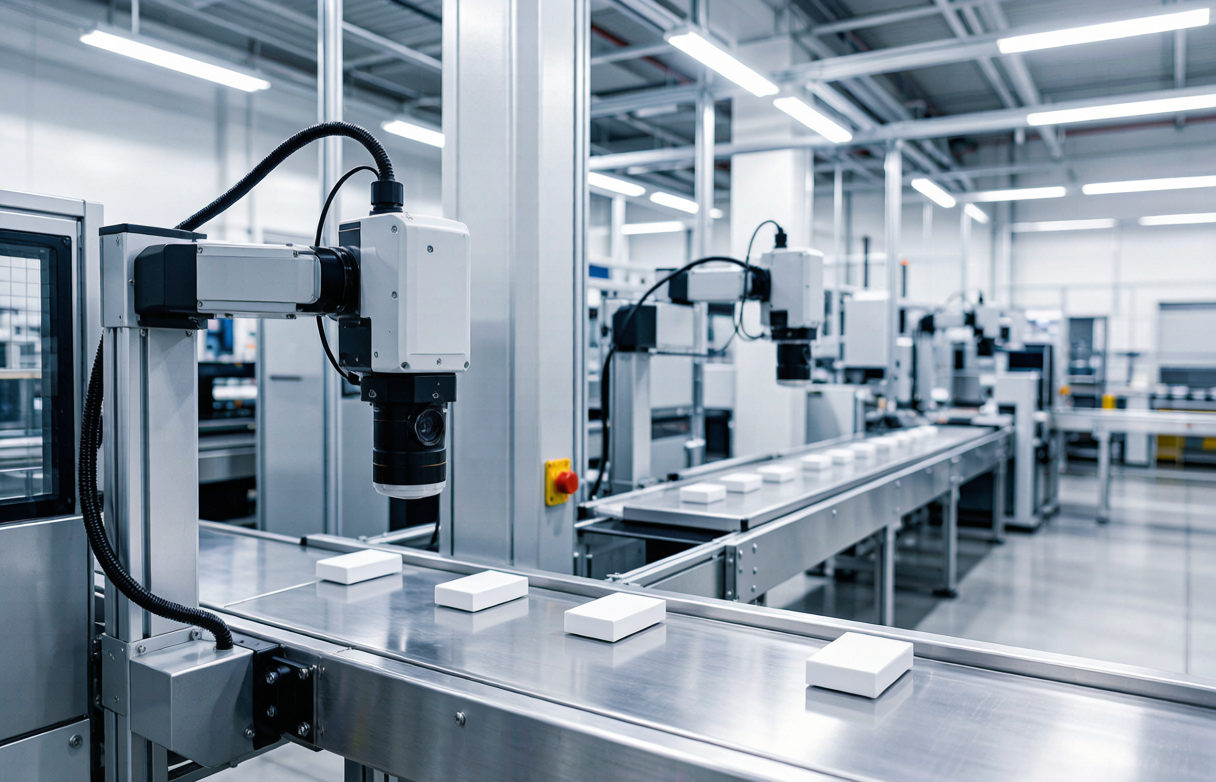
A key laboratory's AI training platform needed to support over 20 research groups concurrently running model training and simulation, with total data exceeding 500TB and peak concurrent read bandwidth requirements of 12GB/s. Previously, a storage pool using SATA SSDs delivered only 550MB/s sequential read speeds, and latency spiked above 200ms during multi-node reads, causing GPU idle rates as high as 40%. After deploying Stonbel's Industrial NVMe drives, sequential read speeds reached 7100MB/s per drive. Combined with a distributed parallel file system, aggregate bandwidth increased to 15GB/s, and data loading time dropped from minutes to seconds. Specifically, the platform deployed a 32-node NVMe storage cluster, each
Official Specs: Industrial NVMe Drive Technical Details & Reliability
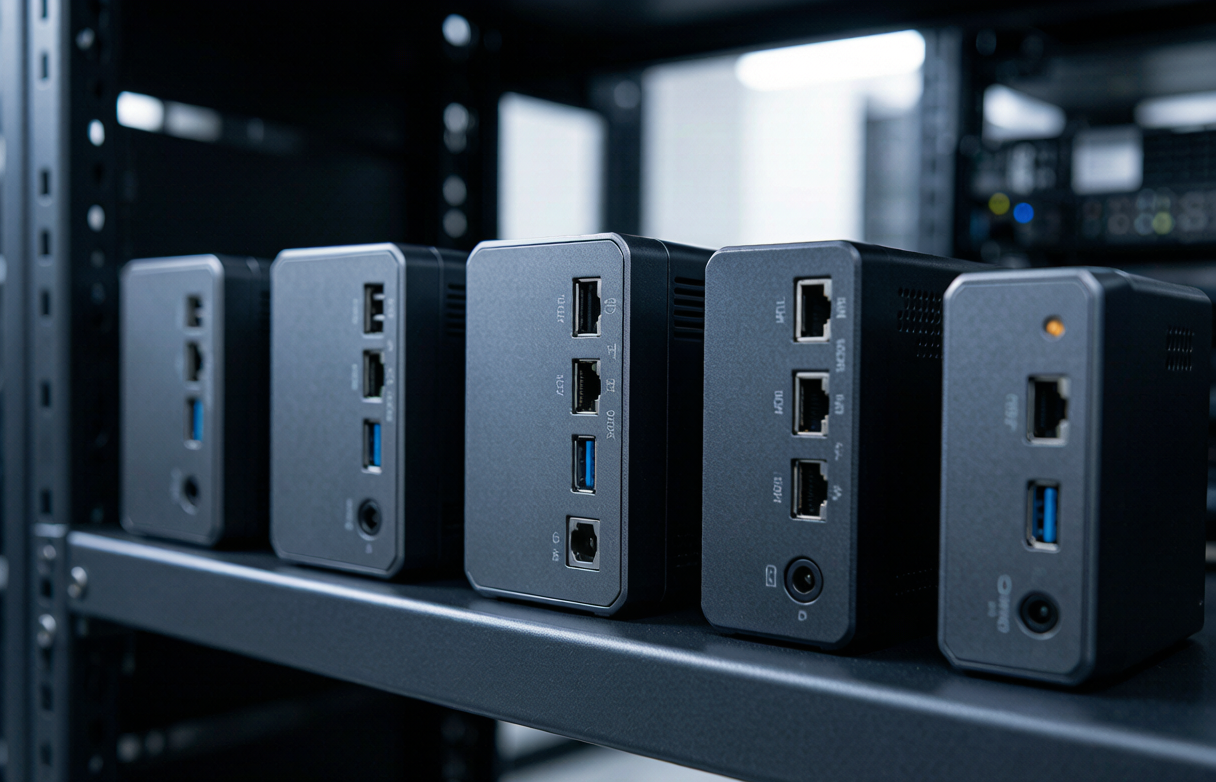
Stonbel's Industrial NVMe drives for educational clouds strictly comply with NVMe 1.3/1.4/2.0 specs, supporting PCIe Gen3x4 and Gen4x4 interfaces, with capacities from 256GB to 4TB. Reliability features include Power Loss Protection (PLP), end-to-end ECC, and a wide operating temperature range of -40~85°C, with an MTBF of up to 2 million hours. The PCIe Gen4x4 version offers 7100MB/s sequential read and 6400MB/s sequential write, with TBW up to 4800TB and 3000 P/E cycles, plus anti-sulfuration (G3), OCP/OVP protection, and on-drive RAID. The PCIe Gen3x4 version (NVMe 1.4) provides 2000MB/s sequential read and 1500MB/s sequential write, with
Industry Impact: Shifting from Capacity-First to Performance & Reliability
The adoption of Industrial NVMe drives marks a shift in university research storage from a capacity-first approach to one prioritizing both performance and reliability. In gene sequencing, a single sample's FASTQ file can be tens of GB; traditional storage took over 10 minutes to read, while NVMe drives cut this to under a minute, directly accelerating analysis. Multi-replica and erasure coding also ensure data safety for shared use across groups. This architecture is not only suitable for universities but also provides a reusable storage-compute synergy model for government and
Q1: Why use Industrial NVMe drives instead of consumer SSDs for educational clouds?
A: Educational clouds run 24/7 with heavy concurrent access; consumer SSDs can suffer from performance drops or lifespan degradation under sustained high load. Industrial NVMe drives support -40~85°C temperatures, PLP, and end-to-end ECC, with TBW up to 5200TB (TLC), suitable for continuous writes. Stonbel's drives also feature anti-sulfuration (G3) and OCP/OVP protection for data integrity. For comparison, consumer SSDs typically have a TBW of 200-800TB (for 1TB models), while Industrial NVMe drives offer 5200TB (TLC) and up to 24000TB (SLC). MTBF for Industrial drives is up to 2 million hours, versus under 1.5 million for
Q2: How do Industrial NVMe drives pair with GPU compute pools?
A: GPU pools need high-speed data supply to avoid idle compute. Industrial NVMe drives provide 7100MB/s sequential read and 6400MB/s sequential write via PCIe Gen4x4, and with parallel file systems, can boost multi-node aggregate bandwidth to over 15GB/s, increasing GPU utilization by over 50%. Stonbel also supports smart data tiering, placing hot data on NVMe and archiving cold data, balancing performance and cost. In practice, a distributed storage cluster with multiple NVMe drives per node, using parallel file systems like Lustre or BeeGFS, can meet the data read demands of multiple GPU nodes. In AI training, the data loading pipeline reads batches from storage, preprocesses on CPU, and
Q3: How to evaluate the lifespan and reliability of Industrial NVMe drives?
A: Lifespan is measured by TBW (Total Bytes Written) and P/E cycles. Stonbel's Industrial NVMe drives support up to 5200TBW (TLC) and 24000TBW (SLC), with 3000 P/E cycles. Reliability includes an MTBF of up to 2 million hours, PLP, end-to-end ECC, and 1500G shock resistance, suitable for 24/7 operation. Lifespan should be assessed based on write load; Stonbel provides intelligent O&M tools for real-time monitoring. For instance, in educational cloud scenarios, daily writes from data preprocessing, model checkpoints, and logs might range from hundreds of GB to several TB. A 2TB TLC drive with 5200TBW would last about 7 years at 2TB daily writes;
Industrial NVMe drives for education cloud platforms are more than a hardware upgrade—they represent a restructuring of research computing architecture. By deeply integrating high-speed storage with GPU compute pools, Stonbel helps universities and research institutes achieve multi-group resource sharing and pay-per-use billing, boosting compute utilization by over 50%. As AI models and simulation demands grow, industrial NVMe drives will become standard in intelligent computing centers. Stonbel will continue to deliver industrial-grade storage and AI compute infrastructure to accelerate research innovation. From real cases—whether AI training platforms in key labs or production line upgrades at Midea smart factories—industrial NVMe drives and supporting solutions demonstrate clear value: data loading time drops from minutes to seconds, GPU idle rates fall significantly, and maintenance costs decrease. The evolution of education cloud platforms is not just a technology upgrade but a transformation of research models—when storage is no longer a bottleneck, compute potential is fully unleashed. With service networks in 31 provinces and direct factory support, Stonbel provides high-reliability, high-performance storage and compute foundations for more universities and research institutions.