This article analyzes key technical approaches for brightness/color temperature selection and ambient light adaptation in airport LED displays from manufacturing R&D, market service, and industry outlook perspectives, drawing on Stonbel's airport deployment experience. It provides quantifiable decision-making references for airport operators and integrators.
Interview Background
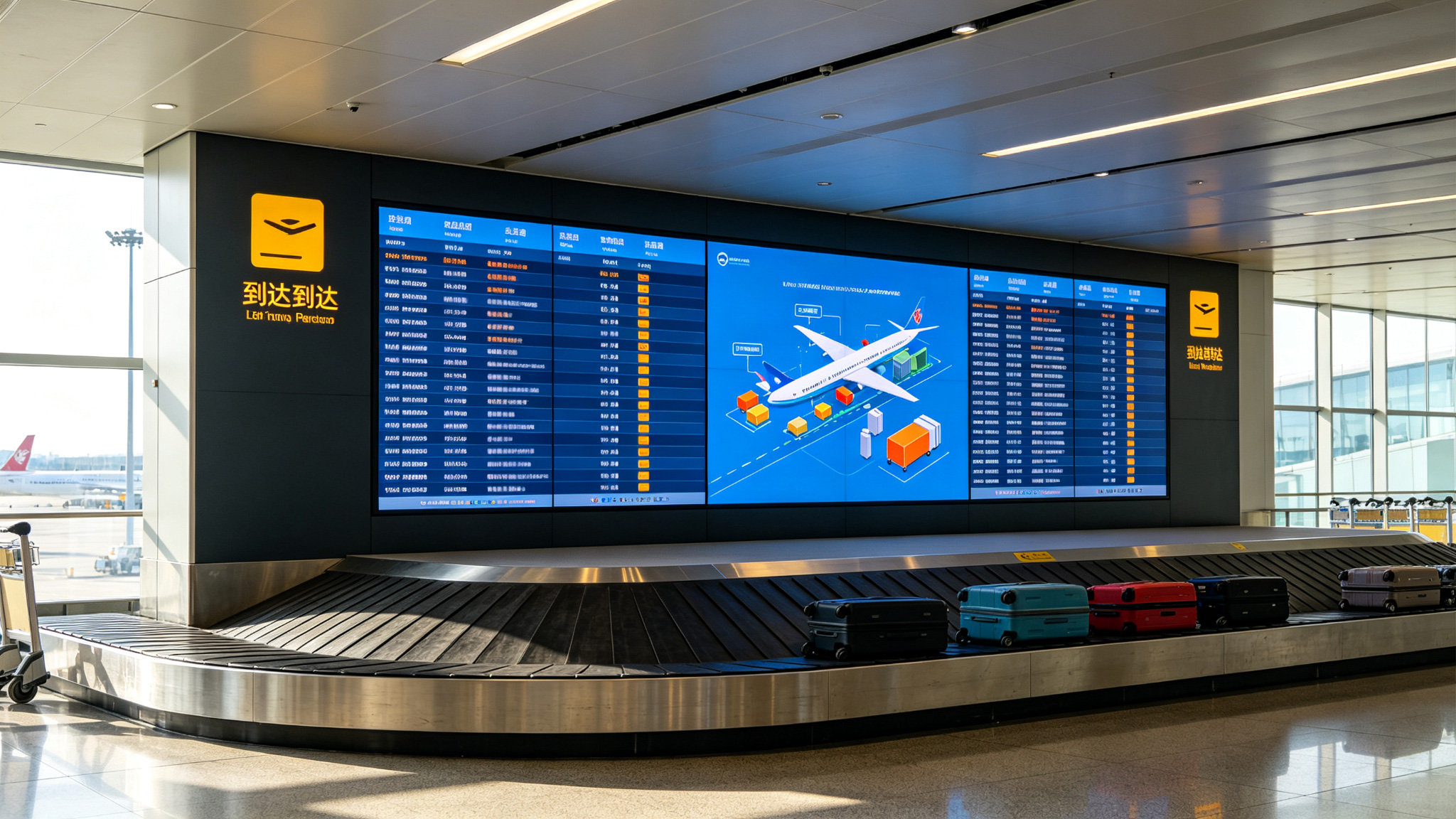
In airports, LED displays serve not only as flight information carriers but also as key windows for passenger flow guidance and brand presentation. From intense direct sunlight in departure halls to softer lighting in waiting areas, and from daytime natural light compensation to nighttime anti-glare needs, airport LED displays face far more complex lighting conditions than typical indoor environments. For instance, at summer noon, light intensity near floor-to-ceiling windows in departure halls can reach tens of thousands of lux, while nighttime waiting areas may drop to just dozens of lux—this extreme dynamic range demands millisecond-level response adjustment. Meanwhile, airport operations require high stability, protection, and remote maintenance—any screen failure could disrupt flight information accuracy, risking passenger delays or missed flights. Industry statistics show that a 1% reduction in airport display failure
Topic 1: Manufacturing & R&D
For high-brightness airport terminal environments, Stonbel has focused R&D on coordinated brightness and color temperature control. Using SMD packaging, surface-mounted LEDs are individually soldered onto PCB boards, offering mature processes and good heat dissipation; outdoor models can be customized to over 8000cd/m², effectively countering screen whitening under direct sunlight. Paired with an intelligent light sensor, the display auto-adjusts brightness based on ambient light, preventing nighttime glare—validated in the Chengdu Chunxi Road project, where smart brightness control cut energy consumption by 35% and significantly improved image clarity. In color temperature, Stonbel LED displays support 22-bit grayscale and NTSC≥130% color gamut, accurately reproducing colors to prevent misreading of flight info. For example, as ambient light
Topic 2: Market & Service
In airport project delivery, Stonbel emphasizes full-process support from design to maintenance. In a high-speed rail station project—similar to airports in high-traffic, high-dust demands—GOB-packaged P2.5 indoor screens achieved IP65 dust and impact resistance, adapting to frequent physical contact while ensuring visual consistency across multiple screens via uniform brightness and color calibration. This balance between protection and display quality is the key consideration in airport LED display selection. During implementation, Stonbel collaborates with architectural design institutes for structural safety assessments, customizes lightweight steel structures, and addresses lightning, waterproofing, and wind resistance requirements. At delivery, 7×24 remote technical support and a centralized control platform enable unified screen management, cutting information update sync time from 30 minutes to 10 seconds with 100% publishing accuracy. With
Topic 3: Industry Outlook
As airports undergo smart upgrades, LED displays are evolving from simple information boards to interactive, immersive experiences. Stonbel's technology enables COB packaging with minimum pixel pitch of P0.7, supporting 4K UHD input, 7680Hz ultra-high refresh rate, and 22-bit grayscale for fine, grain-free images—highly competitive for future airport advertising and information. In commercial zones, P0.7 screens can be seamlessly tiled for luxury ads or art displays, delivering far greater visual impact than traditional lightboxes. Smart interactivity and connectivity—including 5G/WiFi/4G multi-network access, motion sensing, and remote management platforms—turn displays into extended digital service terminals, boosting passenger
Q1: How should brightness be selected for airport LED displays?
A: Brightness selection depends on the installation site's lighting. For direct sunlight areas like departure hall windows or open concourses, choose outdoor models with peak brightness above 8000cd/m² using SMD packaging for clear visibility. For indoor waiting areas, brightness can be lower at 1500-2500cd/m², but smart light sensing is needed to prevent nighttime glare. Stonbel's SMD solutions support brightness customization to over 8000cd/m², with auto-adjustment that cuts energy use by 35% while improving clarity, as seen in the Chengdu Chunxi Road project. For high-dust or high-humidity zones, GOB packaging with IP65 protection extends lifespan. Specific values should be tailored to measured ambient light data; Stonbel offers on-site light environment assessments for precise selection.
Q2: How does color temperature adapt to ambient light?
A: Color temperature adaptation relies on intelligent adjustment systems. Stonbel displays support 22-bit grayscale and NTSC≥130% color gamut, ensuring high consistency and accurate color reproduction. The screen uses light sensors to auto-adjust color temperature, keeping colors true under mixed natural and artificial light to prevent information misreading. For example, as ambient light shifts from cool white (~6000K) to warm yellow (~3000K) at dawn or dusk, the display adjusts to a 5000K-6500K visible range for clear flight info. COB packaging ensures high color temperature uniformity with minimum pitch P0.7, ideal for premium command centers or VIP lounges. For terminals, a 3000K-8000K adjustment range is recommended to cover all-day light changes. Precision and range can be customized per project; Stonbel provides professional calibration for multi-screen consistency.
Q3: How can airport LED displays avoid glare in strong light?
A: Glare prevention hinges on surface treatment and brightness compensation. Stonbel's GOB packaging fills transparent resin over SMD lamp beads, creating a smooth sealed layer that reduces diffuse reflection while achieving IP65+ protection for dusty, humid environments. High-brightness models (above 8000cd/m²) effectively counter direct light, keeping images visible. Smart brightness adjustment raises output at noon sunlight and lowers it at night or on cloudy days to avoid glare—the Chengdu Chunxi Road project cut energy by 35% while improving clarity. For terminals, anti-glare coatings or sunshades can further reduce reflection. Stonbel offers multiple surface treatment options tailored to project needs.
Brightness, color temperature, and ambient light adaptation in airport LED displays are not isolated parameters but a systematic project spanning manufacturing, service, and maintenance. Stonbel offers full-time solutions from strong-light compensation to nighttime anti-glare through flexible combinations of SMD, COB, and GOB packaging technologies, plus intelligent light sensing and remote maintenance. Selection should be based on actual lighting conditions, protection requirements, and lifecycle costs. As naked-eye 3D, interactive, and AI-linked technologies proliferate, airport LED displays will transcend information carriers to become key infrastructure enhancing passenger experience and commercial operations.