Amid the wave of bank branch transformation, LED displays have upgraded from simple information display tools to key carriers for enhancing service image, conveying financial value, and enabling smart interaction. From rate disclosure to product marketing, customer guidance to brand display, a high-definition, stable, and secure display directly affects branch operational efficiency and customer experience. However, with the proliferation of packaging technologies and parameter specifications in the market, how can procurement bidding accurately grasp core points and avoid potential risks? Drawing on real project experience in government, transportation, and cultural tourism, this article breaks down the qualification requirements and key decision points for bank branch LED display procurement bidding, from pain points to solutions and data outcomes, helping procurement parties make rational, professional choices in a complex market.
1. Define Scenario Needs: Display Pain Points of Bank Branches
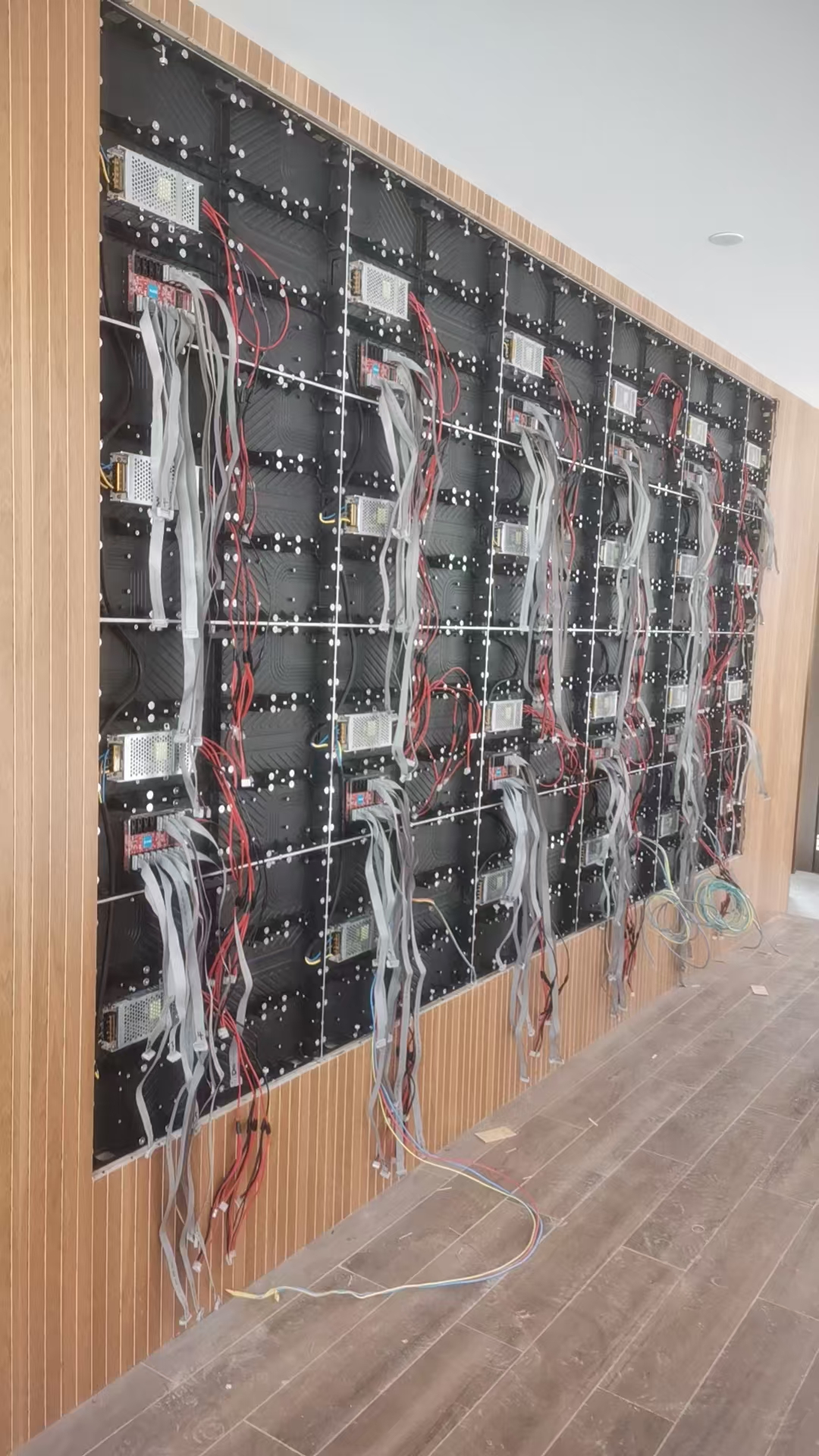
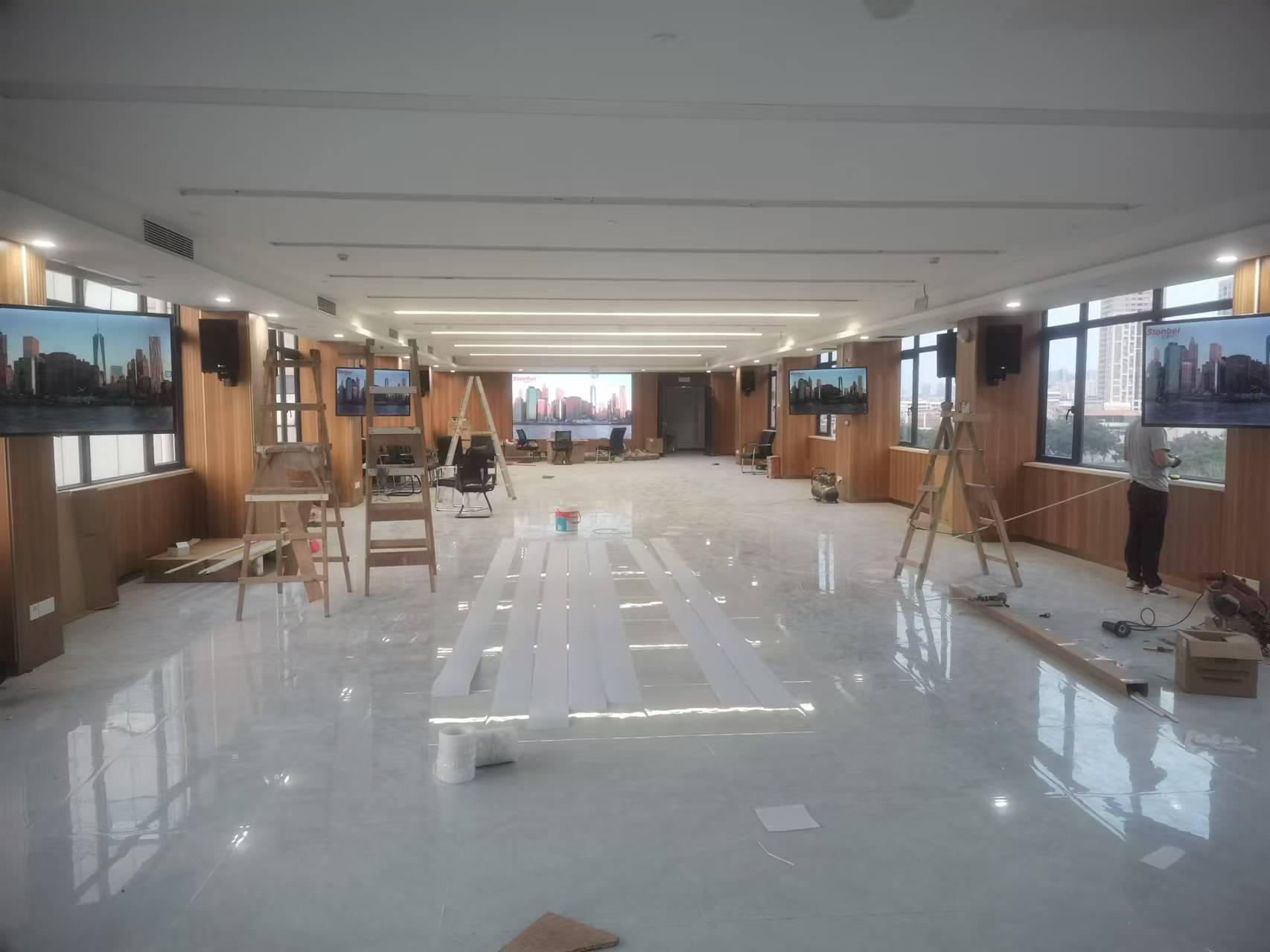
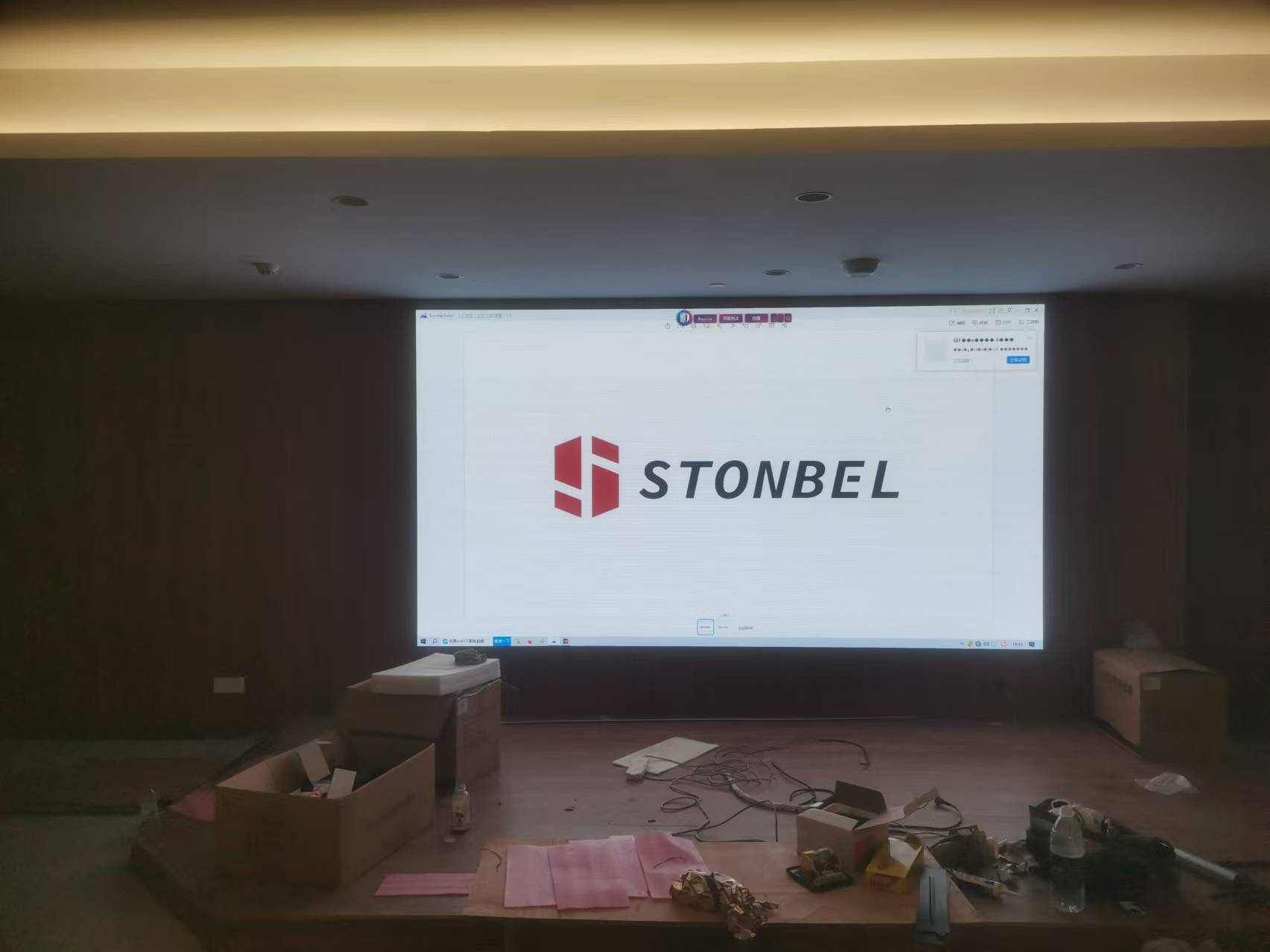
Procurement of LED displays for bank branches starts with defining scenario needs. Unlike outdoor advertising screens, bank branch interiors demand higher standards for brightness, color accuracy, protection rating, and long-term stability. A typical reference is Stonbel's COB P1.5 ultra-fine-pitch LED display for a government service hall, covering 120m² with seamless splicing, 4K input, and 3840Hz refresh rate for smooth visuals. For bank branches, such ultra-HD capability ensures dense text like interest rate boards
2. Core Parameters: Pitch, Refresh Rate, Grayscale, Color Gamut
Technical parameters are the core evaluation criteria. Pixel pitch determines clarity: for viewing within 3m, choose COB fine-pitch P0.7-P1.2 (Stonbel's COB minimum is P0.7); for 3-5m, P1.5-P1.8 suffices. Given dense information, prioritize below P1.2 for sharp text edges. Refresh rate should be at least 3840Hz; Stonbel offers up to 7680Hz to prevent moiré or scan lines in camera shots, ensuring clean video conferencing or media images. Grayscale of 22bit and color gamut NTSC≥130% deliver natural gradients and brand colors without banding. Stonbel's P0.7, 7680Hz, 22bit, NTSC≥130% combination
3. Packaging Technology: SMD, COB, GOB Comparison
Packaging technology is key to performance and cost. SMD uses surface-mounted lamp beads soldered individually on PCB—mature, cost-effective, and versatile across sizes with wide brightness range. Benefits include good heat dissipation for stable operation, adjustable brightness up to 8000cd/m², and full pitch coverage P1.25-P10. For budget-conscious or brightness-specific branches, SMD offers value. COB bonds chips directly to PCB with glue encapsulation, eliminating
4. Qualification Checklist: Certifications and Industry Access
Qualification review is the first defense for project quality and stability. Stonbel advises checking: First, basic certifications—3C (China compulsory), CE (Europe), FCC (US), ROHS (hazardous substances)—ensure electrical safety and compliance. Second, ISO9001 quality management and ISO14001 environmental management certifications measure production standards. For confidential or high-security branches, military and confidentiality qualifications are necessary. Stonbel, a top-10 Chinese LED display company, holds all these, including military and confidentiality credentials, meeting bank security demands.
5. Functionality & Scalability: Upgrade Path for Smart Banking
Procurement should reserve space for future smart upgrades. Stonbel's interactive and networking features support 4K/1080P HD, 5G/WiFi/4G connectivity, built-in human sensing, ad data analytics, remote maintenance, and multi-signal input with synchronized control. For branches, displays can become marketing engagement hubs. For example, LED floor screens or interactive displays at entrances trigger product recommendations via human sensing, attracting customers. Stonbel's P3.91 floor screen (50m², load-bearing ≥800kg/module, IP65+) with human sensing increased visitor dwell time by 40%, boosted nearby merchant sales by 15%, and raised social media exposure by 300%.
Q1: How to choose pixel pitch for bank branch LED displays?
A: Pixel pitch determines clarity. For viewing within 3m, choose COB fine-pitch P0.7-P1.2 (Stonbel's COB minimum is P0.7); for 3-5m, P1.5-P1.8 suffices. Given dense information, prioritize below P1.2 for sharp text edges. Smaller pitch means more pixels per area and higher cost, so balance budget and viewing distance.
Q2: What refresh rate and grayscale are needed for bank branch displays?
A: Refresh rate should be at least 3840Hz; Stonbel offers up to 7680Hz to prevent moiré or scan lines in camera shots, ensuring clean video conferencing or media images. Grayscale of 22bit and color gamut NTSC≥130% deliver natural gradients and brand colors without banding. High refresh and grayscale ensure smooth video and fine static images.
Q3: What protection rating is required for bank branch LED displays?
A: Indoor branches need at least IP65; Stonbel's COB achieves IP55-IP65, while GOB reaches IP65+ for dust, moisture, and impact resistance. In humid or street-facing areas, consider custom high-protection products to extend lifespan and cut maintenance. High ratings handle cleaning, spills, or touch, reducing failure rates.
Q4: How to ensure long-term stable operation of bank branch displays?
A: Stability depends on: packaging (COB/GOB offer higher protection than SMD, reducing lamp failures), heat dissipation (SMD's individual soldering aids cooling), redundant power and control systems (choose dual-power backup and remote maintenance), and after-sales (prefer vendors with 31 provincial service points like Stonbel for rapid response). Require at least 3-year warranty and spare parts commitment.
Q5: Do bank branch LED displays support interactive features?
A: Yes. Stonbel's displays include human sensing for smart interaction, such as triggering product recommendations or games, boosting engagement. They also support ad data analytics for marketing evaluation. Interactive features in VIP or product zones attract customers and enhance brand affinity. Buyers can configure modules based on branch positioning.
Procurement bidding for bank branch LED displays is a complex decision balancing technical parameters, qualification review, and long-term operation. As seen in real cases, COB packaging offers advantages in seamless splicing and high protection, SMD packaging balances cost and flexibility, and GOB packaging provides cost-effective protection—all offering rich options for bank branches. Procurement parties should base decisions on branch scale, budget, and functional positioning, strictly verify manufacturer qualifications such as 3C, CE, and ISO, focus on core parameters like pixel pitch, refresh rate, grayscale, and color gamut, and prioritize suppliers with nationwide service networks and proven project experience to ensure stable operation over a decade-long lifecycle. Additionally, for future smart banking trends, display capabilities in smart interaction, multi-signal input, and customized forms will become key to enhancing branch competitiveness. This article's case analysis and qualification checklist aim to provide professional reference for bank branch LED display bidding, supporting digital service upgrades and winning customer trust in a competitive market.