Using China Telecom's 5G edge computing node deployment and a property group's smart security upgrade as case studies, this article reviews the implementation details, technical highlights, and quantified outcomes of industrial CFast cards in private cloud data centers. It analyzes energy consumption and long-term reliability from a third-party perspective, offering data-driven reference for enterprise selection.
Case Background
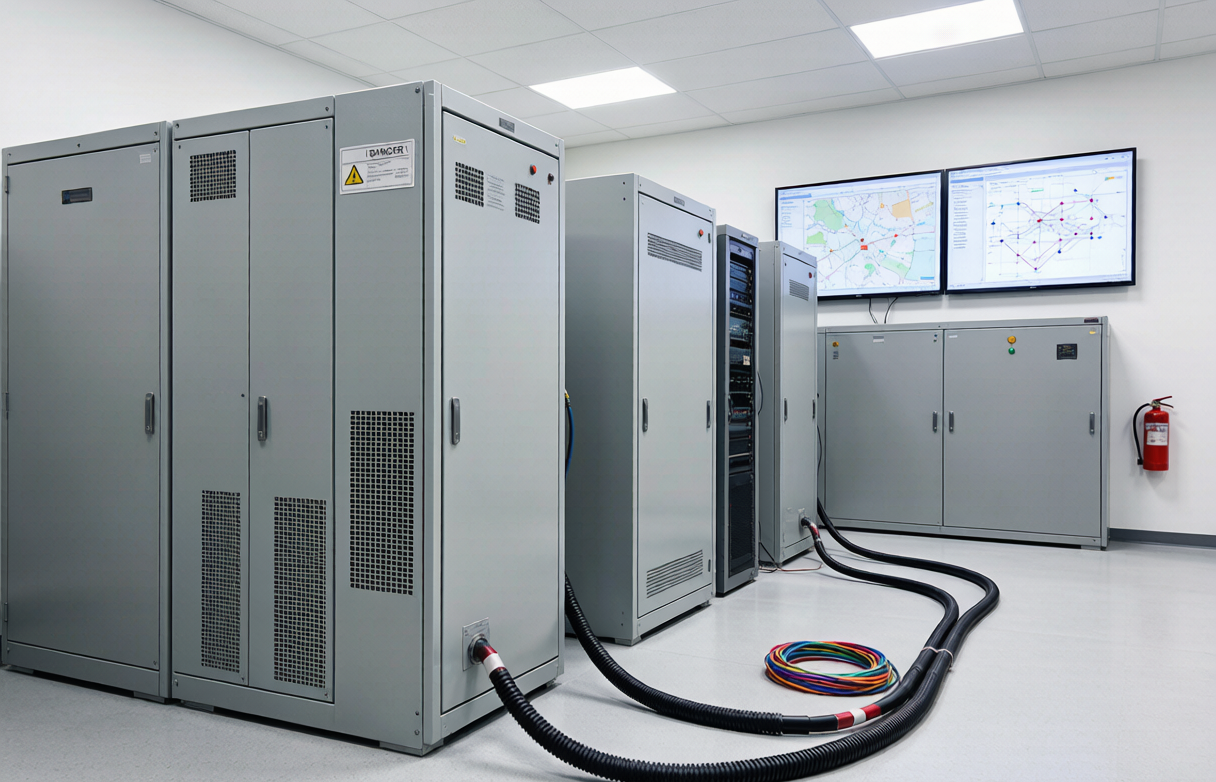
The core challenge for private cloud data centers is ensuring high reliability and low power consumption of storage systems within limited space and cooling conditions. As an industrial-grade pluggable storage card compliant with the CFast 2.0 specification (SATA III 6Gb/s), the industrial CFast card combines the compact size of CF cards with SATA high speed. It supports SLC/MLC/TLC NAND flash, withstands shock and vibration per MIL-STD-810, and is commonly used as a boot drive in industrial PCs, in-vehicle systems, and rail transit recording. In a China Telecom 5G edge computing node project, a provincial telecom operator needed to build 100 edge computing nodes across the province to provide localized computing support for applications. However, the edge node rooms had limited space and

Implementation Details
To address multi-tenant isolation requirements in private cloud data centers, Stonbel pre-loaded data encryption and access audit functions on the CFast cards, supporting at-rest encryption and operation audit logs, meeting the requirements of China's Cybersecurity Multi-Level Protection Scheme (MLPS 2.0) and the Level 3 information security protection for the financial industry. During deployment, an intelligent O&M platform monitors drive SMART data, I/O latency, and temperature in real time, predicting potential failures and automatically migrating data, reducing unplanned downtime by over 80%. For private cloud scenarios requiring elastic expansion, the distributed architecture supports scaling from hundreds of TB to PB-level capacity, with performance scaling nearly linearly with node count. CFast cards, used as boot drives, can be quickly replaced without affecting the data plane. Additionally, Stonbel offers a full range of industrial storage solutions,
Technical Highlights
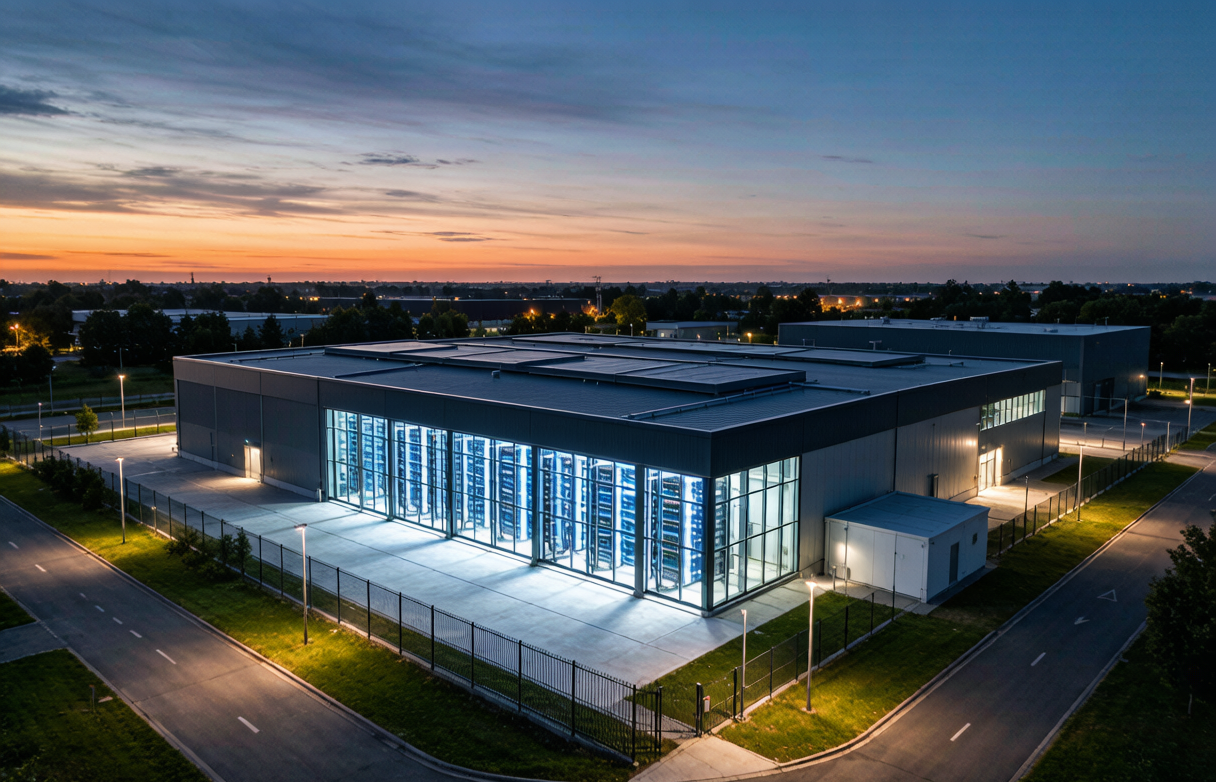
Regarding power consumption and heat dissipation, the CFast card features a low-power design. Compared to HDDs or large-capacity SSDs, its power consumption is negligible, helping reduce overall cooling load in private cloud data centers. Technical specifications show the industrial CFast card achieves sequential read speeds up to 560 MB/s (MLC) and sequential write speeds of 450 MB/s (MLC), with an operating temperature range of -40°C to 85°C, MTBF of 1,000,000 hours, and endurance of 60,000 P/E cycles (SLC mode) or 3,000 P/E cycles (MLC mode). These parameters ensure long-term stable operation under harsh conditions. Stonbel also provides intelligent data tiering and cold/hot archiving, automatically placing hot data on high-speed NVMe drives, warm data on SSDs, and cold data on low-cost media based on access frequency, reducing overall storage costs by over
Results & Insights
From practical cases, the industrial CFast card in private cloud data centers not only excels in power consumption and heat dissipation but also delivers 99.99% annual availability in 7×24-hour operation, significantly reducing O&M costs and failure rates. In the China Telecom project, power consumption per node dropped by 35%, response latency decreased from 150ms to 20ms, and deployment time was shortened by 60%. In the real estate group project, event response time improved from 10 minutes to 2 minutes, vehicle/person recognition accuracy reached 97%, monitoring equipment failure rates fell by 70%, and annual maintenance costs per community decreased by 35%. These figures validate the value of industrial CFast cards in private cloud environments. The key insight is that storage selection for private cloud data centers should not focus solely on capacity and price, but also on long-term reliability. Although the unit price of industrial CFast
Q1: What is the power consumption and heat dissipation performance of industrial CFast cards in private cloud data centers?
A: Industrial CFast cards for private cloud data centers feature a low-power design with an operating temperature range of -40°C to 85°C, ensuring stable operation even when data center cooling fails or edge node cooling is poor. Sequential read speeds reach up to 560 MB/s (MLC), with power consumption far lower than HDDs, helping reduce overall cooling load. In the China Telecom 5G edge node project, Stonbel achieved a 35% reduction in per-node power consumption, validating this advantage. Additionally, CFast cards support intelligent data tiering and cold/hot archiving, automatically migrating data to appropriate media based on access frequency, further optimizing energy use and storage costs.
Q2: Which is more reliable in a private cloud data center: an industrial CFast card or an industrial SD card?
A: Industrial CFast cards use the SATA III 6Gb/s interface, offering significantly higher speeds than SD cards, making them suitable as system boot drives for servers or industrial PCs in private cloud data centers. CFast cards meet MIL-STD-810 for shock and vibration resistance, have an MTBF of 1,000,000 hours, and endurance of 60,000 P/E cycles in SLC mode, providing higher reliability. SD cards are smaller and cheaper but have weaker read/write speeds and vibration resistance, making them unsuitable for high-speed recording applications. In private cloud data centers, the high speed and reliability of CFast cards make them the preferred choice, especially for 7×24-hour environments requiring frequent system log and configuration read/write operations.
Q3: How do industrial CFast cards ensure 7×24-hour operation without downtime in private cloud data centers?
A: Industrial CFast cards for private cloud data centers offer wide-temperature operation (-40°C to 85°C) and high MTBF (1,000,000 hours). Combined with Stonbel's intelligent O&M and failure prediction features, which monitor SMART data, I/O latency, and other metrics in real time, potential failures can be predicted in advance and data automatically migrated, reducing unplanned downtime by over 80%. The solution also supports multi-replica and erasure coding for disaster recovery, ensuring business continuity even with single-point failures. Additionally, Stonbel's data encryption and access audit functions meet MLPS 2.0 requirements, safeguarding data security. These measures collectively ensure high availability during continuous operation in private cloud data centers.
Industrial CFast cards for private cloud data centers, with industrial-grade design, wide temperature range, and high reliability, are essential storage components in enterprise private cloud builds. Cases like China Telecom and Vanke Property show superior energy and thermal performance, achieving 99.99% annual availability in 7×24 operation, reducing maintenance costs and failure rates. Stonbel's integrated solution combines CFast cards with distributed storage and computing nodes, enabling a reliable, scalable private cloud foundation. For enterprises prioritizing long-term stability and TCO, choosing industrial CFast cards is a pragmatic decision. For more, see industrial wide-temp SSDs, DDR4/DDR5 memory, and eMMC/UFS embedded storage.