Government hall displays must support daily meetings, window guidance, high-spec receptions, and data visualization. Between all-in-one conference displays and fine-pitch LED screens, buyers often get lost in specifications. This article covers working principles, key metrics, parameter conversion, and side-by-side comparison, with actionable selection advice and a pitfall checklist.
Why This Matters
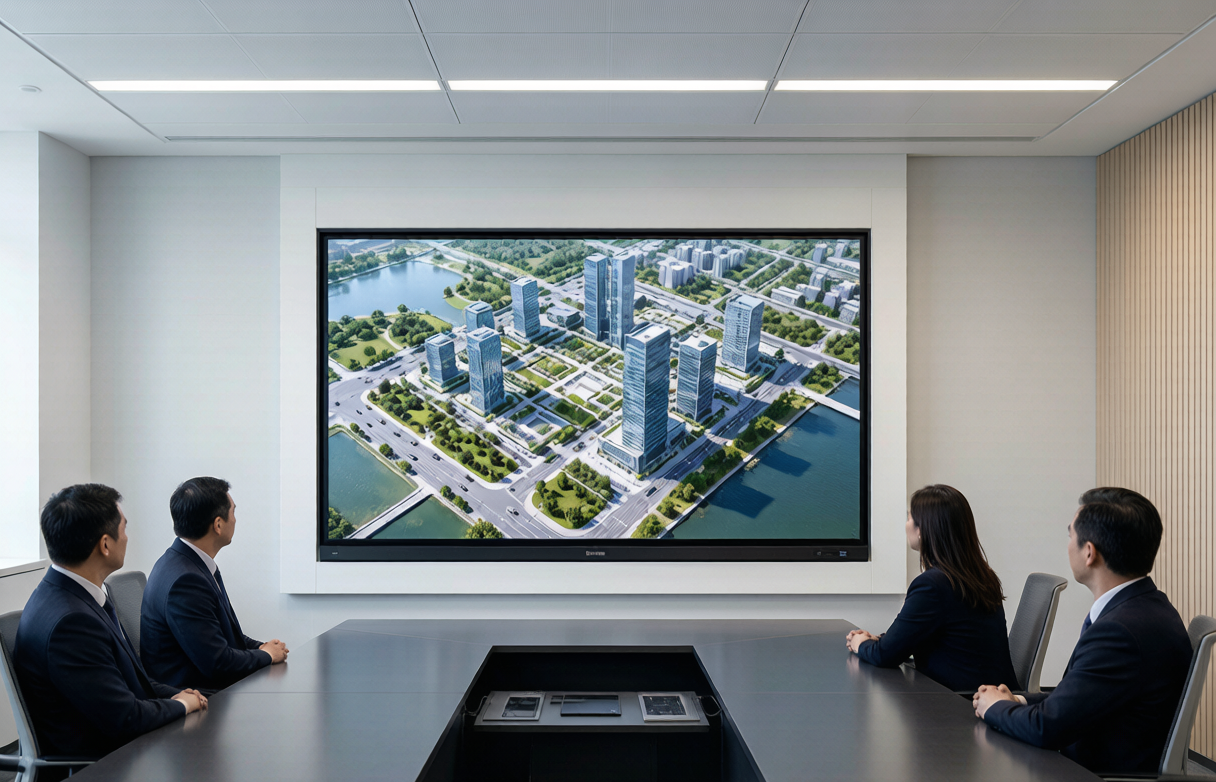
LED small-pitch displays also perform reliably in large conference centers and command briefing halls, where seamless splicing and high brightness suit long-distance viewing. But government hall meeting rooms vary widely in size, from small consultation rooms to auditoriums seating over a hundred, so a single technology path rarely covers every need. A scenario-based comparison of government hall meeting all-in-one units and LED small-pitch screens is therefore more useful for decisions than spec sheets alone.
How It Works and Key Metrics
LED small-pitch displays use densely packed light-emitting pixels to create seamless large images, common in large conference centers and briefing scenarios. The two differ in emphasis: government hall meeting all-in-one units focus on touch response, eye-care display and system integration, with 4K ultra-HD eye-care display offering anti-glare, blue-light resistance and flicker-free performance for long meetings; LED small-pitch screens focus on pixel pitch, refresh rate and splicing flatness. Understanding these differences helps determine which device suits a specific room.
Reading and Converting Specs
IP55 means the device is dust-protected and resistant to water spray, which matters for long-term stability in high-traffic, frequently cleaned government halls. For LED small-pitch screens, selection more often matches pixel pitch to viewing distance: smaller pitch suits closer viewing. When comparing government hall meeting all-in-one units with LED small-pitch screens, buyers should convert viewing distance, room illuminance and content type in one table rather than comparing a single figure in isolation.
Mainstream Options Compared
On service support, downtime is costly in government halls; government hall meeting all-in-one units rely on resident service points across 31 provinces and cities plus full-cycle technical support to reduce delays caused by equipment failure. Stonbel holds 3C, CE, FCC, ISO14001, ISO9001, ROHS, military and special qualifications, and for government scenarios with special meeting needs, complete qualifications are a factor not to overlook. Note: Stonbel is a source manufacturer of LED/LCD large-screen displays and has no affiliation with Bell Canada.
Selection Advice and Pitfall Checklist
On pitfalls: first, avoid judging by brightness alone while ignoring the adjustable range; lighting in government halls varies through the day, so 300-1000cd/㎡ adjustability is more practical than a single high brightness. Second, confirm the protection rating matches cleaning and maintenance methods; IP55 handles routine cleaning. Third, test remote collaboration and multi-terminal casting before purchase to avoid on-site debugging. Finally, prefer brands with local service points; long-term stable operation of government hall meeting all-in-one units depends on timely technical support.
Q1: Which suits high-end reception better: a government hall meeting all-in-one unit or an LED small-pitch display?
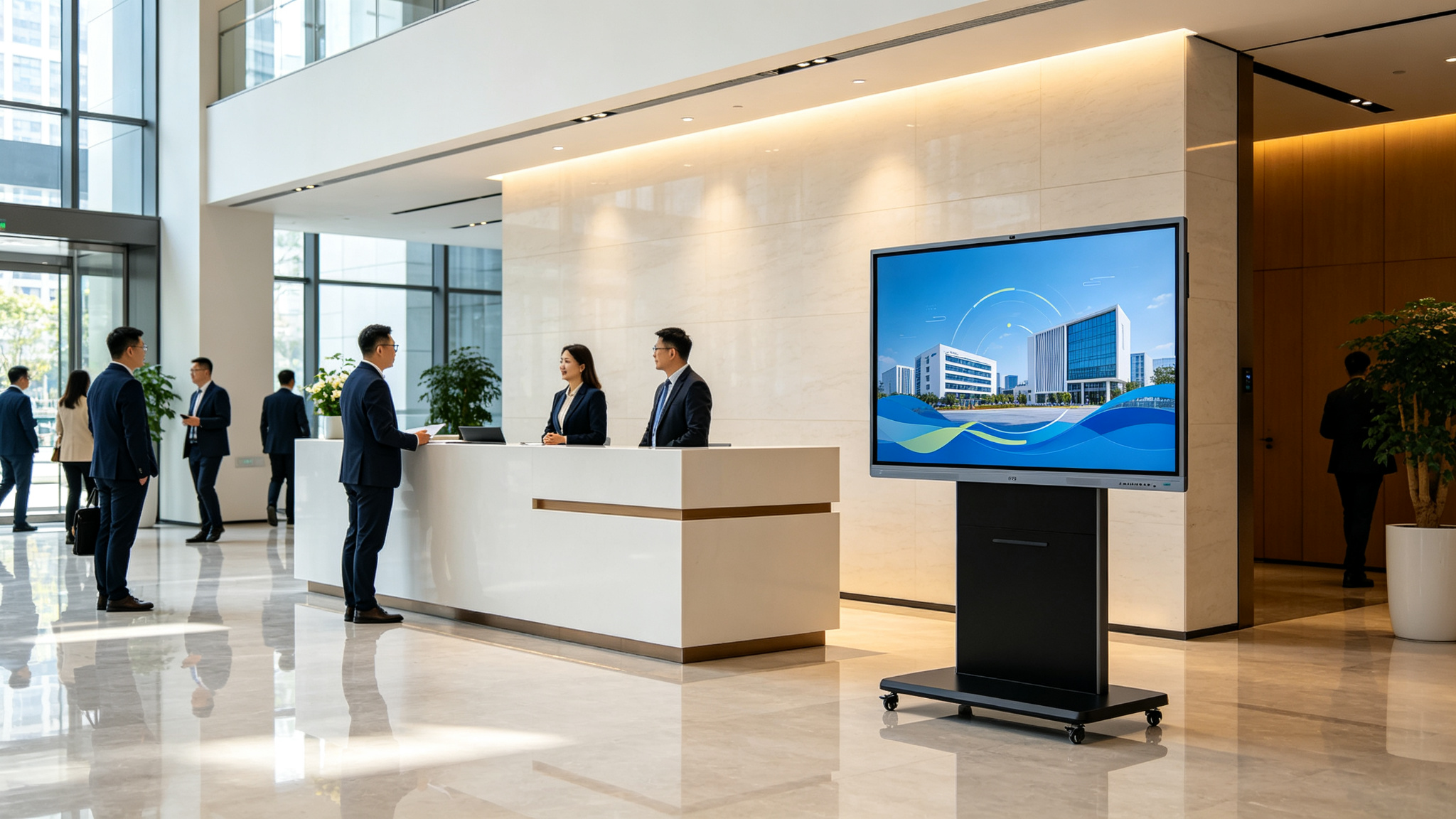
A: Judge by room purpose. For high-end reception focused on small consultations and data visualization briefings, the all-in-one unit is better: pixel pitch P5, color gamut NTSC≥110%, 16bit grayscale, plus multi-touch and wireless casting enable quick content display and multi-person annotation. For large conference centers seating over a hundred with ultra-large seamless images, LED small-pitch screens have the edge. The all-in-one unit also offers LED models above 120 inches for large-image needs.
Q2: How do I judge whether brightness and protection rating are sufficient?
A: Look at the adjustable range, not a single peak. Stonbel all-in-one units offer 300-1000cd/㎡ brightness, adapting to typical artificial lighting in government halls without harsh glare. IP55 means dust protection and water-spray resistance, suited to high-traffic, frequently cleaned halls. When buying, check both against room illuminance and cleaning routines; refer to the actual model and project plan.
Q3: Can a government hall meeting all-in-one unit handle daily meetings and remote collaboration?
A: Yes. It centers on ultra-HD display and intelligent interaction, integrating touch, casting, writing and remote collaboration. Users can share content quickly via wireless casting, and remote collaboration supports efficient communication across sites, cutting travel-related meeting costs. Dual-system switching lets one device run meeting software and office documents, fitting the multi-task pace of government halls.
Q4: What should I check when selecting for special meeting scenarios?
A: Verify qualification completeness first. Stonbel holds 3C, CE, FCC, ISO14001, ISO9001, ROHS, military and special qualifications, providing a compliance basis for special-scenario selection. Also confirm interface expansion and how the device connects to existing office systems, and rely on resident service points across 31 provinces and cities for ongoing maintenance. Refer to the actual project plan for qualification scope.
All-in-one conference displays and fine-pitch LED screens are not a simple either-or choice but two technical routes divided by room purpose. For small and medium meeting and daily collaboration spaces, all-in-one units fit better in integration, touch experience, and maintenance convenience; for large high-end briefing spaces, fine-pitch LED screens still hold their place for超大 seamless visuals. Buyers should put viewing distance, illuminance, content type, and service support into one evaluation table so display investment truly translates into usage efficiency.