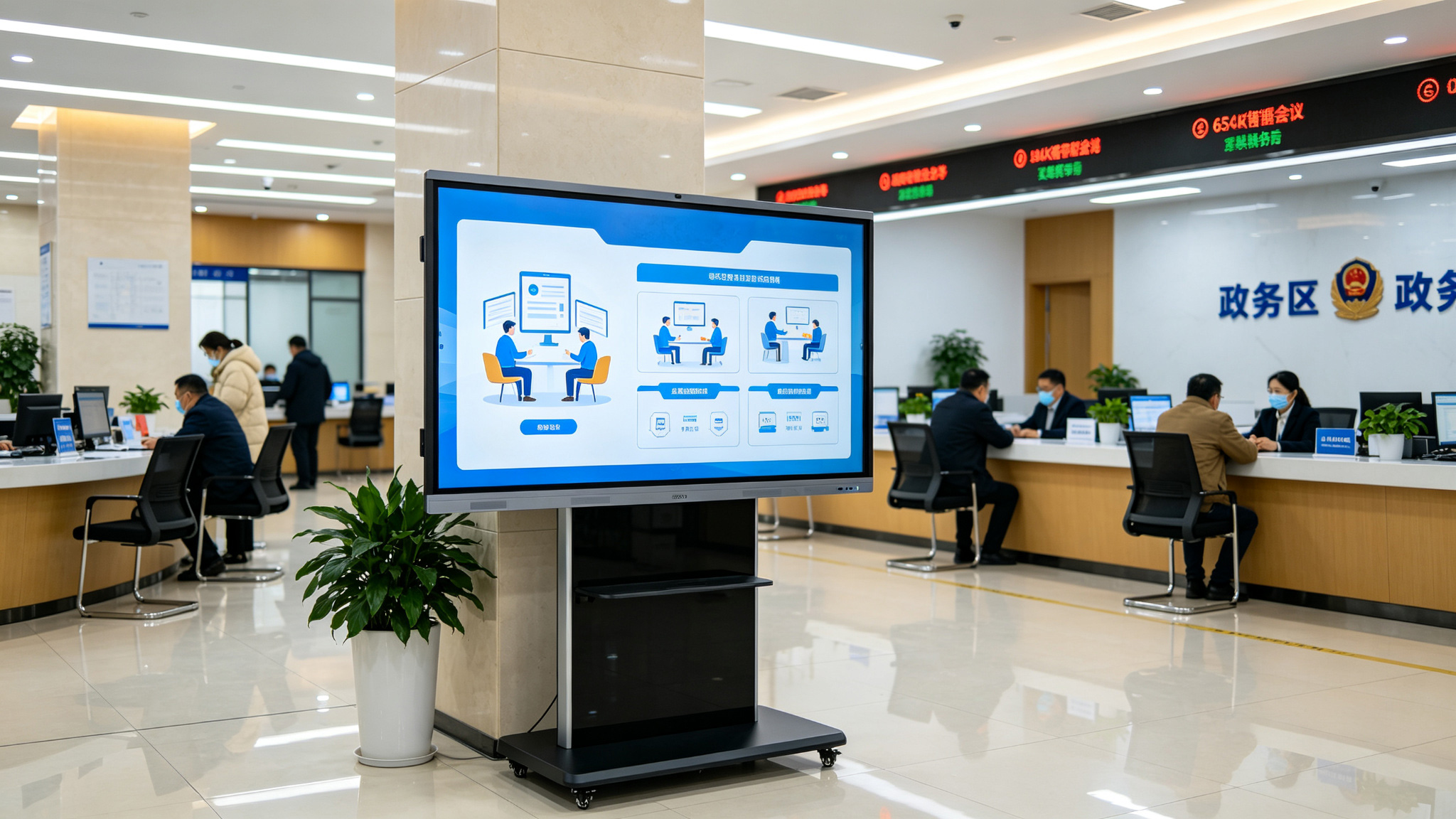
Government halls handle window services, approval coordination, and emergency command, with frequent meetings and large attendance, demanding far higher display stability and interaction efficiency than ordinary offices. This article systematically outlines selection logic for government hall meeting all-in-one displays, from technical specifications and parameter conversion to solution comparison and tender qualification checklists, helping buyers write correct clauses and avoid common pitfalls in tender documents.
Why This Matters
For procurement, a government hall meeting all-in-one is a general office device under centralized government procurement. Technical clauses in tender documents directly determine the actual experience of the winning product. Many projects only specify 'size no less than XX inches, touch support' while ignoring brightness, grayscale, color gamut, and protection rating — metrics directly tied to bright environments and long operating hours. This leads to washed-out displays and lost dark detail after installation. Locking technical points into the tender stage is key to controlling later disputes.
How It Works and Key Metrics
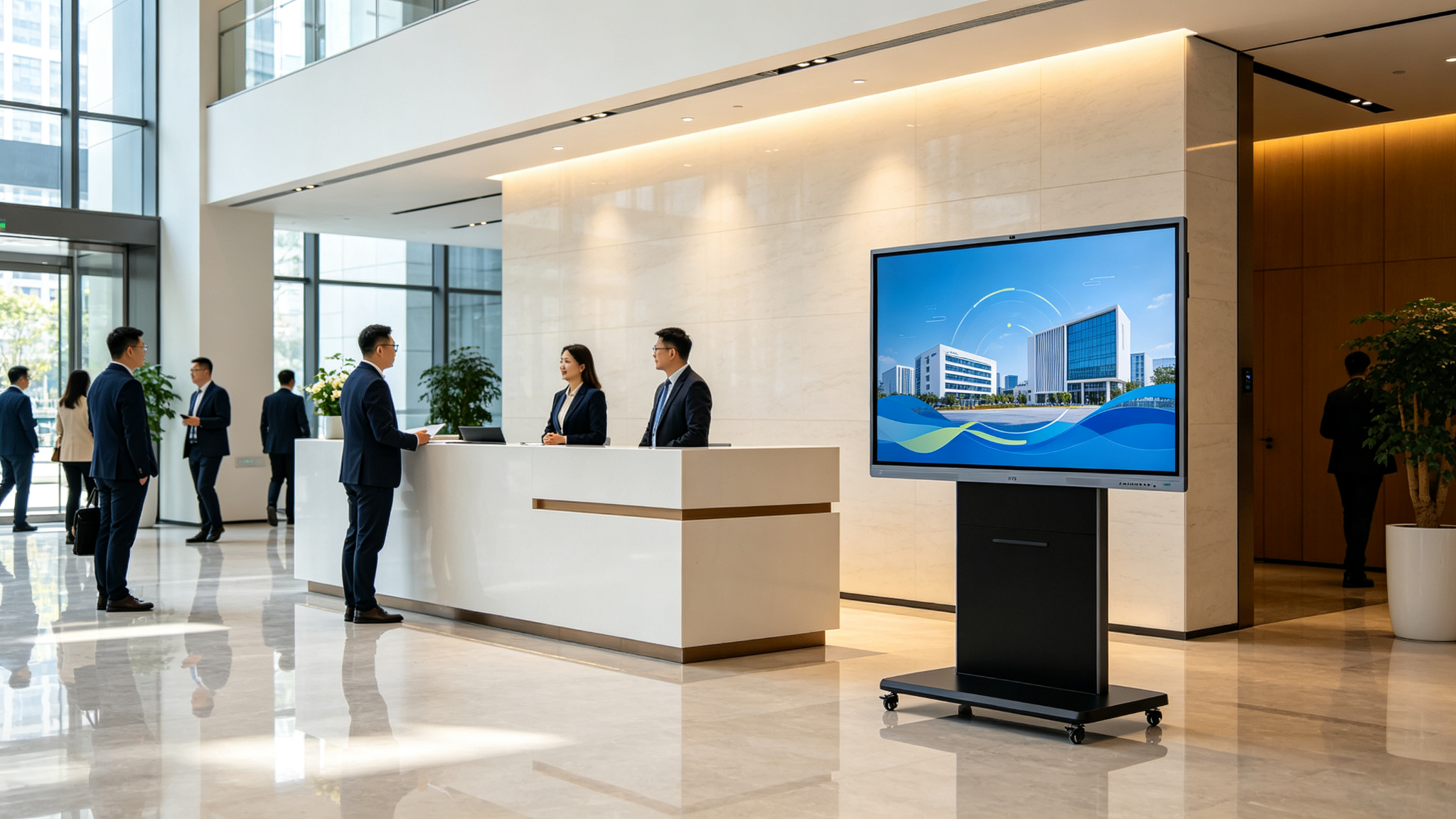
NTSC≥110% color gamut means wide color reproduction, better suited to red-header documents, planning drawings, and data charts common in government halls. IP55 indicates dust and water-jet protection, fitting high-traffic, frequently cleaned government hall environments. Multi-touch supports simultaneous annotation by multiple users, letting parties mark up proposals directly during joint review and reducing back-and-forth circulation. These metrics form the baseline for government hall meeting all-in-one selection and should be itemized in tender documents rather than glossed over.
Reading and Converting Specs
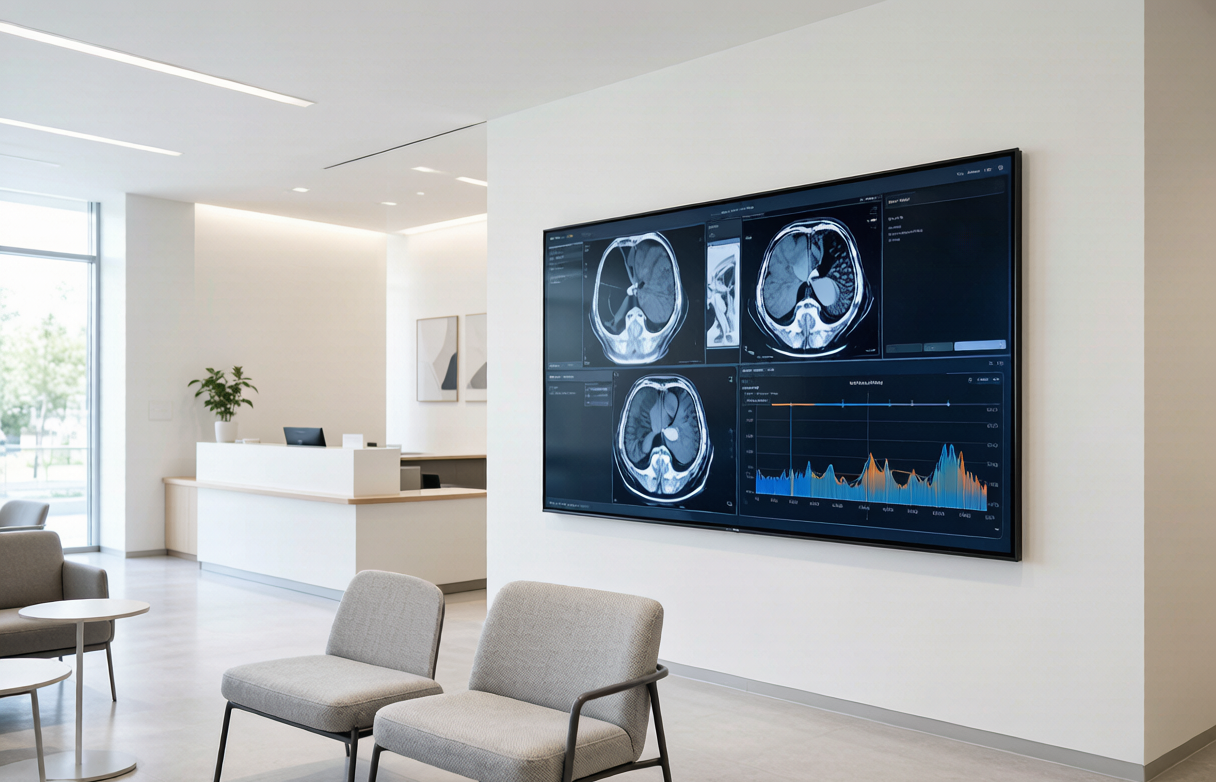
16bit grayscale means 65536 brightness levels per color channel — higher values yield smoother transitions, preventing banding in gradient areas of statistical charts. NTSC≥110% is a relative value; require bidders to provide test reports for the same model as evidence. In IP55, the first 5 is the dust rating and the second 5 is the water-jet rating; wiping the screen with a damp cloth is low-risk. Note that spec sheet values must correspond to actual use scenarios. Tender clauses should state 'subject to test report of the bid model' to avoid performance disputes from inflated specs.
Mainstream Solution Comparison
In terms of integration, the all-in-one design combines display, touch, audio, and casting modules, reducing cable clutter and failure points from stacked devices; split solutions offer more flexibility for later single-module replacement. If the government hall has many meeting rooms with uniform specs, all-in-one models suit batch deployment and unified maintenance; for large command and consultation spaces, combine all-in-one models with large-format display solutions. The core of comparison is not which has higher specs, but which solution better matches the hall's actual room structure and meeting habits.
Selection Advice and Pitfall Checklist
First, beware of tender clauses specifying only size but not brightness and grayscale — bright government hall environments have real brightness requirements. Second, verify protection rating; street-facing halls have higher dust and cleaning frequency than ordinary offices, making IP55 a worthwhile baseline. Third, confirm after-sales response time and backup device mechanisms — meeting interruptions in government halls have wide impact, so service network coverage and on-site response time should be scoring items. Fourth, avoid mixing consumer-grade products into government procurement; special environments should explicitly require local storage and encrypted transmission. Writing these clauses into tender documents greatly reduces procurement risk.
Q1: What core technical parameters should be written into a government hall meeting all-in-one tender document?
A: At minimum specify pixel pitch, brightness, grayscale, color gamut, and protection rating. For Stonbel meeting all-in-one, write pixel pitch P5, brightness 300-1000cd/㎡, grayscale 16bit, color gamut NTSC≥110%, protection rating IP55, and require bidders to provide test reports for the same model. Bright government hall environments have real brightness requirements; specifying only size without brightness easily leads to washed-out images after installation.
Q2: What certifications are needed for a government hall meeting all-in-one to meet bidding requirements?
A: Standard government procurement typically requires 3C, CE, FCC, ISO9001, ISO14001, and ROHS certifications; special meeting scenarios may also need military and special-related qualifications. Stonbel holds these certifications and has permanent service points in 31 provinces and cities, supporting localized maintenance for government halls. List certifications as qualification clauses in tenders and require valid copies to avoid delivery delays from post-award certification gaps.
Q3: What size meeting all-in-one is suitable for a government hall meeting room?
A: Select by room area: 65 to 86 inch LCD models for small-to-medium rooms, 75 to 98 inch for window training rooms by headcount, and 120 inch and above LED models for large conference centers. Stonbel meeting all-in-one covers these size ranges; P5 pixel pitch delivers fine detail at 3 to 8 meter viewing distances for approval materials and charts. Final size should follow actual room depth and seating layout.
Q4: How should protection rating and brightness be verified for a government hall meeting all-in-one?
A: Check the two IP digits: IP55 means dust and water-jet protection, fitting high-traffic, frequently cleaned government halls. Check brightness in cd/㎡ range; street-facing halls should use the higher range, enclosed meeting rooms the mid-to-low range. Stonbel meeting all-in-one offers adjustable brightness of 300-1000cd/㎡ with IP55 protection. In tenders, require bidders to note brightness settings for the installation location to avoid one-size-fits-all parameters.
Procurement tenders for government hall meeting all-in-one displays essentially translate usage scenarios into verifiable technical clauses. From pixel pitch, brightness, grayscale, and color gamut to IP rating, each parameter corresponds to real operating conditions in government halls; from 3C and ISO to special qualifications, each certificate affects whether the project can be delivered smoothly. Writing qualification checklists and technical baselines into tender documents, then configuring sizes by room tier, ensures government hall meeting all-in-one displays are bought right, run stably, and maintained with ease.