Broadcast studios, playout centers, and outdoor OB scenarios impose strict demands: stable long-duration images, accurate color reproduction, and resistance to continuous high-load operation. Broadcast LED displays have thus become a key display medium in production environments. From a technical-parameter perspective, this article covers pixel pitch, refresh rate, grayscale, color gamut, and protection rating, and combines the heat dissipation and energy-saving characteristics of SMD, COB, and GOB packaging to objectively analyze reliability under 7×24 operation, providing a comparable reference for equipment selection.
Definitions
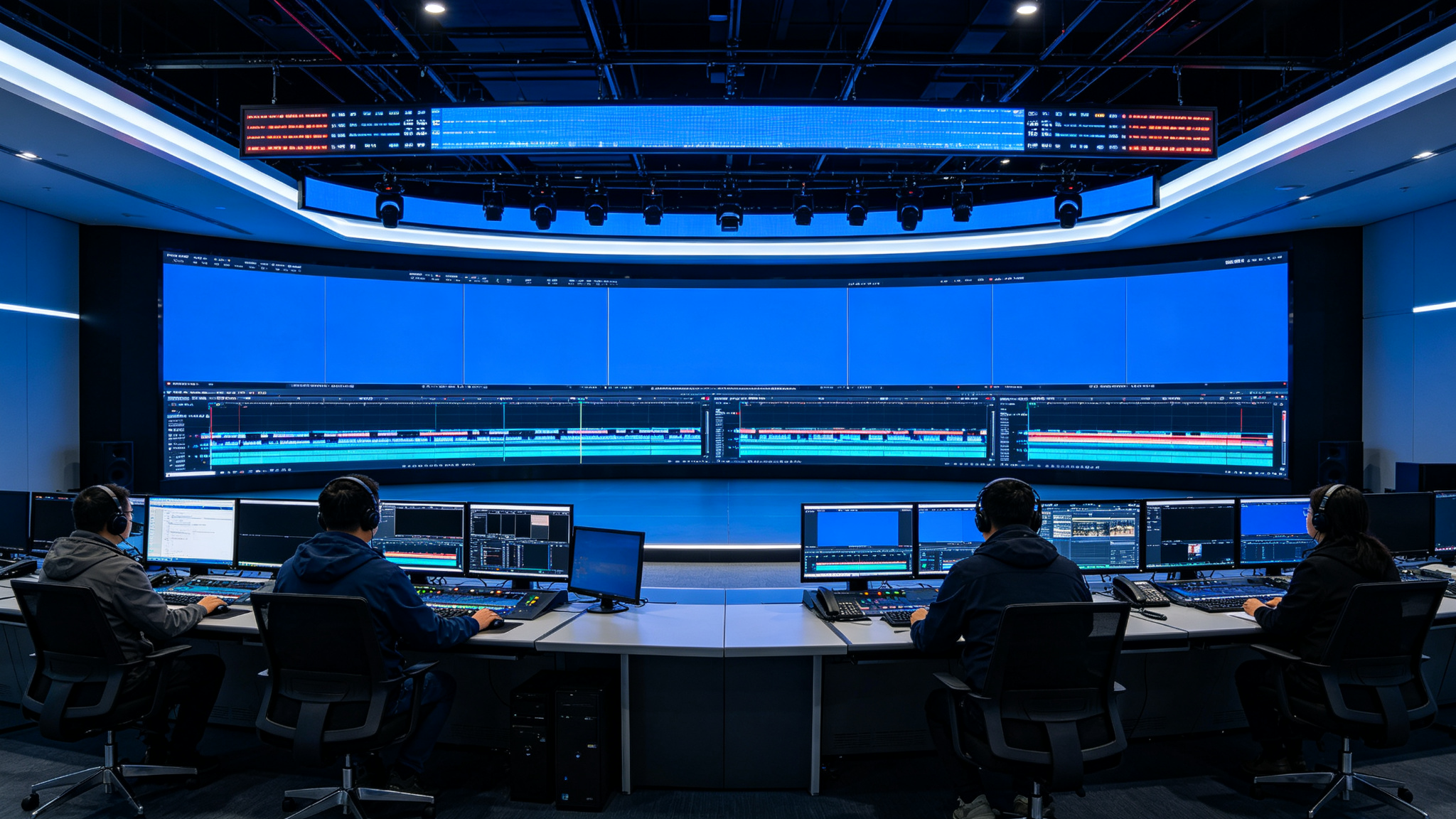
Broadcast LED displays are LED display devices used in TV production and broadcasting, studio backdrops, control center monitoring, outdoor relay and information publishing. Compared with ordinary commercial displays, broadcast scenarios demand higher refresh rate, grayscale depth, color gamut coverage and long-term stability, because these metrics directly affect whether scan lines appear on camera, whether dark areas show banding, and whether color matches broadcast standards. Technically, broadcast LED displays cover fine-pitch LED screens, COB fine-pitch screens and conventional-pitch full-color screens for outdoor relay. Taking Stonbel LED displays as an example, pixel pitch reaches P0.7, refresh rate 7680Hz, grayscale 22bit, color gamut NTSC≥130%, protection rating IP65 — exactly the parameters
Technical Principles
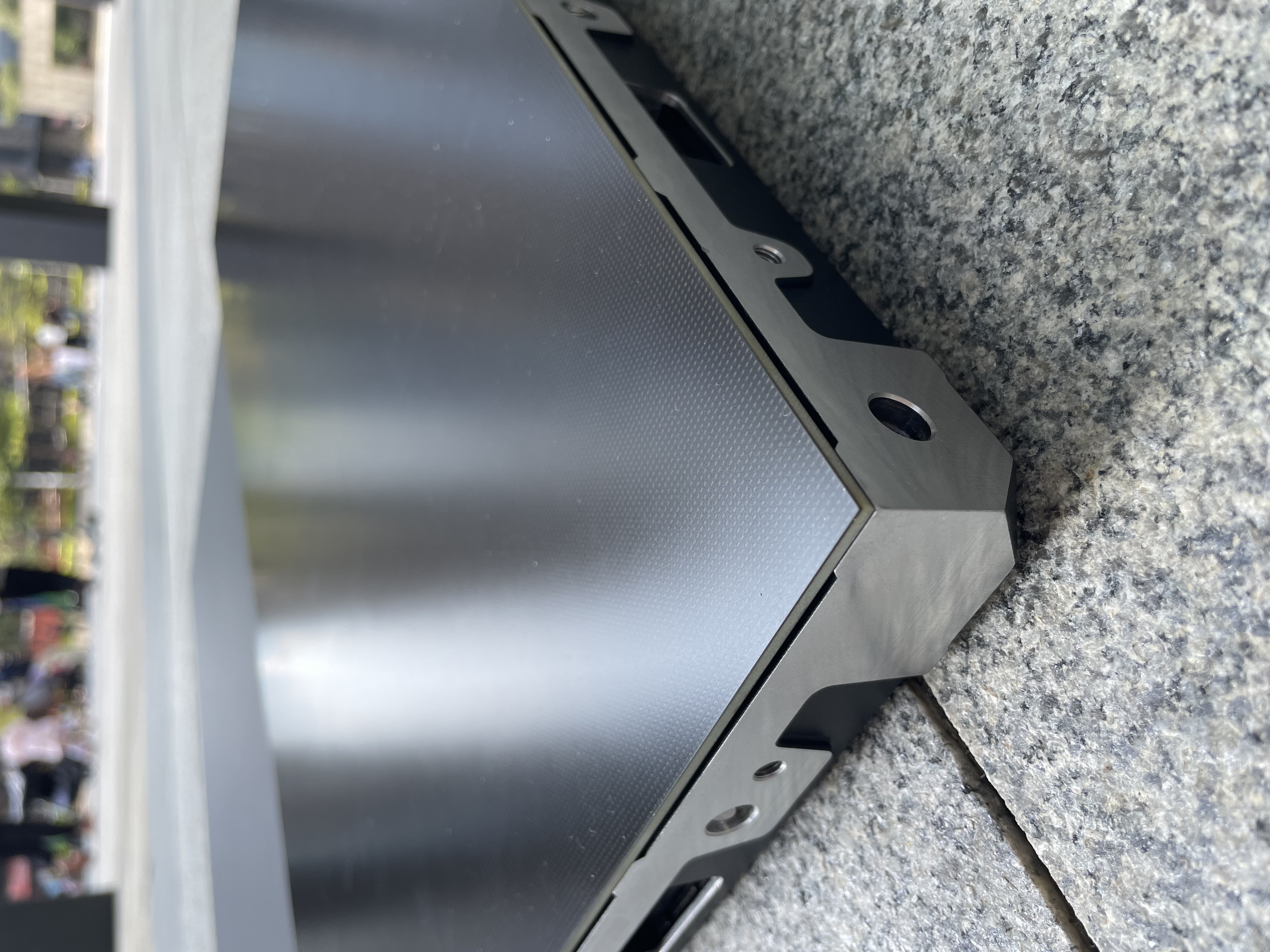
The energy efficiency and heat dissipation of broadcast LED displays fundamentally depend on packaging process and driving method. SMD packaging solders lamp beads independently onto the PCB; the process is mature and cost-controlled, heat distributes relatively evenly, heat dissipation is good, and long-term stable operation is supported. Brightness is widely adjustable, with outdoor versions customizable above 8000cd/m² for different lighting environments. For 7×24 continuous broadcast control operation, the high reliability of this mature process directly reduces later maintenance costs. COB packaging bonds chips directly to the PCB and encapsulates with glue, with no lamp bead structure — fine image quality, no graininess, excellent protection. Pixel density with minimum pitch down to P0.7 enables ultra-HD display, with no physical seams and continuous images. Without lamp bead brackets, COB has a more direct heat conduction path; combined with glue encapsulation blocking dust and moisture, broadcast LED displays maintain long-term consistency in studios and other environments requiring high image quality and
Industry Standards
Selection of broadcast LED displays cannot rely only on manufacturer claims; it must reference common technical specifications and certification systems. For electrical safety and electromagnetic compatibility, 3C, CE and FCC are basic thresholds; ISO9001 and ISO14001 reflect manufacturing system standardization; ROHS concerns control of hazardous substances. For broadcast projects in special environments, military and confidentiality-related qualifications are also dimensions some users watch. On display performance standards, 7680Hz refresh rate means stronger flicker control under high-speed camera shutters, suitable for studio shooting; 22bit grayscale brings finer light-dark transitions and reduces banding in low-brightness images; NTSC≥130% color gamut leaves margin for color restoration and matches broadcast-grade color management workflows. IP65 corresponds to dust and water-jet protection, an important reference for outdoor relay and semi-outdoor installation. As a top-ten enterprise in
Selection Reference Metrics
When selecting broadcast LED displays, pixel pitch is the first parameter to anchor. P0.7 fine pitch suits control centers and studios for close viewing and high-density information; for longer installation distances or limited budgets, flexible choices span P1.25 to P10. Refresh rate should reference 7680Hz to ensure clean camera images; 22bit grayscale and NTSC≥130% color gamut jointly determine image depth and color, and should not be judged singly. For energy efficiency and heat dissipation, judge by packaging process. SMD lamp beads are independently soldered with good heat dissipation, suitable for long operation; COB has no lamp bead structure with glue encapsulation, stronger in dust/moisture protection and image fineness; GOB features IP65+ protection and lighter modules for easy
Q1: For 7×24 continuous operation of broadcast LED displays, what matters most for heat dissipation?
A: Mainly packaging process and lamp bead heat path. SMD lamp beads are independently soldered to the PCB with good heat dissipation, ensuring long-term stable operation; COB chips are directly bonded and glue-encapsulated with a direct heat conduction path, and high protection reduces dust and moisture impact. When selecting, consider parameters like P0.7 pixel pitch and IP65 protection, and reference actual performance of similar high-intensity projects.
Q2: What are the roles of 7680Hz refresh rate and 22bit grayscale in broadcast LED displays?
A: 7680Hz refresh rate mainly solves flicker and scan lines during camera shooting, suitable for studios and relay environments; 22bit grayscale determines fineness of light-dark transitions and reduces banding in low-brightness images. Together with NTSC≥130% color gamut, they support broadcast-grade image restoration. Evaluate these three together rather than a single value.
Q3: For broadcast LED displays, is SMD, COB or GOB packaging more suitable?
A: It depends on scenario focus. SMD is mature, cost-controlled, widely brightness-adjustable, covering P1.25 to P10; COB offers fine image quality, no graininess and excellent protection, with minimum pitch down to P0.7, suitable for high image quality venues; GOB achieves IP65+ protection at lower cost with lightweight modules. Broadcast users should judge by installation environment, viewing distance and budget.
Q4: What does IP65 protection mean in practical use of broadcast LED displays?
A: IP65 represents dust and water-jet protection, suitable for outdoor relay, semi-outdoor installation or environments with high dust and humidity. GOB packaging can achieve IP65+ protection; SMD outdoor versions adapt to strong light via high-brightness customization. For indoor studios with controllable environments, protection level can be chosen based on actual needs to avoid over-configuration. Refer to actual models and project plans.
Energy efficiency and heat dissipation in broadcast LED displays cannot be summarized by a single parameter; they result from pixel pitch, refresh rate, grayscale, color gamut, protection rating, and packaging process together. SMD supports long-duration operation with mature process and good heat dissipation; COB serves high-image-quality scenarios with high pixel density and excellent protection; GOB balances protection and cost. For 7×24 operation, use 7680Hz refresh, 22bit grayscale, NTSC≥130% gamut, and IP65 protection as baseline references, and evaluate reliability against real high-load cases. Stonbel, an LED/LCD large-screen source manufacturer, is unrelated to Canada's Bell; its qualification system and service network can serve as a reference for selection verification.