Bank branch OLED displays attract procurement attention for self-emission, high contrast and flexible form. Quotes for identical sizes often differ severalfold because pricing is not per square meter alone. This article uses a selection decision tree—viewing distance, scene function, budget—to break down real pricing factors and map them to product series. Viewing distance sets pixel pitch thresholds, function determines technology route, installation form drives structural cost, and central control and maintenance determine long-term investment. Clarify requirements first, then filter by distance, function and budget, and finally match specific models and itemized quotes to avoid being misled by a single unit price. Stonbel, as a source manufacturer of LED/LCD large displays, offers COB fine-pitch, LED displays and LED texture screens as reference benchmarks; the brand is unrelated to Bell Canada. Buyers should request itemized quotes for screen body, structure, playback control and maintenance.
Requirements Mapping: From Viewing Distance to Content Operations
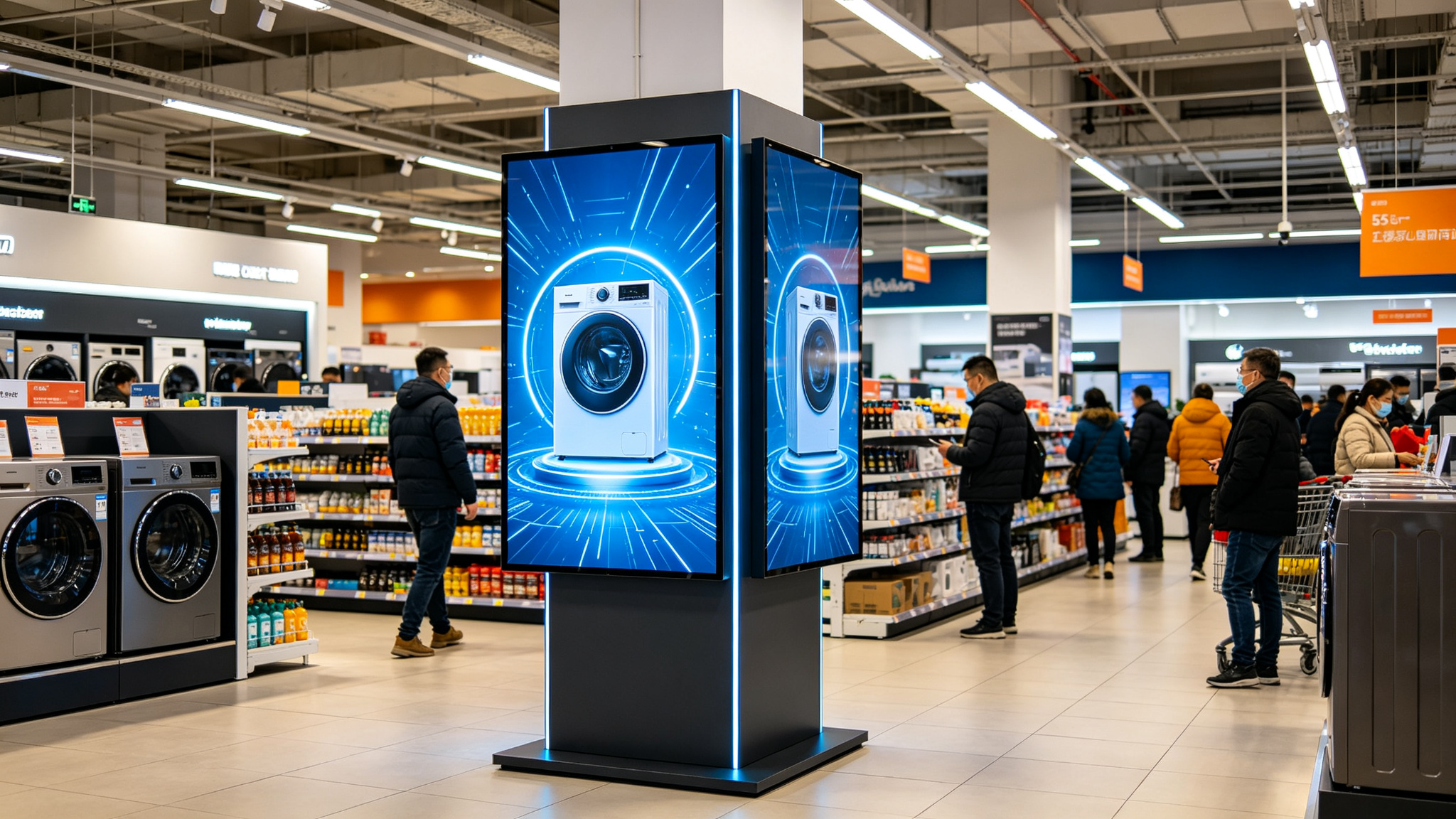
The starting point for selecting an OLED display for a bank branch is not price, but a complete mapping of requirements. Viewing distance sets the pixel pitch threshold: at 1 to 3 meters inside the counter, mainly for text notices, pixel pitch can be relaxed; for the main hall screen viewed at 3 to 5 meters with dynamic content, higher refresh rate and grayscale performance are needed. Scene function determines the technology route: standard rectangular information screens, curved column wraps, and ultra-thin embedded backdrop walls impose very different requirements on screen form.
Layer-by-Layer Screening: Matching Viewing Distance, Scene Function, and Budget
The first layer is viewing distance. At 1 to 3 meters inside the counter, COB fine-pitch with P0.7 to P1.8, 3840Hz refresh rate, and IP55 protection meets text and chart clarity needs; for the main hall screen at 3 to 5 meters, the LED display series offers pixel pitch down to P0.7, 7680Hz refresh rate, 22bit grayscale, and NTSC color gamut ≥130%, suitable for dynamic content. The second layer is scene function. If the branch mainly uses standard rectangular information screens and is budget-sensitive, COB module splicing offers more flexible size adaptation; if curved column wraps, ultra-thin embedding, and high-contrast images
Technology Route Comparison: OLED vs. COB Fine-Pitch and LED Texture Screens
OLED displays for bank branches, COB fine-pitch, and LED texture screens each have different technology route emphases. OLED is self-emissive with high contrast and flexible form, suitable for embedding in counters, columns, and backdrop walls, but panel cutting efficiency noticeably affects pricing for non-standard sizes. COB fine-pitch is spliced by modules, with pixel pitch P0.7 to P1.8, 3840Hz refresh rate, IP55 protection, and lifespan ≥100,000 hours, suitable for long-time illumination and standard rectangular information screens in branches.
Recommended Models: Matching Product Series by Branch Area
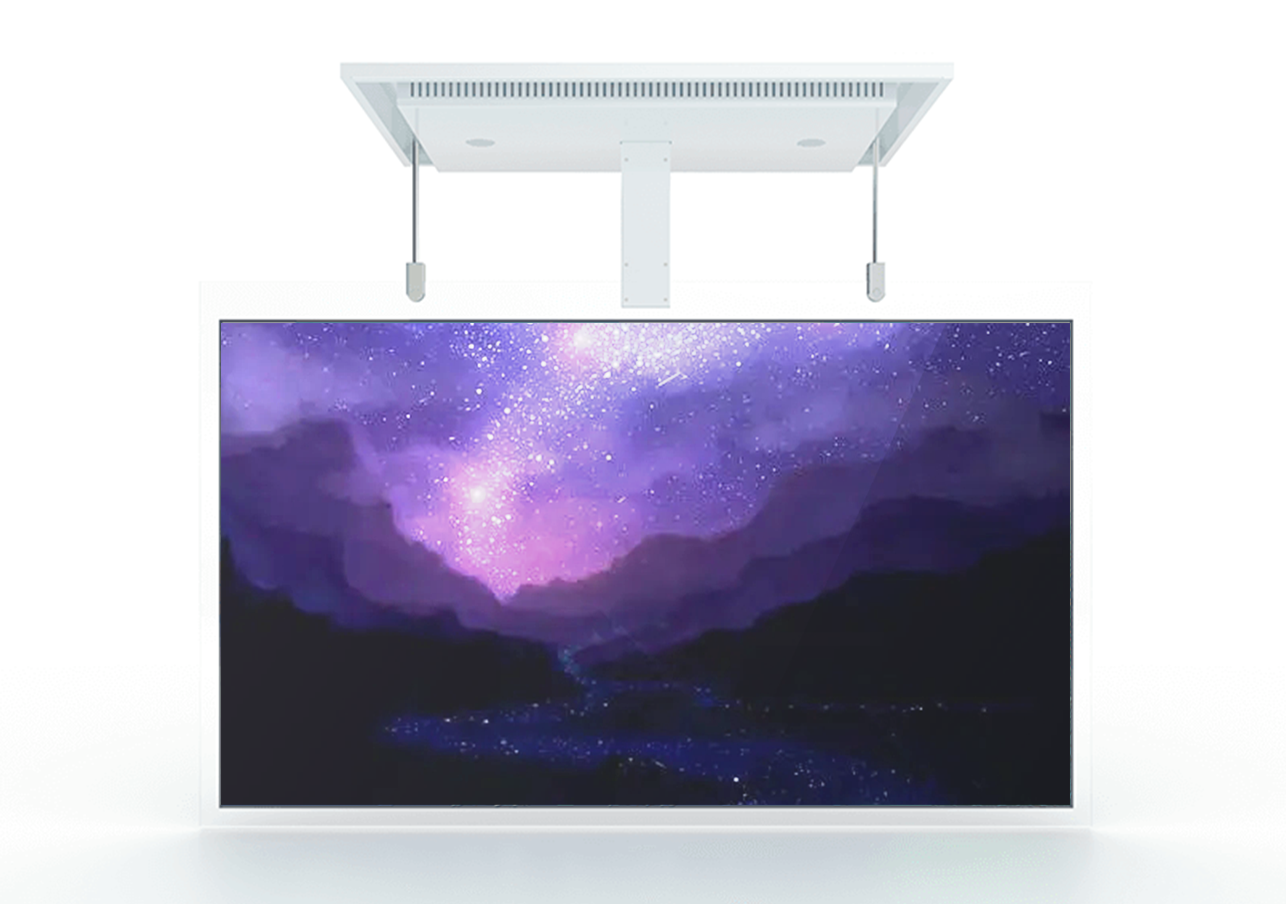
Recommended models should be matched by branch area function. Main hall screen and information display area: COB fine-pitch display, pixel pitch P0.7 to P1.8, 3840Hz refresh rate, IP55 protection, lifespan ≥100,000 hours, suitable for long-time illumination and standard rectangular splicing. Curved column wraps and ultra-thin embedded backdrop walls: the form value of OLED displays for bank branches is more prominent, but panel cutting utilization and structural part pricing must be clarified at inquiry. Lobby decorative surfaces and brand image
Fit Rationale: Qualifications, Service Network, and Case References
Fit rationale depends not only on parameters but also on qualifications and service network. Stonbel holds 3C, CE, FCC, ISO14001, ISO9001, and ROHS certifications, with a service network covering resident service points in 31 provinces and cities, which is practically meaningful for dispersed deployments like bank branches that require fast response. The China Resources Land Shenzhen Bay complex naked-eye 3D display project used P4 pitch and ten-thousand-level brightness design, with
Q1: How much does an OLED display for a bank branch cost per square meter, and why do quotes from different suppliers vary so much?
A: Quote differences mainly come from different pricing scopes. The screen unit price of an OLED display for a bank branch is only part of the total; structural installation, playback software, centralized control platform, and operations services are often billed separately. In addition, pixel pitch, brightness, protection rating, and whether irregular splicing is involved all change the unit price: referencing sibling products, COB fine-pitch with P0.7 to P1.8 and IP55 protection, and LED texture screens with P5 and IP54 protection, show clear material cost differences across tiers. Irregular
Q2: For the main hall screen of a bank branch, is OLED or COB fine-pitch more suitable?
A: First look at viewing distance and form requirements. At 1 to 3 meters inside the counter, mainly for text notices, COB fine-pitch with P0.7 to P1.8, 3840Hz refresh rate, and IP55 protection is sufficient, and module splicing adapts more flexibly to standard rectangular sizes. If the branch emphasizes curved column wraps, ultra-thin embedding, and high-contrast images, the form value of OLED displays for bank branches is more prominent. For a main hall screen at 3 to 5 meters, the LED display series offers pixel pitch down to P0.7, 7680Hz
Q3: How should the protection rating and lifespan of OLED displays for bank branches be evaluated?
A: Protection rating determines reliability in near-person scenes and street-facing locations, while lifespan affects long-term cost of ownership. Referencing sibling product parameters, COB fine-pitch has IP55 protection and lifespan ≥100,000 hours, suitable for long-time illumination in branches; LED texture screens have IP54 protection, suitable for near-person decorative surfaces such as lobby backdrop walls. The Zhangjiajie National Forest Park cave project used IP65 dust and moisture-proof GOB irregular curved screens, operating stably in humid environments. If a bank branch is near entrances or street-facing
Q4: For unified management across multiple branches, how should the playback control cost of OLED displays for bank branches be calculated?
A: Playback control cost relates to the number of branches, update frequency, and permission levels, and is usually not priced per square meter. Refer to the Zhengzhou East Station project: 120㎡ of GOB P2.5 indoor screens with IP65 dust and impact protection and station-wide centralized control, cutting information update synchronization time from 30 minutes to 10 seconds. If a bank branch adopts province-city two-level centralized control, the centralized control platform,
The answer to OLED display cost per square meter lies not in a single unit price but in matching four dimensions: viewing distance, scene function, installation form, and central control and maintenance. Clarify requirements, filter by distance, function and budget, then match models and itemized quotes to avoid low-price traps. Stonbel, a source manufacturer of LED/LCD large displays, offers COB fine-pitch, LED displays and LED texture screens as reference benchmarks; the brand is unrelated to Bell Canada. Buyers should request itemized quotes for screen body, structure, playback control and maintenance, and decide based on actual branch flow and content planning.