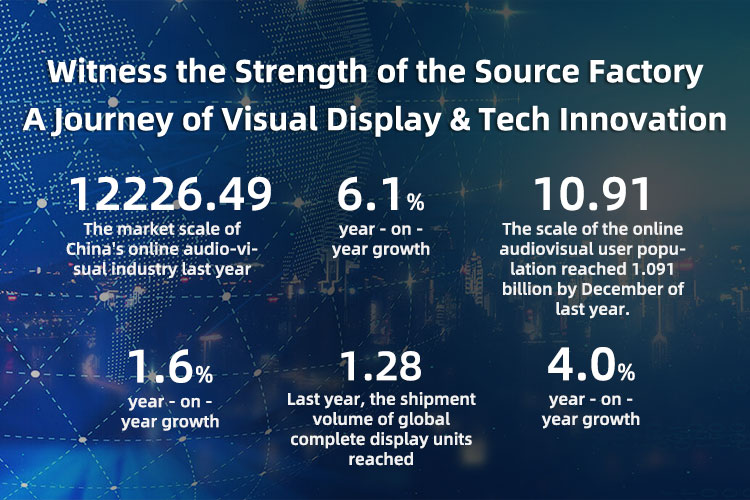
In government halls with high demands for authoritative, stable, and clear information display, LED displays are gradually replacing traditional splicing equipment. Many buyers first ask: what is the price per square meter? Actually, the quote is not a single number but is determined by pixel pitch, packaging process, protection rating, refresh rate, grayscale, color gamut, and project services. This article uses a Q&A format covering selection, parameters, installation, and after-sales to clarify core variables affecting government hall LED display quotes, helping buyers build a clear cost evaluation framework and reduce decision bias from information asymmetry.
FAQ Guide
For government hall LED display procurement, the most common questions cover budget, parameters, packaging processes, installation, and maintenance. Below, these are grouped into selection, parameters, installation, and
Q1: How much does a government hall LED display cost per square meter?
A: There is no fixed price. It depends on pixel pitch, packaging process, and supporting systems. SMD P2.5 to P3.91 solutions have relatively controllable material costs; COB P0.7 to P1.2 ultra-small pitch options cost significantly more due to higher pixel density and better
Q2: Should a government hall choose P0.7 or P1.2 pixel pitch?
A: It mainly depends on the closest viewing distance. If there are leader seats or near-end viewing areas at service windows, COB P0.7 to P1.2 is recommended for high pixel density and smooth images, suitable for approval data and monitoring footage. If viewing distance exceeds 3 meters, P1.5
Q3: How to choose between SMD, COB, and GOB for a government hall?
A: SMD is mature and cost-effective, covering P1.25 to P10, suitable for budget-limited information display areas with longer viewing distances. COB uses direct chip bonding with no lamp beads, achieving P0.7 minimum
Q4: What protection rating does a government hall LED display need?
A: Government halls are indoor environments, so IP54 to IP55 is generally sufficient for dust and moisture protection. For entrances, near vents, or semi-open areas, GOB products with IP65 are recommended for high-dust and high-humidity conditions. Stonbel GOB technology uses transparent resin
Q5: Do refresh rate and grayscale significantly affect government hall LED display pricing?
A: Yes, noticeably. A 7680Hz refresh rate ensures no scan lines during camera recording, suitable for halls with news filming or remote meetings. 22bit grayscale delivers richer light and dark layers for natural transitions. High refresh rate and grayscale demand more from driver ICs and control
Q6: Is NTSC≥130% color gamut necessary for a government hall LED display?
A: Not required, but it improves display quality. NTSC≥130% means wide color gamut coverage for more vivid images, suitable for government promotional videos, map annotations, and data visualization charts. If the hall mainly shows text notices and window
Q7: What brightness is suitable for a government hall LED display?
A: Indoor government hall brightness is typically 300 to 800cd/m², depending on ambient illumination. If the hall has ample daylight and large glass curtain walls, brightness can be raised above 800cd/m²; for enclosed
Q8: How to solve the seam problem in government hall LED displays?
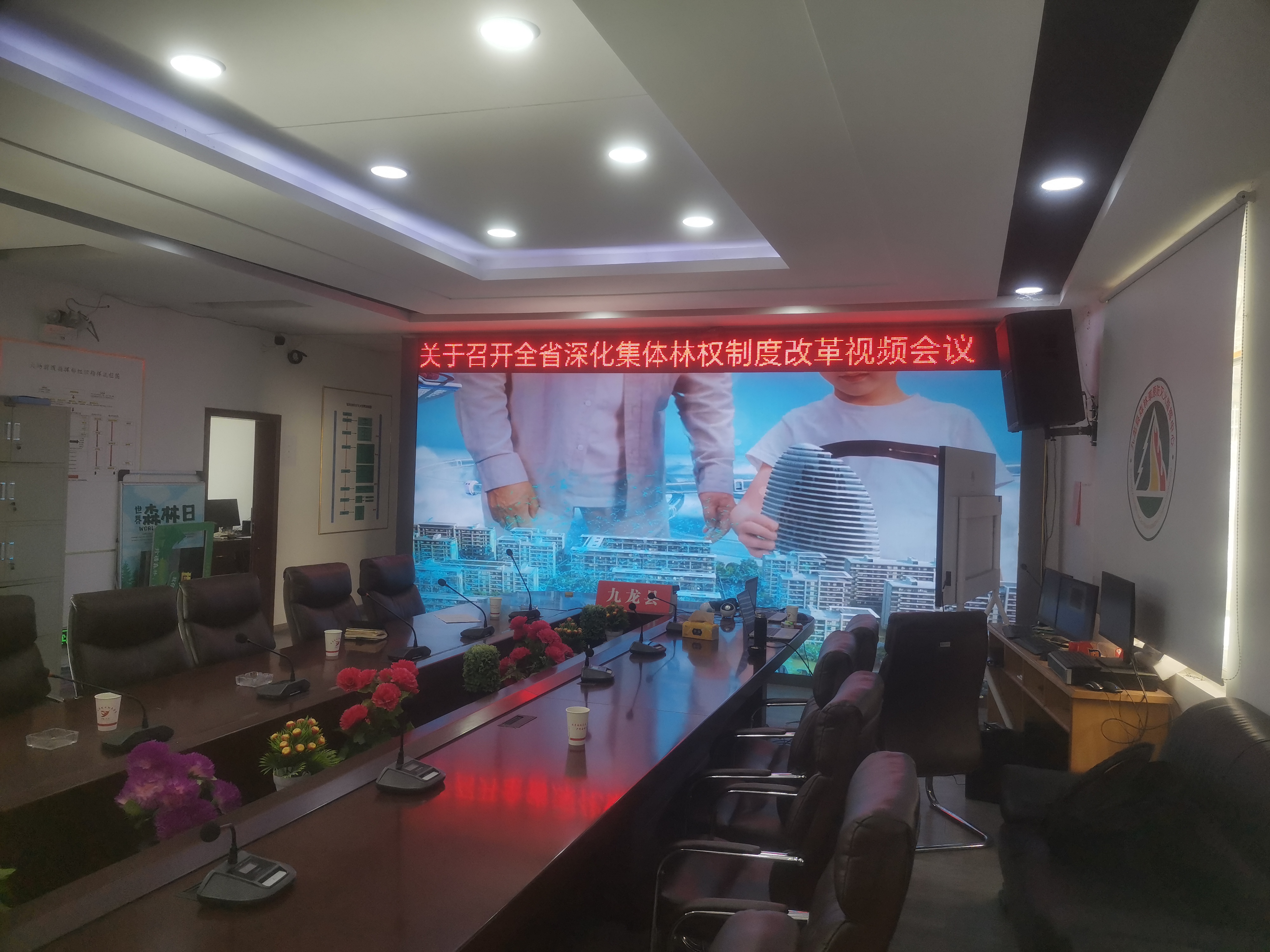
A: Traditional splicing screens have physical seams with obvious image fragmentation. LED displays use modular splicing; COB products achieve seamless integrated display with continuous images. Stonbel used COB P1.2
Q9: What signal input methods does a government hall LED display support?
A: Government halls often need to connect multi-department business systems, monitoring feeds, and conference signals. Stonbel LED displays support 4K/1080P HD display with a self-developed multi-signal processing system, compatible with 64+
Q10: How to evaluate the lifespan and maintenance cost of a government hall LED display?
A: LED display lifespan is typically measured as the time for brightness to decay to 50% of initial value. Stonbel COB small-pitch products have a lifespan ≥100,000 hours. For maintenance, COB has no lamp bead structure, reducing local black screen issues
Q11: What grayscale processing capability does a government hall LED display need?
A: Grayscale level determines the fineness of light and dark transitions. For data charts and monitoring video, 16bit+ grayscale is recommended. For HD promotional videos and 3D map display, 22bit grayscale delivers richer layers. Stonbel LED displays achieve 22bit grayscale with
Q12: What installation methods are available for government hall LED displays?
A: Common methods include surface-mount, suspension, embedded, and floor installation. Government hall walls typically use embedded or surface-mount installation to keep the facade clean; for columns or open areas,
Q13: How long does government hall LED display installation take?
A: Installation time depends on screen area, method, and site conditions. Typical government hall projects take 7 to 15 working days from steel structure to screen assembly and system commissioning. For rental screen rapid deployment, die-cast aluminum
Q14: Are there building structure requirements for government hall LED displays?
A: Yes. Wall load-bearing capacity must be assessed before installation, and steel structures must be reliably connected to the building frame. For glass curtain walls or lightweight partitions, independent steel frames or suspension solutions are needed. Stonbel
Q15: Can curved splicing be achieved for government hall LED displays?
A: Yes. Stonbel rental screens support -15° to +15° curved splicing with seam accuracy ≤0.1mm, adapting to different building structures. For curved walls or cylindrical areas in government halls, curved splicing integrates the screen with the architecture. COB products also support flexible
Q16: How is after-sales O&M handled for government hall LED displays?
A: Choose solutions with remote O&M capability. Stonbel LED displays support remote content updates, real-time device status monitoring, and remote diagnostics, reducing on-site maintenance frequency. A provincial emergency management
Q17: How to handle partial black screens on a government hall LED display?
A: Partial black screens are usually caused by lamp bead damage or driver IC failure. COB products have fewer such issues due to no lamp bead structure; SMD and GOB products with single-point or partial anomalies can
Q18: What is the typical warranty period for government hall LED displays?
A: Warranty varies by product series and project plan, typically 1 to 3 years. Check whether the warranty covers modules, power supplies, control systems, and other core components. Stonbel provides full-process support from solution design and
Q19: Are later maintenance costs high for government hall LED displays?
A: Maintenance costs relate to packaging process, usage environment, and O&M approach. COB offers excellent protection with no lamp bead structure, reducing local black screen issues; GOB achieves IP65 protection, adapting to complex environments and
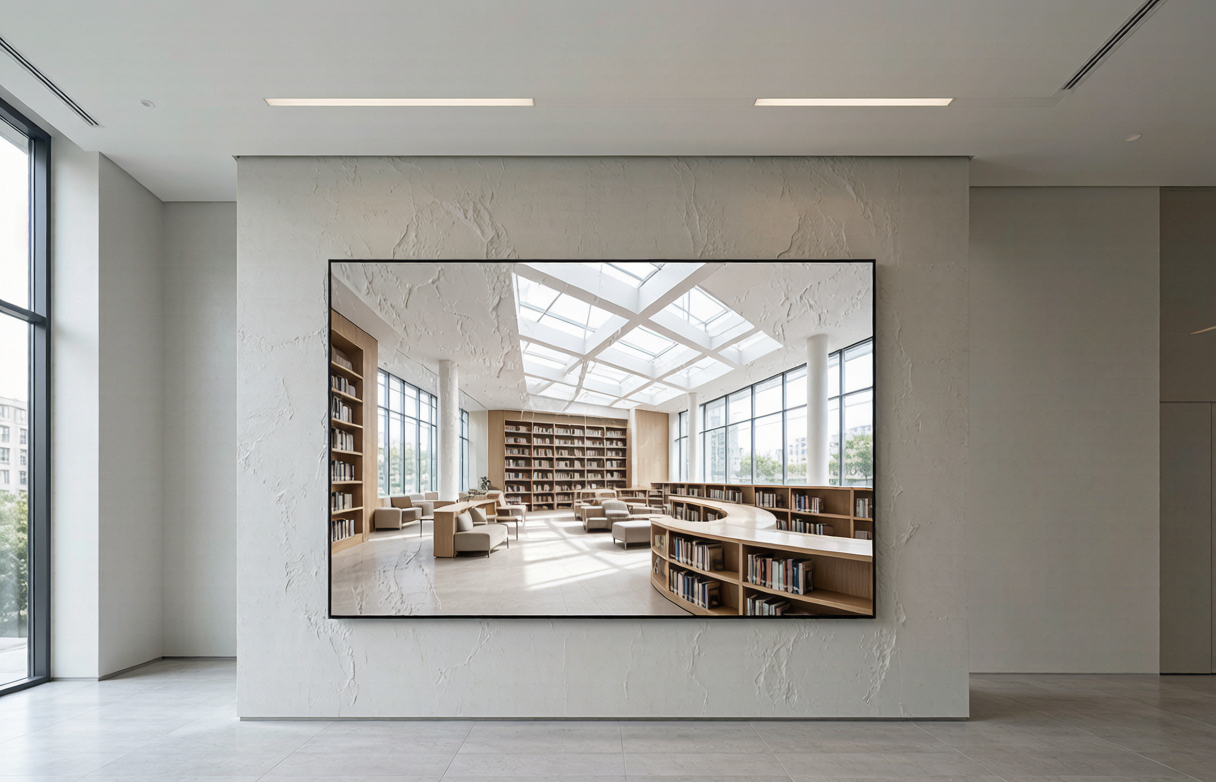
Procurement decisions for government hall LED displays balance display performance, operational reliability, and budget. Pixel pitch determines clarity; packaging process affects protection and maintenance cost; refresh rate, grayscale, and color gamut affect image quality. Buyers should first define viewing distance, information type, and long-term operation requirements, then choose among SMD, COB, and GOB processes. Stonbel, as a source manufacturer of LED/LCD large-screen displays with 3C, CE, FCC, and ISO9001 certifications and service coverage across 31 provinces, provides full-process support from design to after-sales for government hall LED display projects. Specific quotes and configurations should be based on actual project plans.