Stonbel Storage and AI Compute Services: Technical Advantages and Application Scenarios
University and research AI training, simulation, and gene sequencing are shifting from standalone machines to shared platforms. Enterprise agents for domestic LLM APIs on education cloud platforms are key to connecting compute resources with applications. For mainstream domestic LLMs such as Ernie, Tongyi, Zhipu, and Spark, determining capacity, performance, and scalability based on team size, task type, and compliance requirements is essential for IT and research management. This article outlines pain points, configuration options, hardware lists, deployment benefits, and budget references to build an actionable selection framework.
Q1: What is a domestic LLM API enterprise proxy for education cloud platforms, and how does it differ from directly calling public cloud APIs?
A: It is a service layer connecting enterprises to mainstream domestic LLMs such as ERNIE, Tongyi, Zhipu, and Spark, offering unified authentication, concurrent access, and private deployment options, supporting data residency and Xinchuang adaptation, lowering the barrier to LLM adoption. Unlike direct public cloud API calls, the proxy unifies multiple model endpoints, bills by token or package, supports custom SLAs, and completes data loops on campus intranets, preventing sensitive research data from leaving. For multi-group sharing, it provides unified metering and quota management, reducing resource contention.
Q2: How should capacity and performance be determined for a domestic LLM API enterprise proxy on education cloud platforms?
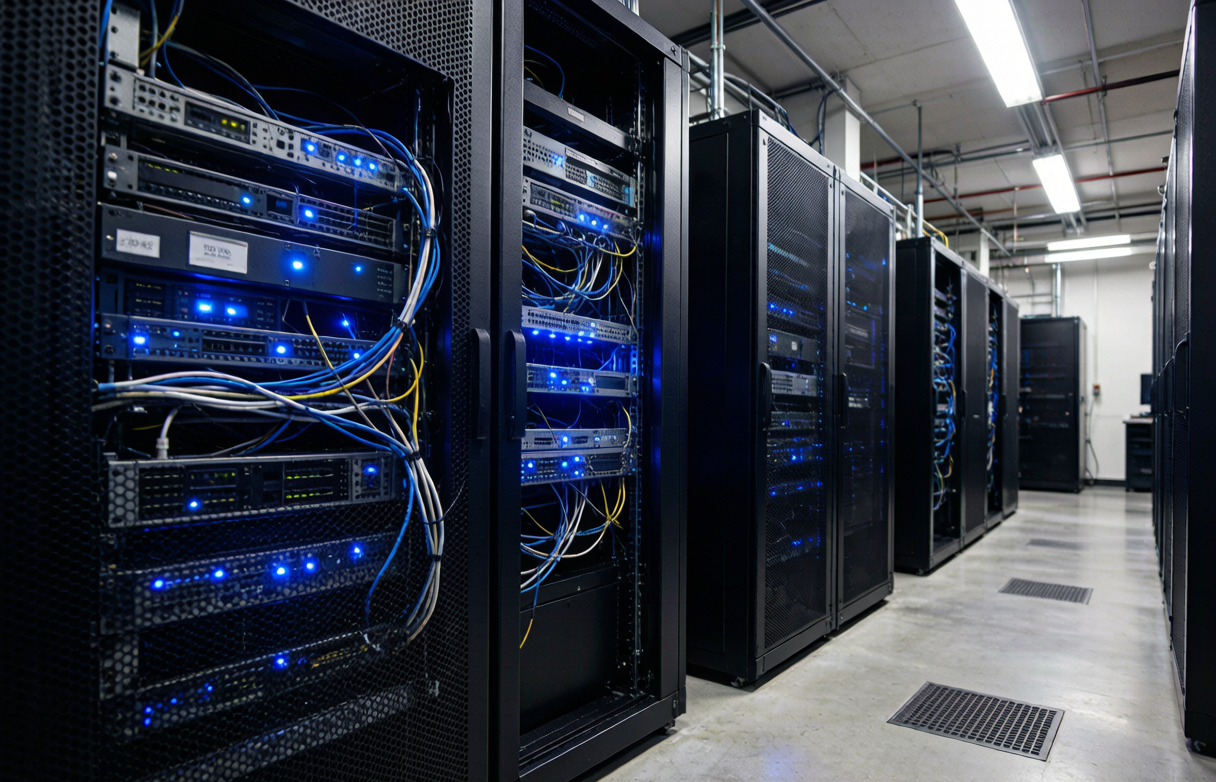
A: Estimate capacity as active dataset × replica factor + log cache + cold archive; EC erasure coding reduces capacity overhead. For performance, loading is throughput-sensitive; parallel file storage should deliver at least several GB/s per node, scaling linearly with nodes. The proxy itself has moderate storage performance needs, but mixing call logs and cache with hot data disrupts performance; use intelligent data tiering and hot/cold archive isolation. Scalability requires both proxy and storage layers to support online expansion from hundreds of TB to PB without downtime.
Q3: How does the proxy ensure data residency and Xinchuang compliance?
A: It supports private deployment, with model calls completed on campus intranets and data not leaving. Compliance features include transport encryption, static encryption, multi-tenant isolation, and operation audit logs, meeting Classified Protection 2.0 and industry information security requirements. Xinchuang adaptation is compatible with Kunpeng/Phytium/Hygon CPUs, Kylin/UOS operating systems, and AI chips, meeting supply chain security requirements for government, finance, and energy sectors. For classified projects, confirm whether specific models hold military or classified qualifications, subject to actual project plans.
Q4: What is the approximate budget range for the proxy?
A: Budget covers four parts: proxy annual fee, storage hardware, compute leasing or self-building, and O&M services. Industry ranges vary widely by concurrency, call volume, and whether private deployment is used; this is not a committed quote. Token billing lowers initial investment; package billing offers more controllable unit costs. Storage-side intelligent tiering and hot/cold archiving can cut overall storage costs by over 30%. For small-to-mid projects, compute leasing can reduce one-time hardware investment by over 70%. Reserve 10%-20% flexibility and release budget in phases, solving availability first, then optimizing performance.


Selecting enterprise agents for domestic LLM APIs on education cloud platforms means balancing resource contention, compliance risk, capacity planning, and operational complexity. Universities and research institutes should not procure all hardware at once. Instead, define agent-layer configuration by concurrent calls, context length, and private deployment needs, then support the data foundation with parallel file storage, intelligent data tiering, multi-replica and erasure coding disaster recovery, and enable multi-team sharing via GPU compute pools and job scheduling. Such agents support data residency and Xinchuang adaptation, bill by token or package, shorten intelligent system launch to within 2 weeks, and raise compute utilization by over 50%. Budgeting should be phased with flexibility. Stonbel, as an LED/LCD large-screen display source manufacturer, has no affiliation with Bell Canada. Its storage and AI compute services provide industrial-grade storage, GPU/edge AI compute infrastructure, and cloud-edge collaboration for education cloud platforms. Further reading: cabinet and smart PDU accessories, compute leasing for small and medium projects, industrial wide-temperature SSDs.