Airport OLED Display Viewing Distance and Pixel Pitch Selection Guide
As hubs like Xi'an Xianyang T5 open, terminals demand more from displays. Airport OLED displays suit check-in, security and gate screens. Integrators and owners ask: what viewing distance fits, and how to set pixel pitch? This article breaks down pain points, configuration, checklist, advantages and budget for actionable decisions.
Q1: What viewing distance is suitable for airport OLED displays?
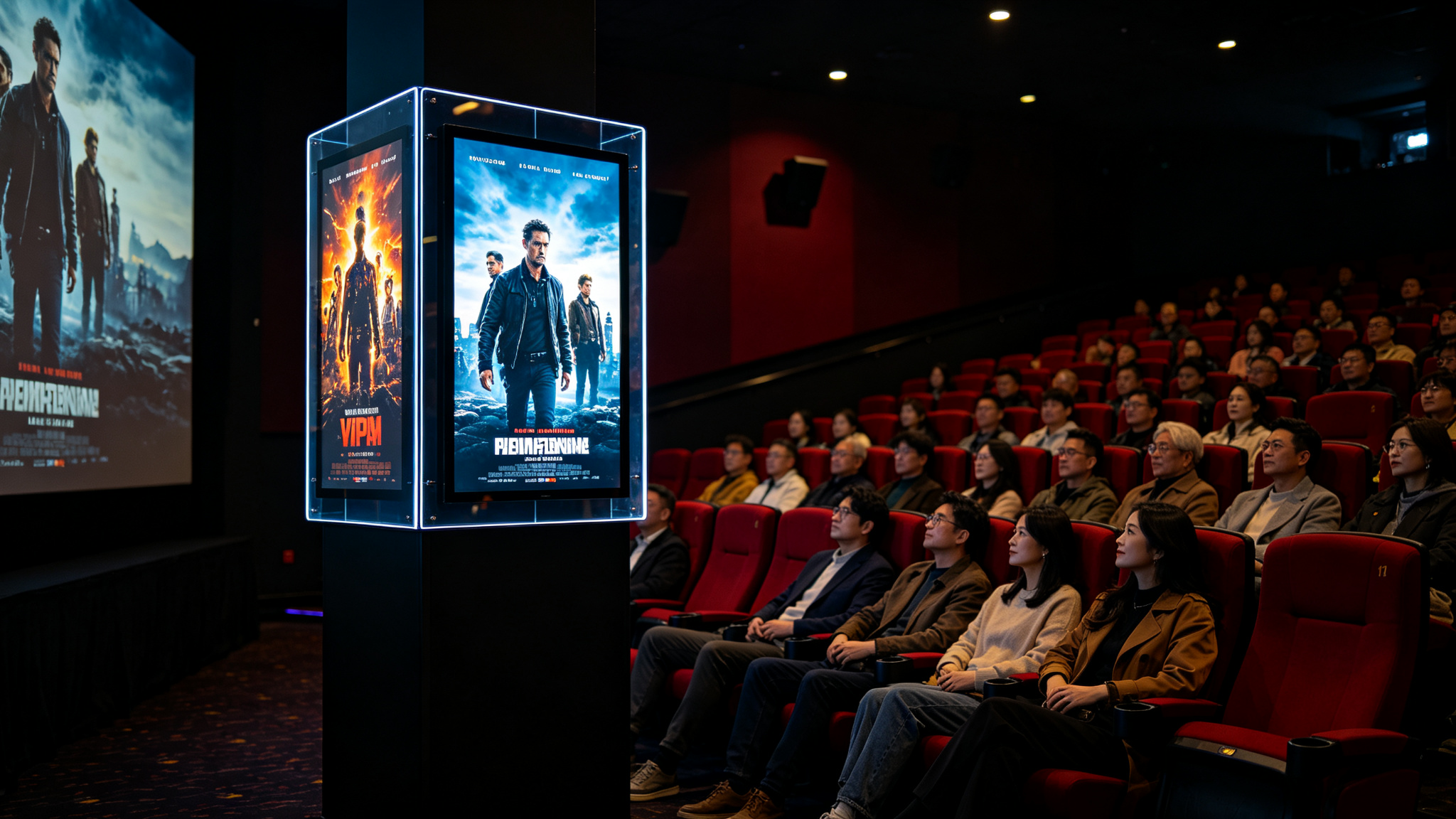
A: Suitable viewing distance is directly related to pixel pitch. Industry experience: pixel pitch (mm) is about 1–1.5× the minimum viewing distance (m). For example, P3 airport OLED displays suit 3–4.5 m minimum viewing, P1.5 suits 1.5–2.25 m. Check-in island screens are often viewed at 3–8 m, so P3 to P4 works; gate query screens can be approached within 1 m, so P1.2 to P1.8 is recommended. Actual models and project plans prevail.
Q2: How to determine airport OLED display pixel pitch?
A: First determine minimum viewing distance, then work backward using pixel pitch about 1–1.5× minimum distance. For long-distance flight information, about 4 m minimum viewing, P4 suffices; for near-distance security guidance, 1.5 m minimum viewing, P1.5 to P2 is needed. Also consider refresh rate and grayscale; dynamic flight information should use at least 1920Hz to avoid camera scan lines. Stonbel LED displays reach 7680Hz refresh and 22bit grayscale as parameter references for airport OLED display selection.
Q3: Are airport OLED displays readable in bright terminals?
A: Airport OLED displays use self-emissive pixels, so black areas emit no light and maintain good contrast under glass curtain wall glare without washing out. Readability also depends on whether pixel pitch matches viewing distance and whether anti-glare treatment is applied. Near entrances or baggage carousels, airport OLED display protection should be at least IP54. Stonbel COB small-pitch displays are IP55 with lifespan ≥100,000 hours as a durability reference. Actual models and project plans prevail.
Q4: How do airport OLED displays achieve remote centralized management?
A: Airport OLED displays need multi-screen controllers and remote management platforms supporting zone publishing, one-click scheduling, and fault alerts. In the Xi'an Xianyang project, Stonbel used a unified display network to cut flight information update latency to seconds, reduce O&M manpower by 50%, and cover over 400 display terminals. Airport OLED displays can borrow this architecture with multiple signal inputs and preset switching to avoid signal scheduling chaos. Actual models and project plans prevail.

Airport OLED display selection balances viewing distance, pixel pitch, refresh rate, protection rating and remote management along real terminal routes. Check-in far-view screens and gate near-view query screens differ: the former needs long-range legibility and dynamic refresh, the latter near detail and touch. Xi'an Xianyang T5's unified display network enables second-level updates and halves O&M staff, showing proper configuration improves passenger experience and efficiency. Stonbel holds 3C, CE, FCC, ISO14001, ISO9001, ROHS and other certifications, with service points in 31 provinces for local support. Use industry budget ranges, calculated by point count and function depth.