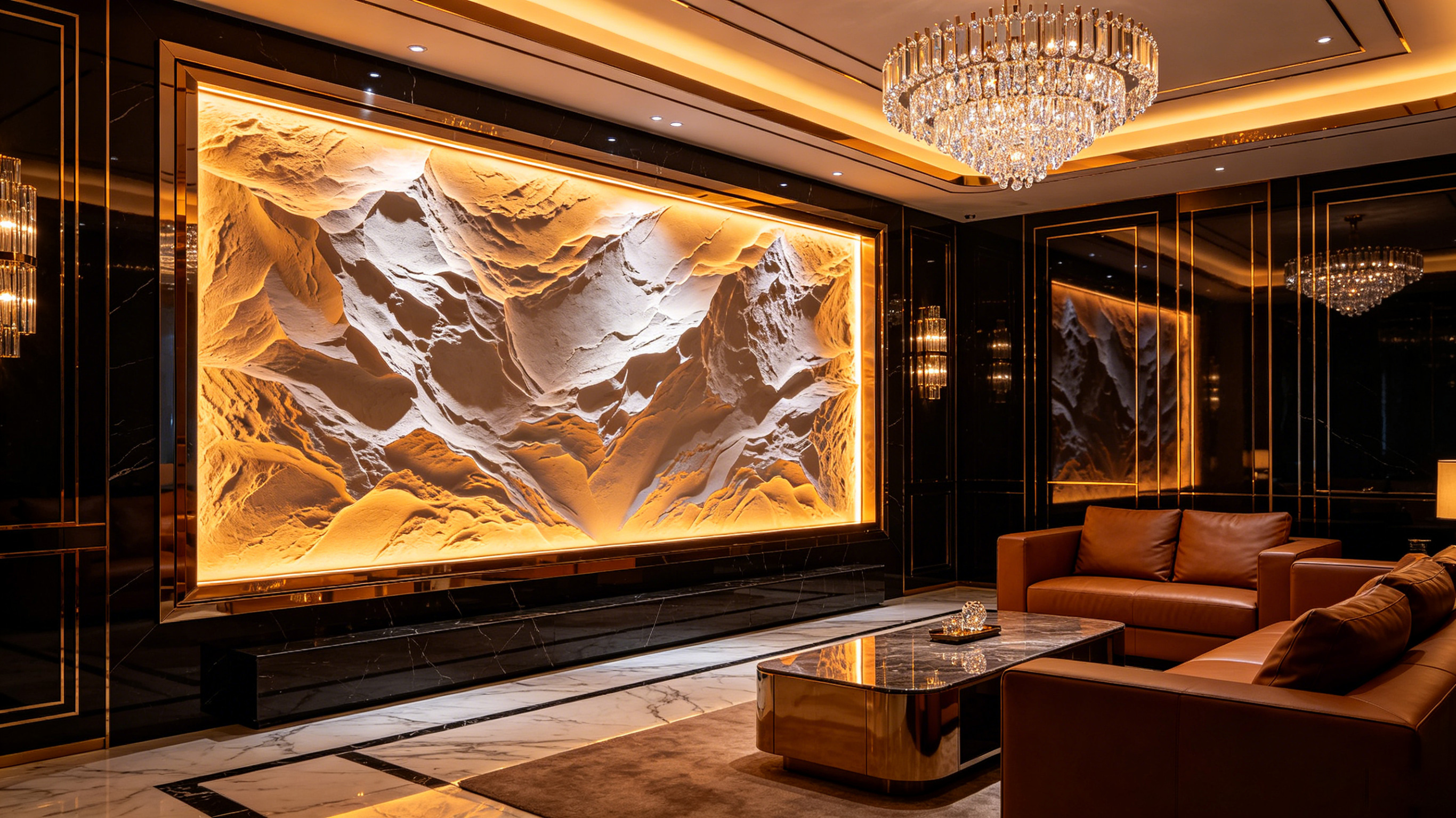
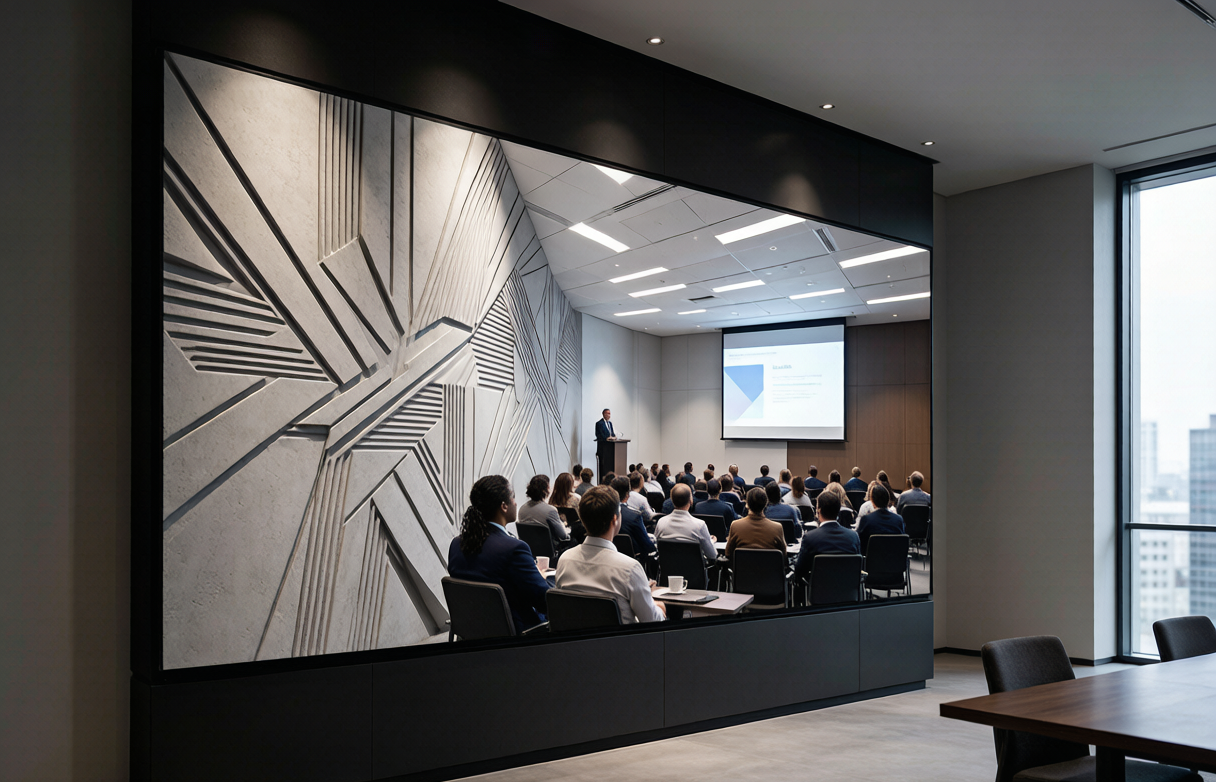
Auditoriums host corporate meetings, academic exchanges, and result launches. Their display systems must present HD content while blending with interior decor. LED relief texture screens, which act as decoration when off and as displays when on, are increasingly chosen for new builds and retrofits. However, their installation and cabling differ notably from conventional LED screens, and budgets are easily underestimated. This article breaks down costs from screen body to installation, cabling to commissioning, compares investment across tiers, and offers practical cost-saving advice for integrators and end users at the project planning stage.
Total Budget Structure
The total budget for a lecture hall LED embossed texture screen is not just the screen purchase price. It is a composite account covering the screen, supporting equipment, installation, wiring materials, commissioning training, and ongoing O&M. Take Stonbel LED texture screens as an example: pixel pitch P5, protection rating IP54, combining building-grade texture decoration with Micro-LED display technology. This means the screen itself serves as both decorative surface and display unit. In the budget structure, the screen typically accounts for 45% to 60% of total investment, depending on wall area and texture customization level. Supporting
Itemized Quotation Details
The screen is the core of the lecture hall LED embossed texture screen budget. LED texture screen pixel pitch P5, protection rating IP54, suitable for medium-close viewing and long-term illumination in lecture halls. Screen pricing is usually calculated per square meter, with industry ranges affected by texture customization complexity, pixel density, and packaging process. If the wall area is large and textures must match interior design, customization costs exceed standard texture models. Stonbel, as a top-10 LED display manufacturer, holds 3C, CE, FCC, ISO14001, ISO9001, and ROHS certifications. Screens undergo protection and aging tests before shipment, with these costs
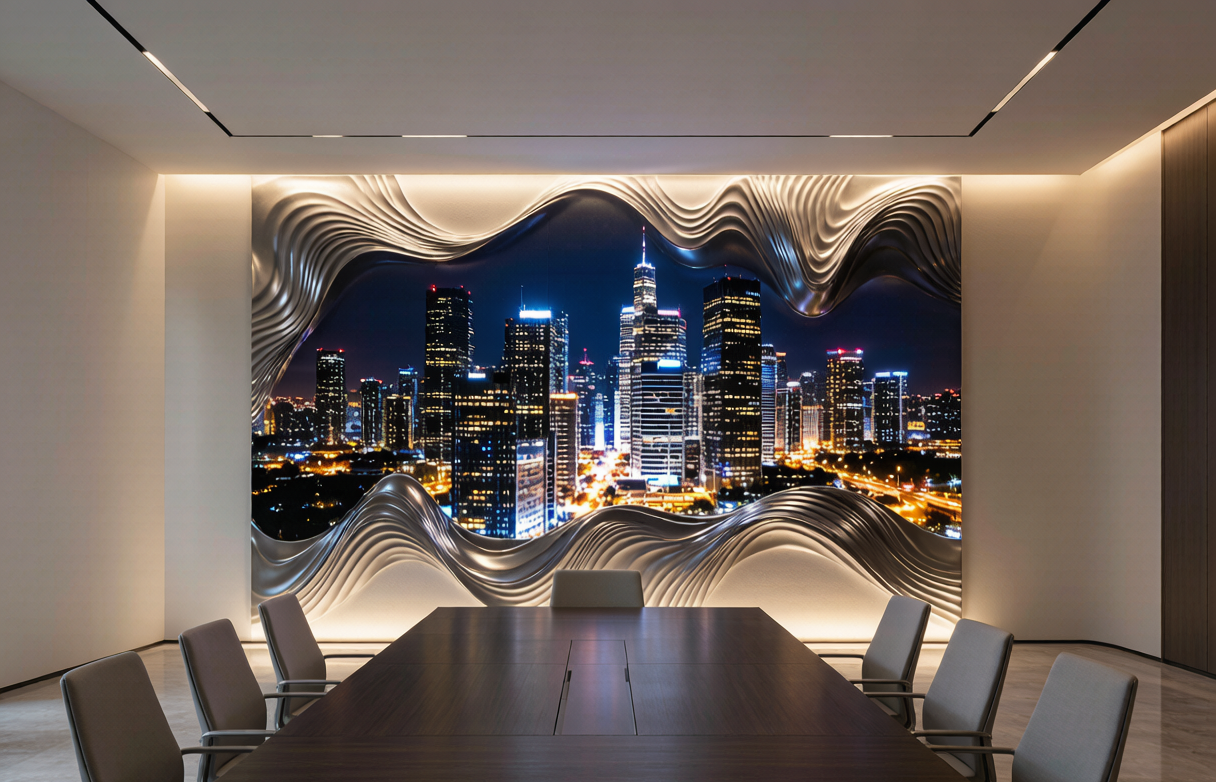
Tier Comparison
The entry tier suits small-to-medium lecture halls or budget-constrained renovation projects. The screen uses standard texture LED embossed texture screen, pixel pitch P5, protection rating IP54, meeting basic meeting presentation and video playback needs. Supporting video processors prioritize stable operation, with signal channels kept to a limited range. Installation uses conventional keel mounting, with wiring utilizing existing conduits or surface-mounted cable trays. This tier has relatively controllable total investment but limited texture customization freedom, signal scheduling flexibility, and future expandability. Suitable for lecture halls with low usage frequency and single content format. The mid tier suits most corporate lecture
Cost-Saving Tips
First, complete pre-wiring in one go to avoid rework. Lecture hall LED embossed texture screen wiring is concealed work. If signal or power cables are added after decoration, slotting and restoration costs often exceed pre-embedding. Determine screen position, control room location, and signal source distribution during civil or decoration design, reserving conduits per final usage needs, including independent power circuits, shielded signal cables, spare network cables, and access channels. The extra upfront conduit cost is usually far less than later renovation. Second, choose screen specs and texture customization level based on actual usage. The core value of lecture hall LED embossed texture screens is the fusion of decoration and display, but not all halls need high-complexity texture customization. For
Q1: What are the key wiring points before installing a lecture hall LED embossed texture screen?
A: Lecture hall LED embossed texture screen wiring requires focus on three points: first, independent power circuits with margin based on total screen power, avoiding shared circuits with lighting or HVAC; second, shielded signal cables kept away from power cable trays to reduce electromagnetic interference on display performance; third, conduits from control room to screen with access panels and redundant length for future maintenance and expansion. LED texture screens have protection rating IP54, but wiring should still include moisture and fire protection. Subject to actual project plans.
Q2: What proportion of the total budget does the screen itself account for?
A: In the total budget for a lecture hall LED embossed texture screen, the screen typically accounts for 45% to 60%, depending on wall area and texture customization level. LED texture screens have pixel pitch P5 and serve as both decorative surface and display unit. Custom texture models cost more than standard models. Supporting video processing and signal scheduling account for 15% to 25%, installation and wiring 20% to 30%, and commissioning training and O&M 5% to 10%. Itemize during project planning to avoid focusing only on screen unit price while underestimating construction and wiring investment.
Q3: What special requirements apply to lecture hall LED embossed texture screen installation?
A: Lecture hall LED embossed texture screen installation requires three special conditions: walls must be leveled with sufficient load-bearing capacity, with keel structures designed specifically for screen weight; the bonding process between embossed texture surface and display modules requires professional workmanship to ensure flatness and splicing consistency; heat dissipation channels must be reserved to prevent heat accumulation during extended illumination. LED texture screens have protection rating IP54; the installation environment should remain dry and ventilated. Choose teams with display industry construction experience and perform screen-by-screen correction and aging tests during commissioning.
Q4: Are ongoing O&M costs high for lecture hall LED embossed texture screens?
A: Ongoing O&M costs for lecture hall LED embossed texture screens are relatively controllable. LED texture screens have a lifespan of up to 100,000 hours with protection rating IP54. Daily maintenance mainly involves cleaning texture surfaces and checking signal connections. With proper pre-wiring and construction quality, failure rates are low. Include operator training in the project contract so O&M staff can master basic operations and daily checks, reducing on-site service frequency. Stonbel has permanent service points across 31 provinces and cities, providing remote guidance and on-site support. Specific services are subject to contract terms.
Budgeting an auditorium LED relief texture screen is essentially a comprehensive review of display needs, decorative effect, and site conditions. Each item—screen body, supporting equipment, cabling, installation, commissioning, and O&M—has a reasonable cost range; cutting any part blindly often returns as higher later costs. Four proven ways to save: complete cabling in one pass, match texture customization to the actual scene, choose a manufacturer with a service network for installation and commissioning, and reserve signal system expansion headroom. Stonbel, a top-10 LED display maker, holds 3C, CE, FCC, ISO14001, ISO9001, and ROHS certifications, with service covering 31 provinces and cities, supporting auditorium LED relief texture screen projects from survey to O&M. Related reading: LED texture screens, COB fine-pitch displays, LED displays.