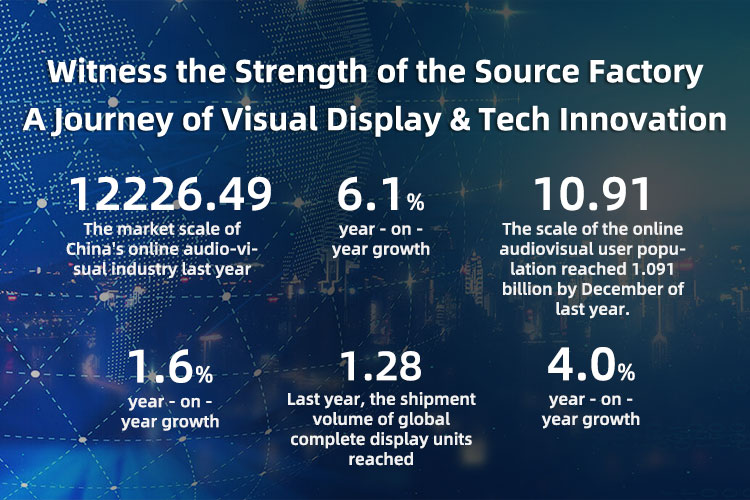
In high-end showroom and command center projects, storage devices and display terminals are often compared together, with some even assuming a large screen eliminates the need for high-performance storage. This misconception frequently causes frame drops, stuttering, and frequent drive failures after delivery. Industrial NVMe drives and video wall solutions are infrastructure at different layers: the former handles high-speed data read/write and reliable retention, the latter handles final presentation. This article addresses common industry misconceptions, using real parameters such as NVMe protocol, PCIe bus, and industrial wide-temperature ratings, plus deployment cases, to clarify selection logic and prevent storage bottlenecks from degrading overall experience in high-end scenarios.
Common Industry Misconceptions
Another hidden misconception is confusing interface with protocol. Some assume all M.2 drives are the same, ignoring that SATA and NVMe use entirely different buses. SATA SSDs are limited by 6Gbps bandwidth, with sequential reads hovering around 500 MB/s, while industrial NVMe drives for showrooms use PCIe channels, with Gen4x4 versions reaching 7100 MB/s sequential read — over ten times the difference. When retrieving multiple 4K or even 8K signals in a showroom, this gap translates directly into loading delays and screen tearing. Additionally, some projects focus only on capacity numbers during selection, ignoring TBW and write endurance. Showroom content updates frequently and logs write continuously; if
Debunking and Correcting One by One
Another point to correct is that "power loss protection is optional." Showrooms often experience temporary power outages or voltage fluctuations. Drives without PLP (Power Loss Protection) that lose power during writes can easily suffer data corruption or even drive failure. Some industrial NVMe drives for showrooms explicitly support PLP, along with short-circuit/undervoltage protection and ECC, with MTBF reaching 2,000,000 hours. For showroom projects carrying critical display data and operation logs, these protection mechanisms are not optional — they are mandatory. Some also believe that "in-drive RAID and anti-sulfurization are gimmicks." In industrial and high-end showroom environments, corrosive gases may be present in the air, and ordinary drives' gold fingers and solder joints can
Correct Understanding
From a comparison standpoint, the differences between SATA SSDs and NVMe drives center on bus, speed, and latency. NVMe uses PCIe, with sequential read reaching 7000+ MB/s and lower latency, suitable for edge servers and machine vision; SATA is adequate and cheaper, suitable for standard industrial PCs. If a showroom involves concurrent multi-channel HD signals or real-time 3D rendering, NVMe should be prioritized. If it's simply image-text carousel, SATA SSD suffices. The key is to decide based on the showroom's actual workload, not blindly chasing high specs or cutting costs. From a support services perspective, full-category industrial
Selection Recommendations
Fourth, emphasize compatibility and support. Showroom projects often involve domestic CPUs, operating systems, and AI chips. During selection, confirm whether the industrial NVMe drive for showrooms is compatible with Kunpeng/Phytium/Hygon platforms and Kylin/UOS operating systems. Stonbel storage and AI computing services provide full-category industrial wide-temperature storage support, covering distributed storage, private cloud, intelligent computing centers, disaster recovery, and industrial wide-temperature SSDs, reducing compatibility testing investment. Meanwhile, original manufacturer direct-supply after-sales support and resident service points across 31 provinces and cities provide response support
Q1: What exactly is the difference between industrial NVMe drives for showrooms and ordinary consumer SSDs?
A: The core differences are endurance, temperature adaptability, and protection mechanisms. Industrial NVMe drives for showrooms support -40~85°C operating temperature, 1500G shock resistance, 20G@7-2000Hz vibration resistance, with some models offering TBW up to 5200 TB (TLC)/24000 TB (SLC), plus PLP, ECC, and anti-sulfurization G3. Consumer drives typically only guarantee around 0~70°C, have lower TBW, and lack power loss protection. Showrooms run 7×24 with frequent content updates — industrial-grade endurance and protection directly determine equipment lifespan and data security.
Q2: Should a showroom project choose PCIe Gen3 or Gen4 industrial NVMe drives?
A: It depends on the workload. If the showroom mainly runs image-text and standard video carousel, PCIe Gen3x4 with 2400 MB/s sequential read and 1950 MB/s sequential write is sufficient, with 256GB~2TB capacity options at better cost. If it involves real-time 3D rendering, concurrent multi-channel 8K signals, or machine vision interaction, choose PCIe Gen4x4 with 7100 MB/s sequential read and 6400 MB/s sequential write, 512GB~4TB capacity, and note TBW up to 4800 TB and 3000 P/E cycles. Gen4 is backward compatible but requires motherboard and CPU support for the corresponding lanes.
Q3: Is power loss protection (PLP) really necessary for industrial NVMe drives in showrooms?
A: Yes. Showrooms often experience temporary power outages, voltage fluctuations, or accidental unplugging. If the drive loses power during a write, drives without PLP can easily suffer data corruption, file system crashes, or even drive failure. Some industrial NVMe drives for showrooms explicitly support PLP, along with short-circuit/undervoltage protection and ECC, with MTBF reaching 2,000,000 hours. For showroom projects carrying critical display data, operation logs, and configuration files, PLP is a key mechanism for ensuring data integrity and should not be omitted to save cost.
Q4: How to choose between industrial NVMe drives and SATA SSDs for showrooms?
A: Judge by three dimensions: bus, speed, and latency. NVMe uses PCIe, with sequential read reaching 7000+ MB/s and lower latency, suitable for edge servers and machine vision; SATA is limited by 6Gbps with a lower speed ceiling, but is adequate and cheaper, suitable for standard industrial PCs. If the showroom involves concurrent multi-channel HD signals or real-time 3D rendering, prioritize NVMe; if it's simply image-text carousel, SATA SSD suffices. The key is to decide based on the showroom's actual workload, not blindly chasing high specs or cutting costs.
High-end showroom selection is not about buying the most expensive display or configuring storage arbitrarily. Industrial NVMe drives and video wall solutions belong to the data layer and presentation layer respectively. The former ensures high-speed, reliable data flow via PCIe Gen3x4/Gen4x4, NVMe 1.3/1.4/2.0, -40~85°C wide temperature, and power loss protection (PLP); the latter handles final visual presentation. From confidential meeting rooms to command halls and refinery projects, real cases repeatedly confirm: only when storage, compute, and display match can the system run stably. Define load type and environmental conditions first, then evaluate TBW, P/E cycles, form factor, and compatibility, making industrial NVMe drives a reliable foundation rather than a later fix. Related reading: industrial wide-temperature SSDs, industrial DDR4/DDR5 memory, eMMC/UFS embedded storage.