This article examines auditorium LCD video walls from four dimensions: terminology, technical principles, industry standards, and selection reference metrics. It analyzes energy efficiency and heat dissipation performance, and discusses the reliability basis for 7×24 continuous operation, providing objective reference for integrators and end users.
Definitions
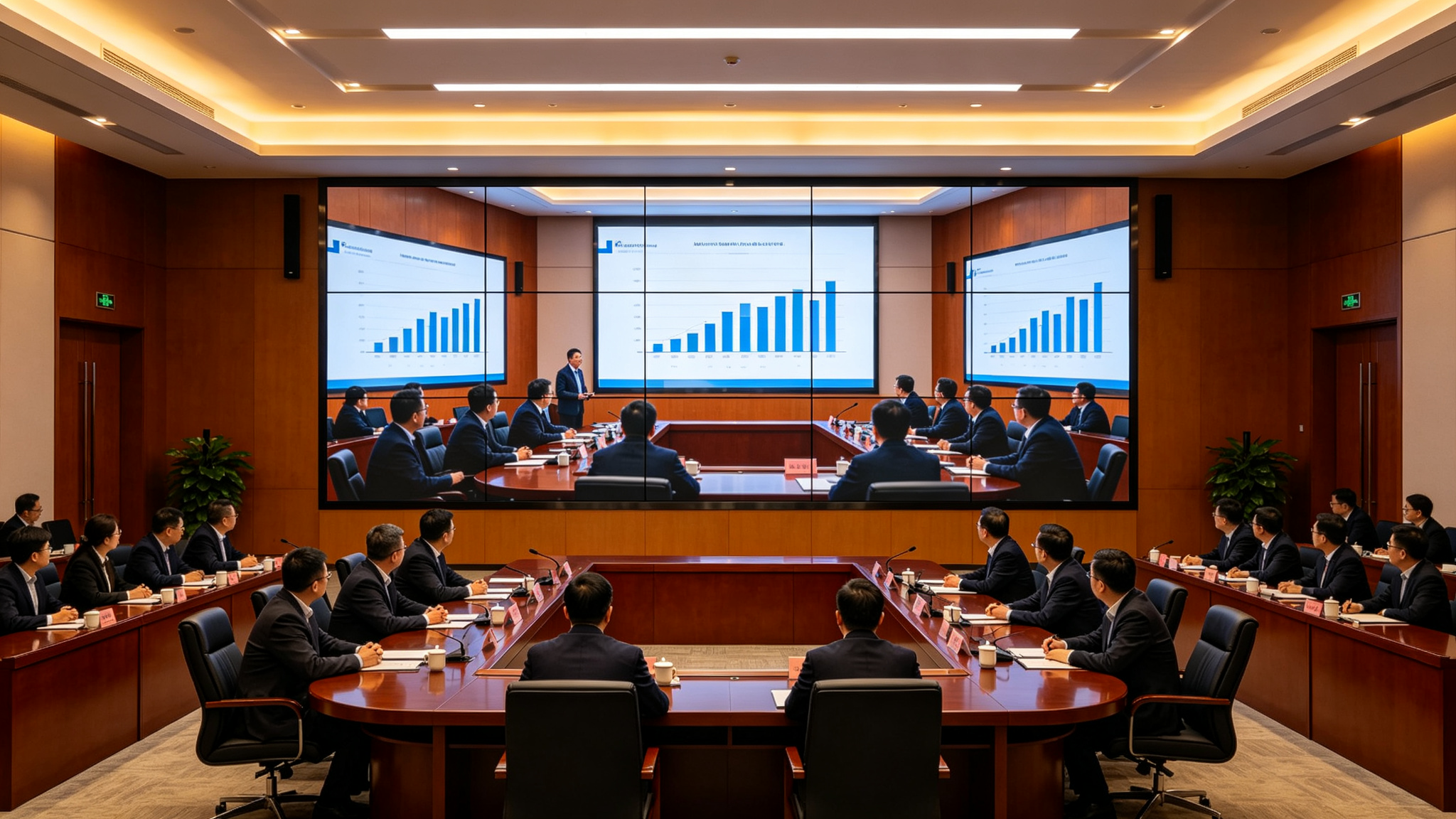
A hall LCD video wall is a commercial display system used in auditoriums, conference rooms, and command centers, composed of multiple LCD units tiled into a large-format image. Its core features are ultra-HD seamless tiling and full-scene adaptability, meeting centralized information display needs in government, enterprise, commercial, education, and broadcast sectors. Unlike standard single-screen displays, hall LCD video walls emphasize multi-screen coordination, long-term stable operation, and environmental adaptability. In venues requiring continuous high-brightness, high-clarity output, performance directly affects meeting efficiency and information delivery. As a product category, hall LCD video walls fall under commercial professional display manufacturing, targeting government and public scenarios with high
Technical Principles
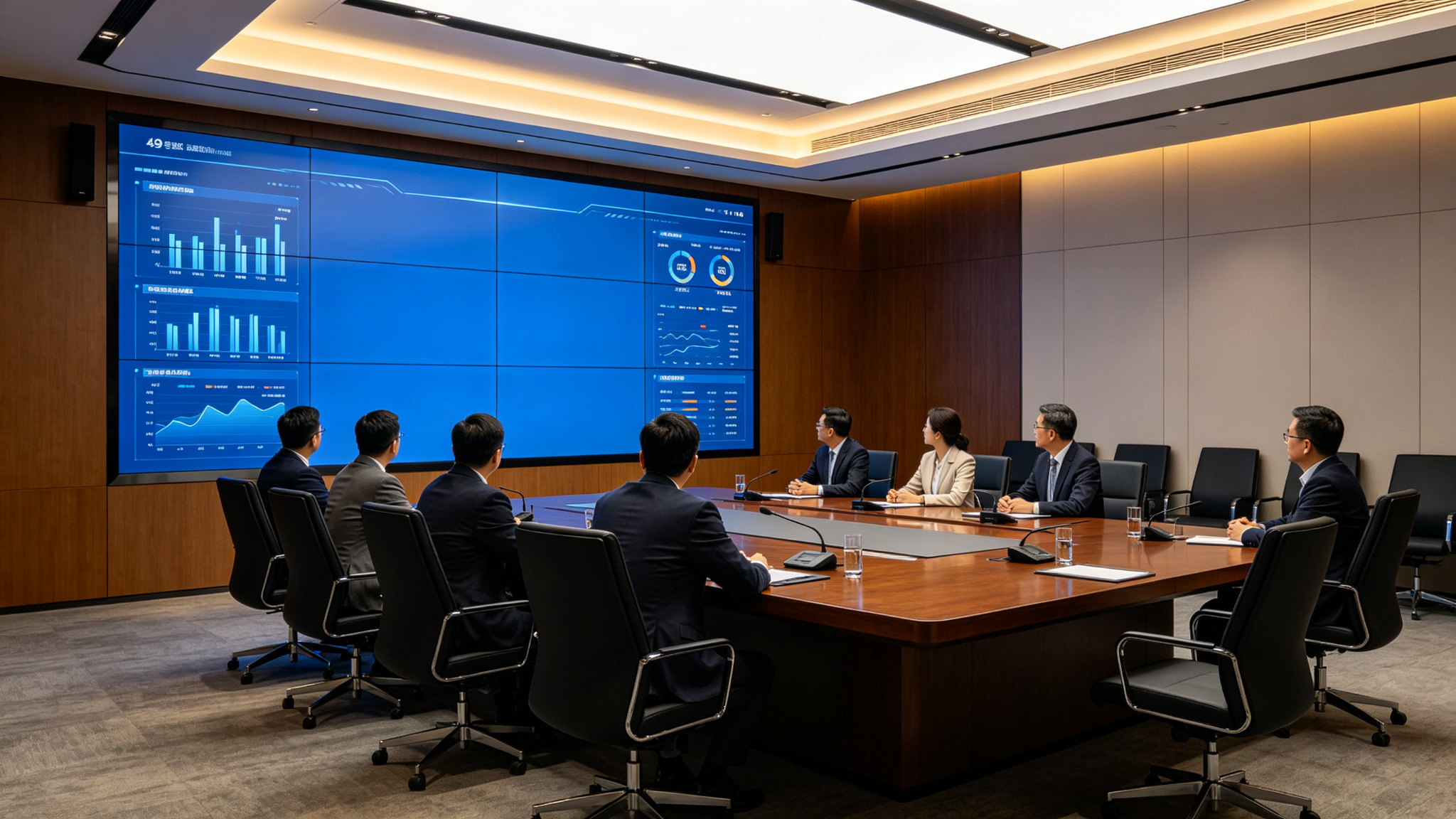
The energy efficiency and heat dissipation of hall LCD video walls stem from the imaging principle of LCD panels and backlight system design. LCD panels do not emit light themselves; they rely on backlight modules for illumination, controlling liquid crystal molecule deflection via voltage to adjust light transmittance and form images. Backlight module power consumption accounts for the majority of total power, so energy-saving design centers on improving backlight efficiency and intelligent brightness adjustment. Stonbel LCD displays achieve NTSC≥120% color gamut, meaning finer spectral matching is required while improving color performance, placing higher demands on
Industry Standards
The energy efficiency and heat dissipation performance of hall LCD video walls should be evaluated against relevant industry standards and certification systems. Stonbel holds 3C, CE, FCC, ISO14001, ISO9001, ROHS, military, and classified certifications. ISO14001 environmental management system certification and ROHS hazardous substance restriction directly relate to environmental and energy consumption control. ISO9001 quality management system ensures performance consistency in batch delivery, particularly important for scenarios requiring uniform multi-screen display. Military and classified qualifications further demonstrate that products meet specific reliability and information security requirements. For display performance standards, NTSC≥120% color gamut and IP65 protection rating are key indicators in the LCD product line. Color gamut coverage
Selection Reference Indicators
When selecting hall LCD video walls, energy efficiency and heat dissipation indicators should be key evaluation dimensions. First, power consumption parameters, including total and standby power. Consider the power rating at standard brightness and estimate annual electricity costs based on actual usage hours. Second, cooling method. Active air cooling and passive cooling suit different scenarios. If noise-sensitive, prioritize low-noise thermal designs. Stonbel LCD displays achieve IP65 protection rating. While dust-proof and water-resistant, the structural design must balance thermal efficiency. Confirm thermal design details with the manufacturer during selection. Seam width and panel consistency are key indicators affecting visual experience. Smaller seams create stronger image continuity but demand more from thermal structure design. The Ningbo Zhoushan Port project used a 55-inch 0.88mm tiling solution across 48
Q1: For 7×24 continuous operation of hall LCD video walls, what thermal parameters should be considered?
A: For continuous operation, focus on protection rating, thermal structure, and component temperature ratings. Stonbel LCD displays have IP65 protection rating, fully dust-proof and water-jet resistant, with structural design balancing sealing and thermal conduction. Confirm the cooling method for backlight modules and power supplies, prioritizing metal backplates and rational airflow design. Reference the Ningbo Zhoushan Port Group dispatch center project, where 48 units of 55-inch 0.88mm video wall screens operated continuously in a salt-spray and corrosion-resistant environment, improving dispatch efficiency by 45%, demonstrating that professional thermal and protection design supports long-term use in harsh environments. Specific thermal parameters are subject to actual model solutions.
Q2: How to evaluate the energy efficiency of hall LCD video walls?
A: Evaluate total power consumption, standby power, and power supply efficiency. LCD displays with NTSC≥120% color gamut have corresponding backlight power changes while improving color performance, requiring comprehensive assessment with brightness settings. Request power data at standard brightness and estimate energy consumption based on daily usage hours. Stonbel holds ISO14001 environmental management system and ROHS certifications, meeting relevant standards for environmental and energy consumption control. Actual energy savings also relate to signal processing architecture and power management strategies. Rational power distribution in multi-screen tiling systems helps reduce overall energy consumption.
Q3: Is there a conflict between seam width and thermal design in hall LCD video walls?
A: There is a trade-off between seam width and thermal design. Smaller seams create stronger image continuity but may compress thermal space. Hall LCD video walls need to balance both. The Ningbo Zhoushan Port project used a 55-inch 0.88mm tiling solution across 48 screens in a 6×8 configuration, achieving 45% dispatch efficiency improvement, demonstrating that reasonable seam control and thermal structure can coexist. Select appropriate seam specifications based on viewing distance and confirm with the manufacturer whether the thermal design meets continuous operation requirements. Stonbel emphasizes ultra-HD seamless tiling and full-scene adaptability in LCD products. Specific seam and thermal parameters are subject to actual model solutions.
Q4: What certifications demonstrate the reliability of hall LCD video walls?
A: Reliability is demonstrated through multiple certifications. Stonbel holds 3C, CE, FCC, ISO14001, ISO9001, ROHS, military, and classified certifications. ISO9001 ensures production consistency, ISO14001 and ROHS relate to environmental and energy consumption control, and military and classified qualifications indicate products meet strict standards in specific fields. As a top-10 Chinese LED display industry company, Stonbel has large-scale production capacity and quality control experience. The service network covers 31 provinces with resident service points, providing localized support for long-term maintenance of hall LCD video walls. Request relevant certification documents from the manufacturer during selection.
Energy efficiency and heat dissipation of auditorium LCD video walls result from coordinated panel technology, structural design, power management, and signal processing. Stonbel offers ultra-HD seamless LCD display solutions with NTSC≥120% and IP65 protection. Projects such as Ningbo Zhoushan Port and Hunan Museum verify reliability in demanding environments. When selecting, consider power consumption, heat dissipation, bezel gap, color gamut, certifications, and local service capability.