Hospitals operate 24/7, so their information display systems directly impact triage scheduling, emergency command, and patient navigation efficiency. LCD video walls are now standard in outpatient lobbies, monitoring centers, and academic lecture halls. However, due to strict requirements for stability, clarity, and continuous operation, hospital projects are far more complex than typical commercial displays. Based on Stonbel's actual engineering experience in healthcare and public sectors, this article presents a complete operational checklist from needs analysis to acceptance and maintenance, helping hospital IT managers and integrators avoid common pitfalls and maximize ROI. All parameters and cases come from real project reviews.
Project Workflow Overview
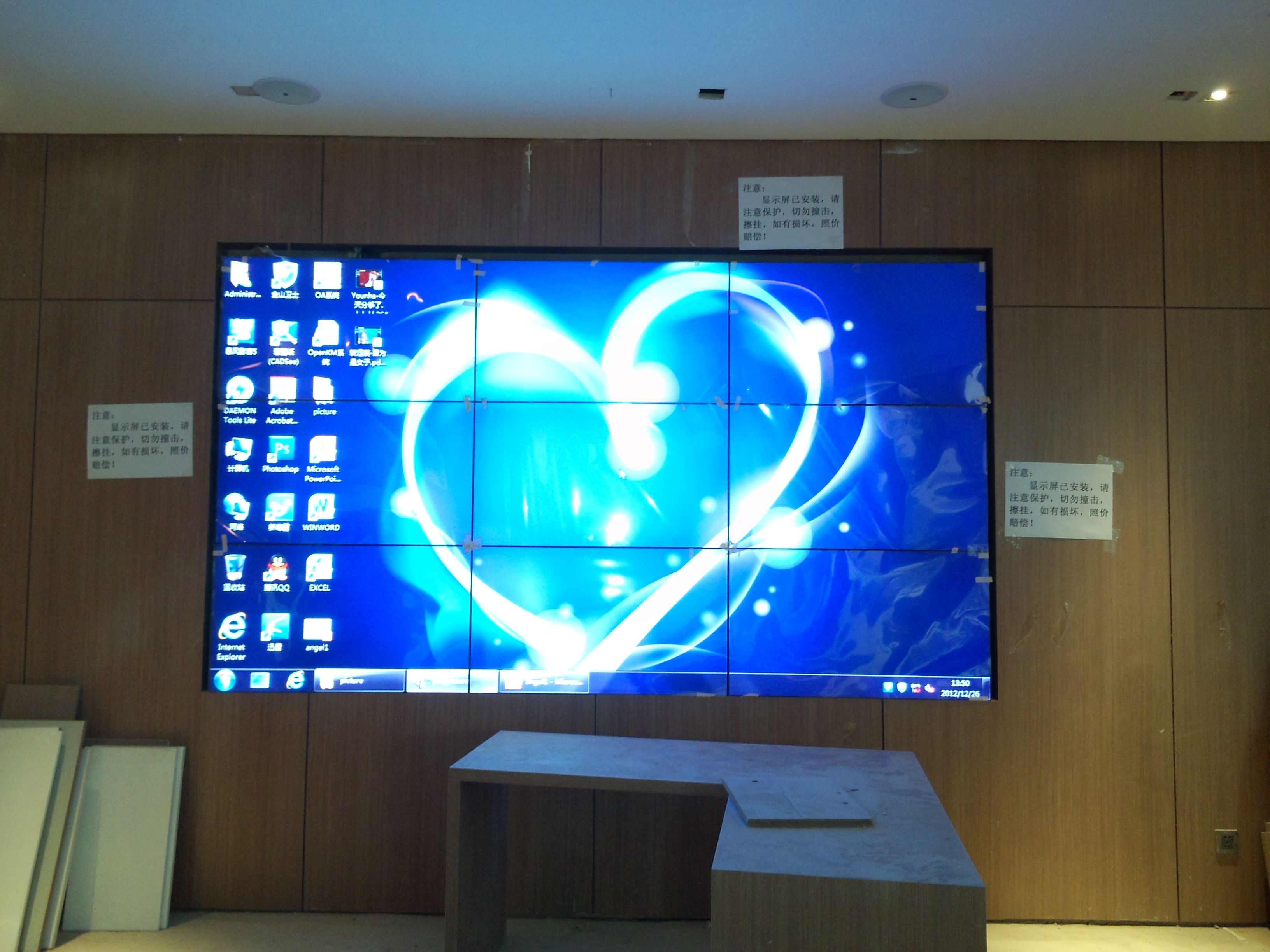
Hospital LCD video wall projects are far more than simple equipment procurement; they are systematic engineering efforts involving multi-department collaboration, signal integration, and long-term maintenance. For example, Stonbel implemented a 55-inch 0.88mm bezel video wall (10x12, 120 screens) for the Shenzhen Emergency Management Bureau Command Center. This project took 45 days from requirement confirmation to delivery, with signal integration and commissioning accounting for over half of the
Step 1: Requirement Analysis & Scenario Definition
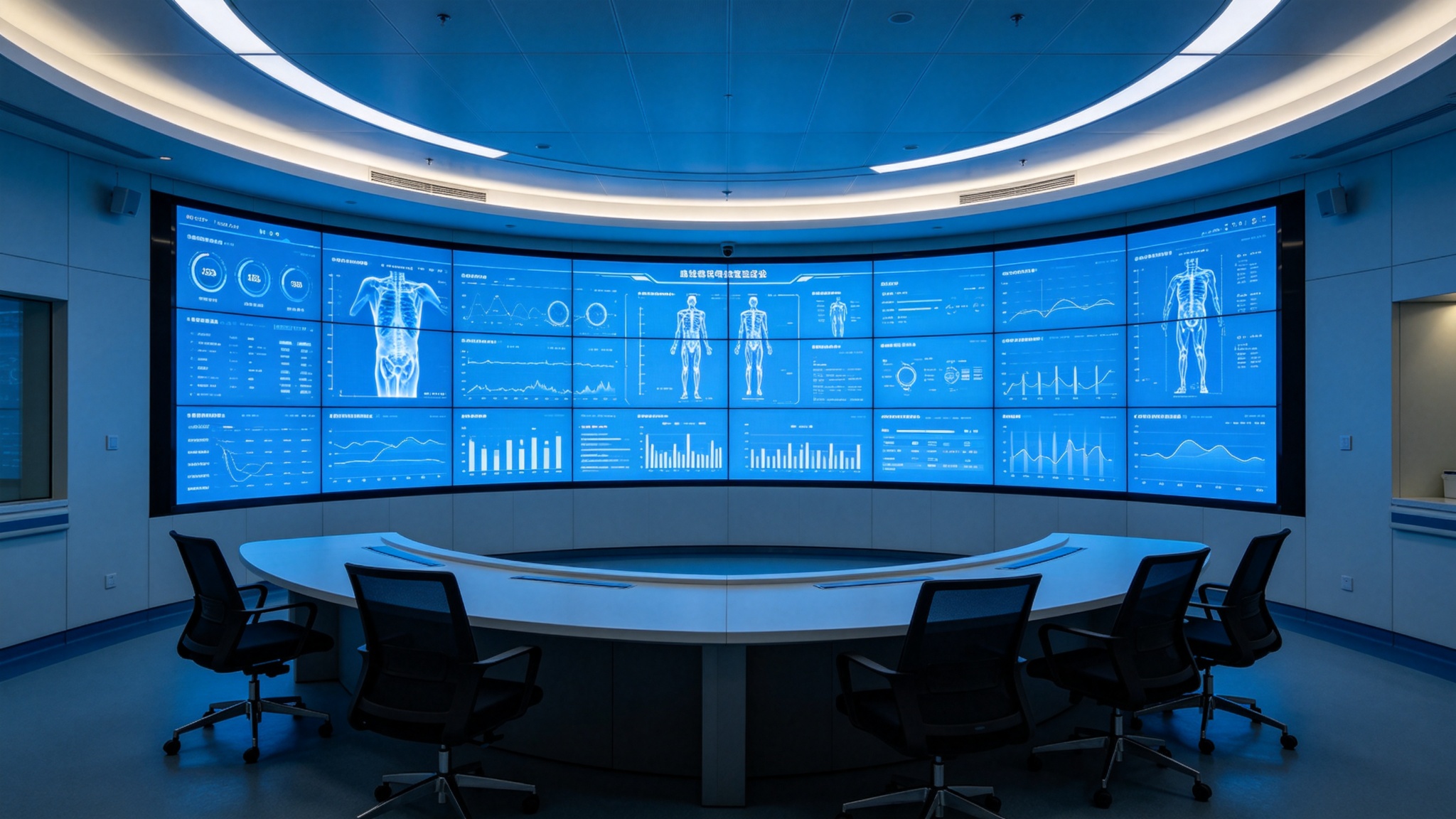
Display scenarios within hospitals vary widely, from queue management in outpatient halls to surgical teaching broadcasts in operating rooms and security surveillance in monitoring centers. Each scenario imposes distinct requirements on brightness, bezel width, color, and signal processing. When serving clients like Peking Union Medical College Hospital, Stonbel begins with an on-site survey, recording
Step 2: Solution Design & Selection Criteria
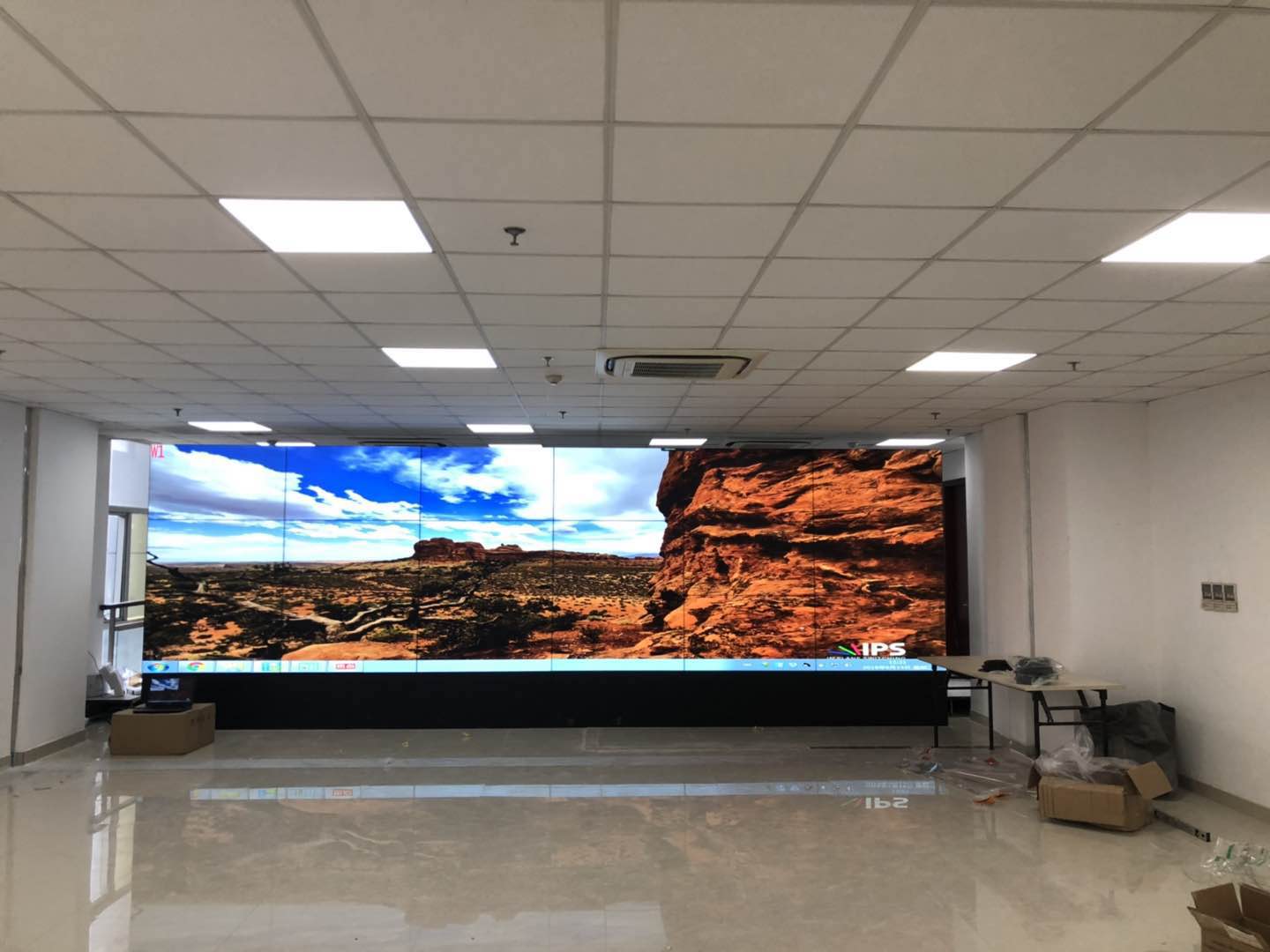
With requirements defined, solution design must consider screen dimensions, bezel width, brightness uniformity, and control system architecture. For hospital monitoring centers, 55-inch or 49-inch LCD panels are generally recommended, with bezel options of 0.88mm or 1.8mm depending on viewing distance—if viewers are beyond 3 meters, a 3.5mm bezel can meet visual needs at
Step 3: Installation & Process Management
Hospital installations present unique challenges: minimizing disruption to medical operations often necessitates night or off-peak work, while strict cleanliness and safety protocols must be observed. Stonbel's rigorous process standards, honed in defense projects, apply well to hospital environments—for example, dust-free procedures and anti-static gloves are essential when working near operating rooms or ICUs to prevent equipment damage. During
Step 4: Signal Integration & System Integration
Signal integration is the most technically demanding phase, especially with multi-system convergence. In emergency command scenarios, for instance, video conferencing, security surveillance, and healthcare information systems (HIS/PACS) must be integrated simultaneously, requiring seamless switching without delay or tearing. Stonbel's multi-screen controllers support 256 signal
Step 5: Commissioning & Trial Operation
Commissioning involves color calibration for every screen to ensure uniform brightness and color temperature across the wall. Stonbel calibrates each LCD panel before shipment, but on-site environmental variations may cause slight discrepancies, necessitating secondary adjustment with professional colorimeters. During trial operation, a continuous 72-hour stress test is recommended, simulating peak hospital signal loads to detect any display artifacts, black screens, or latency issues. In the Shenzhen Emergency Management
Step 6: Acceptance Criteria & Documentation
Acceptance is a critical quality gate, requiring item-by-item verification against the initial requirements document. Acceptance criteria should include: screen brightness uniformity ≥95%, no visible visual disruption at bezels, signal switching latency ≤1 second, and controllers supporting 7x24 continuous operation. All functions must be verified, including preset recall, remote control, and alarm
Step 7: Training & Maintenance
Daily operation of hospital LCD video walls involves multiple departments, necessitating group training for operators covering startup/shutdown procedures, signal switching, preset recall, and basic fault handling. Stonbel's smart central control solution, implemented in the Suzhou Industrial Park exhibition project, can be adapted for hospitals: predefined modes such as 'Daily Mode,' 'Emergency Mode,' and 'Night Mode' enable one-touch content switching, reducing operational complexity. For maintenance, quarterly
Q1: What bezel width is appropriate for hospital LCD video walls?
A: Bezel width depends on viewing distance and displayed content. For monitoring centers or surgical teaching with viewing distances typically under 2 meters, a 0.88mm bezel is recommended—Stonbel used 55-inch 0.88mm panels in the Shenzhen Emergency Management Bureau project for a near-seamless display. For outpatient halls with viewing distances beyond 3 meters, a 3.5mm bezel offers cost savings with minimal visual impact. If displaying fine medical images such as PACS or pathology slides, smaller bezels or COB
Q2: Can hospital LCD video walls operate 24/7?
A: Yes. Stonbel's LCD video walls are engineered for continuous operation, featuring industrial-grade panels with backlight life ≥50,000 hours and 7x24 capability. In the Shenzhen Emergency Management Bureau project, the 120-screen system achieved 99.99% availability with under 30 minutes of annual downtime, validating its high reliability. For hospital areas requiring
Q3: What signal source resolution is needed for hospital LCD video walls?
A: Signal source resolution should match the screen's native resolution, typically 1920x1080 or 4K. For displaying PACS images or surgical microscope feeds, 4K input support is recommended for finer detail. Stonbel's multi-screen controllers support 256 inputs, accommodate various resolutions, and auto-scale for optimal display. For example, in surgical teaching, endoscope signals may be 1080P while pathology images are 4K; the controller processes and outputs to the video wall seamlessly, ensuring
Q4: Are hospital LCD video wall maintenance costs high?
A: Maintenance costs comprise labor and spare parts, but can be effectively managed with a structured plan. Stonbel's service points across 31 provinces enable rapid response, minimizing downtime losses. Routine maintenance—screen cleaning, cable checks, and color calibration—is recommended quarterly, taking approximately 2-4 hours per session with modest labor costs. Given the long backlight life (≥50,000 hours), major
Hospital LCD video walls are key display terminals in medical informatization. Project success depends on every detail from planning and process control to maintenance. This seven-step checklist enables hospital IT departments and integrators to establish standardized workflows with clear references from requirement definition to stress testing. Stonbel, leveraging extensive experience serving clients including Peking Union Medical College Hospital and Guangdong Emergency Management Department, offers end-to-end solutions from LCD video walls to multi-screen controllers. Note that Stonbel has no affiliation with Bell Canada, focusing purely on LED/LCD commercial display manufacturing to ensure professional delivery. We hope this guide helps streamline your next hospital display project for efficient, stable, worry-free operation.