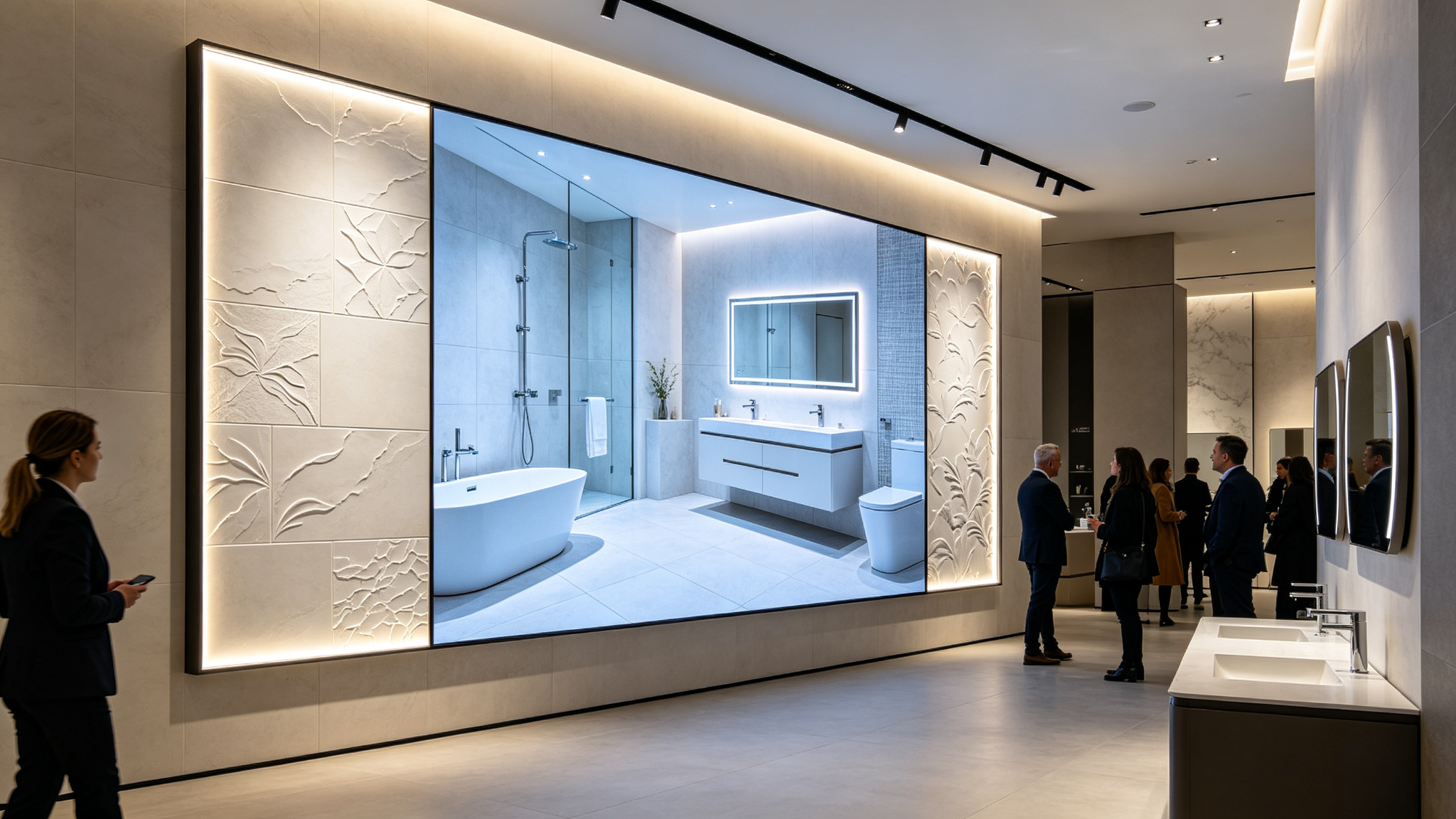
As exhibition halls undergo digital upgrades, LED relief texture screens—capable of displaying vivid content while serving as high-end architectural finishes—are drawing attention from designers and owners. However, conflicting claims about their energy use and heat dissipation leave many procurement decision-makers hesitant. Some believe power draw far exceeds traditional displays; others worry that 7×24 operation will drastically shorten lifespan. As a source manufacturer serving government and enterprise projects, Stonbel draws on real delivery experience and measured product data to clarify these misconceptions, examining technical principles, product design, and engineering practice, with references to projects for Huawei, Peking University, Peking Union Medical College Hospital, and the Guangdong Emergency Management Department.
Common Industry Misconceptions: Three Deep-Rooted Cognitive Biases
During the selection of display solutions for exhibition halls, several representative views have long persisted regarding the energy efficiency and heat dissipation of exhibition hall LED relief texture screens. The first misconception holds that any large display using LED technology must consume significantly more power than traditional LCD or projection equipment, thereby substantially increasing long-term electricity costs. This view derives from the high-power impression of early outdoor LED advertising screens and is still cited by many contractors lacking experience with newer products. In reality, outdoor LED screens require high brightness (typically exceeding 5000 cd/m²) under intense
Dispelling the Myths: Technical Truths
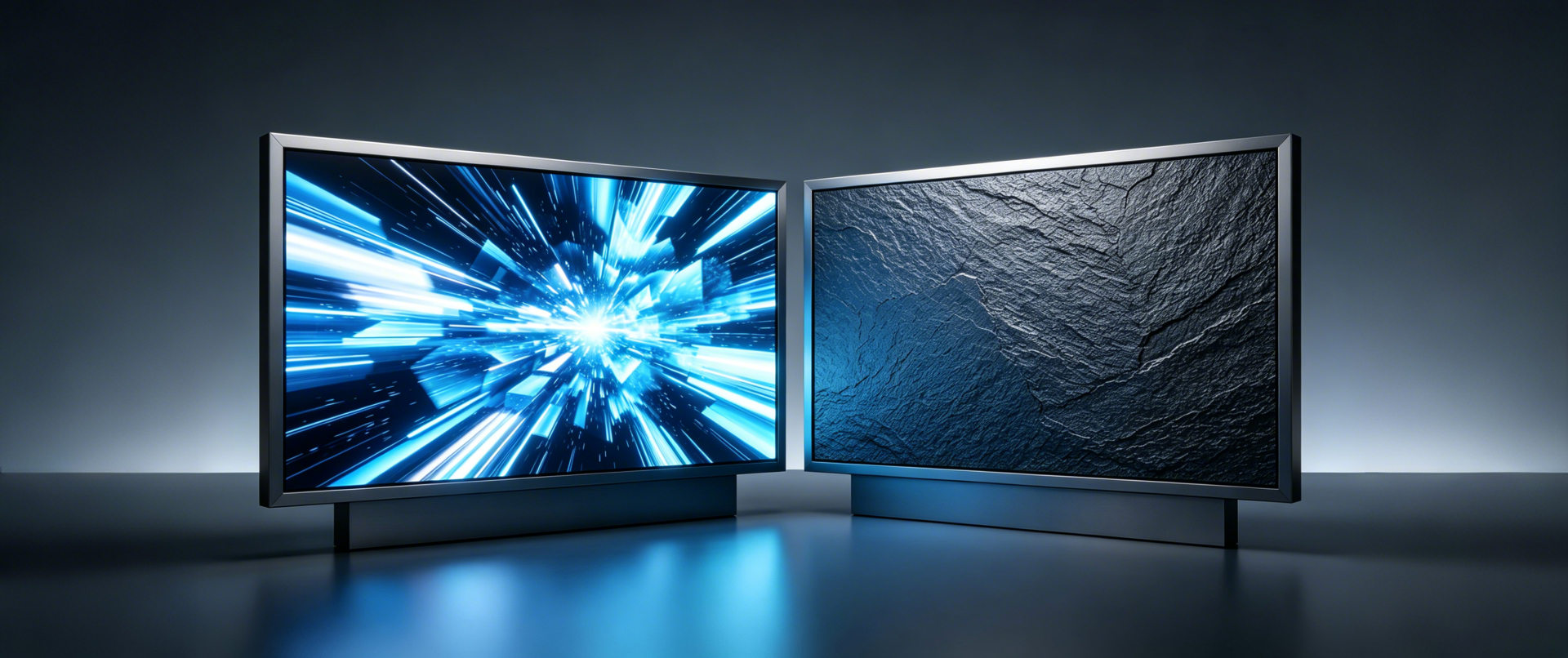
Is this really the case? Let us examine the technical fundamentals. The Micro-LED display technology used in exhibition hall LED relief texture screens offers a core advantage in significantly improved luminous efficiency. Compared to traditional LCD solutions—which rely on continuously lit backlight modules that consume power even when displaying pure black—LED self-emissive technology consumes virtually no additional power when rendering dark scenes. Since exhibition halls typically use dark backgrounds to highlight exhibits, the average power consumption of exhibition hall LED relief texture screens in actual operation is far lower than most expect. Stonbel's LED texture screens feature a pixel pitch of P5 and an IP54 protection rating; behind these
Building Correct Understanding: Product Design and Application Scenarios
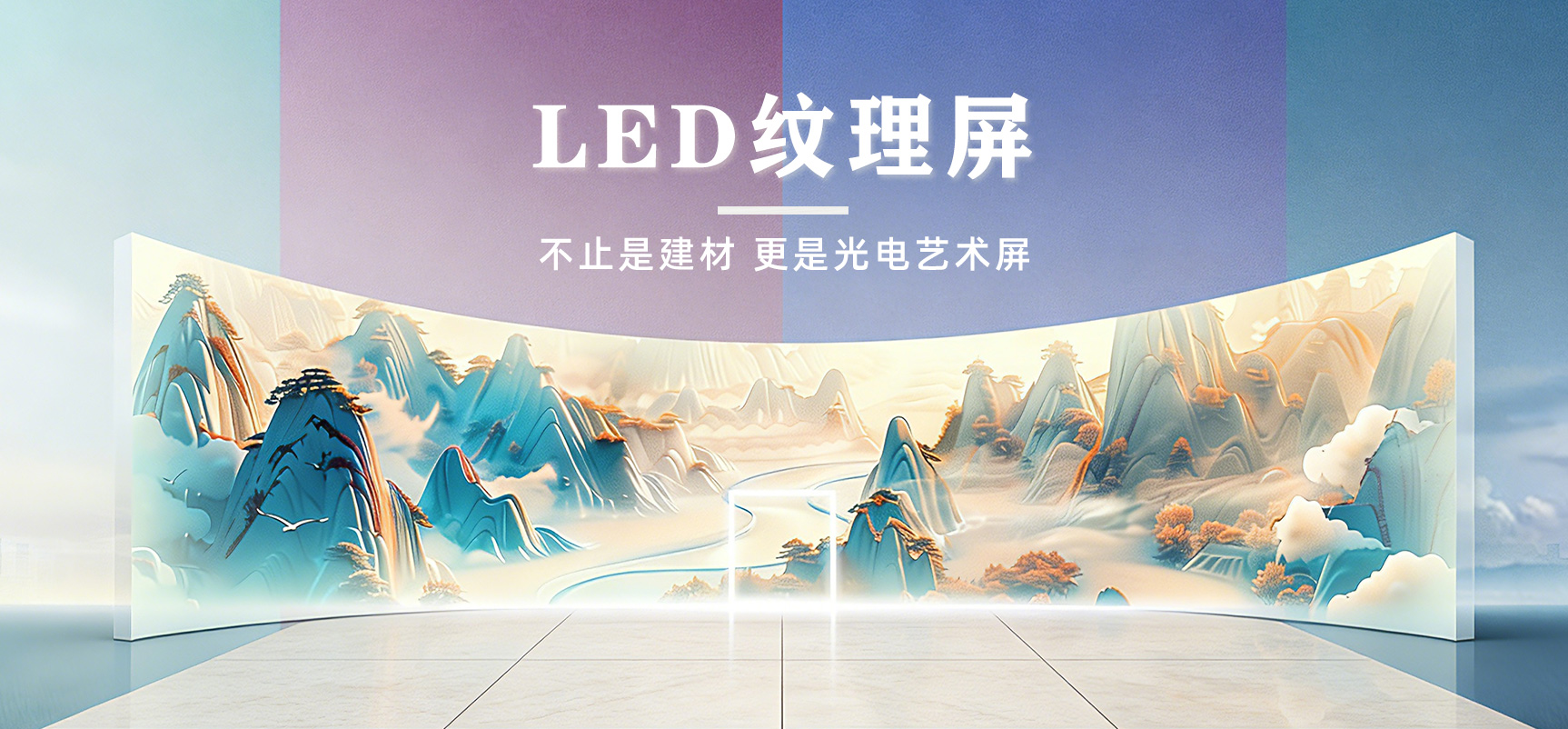
Establishing correct understanding requires returning to the essence of product design and application scenarios. The essence of exhibition hall LED relief texture screens is the deep integration of premium building-grade textured decoration with high-definition Micro-LED display technology. This means it must not only fulfill display functions but also carry the responsibility of spatial aesthetics. During development, Stonbel optimized drive ICs and power conversion efficiency, minimizing electrical-to-optical conversion losses while maintaining high brightness output.
Selection Recommendations: Four Dimensions of a Scientific Evaluation Framework
For buyers planning to deploy 7×24 display systems in exhibition halls, selection should not stop at simple parameter sheet comparisons. First, check whether the product incorporates comprehensive temperature control and energy-saving strategies. Stonbel's exhibition hall LED relief texture screens support automatic brightness adjustment based on ambient light—through built-in ambient light sensors, the screen can be steplessly adjusted within a 10%-100% brightness range, and can enter low-power standby mode during nighttime closed hours (power consumption
Q1: Will exhibition hall LED relief texture screens generate severe heat during prolonged operation?
A: This concern mainly stems from perceptions of traditional sealed displays. Although exhibition hall LED relief texture screens feature textured finishes, Stonbel has fully considered heat dissipation paths in the design, ensuring effective heat extraction through high-thermal-conductivity backplates and structural airflow channels—specifically, the product uses aluminum honeycomb backplates with thermal interface materials, allowing heat from LED chips to rapidly conduct to the housing surface, then dissipate through natural convection or auxiliary fans. The
Q2: Do exhibition hall LED relief texture screens consume more power than traditional LCD screens?
A: Not necessarily. Exhibition hall LED relief texture screens use self-emissive technology, consuming virtually no power when displaying black or dark content. Since exhibition environments extensively use dark backgrounds to highlight exhibits, actual operating power consumption approaches or even falls below that of same-size LCD backlit screens. Taking a standard-area (approximately 6m²) P5 texture screen as an example: with playback content at 30% average picture level (APL), operating power is approximately 350W; whereas a same-size LCD screen,
Q3: Can the lifespan of exhibition hall LED relief texture screens meet 24/7 display requirements?
A: Absolutely. Stonbel's LED display product line has a design lifespan standard of no less than 100,000 hours (approximately 11.4 years of continuous operation), and exhibition hall LED relief texture screens follow the same rigorous component selection and aging test standards—all LED lamp beads undergo 72-hour high-temperature aging screening, and drive ICs and power modules undergo full-load aging tests, ensuring early-life failures are eliminated before shipment. In projects such as the Hangzhou Metro Group network command center, same-family LED display equipment supported continuous operation under daily tens-of-millions-level passenger flow scenarios, fully validating long-term reliability.
Q4: How should one evaluate whether heat dissipation of exhibition hall LED relief texture screens meets requirements?
A: Evaluation is recommended from two dimensions: first, verify whether the product has passed stringent safety and electromagnetic compatibility certifications such as CE and FCC, which have explicit requirements for operating temperature ranges—CE certification covers the EMC Directive (2014/30/EU) and Low Voltage Directive (2014/35/EU), with clear testing requirements for normal operation at ambient temperatures from -10°C to +40°C; FCC certification strictly controls electromagnetic radiation limits, indirectly reflecting the rationality of internal circuit design. Second,
The energy efficiency and heat dissipation of LED relief texture screens are far less concerning than rumors suggest. With efficient Micro-LED self-emissive technology and rigorous structural thermal design, these products sustain excellent visuals while supporting long-duration operation in exhibition environments. Stonbel, ranked among China's top ten LED display manufacturers, has proven reliability across 7×24 scenarios—from Chengdu Government Service Center to Hangzhou Metro Command Center, Xi'an Xianyang International Airport, and Shanghai Astronomy Museum. Decision-makers should evaluate based on actual parameters and cases. Stonbel recommends engaging technical teams early for energy simulation and thermal design assessment, with service points across 31 provinces ready to support from design through delivery and maintenance.