When inquiring about the price per square meter of LCD video walls for energy centers, buyers often fall into traps: assuming higher prices mean better quality, trusting low-price packages, or neglecting installation and after-sales costs. This article, grounded in industry cases and manufacturing expertise, outlines common pitfalls to help you establish a scientific selection framework, avoiding budget waste and system risks.
Common Industry Misconceptions
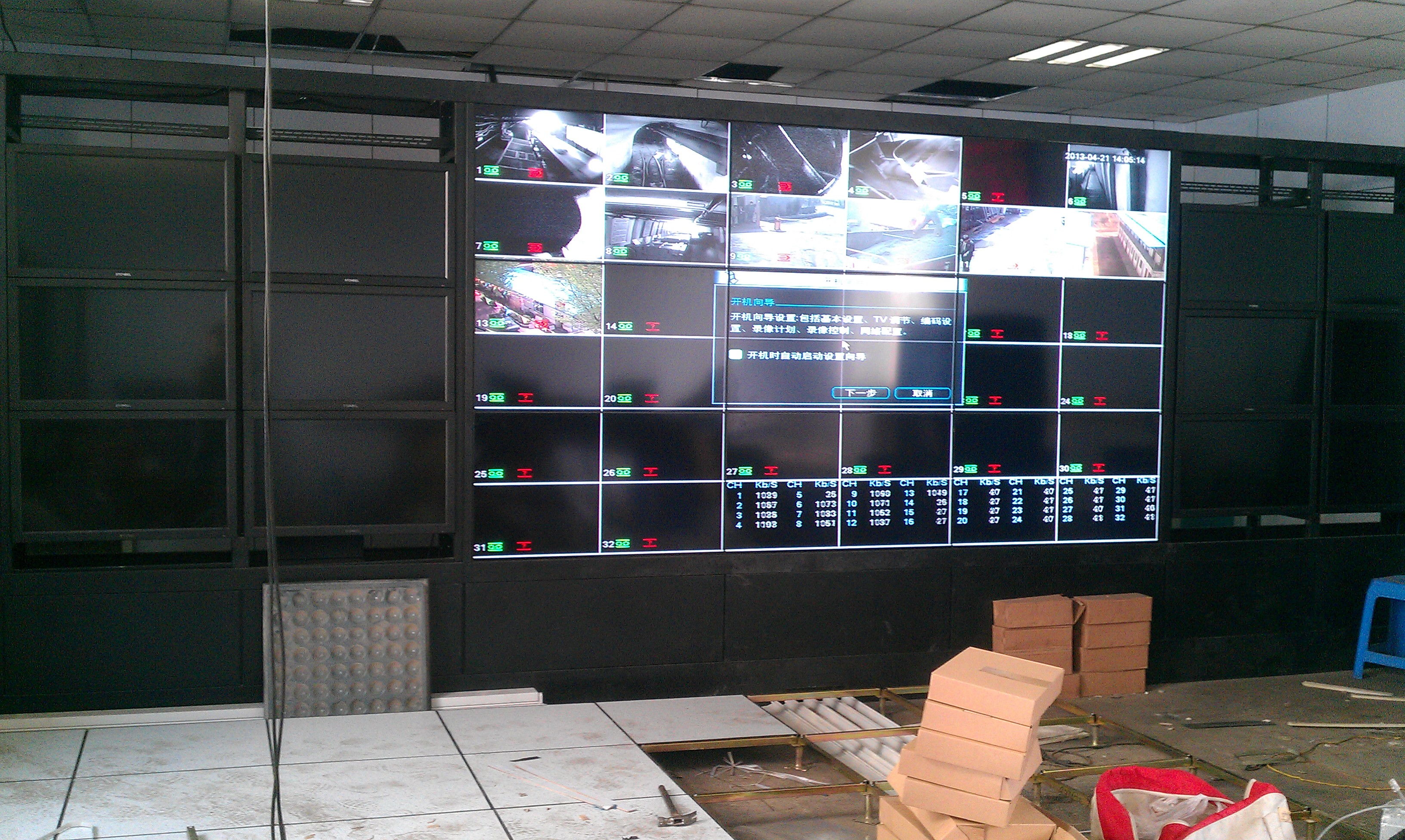
In energy center display project procurement, the first frequent misconception is equating "price per square meter of LCD video wall" with "panel unit price." Many buyers use bare panel quotes from e-commerce platforms to negotiate, overlooking that a video wall system is a complete project including controllers, mounting frames, cables, software, and installation. For example, in a classified meeting room project Stonbel participated in, the LCD video wall required built-in encrypted transmission and local storage modules, with both
Clarifying Misconceptions One by One
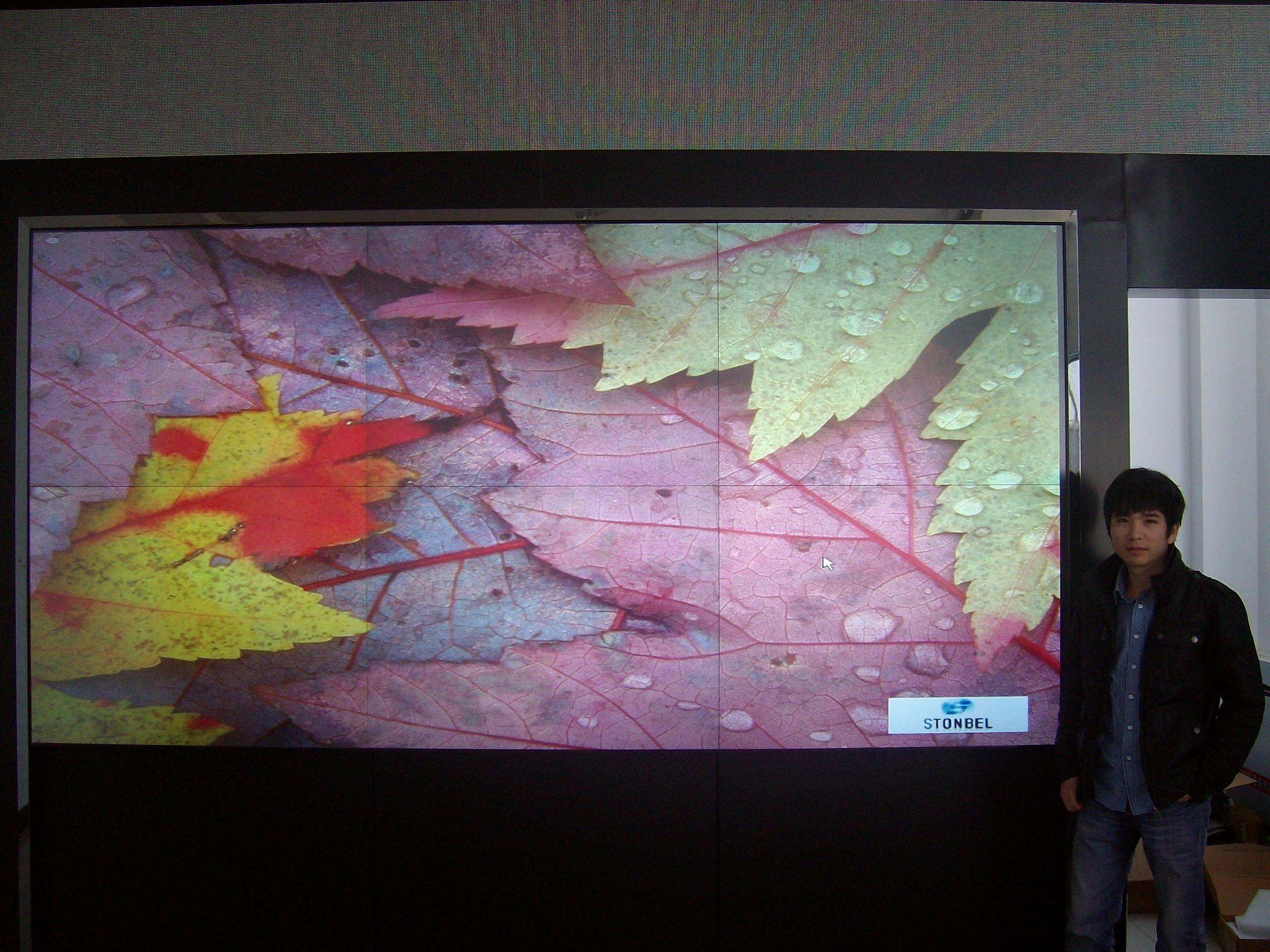
Misconception 2: Believing "higher resolution necessarily means higher price." In reality, the resolution of an energy center LCD video wall is determined by single-panel physical pixels and the number of panels—not simply that pursuing 4K is always reasonable. For instance, an energy dispatch center adopted a 5×5 configuration with 55-inch panels and 0.88mm bezel width, each panel at 1920×1080, yielding a total wall resolution of 9600×2700—sufficiently clear for power grid topology maps and real-time data streams. Blindly upgrading to higher-spec panels not only doubles the budget but may also reduce refresh rates due to signal
Correct Understanding
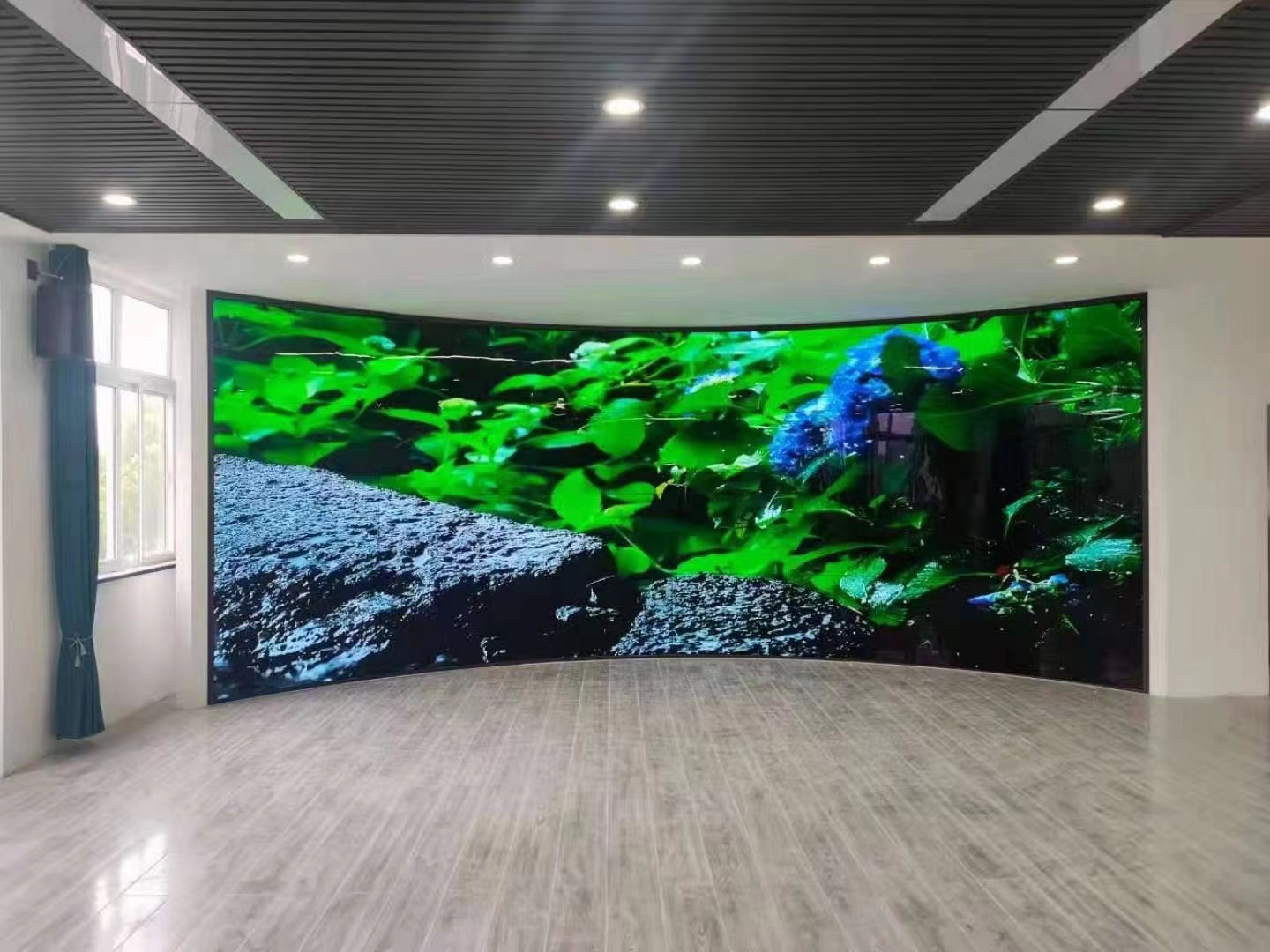
The system cost structure of an energy center LCD video wall is complex. Beyond hardware, signal processing, installation, commissioning, and maintenance services must be considered. In Stonbel's Nanjing Jiangbei New Area Construction and Operation Center project, a P1.0 COB fine-pitch LED curved screen was used (note: this was an LED solution; for LCD video walls, controllers and signal scheduling require attention), but the core logic is the same: signal scheduling chaos when multiple departments share the display was resolved through a self-developed multi-signal scheduling system. Such software platform development costs and subsequent upgrade fees must be included in the comprehensive per-square-meter cost. For LCD video walls,
Selection Recommendations
Based on the above understanding, recommendations for energy center buyers: First, clarify scenario needs—is it only for video surveillance, or does it require high-precision GIS data presentation? For the former, standard 500cd/m² brightness suffices; for strong-light environments, high-brightness versions are needed. Second, focus on bezel width and color consistency: energy centers often display long-format images across multiple screens; 0.88mm bezel width reduces visual fragmentation, while NTSC≥120% color gamut ensures uniform
Q1: How much does an energy center LCD video wall cost per square meter? Why do quotes vary greatly among manufacturers?
A: Price differences mainly stem from panel grade, bezel specifications, driver solutions, and after-sales service. Stonbel's LCD video wall supports 0.88mm ultra-narrow bezel, NTSC≥120% color gamut, and passes 3C, CE, FCC certifications—these hardware and compliance costs naturally exceed those of uncertified products. Additionally, energy center projects often require customized installation and long-term maintenance; whether the manufacturer provides resident service across 31 provinces also affects total price. For example, the China Electronics Technology Group classified meeting room project required built-in encrypted transmission and local storage modules with domestic software/hardware adaptation—such security compliance costs cannot be
Q2: For energy center LCD video walls, how does bezel width affect display quality and price?
A: Smaller bezels provide better visual continuity but incur higher manufacturing costs. Stonbel's 0.88mm bezel solution effectively reduces line-break perception when displaying energy pipeline network diagrams or large-scale data reports, improving data reading accuracy. For video surveillance walls, 1.8mm bezels may suffice at a more economical price. In the Zhejiang Radio and TV Group studio project, a 5×5 configuration with 55-inch 0.88mm panels delivered 120% NTSC color gamut for accurate color reproduction, 32-channel signal input without latency, and a 92% annual failure rate reduction—fully validating ultra-narrow bezel reliability in
Q3: Energy center environments are special—what protection certifications do LCD video walls need?
A: Energy centers may have dust, temperature/humidity fluctuations, and electromagnetic interference. Products with IP65 protection certification are recommended, along with ROHS and ISO14001 environmental certifications for material safety. Stonbel's LCD video walls simultaneously meet 3C, CE, and FCC standards, satisfying both domestic and international access requirements. For classified energy projects, verify whether equipment supports local storage and encrypted transmission to avoid backdoor risks in consumer-grade products. In the China Electronics Technology Group Electronic Science Research Institute project, the classified meeting display system featured built-in encrypted transmission and local storage modules, full domestic
Q4: What is the lifespan of an energy center LCD video wall? Are maintenance costs high?
A: LCD video walls typically have a rated lifespan of over 100,000 hours—Stonbel products are designed to this target. Actual lifespan is affected by ambient temperature, operating hours, and signal load. For 24/7 operation in energy centers, industrial-grade power supplies and thermal modules are recommended, with periodic color calibration. In the Xi'an Xianyang International Airport smart terminal project, over 400 display terminals were deployed with remote centralized management, reducing maintenance manpower by 50% and cutting flight information update delays to seconds, with passenger complaint rates dropping 70%—demonstrating that systematic maintenance extends equipment life and reduces long-term costs. Stonbel provides resident service across 31 provinces
Purchasing an LCD video wall for an energy center is a systematic decision; the per-square-meter quote is only the tip of the iceberg. True costs include panel grade, bezel technology, protection certifications, signal processing, software platforms, and lifecycle services. Stonbel, a top-10 LED display manufacturer in China, holds 3C, CE, FCC, ISO9001, ISO14001, ROHS, and military confidentiality certifications, offering one-stop solutions. Its products have proven stable in demanding environments: Zhejiang Radio and TV Group's studio saw a 92% annual failure reduction, Xi'an Xianyang International Airport cut O&M labor by 50%, and CETC confidential projects had zero data leaks. Only by aligning scenario needs with system costs can ROI be maximized. Buyers should focus on service networks, case experience, and compliance, evaluating value via total system cost divided by display area and expected lifespan. Energy center displays underpin safe production and efficient dispatch; choosing a battle-tested partner outweighs chasing low prices.