Selecting a court LED relief texture screen is a rigorous task blending visual aesthetics and engineering optics, not merely resolution. Comparing Stonbel's texture screens with COB fine-pitch displays reveals the importance of tailoring designs to different court zones' light environments. Whether the P5 texture screen for decorative integration or COB fine-pitch products emphasizing high refresh rates and protection, all should serve solemn, clear, and stable judicial information display. Users are advised to conduct on-site environmental surveys and simulations with professional manufacturers early in project planning.
Selection Logic: Starting from Ambient Light
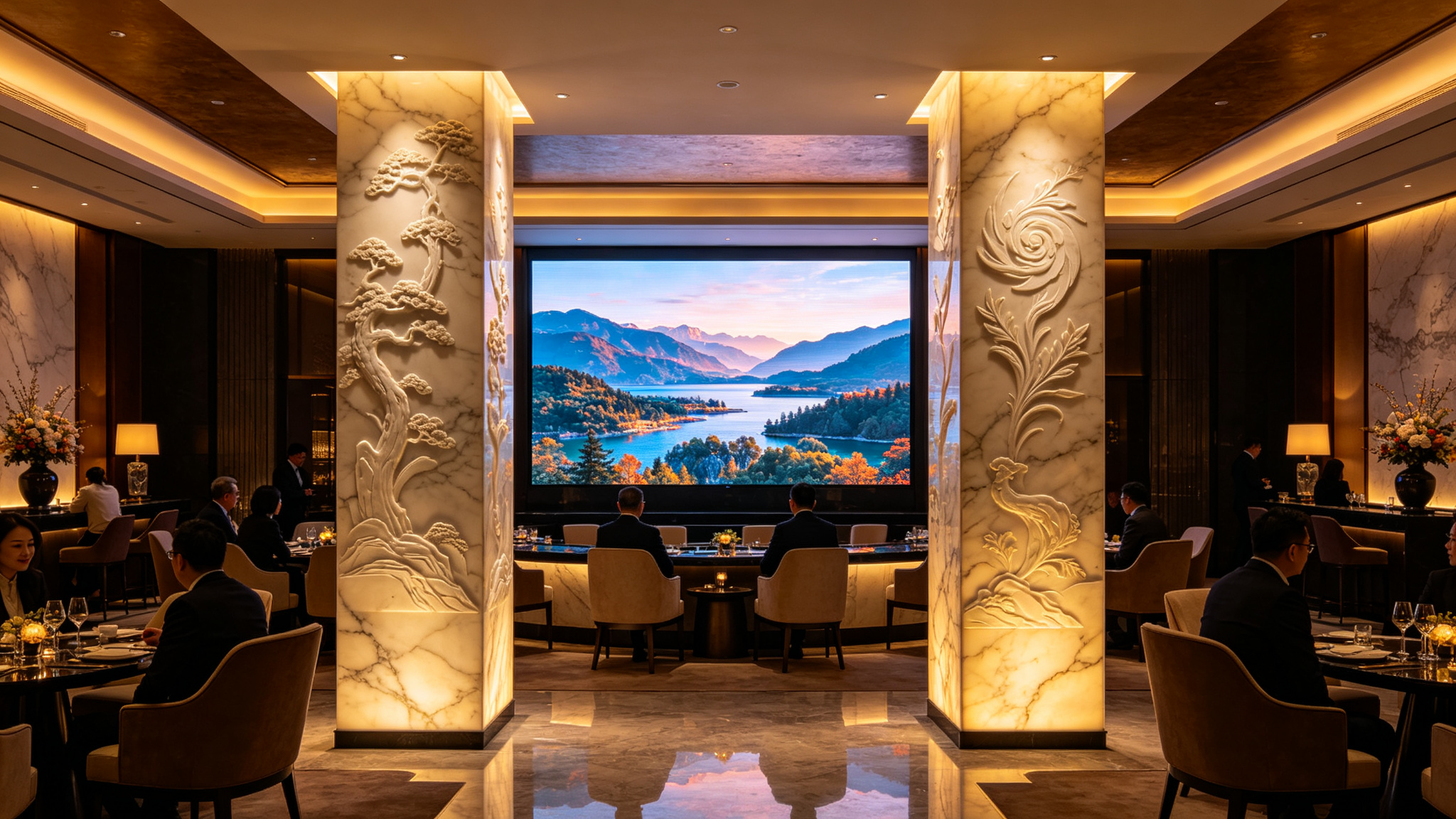
Selecting a court LED relief texture screen is not determined by a single parameter; the core lies in the optical integration of display performance with the installation environment. Lighting conditions vary significantly across court lobbies, corridors, conference rooms, and courtrooms, from low-illuminance corridors to high-brightness service halls, creating vastly different brightness requirements. If screen brightness is insufficient, content becomes hard to read in strong light; if too high, it causes light pollution in dark environments, undermining courtroom solemnity. Therefore, understanding the relationship between ambient light, screen brightness, and
Core Specs: Texture Screen vs. COB Fine Pitch
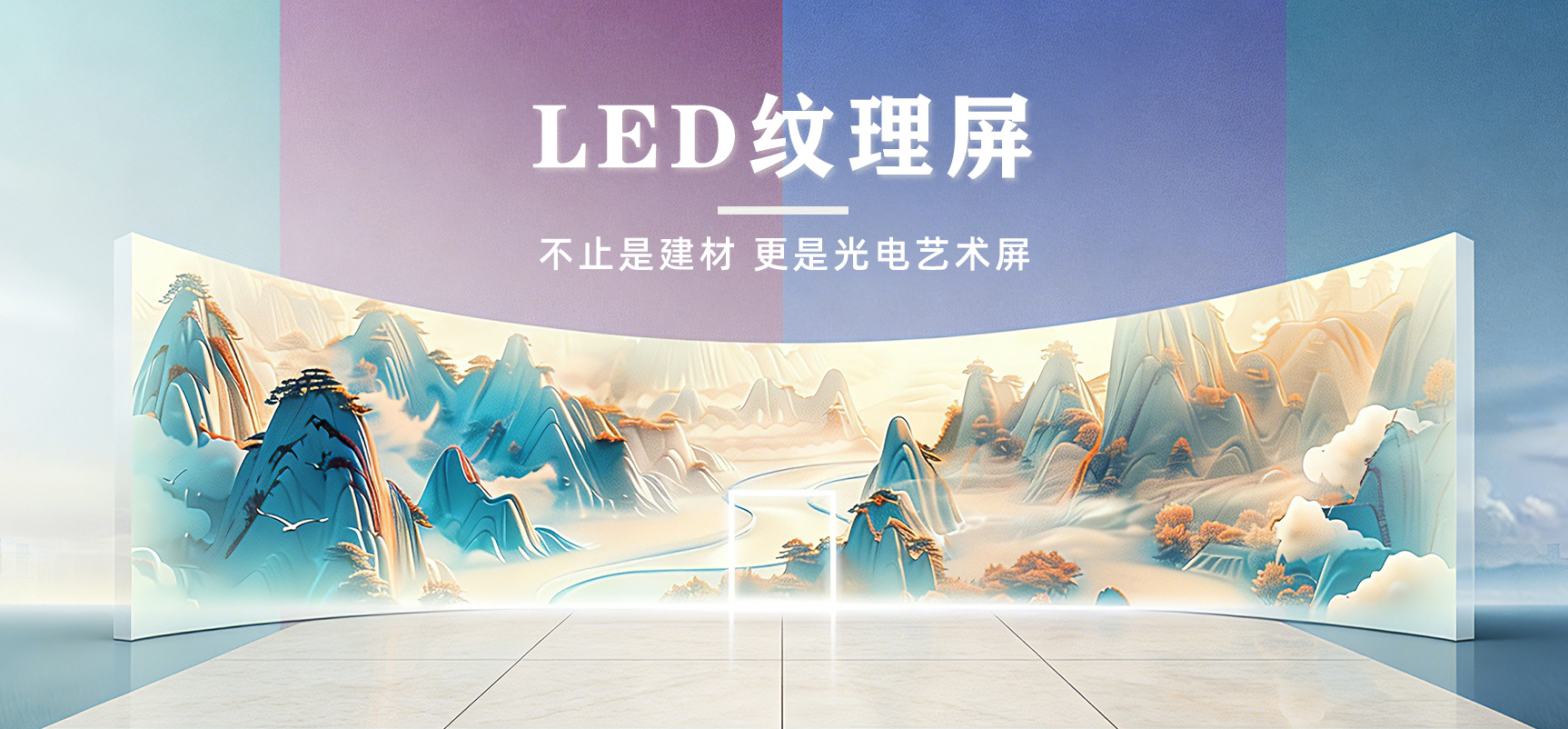
To objectively assess adaptability across court scenarios, we compare Stonbel's LED texture screen with its COB fine-pitch display. The LED texture screen, an innovative blend of decorative texture and display tech, features P5 pixel pitch and IP54 rating, focusing on tactile quality and integrated aesthetics for close viewing. The COB fine-pitch display offers a wide pitch range from P0.7 to P1.8, a 3840Hz refresh rate, IP55 protection, and over 100,000 hours of lifespan. Each excels in different core metrics, suited to various functional zones. The P5 pitch of the court LED relief texture screen dictates an optimal viewing distance of over 5 meters, fitting lobby atriums, corridor viewing, and large conference presentations. Its IP54 rating effectively resists dust and incidental water splashes in high-traffic
Recommendations: Scene-Specific Brightness, Color Temperature & Redundancy
Based on the above comparison, selection advice for court LED relief texture screens can be detailed for three typical scenarios:
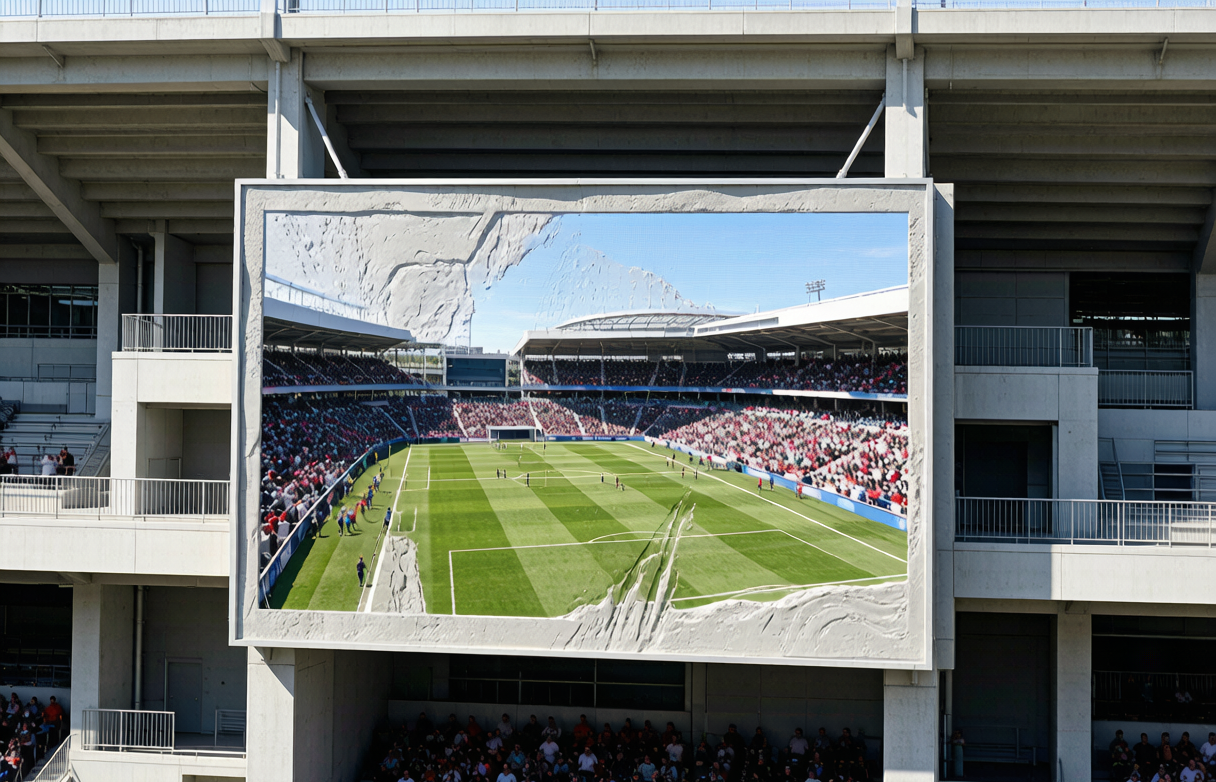
First, the court lobby and legal publicity area. This area has ample natural light and high foot traffic, serving as the court's 'facade'. We recommend the LED texture screen with brightness set to 800-1200cd/m² and color temperature matched to the lobby's neutral white light (approx. 4500K) to ensure readability under direct or diffuse sunlight. Its building-material-grade appearance (e.g., stone-like texture) blends with the wall when powered off, avoiding a stark black panel on light stone. Second, courtrooms and remote interrogation rooms. These demand high
Q1: How does brightness selection differ between court LED relief texture screens and regular LED displays?
A: The key difference lies in optical integration requirements. Regular LED screens only need content readability, while court LED relief texture screens also require decorative texture when powered off. In high-brightness areas like court lobbies (800-1200 lux), choose higher brightness models for clarity—Stonbel's LED displays support up to 7680Hz refresh rate and 22-bit grayscale, covering high-brightness needs. In courtrooms with strict lighting control (typically 300-500 lux), excessive brightness disrupts the solemn atmosphere and causes visual fatigue. Refer to our COB fine-pitch specs, customize brightness to 400-600cd/m², and use software to set auto-adjustment curves for all-day ambient adaptation. Note that the P5 pitch shows more graininess up close than fine-pitch products, so coordinate brightness with viewing distance to avoid glare.
Q2: Is a P5 LED texture screen suitable for court conference rooms?
A: P5 LED texture screens suit large court conference rooms or auditoriums with longer viewing distances. For rooms over 80 square meters with viewing distances beyond 5 meters, P5 provides a good experience, and its IP54 rating and unique texture harmonize with solemn court interiors. Optically, at 5 meters, the human eye's resolution limit is about 1.5mm/pixel; P5 (5mm) approaches retina-level clarity, meeting PPT and video conference needs. For closer viewing (around 3 meters) requiring finer detail, consider Stonbel's COB fine-pitch series (P1.2-P1.8) for sharper images—for instance, when displaying scanned evidence in remote meetings,
Q3: How should the color temperature of a court LED relief texture screen be adjusted?
A: Adjust color temperature to match the court's ambient lighting. In courtrooms or corridors with warm light sources (approx. 3000K), set the screen to a similar range (3000K-3500K) for seamless blending—a high screen temperature (e.g., 6500K) appears bluish-white under warm light, clashing with wood finishes and undermining stability. In service halls using neutral white light (approx. 4000K-5000K), increase screen temperature accordingly (4000K-4500K) for visual clarity and high contrast. Calibrate on-site with a colorimeter, keeping the difference between screen white point and ambient light within ±500K. Stonbel displays support
Q4: Is the protection rating important for court use?
A: Yes. Courts are public buildings with high traffic, frequent use, and risks from cleaning or accidental spills. Stonbel's LED texture screen has an IP54 rating, effectively preventing dust ingress and water splashes—'5' means dust-tight, '4' means splash-proof—practical for lobbies or corridors. For example, splash from wet mopping won't affect the screen. The COB fine-pitch display's IP55 rating offers stronger protection ('5' means water-jet proof), suitable for complex environments like walls near windows prone to rain seepage or condensation. Note that these ratings don't imply submersion or tolerance to prolonged high humidity; in southern rainy seasons or
Choosing a court LED relief texture screen is a systematic project integrating display technology into judicial spatial aesthetics and functional needs. From precise brightness and color temperature matching to careful protection level consideration, every step should rely on on-site ambient light data, not blind pursuit of high specs. Stonbel's P5 texture screens and COB fine-pitch product matrix cover court halls, courtrooms, meeting rooms, and corridors, backed by certifications (3C, CE, FCC, ISO14001, ISO9001, ROHS, military, confidential) and top-ten industry ranking. Proven multi-signal control and remote maintenance capabilities from projects like Huawei, Peking University, and Chengdu Government Center can be applied to live trial broadcasts and remote interrogations. Users should conduct illuminance mapping and color temperature simulations with manufacturers early, and trial installations to compare pixel pitches and brightness combinations. Stonbel's service points in 31 provinces ensure timely support for long-term stable operation.