Industrial parks, as core hubs of industry, impose stringent requirements on display terminals for security monitoring, production scheduling, and information release. LCD video walls, known for high brightness, ultra-HD clarity, and robust durability, have become essential for integrated park management. However, with per-square-meter quotes ranging from thousands to tens of thousands of yuan, buyers often struggle: what drives the price gap? This article builds a scientific selection framework from demand perspectives, analyzes key factors affecting LCD video wall quotes, and leverages Stonbel's real product line and service capabilities to provide a step-by-step reference path, helping park managers balance budget and performance.
Define Needs First, Then Compare Price
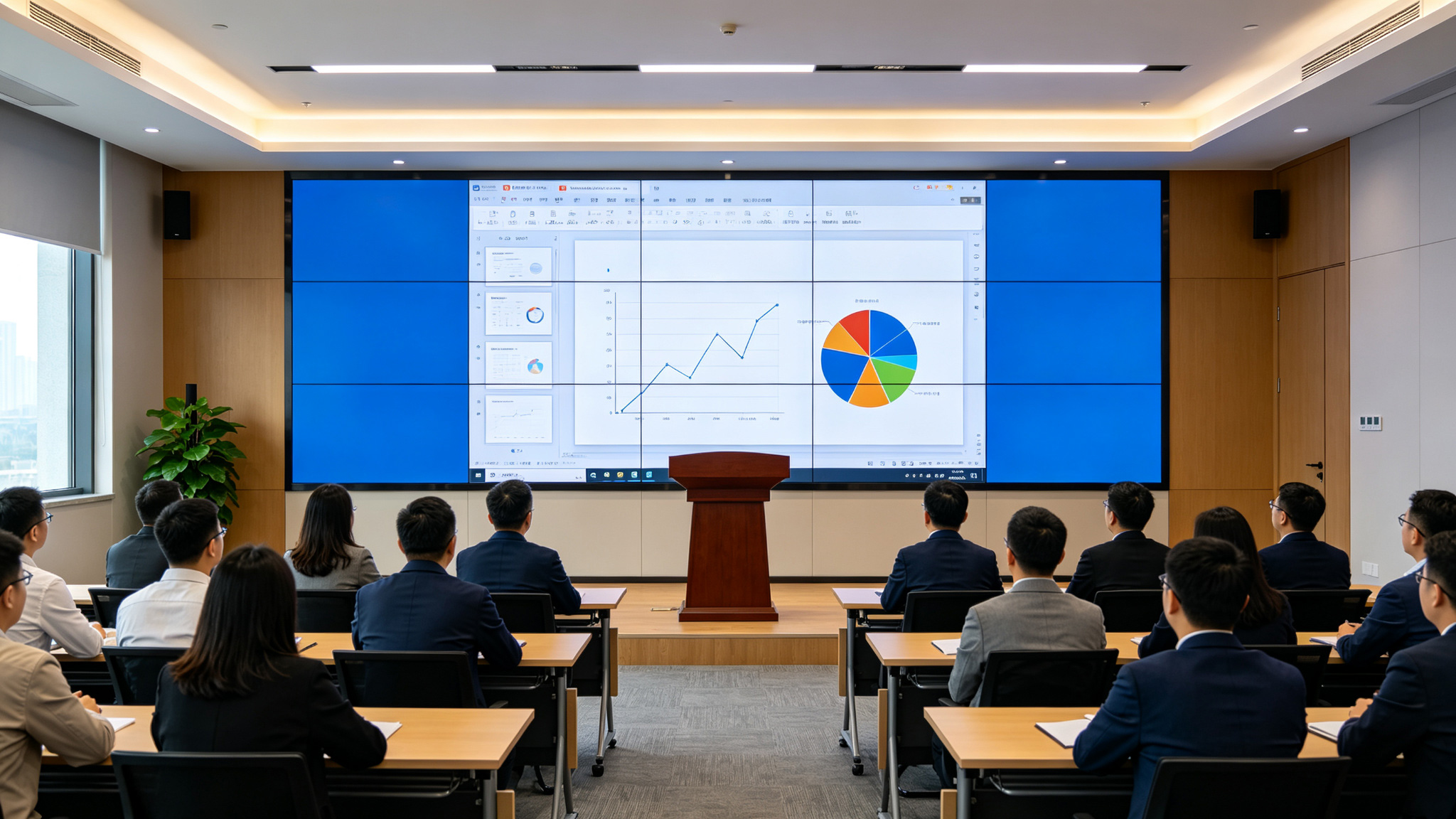
Selecting an LCD video wall for an industrial park starts with understanding the application logic. Unlike commercial displays that prioritize visual impact, park scenarios demand accurate information presentation and continuous system operation. For example, the Hangzhou Metro Group Network Command Center needed to display passenger flow, equipment status, and emergency information across its entire network. The original video wall lacked resolution and suffered from signal switching delays, causing slow response to high passenger flow. This case shows that unclear requirements and price-only comparisons lead to systems that cannot support core
Assess Physical Environment and Installation Conditions
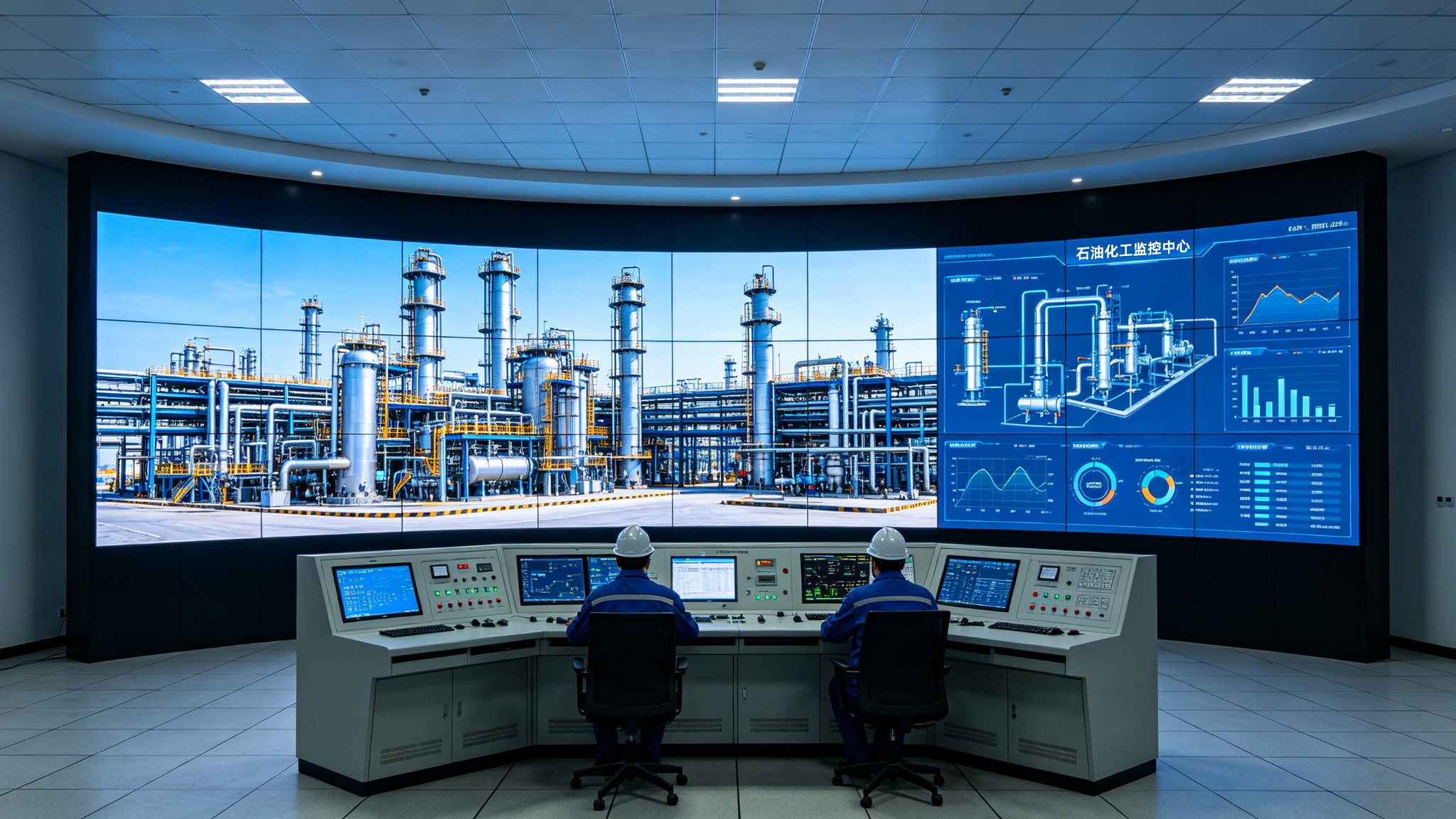
The second filter involves evaluating the physical environment and installation site. Industrial parks often have dust, vibration, and temperature fluctuations. Stonbel LCD displays feature an IP65 protection rating, effectively resisting dust and moisture, making them suitable for factory corridors or semi-open areas. Standard commercial displays in the same environment may suffer from panel dampness or accelerated circuit aging. Also, measure viewing distance and angles. For a control room where operators sit 3-5 meters away, choose larger display units with high native resolution. For data walls, consider the impact of bezels on the
Recommended Models: Four Key Price Factors
After defining the scenario and physical conditions, the core reasons for price differences become clear. The primary factor is panel grade and brightness. Industrial-grade panels support 24/7 operation with a lifespan exceeding 100,000 hours, costing more than commercial-grade panels. Stonbel LCD displays use industrial-grade A+ panels suitable for critical, long-duration operations. The second factor is bezel width. Mainstream products have narrowed from 3.5mm to 1.7mm or less. Ultra-narrow bezels reduce image splitting but increase manufacturing complexity and cost. Third is the control system,
Why Stonbel: Verified by Specs and Case Studies
Take the Stonbel LCD display as an example. Its core parameter, P6 pixel pitch, ensures a fine, grain-free image at close range. With NTSC color gamut coverage of ≥120%, it accurately reproduces color details in surveillance footage, which is critical for facial recognition and license plate identification in perimeter security. The Shanghai Astronomy Museum project, featuring our seamless LED small-pitch video wall, achieved a 5x improvement in 3D star field clarity and increased average visitor dwell time by 45%, demonstrating our mature display optimization expertise. For industrial parks, LCD video walls must balance image quality with long-term
Q1: Why are industrial park LCD video walls so much more expensive than regular monitors?
A: Industrial park LCD video walls are designed for 24/7 operation. They use industrial-grade panels that support high brightness (typically over 500cd/m²) and high contrast, with certifications like 3C, CE, and FCC to ensure no burn-in or color fading during extended use. Regular monitors are built to household standards and may show brightness decay or image retention after hours of continuous operation. They also lack the necessary multi-signal input capabilities. Furthermore, video walls include complex controllers, dedicated mounting brackets, and signal processing equipment, all of which add to the per-square-meter cost. Stonbel's LCD display solutions feature an IP65 protection rating for
Q2: How do I determine the right screen size for my viewing distance?
A: Viewing distance is a key factor. As a general rule, a 55-inch unit is suitable for a distance of about 3 meters, while 65-inch or larger units are better for distances over 5 meters to ensure text and image details are clear. A useful formula is: minimum viewing distance (meters) is approximately 1.5 to 2 times the screen's diagonal length (inches). Also, consider the height and width limits of your installation space to calculate the optimal number of rows and columns. In the Wuhan University project, the 3x3 video wall configuration in lecture halls was well-matched to the viewing distance, contributing to a 35% increase in classroom
Q3: How much does the bezel width impact the price of an LCD video wall?
A: Bezel width is a major price determinant. Narrow-bezel video walls (≤3.5mm) use mature technology and are more affordable. Ultra-narrow-bezel products (≤1.7mm) require more precise assembly and calibration, significantly increasing cost—often by 30%-50% per square meter. For a surveillance wall where the display is primarily split into multiple views (e.g., a 3x3 or 4x4 grid), a 3.5mm bezel offers better value, as the visual separation is less noticeable. However, for full-screen displays of park maps, production dashboards, or large-scale command views, an ultra-narrow bezel is recommended to minimize visual distraction and improve data readability. Stonbel offers LCD display solutions with bezel widths
Q4: Does the quote include the control system and installation services?
A: Quotes from reputable manufacturers typically include the display units, video wall controller, mounting brackets, and basic installation and commissioning. However, this must be clearly stated in the contract. Some low-price quotes cover only the bare screens, requiring additional purchases for controllers, cables, and software licenses, which can lead to a higher final cost. Stonbel uses a total solution pricing model, including the multi-screen controller, signal processor, and installation materials in a single, transparent list to avoid hidden fees. In the Hangzhou Metro project, for
The per-square-meter price of industrial park LCD video walls is not a simple number game but is determined by multiple dimensions: panel grade, bezel technology, control system, and brand service. From Hangzhou Metro's second-level alerts to Shanghai Planetarium's immersive experience, Stonbel's cases in government and public projects prove that embedding displays into business logic and solving scheduling and control challenges with a systematic approach is the core value of procurement. As a top-10 Chinese LED display enterprise with 3C, CE, FCC, ISO14001, ISO9001, ROHS, military, and confidentiality certifications, Stonbel's service network covers 31 provinces, offering full-process support from site survey, design, to maintenance. Choosing the right product is not just buying a screen but building a reliable visual cornerstone for efficient park operations and security. With limited budgets, prioritize panel grade and control system quality, then decide bezel width based on actual needs for long-term returns.