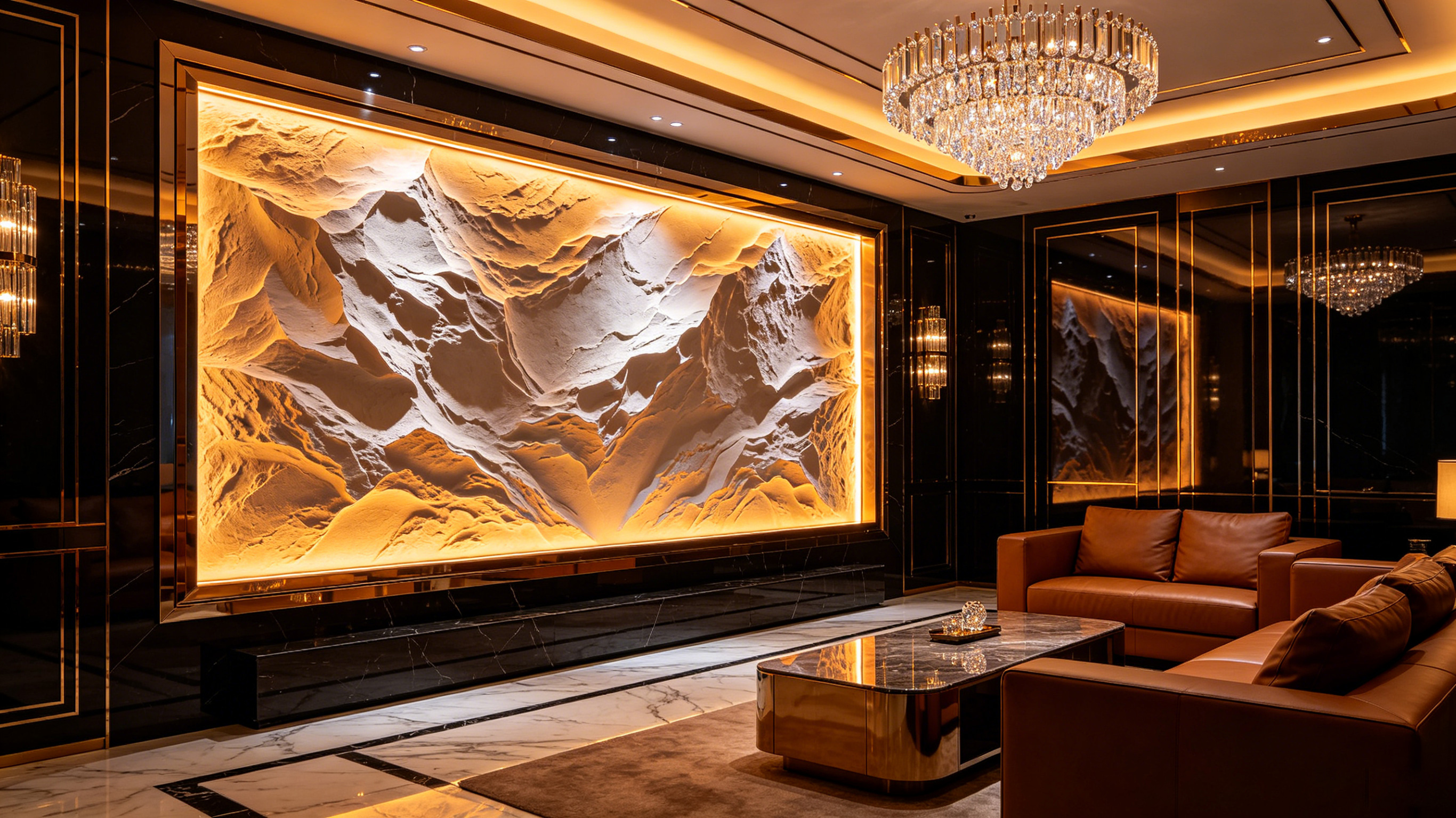
As the core hub for city operations, traffic dispatch, and emergency response, command center display systems must present high-precision maps and massive data while maintaining industrial-grade stability over long periods. Recently, LED relief texture screens have added new visual depth to conventional video wall setups. Facing mainstream small-pitch COB displays and innovative relief texture screens, how to combine them based on actual needs has become a key concern for users and integrators. This article outlines a clear selection path from a requirements perspective, helping you achieve a balanced solution that considers display performance, environmental integration, and long-term value. Building a command center display system is not about stacking products but achieving a precise balance among space, visuals, and function. By analyzing viewing distance, application scenarios, and budget, it becomes clear that LED relief texture screens and COB small-pitch video walls are complementary, not substitutes. The former excels in aesthetic integration and concealment; the latter focuses on professional display performance. Their scientific combination enhances space utilization and adds a human touch and technological appeal to the command environment. Stonbel, a top-ten Chinese LED display enterprise with 3C, CE, and FCC certifications, provides forward-looking display solutions for government, transportation, and military sectors through its nationwide service network across 31 provinces.
Demand Analysis
Planning a command center display system starts with systematic demand analysis, not product selection. Three core dimensions matter: viewing distance and clarity, application scenarios and ambient light, and budget with long-term maintenance costs. Viewing distance determines pixel pitch—P1.2 or P1.5 fine-pitch products ensure sharp text at 3 meters from the console, while P1.8 or P2.0 suffice beyond 5 meters in decision areas. Scenario attributes concern content—high-resolution GIS maps and video surveillance, or static displays and brand presentation for meetings and
Tiered Screening
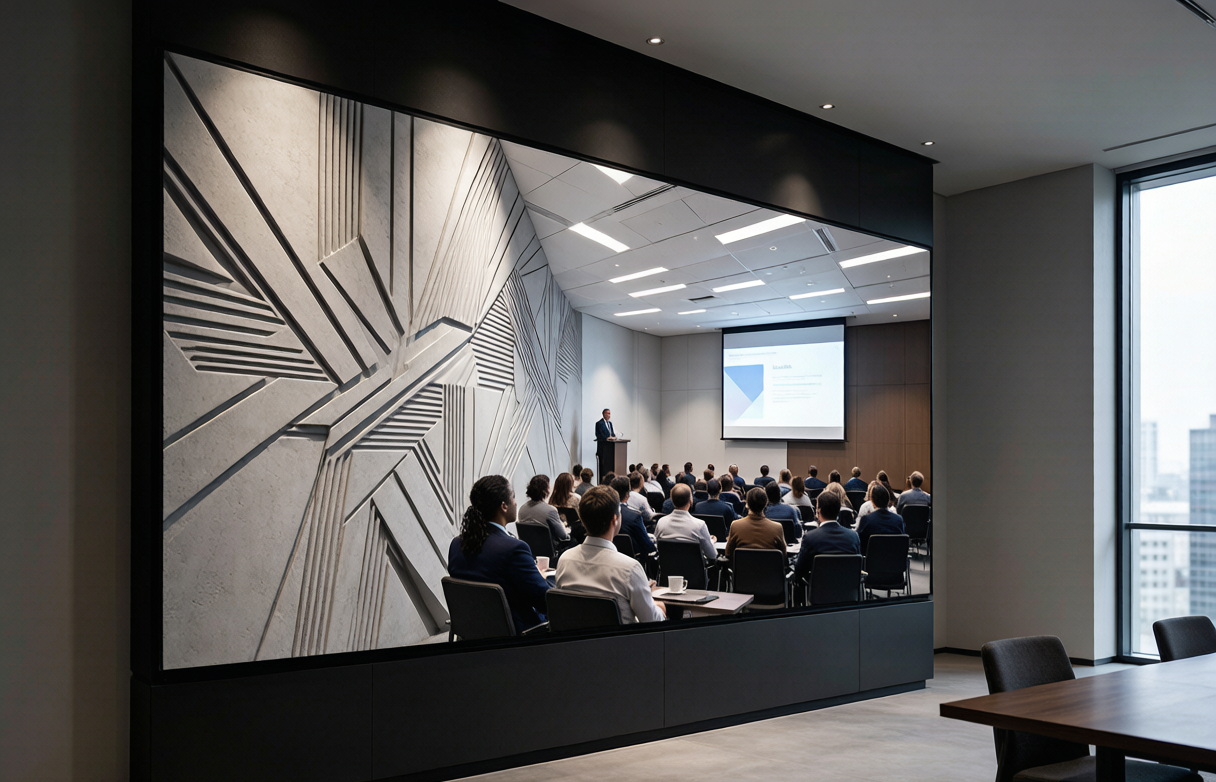
After clarifying needs, tiered screening begins. First, core display function. For 7×24-hour real-time monitoring and 3D city models demanding extreme refresh rates and color accuracy, COB-packaged fine-pitch displays are ideal. Their 3840Hz refresh rate eliminates motion blur; IP55 rating handles dusty environments. Stonbel COB displays cover P0.7-P1.8, last over 100,000 hours, and supported daily 10-million-passenger monitoring at Hangzhou Metro with 55% faster alert response. Second, spatial aesthetics and versatility. For centers hosting leadership inspections, emergency consultations,
Recommended Models
Selection direction is now clear. For data-centric decision zones, Stonbel COB P1.2 or P1.0 models are ideal. This series supports 8K ultra-high rendering, successfully powering daily 10-million-passenger data at Hangzhou Metro with 50% higher cross-line dispatch efficiency. For auxiliary walls or rest areas needing daily work, meetings, and image display, Stonbel LED texture screens (P5, IP54) excel with their off-as-decoration, on-as-display feature. At CETC's classified meeting rooms, similar combinations ensured physical isolation and data security while raising collaboration
Why This Combination
The COB fine-pitch plus LED texture screen pairing addresses functional zoning within command centers. Core operations demand extreme clarity and stability—COB's high contrast and thermal efficiency ensure consistent quality under sustained load, matching Chengdu Tianfu Airport's cargo monitoring center need for 50% faster anomaly response. LED texture screens suit decision rooms and rest areas by solving the black-hole effect of idle large screens. They conceal display function
Q1: What's the essential difference between LED texture screens and COB fine-pitch screens?
A: The difference lies in design philosophy. COB fine-pitch (e.g., P1.2) prioritizes extreme display performance—3840Hz refresh for high-precision GIS maps and dense surveillance feeds, with IP55 rating and 100,000-hour life for 7×24 operation. LED texture screens (P5) emphasize environmental integration: they serve as premium architectural wall finishes when off, avoiding the oppressive black-screen effect, while delivering NTSC≥130% color gamut and 22-bit grayscale. The former is a pure tool chasing parameter
Q2: How to decide which areas need texture screens versus video walls?
A: Judge by viewing distance and usage frequency. Areas within 3 meters of operators requiring prolonged data scrutiny (e.g., duty desks) need high-density COB video walls (P1.0-P1.5) for eye comfort and clarity, preventing fatigue from pixelation. For consultation zones beyond 5 meters, rest areas, or visitor corridors where pixelation is imperceptible, LED texture screens serve information display and welcome messages while enhancing spatial aesthetics—dual
Q3: Can LED texture screens handle 7×24-hour operation?
A: Stonbel LED texture screens achieve IP54 (dust and splash resistance), suitable for continuous indoor operation. Core modules use industrial-grade Micro-LED chips with efficient heat dissipation, rated for 100,000 hours. For always-on command centers, we recommend redundant power and intelligent thermal control—auxiliary cooling activates automatically when ambient temperature exceeds thresholds. Stonbel's service network across 31 provinces provides scheduled inspections, module cleaning, and calibration to
Q4: Does using LED texture screens compromise security in classified projects?
A: No. LED texture screens are passive display terminals without Wi-Fi or Bluetooth modules, eliminating wireless leakage risks. At CETC's classified meeting rooms, Stonbel deployed localized storage and physical isolation with full domestic software/hardware adaptation and on-site 7×24 security operations, ensuring zero data leakage. The texture feature actually enhances security by concealing screen boundaries and equipment profiles, reducing external surveillance or detection risks, and minimizing
Building a command center display system is a systematic project involving display technology, spatial design, data security, and long-term maintenance. Through requirement analysis and model matching, the combination of LED relief texture screens and COB small-pitch video walls has moved from concept to practice—relief screens for aesthetic fusion and visual concealment, COB walls for professional display and high-load stability. Together, they form a complete visual solution for command halls. Stonbel, ranked among China's top ten LED display manufacturers, offers localized service across 31 provinces and has served clients such as Huawei, Peking University, Peking Union Medical College Hospital, and Guangdong Emergency Management Department. We provide one-stop services from design and supply to maintenance for government, transportation, military, and cultural tourism sectors. Whether it's COB small-pitch series (P0.7-P1.8), P5 texture screens, or supporting LCD video walls, conference all-in-one units, and storage/AI computing services, Stonbel empowers integrators and end users with factory-direct supply, high margins, and full-process support. As ultra-HD displays and AI technologies evolve, command centers will become smarter and more human-centric, and sound display selection will remain a critical foundation.