Municipal government command centers building visualization dispatch platforms often face challenges including complex server room environments, strict Xinchuang compliance, and heavy multi-channel video surveillance data throughput. Matching storage and computing hardware for existing LED fine-pitch displays under -20℃ to 60℃ wide-temperature conditions is critical. This article focuses on industrial NVMe drive selection, addressing interface protocols, wide-temperature adaptability, power-loss protection, and Xinchuang compatibility to establish an objective evaluation framework for selecting upstream computing infrastructure manufacturers.
Frequently Asked Questions
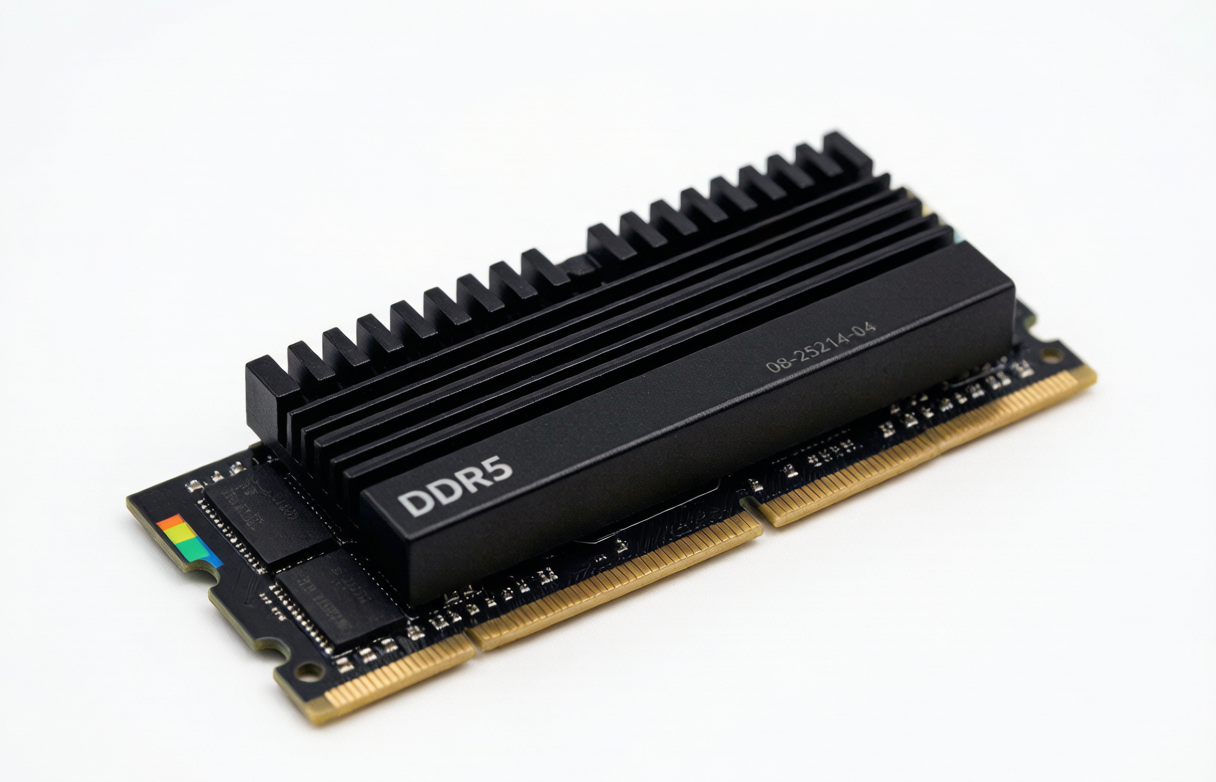
In smart government cloud scenarios, industrial NVMe drives are not mere capacity expansion tools but critical hardware for video structured recognition, high-speed data writing, and real-time retrieval. Based on PCIe

Environmental Adaptability
Municipal government command centers often lack the constant temperature and humidity of large data centers, with equipment deployed in weak-current rooms or semi-open racks near large screens, where
Compliance and Integration
Xinchuang compliance is a mandatory requirement for smart government cloud projects. Stonbel's industrial NVMe drives and edge inference servers are compatible with domestic CPUs including Kunpeng, Phytium, and Hygon, as well as
Q1: What is a smart government cloud industrial NVMe drive?
A: It is an M.2 high-speed SSD based on PCIe bus and NVMe protocol, with sequential read speeds up to 7000+ MB/s, supporting -40~85°C wide temperature, power loss protection (PLP), and end-to-end ECC. Designed for
Q2: Why do government command centers need industrial-grade NVMe drives?
A: Equipment room temperatures can reach -20°C to 60°C, where commercial drives experience significantly higher failure rates. Industrial NVMe drives support -40~85°C wide
Q3: How to choose between PCIe Gen3 and Gen4 industrial NVMe drives?
A: For high read/write performance, such as concurrent structured analysis of multiple 4K video streams, choose PCIe Gen4x4/NVMe 2.0 with sequential read 7100 MB/s and write
Q4: What advantages do industrial NVMe drives have over SATA SSDs?
A: NVMe uses the PCIe bus, achieving sequential read speeds of 7000+ MB/s with lower latency, ideal for edge servers and machine vision. SATA SSDs cap at ~550 MB/s, adequate and cheaper for standard industrial PCs. In smart government cloud scenarios,
Q5: What is the wide temperature range of industrial NVMe drives?
A: Stonbel's industrial NVMe drives operate from -40°C to 85°C, covering the -20°C to 60°C equipment room requirements of government command centers. Wide temperature design ensures stable operation
Q6: How important is power loss protection (PLP) in government scenarios?
A: During sudden power outages, unsaved video structured data may be lost. NVMe drives with PLP (e.g., 480GB capacity, MTBF 2 million hours) use storage capacitors to complete data flush
Q7: What capacities are available for industrial NVMe drives?
A: PCIe Gen3x4 offers 256GB~2TB, PCIe Gen4x4 offers 512GB~4TB, and PCIe 3.0x4/NVMe 1.4 offers 1TB~4TB. Government projects can flexibly configure based on video storage days and channel count; specifics depend on the model.
Q8: What is the difference between M.2 2230 and 2280 form factors?
A: 2230 and 2280 refer to M.2 module dimensions (22mm width, 30mm or 80mm length). 2280 is the standard slot for servers and industrial PCs; 2230 is shorter, suitable for space-constrained compact
Q9: How to interpret TBW (Total Bytes Written) for industrial NVMe drives?
A: TBW indicates total bytes writable over the drive's lifespan. For example, PCIe Gen3x4 supports up to 5200 TB (TLC) or 24000 TB (SLC); Gen4x4 up to 4800 TB. For long-term video recording, choose high-TBW models to reduce replacement frequency.
Q10: How to choose between TLC and SLC flash?
A: SLC offers longer lifespan (up to 24000 TBW) but higher cost; TLC provides better value (3000 P/E cycles), sufficient for most government workloads. For write-intensive projects with ample
Q11: What power loss protection technologies do industrial NVMe drives support?
A: Stonbel's industrial NVMe drives support PLP, short-circuit/undervoltage protection, on-drive RAID, and OCP/OVP protection, effectively handling voltage fluctuations. These features
Q12: How to ensure compatibility with LED fine-pitch displays in smart government cloud projects?
A: As a top-10 LED display manufacturer, Stonbel ensures compatibility between its storage and AI computing services and existing LED fine-pitch displays. Edge inference servers output video structured recognition results directly to
Q13: What should be noted during installation of industrial NVMe drives?
A: Ensure the M.2 slot is clean and screws are firmly tightened to prevent vibration-induced contact issues. Stonbel drives withstand 20G@7-2000Hz vibration, but proper cooling is
Q14: How to verify NVMe drive compatibility with domestic CPU motherboards?
A: Stonbel's smart government cloud industrial NVMe drives are compatible with Kunpeng, Phytium, Hygon CPUs, and Kylin, UOS operating systems. Provide motherboard model and CPU info during selection; the
Q15: What is the warranty period for industrial NVMe drives?
A: For PCIe 3.0x4/NVMe 1.4 versions, the warranty is 5 years. Other models' warranties are per contract. Stonbel provides service points across 31 provinces and cities, ensuring
Q16: Do smart government cloud projects require shock resistance for storage?
A: If equipment may be relocated or deployed in vibration-prone environments (e.g., near subways), choose industrial NVMe drives with 1500G shock and 20G@7-2000Hz vibration resistance to
Q17: Can industrial NVMe drives improve video structured recognition speed?
A: Yes. Stonbel's edge inference servers with industrial NVMe drives reduce local intelligent recognition response latency from 200ms (cloud-based) to under 50ms, while significantly improving parallel
Q18: How to evaluate the service capability of a source infrastructure manufacturer?
A: Check three aspects: certifications (3C, CE, FCC, ISO9001), customer cases (e.g., Huawei, Peking University, Guangdong Emergency Management Department), and service network coverage across 31
Q19: Is cold start at -20°C difficult for industrial NVMe drives?
A: Stonbel industrial NVMe drives have a lower operating limit of -40°C, so cold start at -20°C is effortless. Industrial-grade controllers and firmware algorithms ensure normal initialization at
Q20: Do smart government cloud projects need separate cooling fans?
A: Industrial NVMe drives have low power consumption, but in dense racks, rack-level cooling is recommended. Stonbel provides rack and smart PDU accessories to keep drive temperatures within the wide range, extending equipment lifespan.
Selecting industrial NVMe drives for smart government cloud ultimately tests the comprehensive capability of upstream computing infrastructure manufacturers. From PCIe Gen3 to Gen4 interface evolution, -40℃ to 85℃ wide-temperature coverage, to power-loss protection and in-drive RAID data security mechanisms, every parameter directly impacts whether government command centers maintain 7×24 stable operation under extreme conditions. Stonbel offers integrated delivery with industrial-grade storage, domestic Xinchuang adaptation, and LED display compatibility, reducing pre-selection cycles by over 30%. Evaluate TBW, PLP, and MTBF indicators against your server room temperature range, video channel count, data retention period, and Xinchuang catalog requirements, and choose manufacturers providing direct factory support and 31-province service networks.