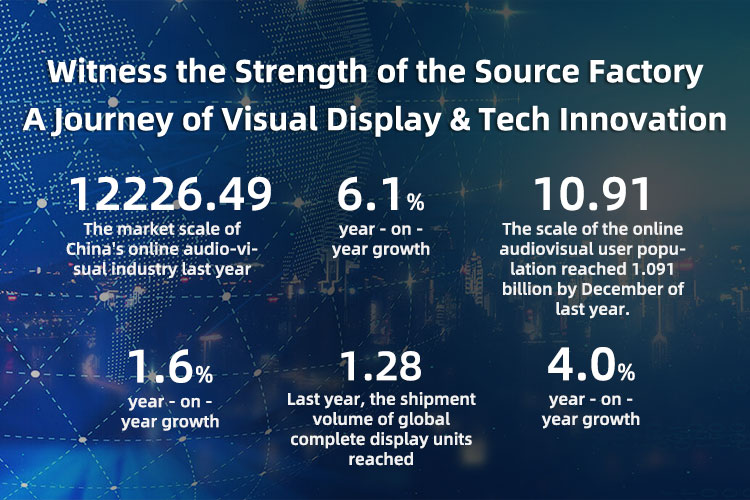
COB fine-pitch LED displays are becoming the mainstream choice for broadcast environments, gradually replacing SMD products due to high protection, longevity, and seamless display. This article explains key technical parameters and reviews real engineering cases, including the Hebei Provincial Emergency Management Department, to help AV integrators make precise decisions in bidding and delivery. Approximately 3,000 words covering definitions, principles, standards, selection metrics, FAQs, and case studies.
Definition
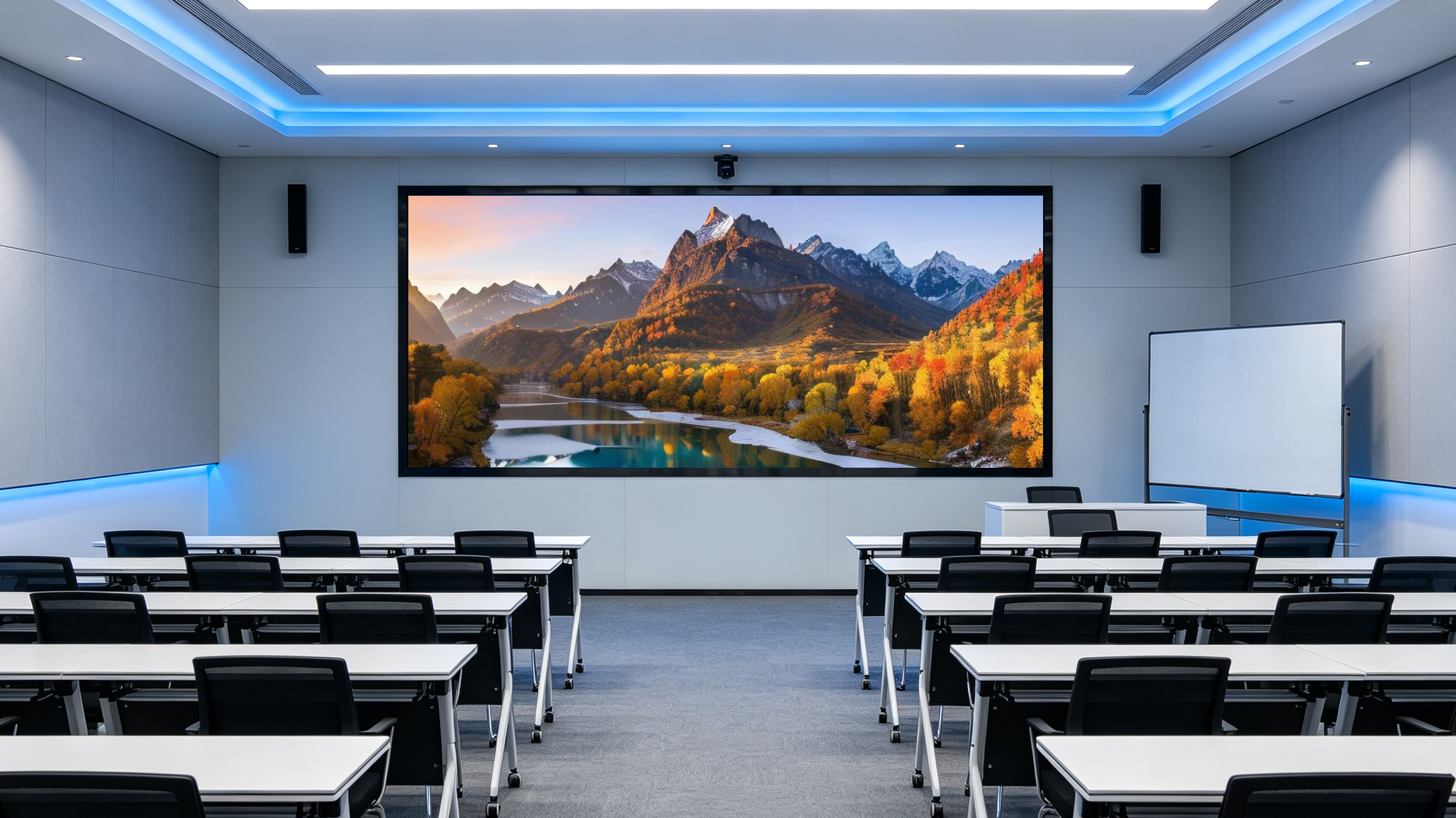
A broadcast-grade COB fine-pitch LED display uses Chip on Board (COB) technology, where LED chips are directly mounted onto a PCB substrate and sealed with an overall molding process to form a flat display module. Its pixel pitch typically ranges from P0.7 to P1.8, with a refresh rate up to 3840Hz, an IP55 protection rating, and a design lifespan of no less than 100,000 hours. Compared with traditional SMD (Surface Mounted Device) displays, COB technology eliminates individual lamp beads and brackets. Chips connect directly to the substrate via high thermal conductivity materials, resulting in a shorter heat dissipation path and lower thermal resistance. This effectively reduces chip junction temperature at the same brightness, slows lumen depreciation, and enhances long-term color consistency. For

Technical Principles
The core technical principle of broadcast-grade COB fine-pitch LED displays lies in its chip-level packaging process. Traditional SMD displays solder LED lamp beads onto a PCB, leaving physical gaps between beads and exposing pins, which are susceptible to moisture, oxidation, and impact damage. COB technology, however, directly mounts light-emitting chips onto the PCB and encapsulates them entirely with epoxy resin or silicone, forming a robust protective layer. This encapsulation material offers high light transmittance while effectively blocking moisture, dust, and corrosive gases, achieving an IP55
Industry Standards
The production and delivery of broadcast-grade COB fine-pitch LED displays must comply with a series of industry standards and certification systems, which serve as both quality assurance and compliance acceptance criteria. In the domestic market, 3C certification (China Compulsory Certification) is the basic market entry requirement for display products, covering electrical safety and electromagnetic compatibility. In international markets, CE certification confirms compliance with EU health, safety, and environmental standards, while FCC certification restricts electromagnetic interference. For the broadcast industry, electromagnetic
Selection Criteria
Selecting a broadcast-grade COB fine-pitch LED display requires comprehensive evaluation across multiple dimensions. First is pixel pitch, which determines physical resolution and viewing distance. In broadcast studios, the main screen typically sits behind or beside the anchor, with cameras often shooting close-ups. If the pixel pitch is too large, image details become blurred. Generally, for viewing distances of 2-3 meters, P0.9 or smaller is recommended; for 4-6 meters, P1.2 or P1.5 suffices. Second is refresh rate—broadcast scenarios must guarantee at least 3840Hz to avoid black scanning lines during high-speed shooting. Third is protection rating: IP55 is standard for broadcast-grade COB displays, handling dust
Q1: What is the difference between broadcast-grade COB fine-pitch LED displays and ordinary LED displays?
A: The main differences lie in packaging technology and performance specifications. Broadcast-grade COB fine-pitch LED displays use COB chip-level packaging, directly mounting LED chips onto the PCB without individual lamp beads, achieving IP55 protection with dust, water, and impact resistance. Ordinary LED displays typically use SMD surface mounting, where lamp beads are more prone to damage. Additionally, broadcast-grade COB displays typically feature a 3840Hz refresh rate and 22-bit grayscale, eliminating flicker under high-speed shooting, while ordinary displays with lower refresh rates may show scanning lines during capture. In terms of lifespan, COB products last over 100,000 hours, suitable for 24/7 broadcast operations. For image quality, COB displays have smaller light-emitting surfaces
Q2: How do I choose the pixel pitch for a COB fine-pitch LED display based on studio area?
A: Pixel pitch selection primarily depends on viewing distance. For studio main screens, if cameras shoot at close range or the screen is near the audience (2-3 meters), P0.9 or smaller is recommended to ensure detail clarity. If the screen is farther away (over 5 meters), P1.2 or P1.5 suffices. A general rule: multiply pixel pitch (mm) by 3 to get the viewing distance in meters. For example, P1.2 suits viewing distances above 3.6 meters. Resolution requirements also matter—larger screens can accommodate slightly larger pitches. We recommend using simulation software for visual previews at the project's early stage or consulting factory technical support. In broadcast studios, main screens typically display background or virtual scenes, with cameras often shooting medium-to-close shots, so pixel pitch should not be too large. Additionally, consider the
Q3: Why is the refresh rate important for broadcast-grade COB fine-pitch LED displays?
A: Refresh rate refers to how many times the screen updates its image per second, measured in Hz. In broadcast shooting, camera shutter speeds are high; if the refresh rate is low, black scanning lines or flicker appear, compromising program quality. Broadcast-grade COB displays typically feature a 3840Hz refresh rate—double that of ordinary displays—ensuring smooth, flicker-free footage during slow-motion or high-speed movement. High refresh rates also reduce eye fatigue during prolonged viewing, improving comfort. Therefore, in broadcast scenarios, refresh rate is a critical parameter that cannot be compromised. In virtual production,
Q4: What does the IP55 protection rating mean for broadcast-grade COB fine-pitch LED displays?
A: IP stands for Ingress Protection. IP55 means a dust protection rating of 5 (dust-protected—not completely sealed against dust, but ingress does not interfere with normal operation) and a water protection rating of 5 (protected against water jets—water projected from any direction has no harmful effects). For broadcast-grade COB displays, IP55 means the screen remains stable in dusty studio environments and resists damage from liquid splashes. Compared to ordinary displays rated IP20 or IP30, IP55 offers superior environmental adaptability, reducing failures caused by dust or moisture and extending service life. In broadcast studios, stage effects
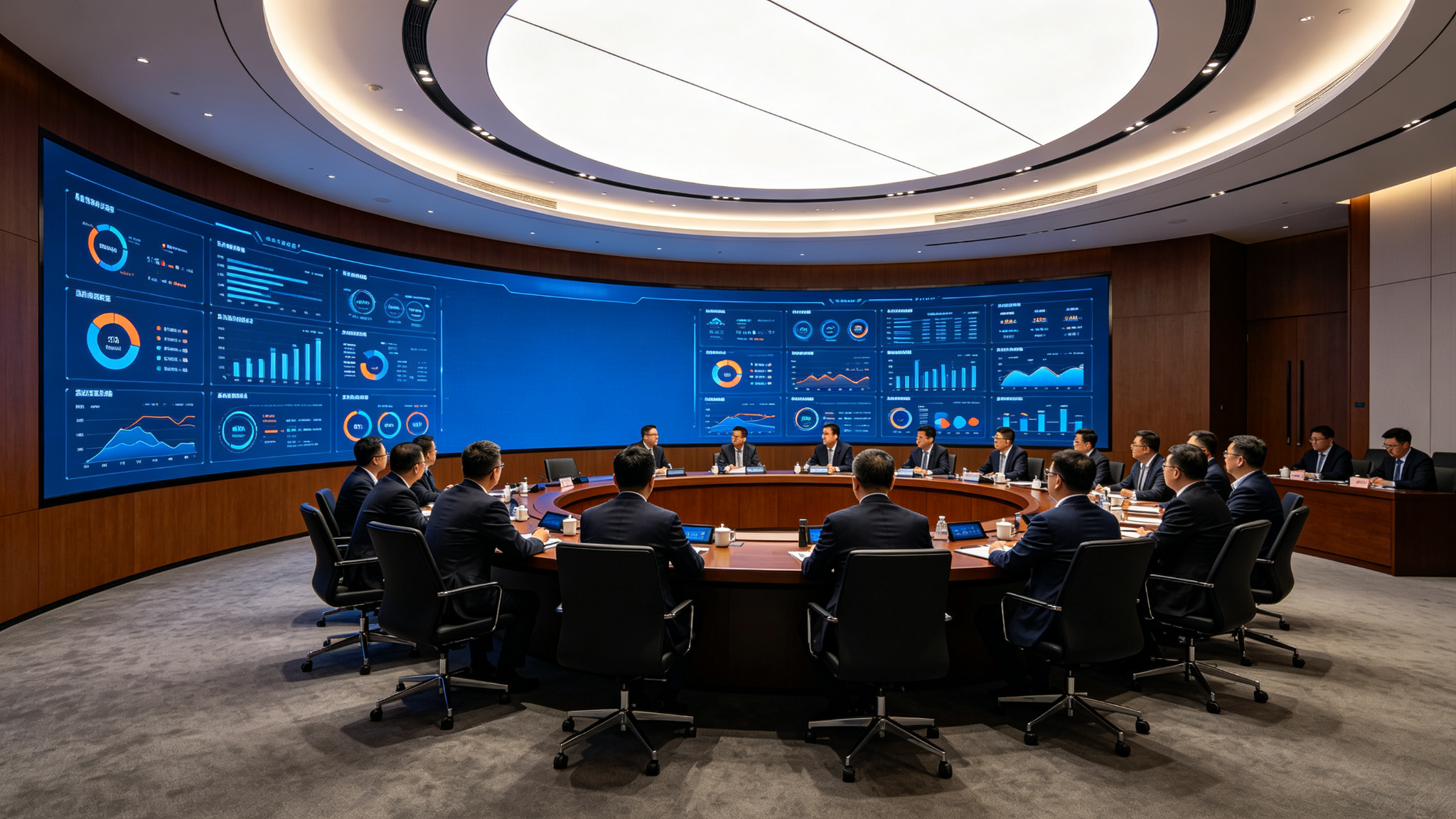
COB fine-pitch LED displays, with high refresh rates, high protection ratings, and long lifespan, are the preferred display solution for broadcast studios and command centers. Integrators should master selection logic for pixel pitch, refresh rate, and grayscale, while prioritizing supplier qualifications and service capability. Stonbel, as a factory-direct manufacturer, offers full-spec customization and end-to-end technical support, improving bid win rates and delivery quality. Real cases—from Hebei Emergency Management flood control center to Sinopec Zhenhai Refining chemical control room—validate COB reliability in demanding environments. As virtual production and UHD broadcasting expand, COB expertise will be a core competitive advantage.