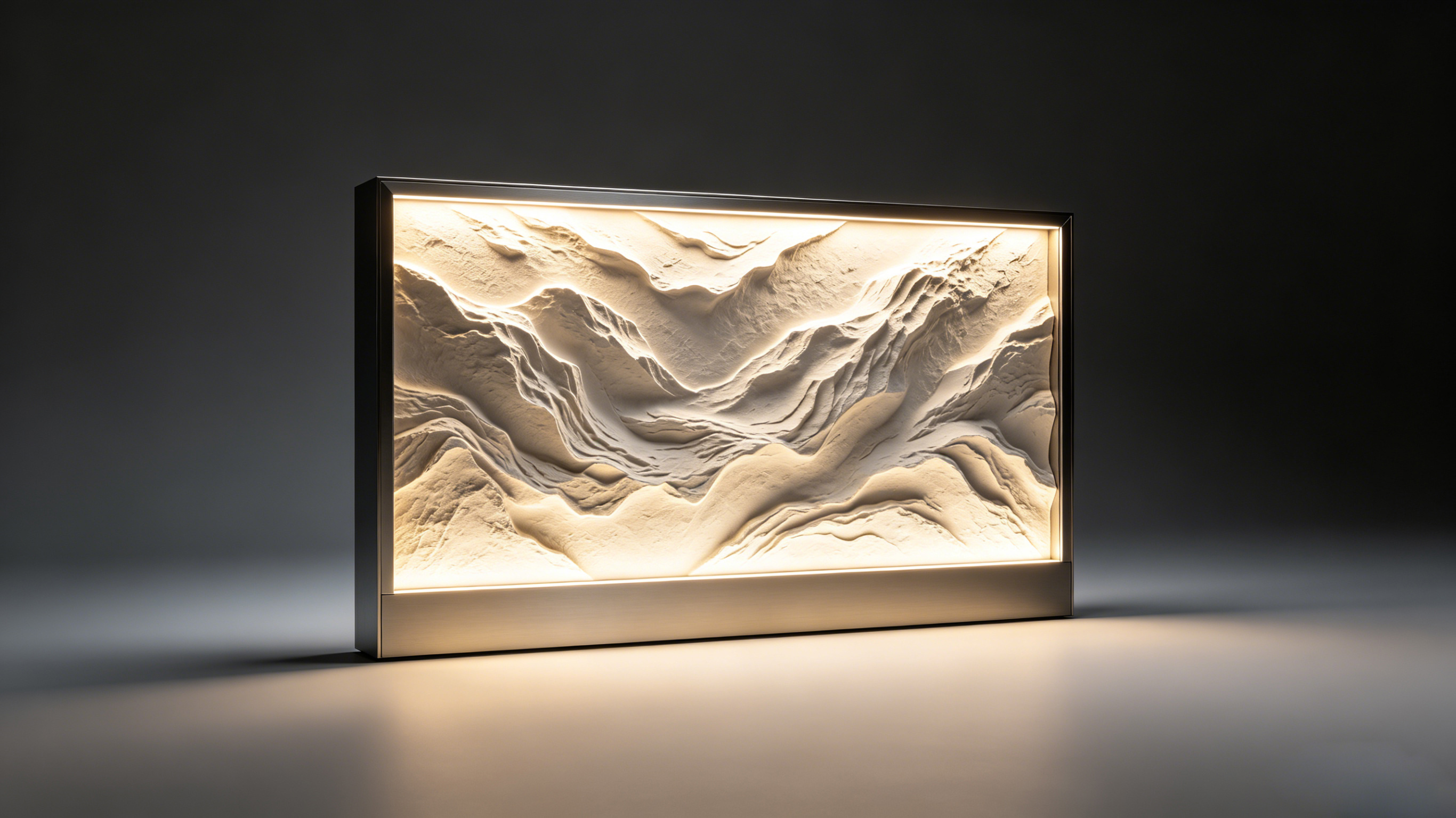
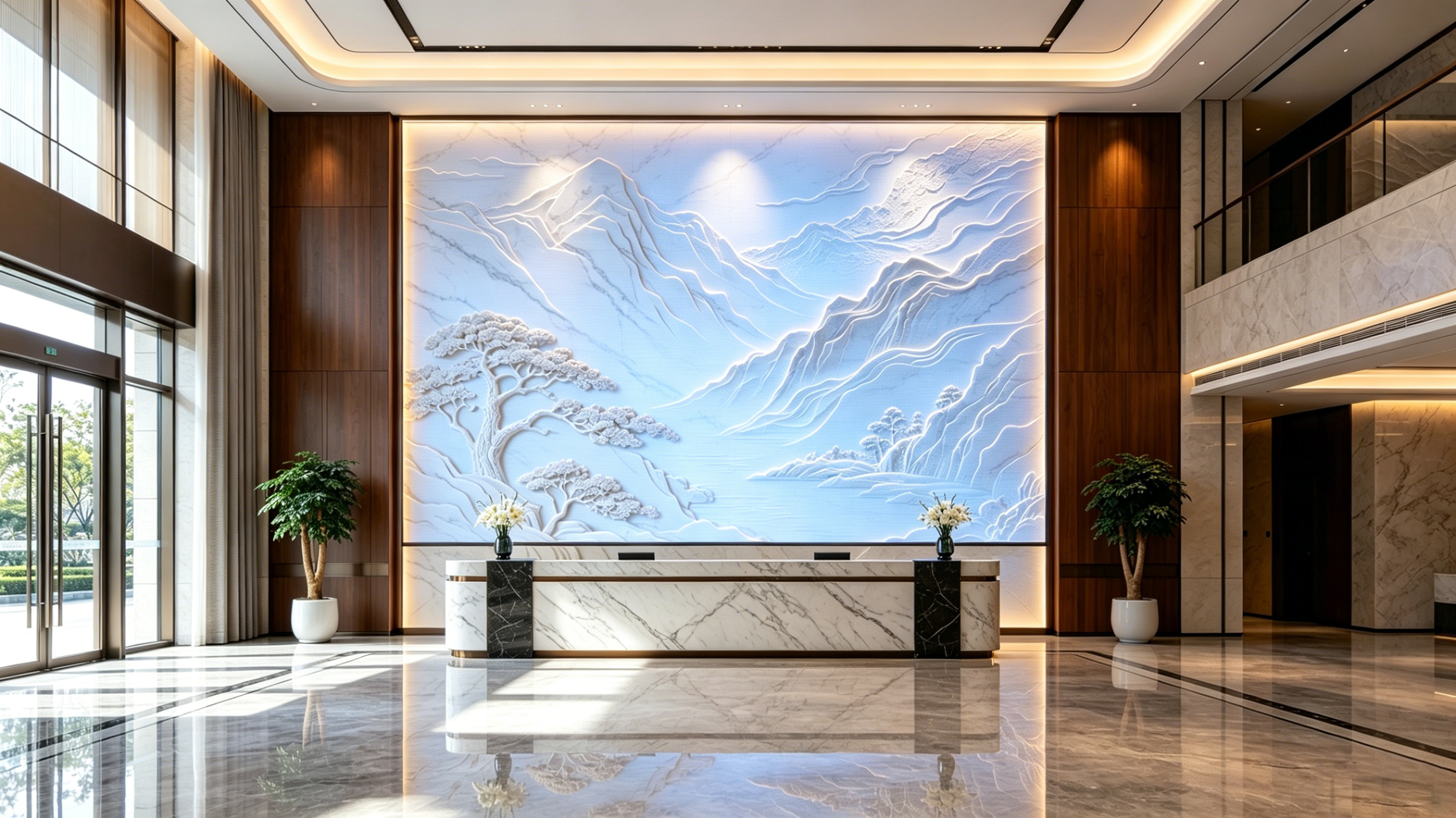
Energy centers are the 'heart' of urban infrastructure, and their display screens must not only present operational data and dispatch information but also bear the responsibility of image display and safety warnings. In recent years, LED relief texture screens for energy centers, with their unique 'decorative when off, display when on' texture, have become a top choice for designers and owners. However, facing a market full of varied products and parameters, many projects fall into selection traps, leading to disproportionate investment and results. This article starts with common industry misconceptions, debunks them one by one, helps you build a correct understanding of energy center LED relief texture screens, and provides a practical selection checklist to ensure every dollar of your budget is well spent.
Common Industry Misconceptions
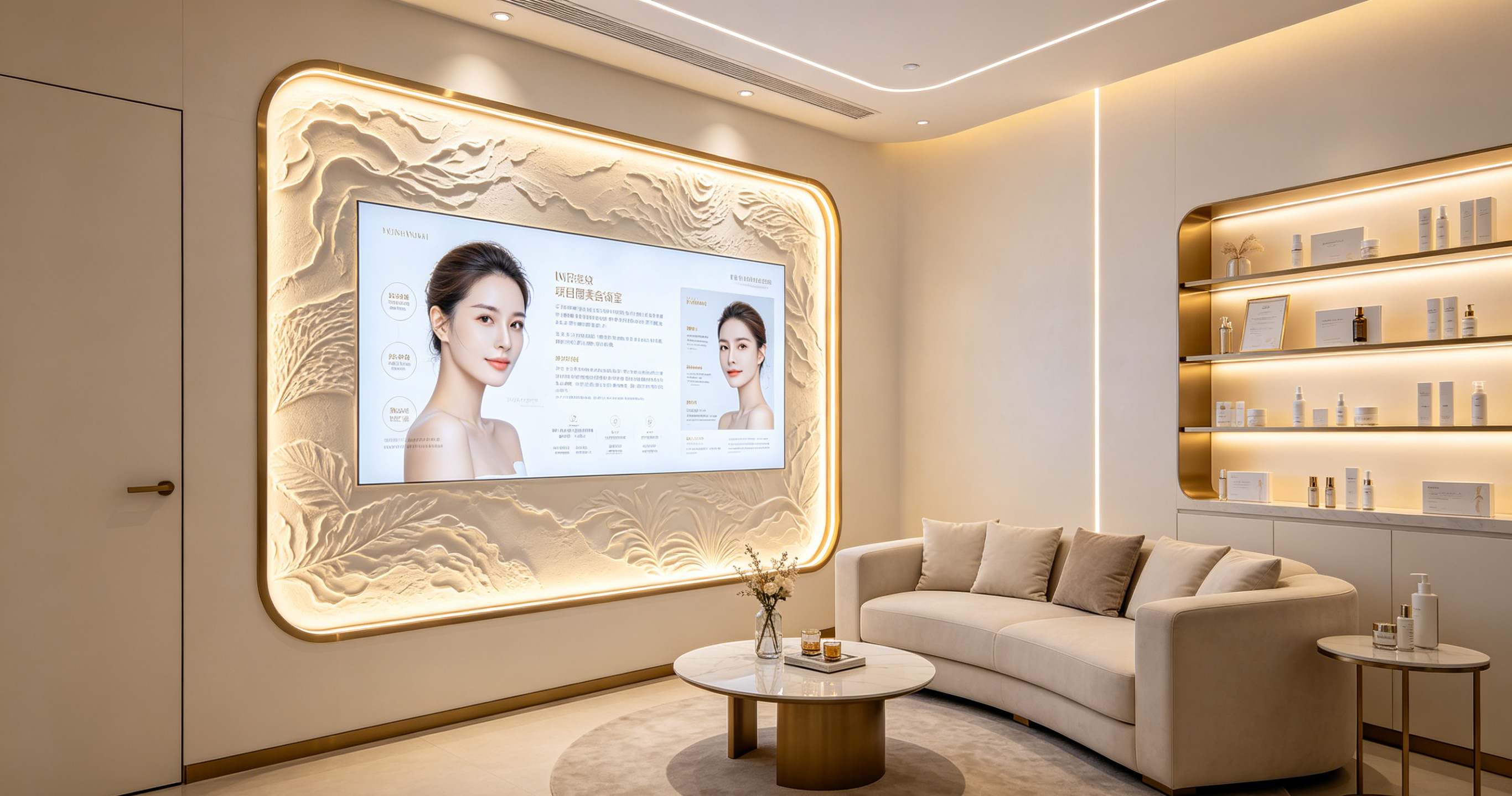
Misconception 1: The more realistic the texture, the better. Many buyers prioritize the realism of marble or wood grain textures, even demanding that they be indistinguishable from the real thing. However, the core need of an energy center is information visualization, not pure decoration. Overly complex or dark textures can interfere with data readability when the screen is on. In low-light conditions, dark textures absorb light and reduce contrast. For the LED texture screen (P5 pitch) supplied by Stonbel for the Atlantis Sanya project, we used an optically optimized light marble texture that retains the stone feel while ensuring clear, bright images. This resulted in a 50% increase in visitor interaction. Texture selection should follow the principle: textured from afar, non-glaring up close, and non-intrusive when lit.
Misconception 2: Focusing only on brightness, ignoring refresh rate. Control rooms and dispatch halls in energy centers have constant ambient light. Some buyers pursue high brightness (e.g., above 2000cd/m²) while neglecting the refresh rate. In environments requiring prolonged screen viewing, a refresh rate below 1920Hz can cause visible flicker in camera captures or peripheral vision, leading to eye fatigue. Stonbel's COB fine-pitch displays offer a 3840Hz refresh rate, and our LED displays reach 7680Hz, ensuring smooth, flicker-free scrolling of dynamic data.
Misconception 3: Treating the protection rating as the sole standard. IP65 is often seen as the 'must-have' for outdoor use. However, many areas in an energy center are semi-open indoor spaces, such as equipment corridors or display walkways. These areas have minimal dust and no strong water jets, making IP54 sufficient. The key is the overall sealing process and PCB protection, not just the IP number. Stonbel's LED texture screen has an IP54 rating but has operated flawlessly for years in the high-humidity, high-salt outdoor corridor of the Sanya project. This reliability comes from fully sealed modules and anti-corrosion coating, not just a high IP rating.
Debunking Myths: The Logic Behind the Specs
Myth 1: 'Smaller pixel pitch means clearer image.' Pixel pitch does affect resolution, but it must be matched with viewing distance. LED relief texture screens in energy centers are often used for feature walls, with typical viewing distances of 3-8 meters. At distances beyond 5 meters, a P5 pitch approaches the resolution limit of the human eye. Choosing P2 or smaller not only doubles cost but can also increase module heat, reducing lifespan. Stonbel's standard P5 pitch for LED texture screens is designed based on typical viewing distances in energy center scenarios.
Myth 2: 'Higher refresh rate means higher power consumption.' Refresh rate and power consumption are not linearly related. A high refresh rate (e.g., 3840Hz) refreshes the image 3840 times per second, effectively eliminating flicker. With optimized driver ICs, the power increase can be kept under 5%. Conversely, low refresh rates can cause color banding in gradient charts, which is detrimental to displaying energy data curves. We recommend choosing products with at least a 3840Hz refresh rate, which is the standard for Stonbel's COB fine-pitch displays.
Myth 3: 'Decorative screens don't need high grayscale.' Energy center screens often display heat maps, GIS maps, and equipment status blocks, which contain many subtle color gradients. Grayscale determines the smoothness of color transitions. 16-bit grayscale offers 65,536 levels, while standard 8-bit offers only 256. Stonbel's LED texture screens feature 16-bit grayscale and NTSC≥110% color gamut, accurately reproducing pressure gradient color bands in energy pipe networks without visible color banding.
Energy center LED relief texture screens, as an emerging product merging display and decoration, are gradually reshaping traditional perceptions of displays in the energy industry. Through this myth-busting, we hope you avoid pitfalls like 'texture obsession,' 'IP-only thinking,' and 'low-price traps,' establishing a correct selection mindset centered on display quality, environmental adaptability, and total lifecycle cost. Remember, a qualified energy center LED relief texture screen must not only 'look beautiful' but also 'run reliably.' When selecting, prioritize manufacturers with 3C, CE, ISO certifications, rich industry cases (e.g., Stonbel's successful application at Atlantis Sanya), and service networks covering 31 provinces. Comprehensively evaluate product parameters (pixel pitch P5, refresh rate ≥3840Hz, grayscale 16bit, lifespan ≥100,000 hours), environmental protection (IP54 and above, anti-corrosion coating), and O&M support (7×24-hour response, localized service). Energy centers are the 'lifeline' of urban operations, and their display systems allow no negligence. We hope this checklist helps you precisely lock onto a reliable solution, enabling technology and aesthetics to coexist harmoniously in energy scenarios and safeguarding urban energy security.